Romullo Baratto is an architect with a PhD from FAUUSP and Managing Editor of ArchDaily. He previously coordinated the editorial team of the 11th São Paulo Architecture Biennial and served as Managing Editor of ArchDaily Brasil, where he led the platform to win the FNA Award—the first time the honor was granted to a media outlet. He collaborated on the editing of the book "Concrete Jungle", published by gestalten, and has curated architecture exhibitions in Brazil, Chile, Denmark, and Italy, as well as delivered lectures and moderated debates in Spain, the United States, and Portugal. His doctoral thesis investigates the urban landscapes of São Paulo through cinema. His work spans academic research and editorial practice, communicating architecture through texts, interviews, lectures, curatorship, and photography. Follow him on Instagram @romullobf.
Em primeiro plano, a favela da Rocinha. Image Cortesia de CAU/BR
The mayor of Rio de Janeiro, Marcelo Crivella, has signed into law Bill No. 642-A of 2017, authored by former councilwoman Marielle Franco, which establishes free, public technical assistance for the design and construction of social interest housing for families with a monthly income of up to three minimum wages in the state capital.
Opened earlier this month, the audiovisual installation A marvellous entanglement, conceived by British artist Isaac Julien, explores the life and work of Lina Bo Bardi through an immersive environment composed of nine projection screens. Featuring actresses Fernanda Torres and Fernanda Montenegro, who portray the architect at different stages of her life, Julien's work also includes a series of photographs of Lina's work.
The Polytechnic University of Valencia offers a free online course on sustainability in architecture. Available through the edX platform, registration is now open for Sustainability in Architecture: An Interdisciplinary Introduction, which begins on July 9. The four-week course requires three to four hours of study per week.
Founded in the 1970s by Rem Koolhaas, Elia Zenghelis, Madelon Vriesendorp, and Zoe Zenghelis, the Office for Metropolitan Architecture (OMA) is one of the world's most renowned practices. While the firm has realized numerous projects and built iconic works across various countries, its work is not limited to architectural design alone. Instead, OMA frequently transcends strict disciplinary boundaries to engage with other areas of practice.
Fernanda Montenegro and Fernanda Torres. Photo: Reproduction
Conceived and directed by British artist Isaac Julien, the video installation A Marvellous Entanglement portrays the life of Lina Bo Bardi and stars actresses Fernanda Torres and Fernanda Montenegro, who play the architect at two different stages of her life. The nine-screen installation opens today at the renowned Victoria Miro art gallery in London.
Romano Guerra Editora has launched a crowdfunding campaign on Catarse to reissue the celebrated book RINO LEVI – arquitetura e cidade. Based on Renato Anelli's doctoral dissertation, the book features iconographic research by a team led by Abilio Guerra and is filled with photography by Nelson Kon.
The Atlas of Urban Expansion platform uses maps, satellite imagery, and spatial change data to showcase the growth of hundreds of cities worldwide. Developed since 2012 by New York University, UN-Habitat, and the Lincoln Institute of Land Policy, the primary goal of the Atlas is to analyze performance and identify trends in the implementation of the New Urban Agenda.
The Campus Universitario di Matera opens the exhibition Casas Paulistas: 2000 - 2017 today, June 5. The exhibition is part of a series of Brazilian showcases in the 2019 European Capital of Culture. Curated by Romullo Baratto and conceived by Ruben Otero, the exhibition brings together 12 projects of houses in São Paulo built since the turn of the century.
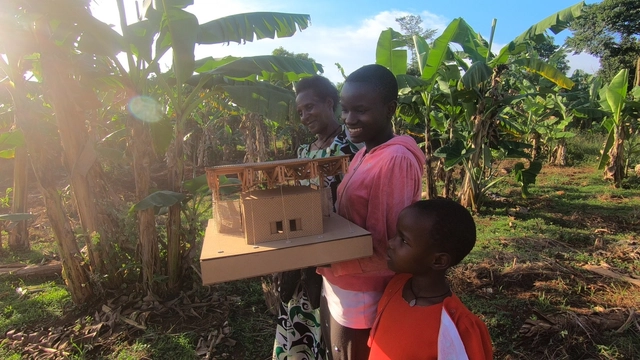
The **A Casa de Jajja **project explores the relationship between affection and architecture as an emancipatory practice. It grew out of research developed as Mariana Montag’s graduation thesis at the School of Architecture and Urbanism of Mackenzie Presbyterian University. This connection of affection emerged through her involvement in the School Project in Kikajjo, a rural village in Uganda, East Africa. There, Mariana met Jajja Imaculate, a strong and faithful 75-year-old woman, grandmother to Rose and Gift. Together, they designed and discussed what a house would look like—a home whose architecture not only shelters Jajja but also serves as an emancipatory practice challenging gender roles, with the construction process conducted through capacity-building workshops for women.
The gradual transition from CAD to BIM in architecture firms worldwide, and particularly in Brazil, brings numerous benefits to the design process, from reducing the working hours spent on each project to facilitating the coordination of different disciplines.
However, to fully leverage these benefits, it is essential to have access to BIM families that meet specific design requirements. To simplify the search for this content, the online platform Família BIM offers over 800 families for free download upon registering on the website.
Bulevar e mercado. Image Cortesia de Estúdio Módulo
The City of São Paulo has begun the first phase of interventions to revitalize Largo do Arouche, a busy area in the city's central district. The project includes paving and leveling the square's promenade and installing new street furniture, including benches, bike racks, drinking fountains, bollards, and guardrails.
Brazil's recent political and social crisis—exemplified by the results of the latest election—is concerning and has been undermining citizens' trust in the decision-making processes that affect our lives and cities. One of the reasons for this is the absence of public spaces where people of different social classes, races, ethnicities, perspectives, and worldviews can meet, exchange, and represent who they are.
Public spaces are fundamental to democracy and citizenship. Modern planning and unequal urban development have led Brasília to become a segregated, fragmented, and deeply unequal city. The deteriorated public sphere and the resulting individualization of lifestyles worsen the situation, leaving us increasingly disconnected, intolerant, and civically disengaged.
Vista marquise a partir da via pública. Image Cortesia de Coletivo de Arquitetos
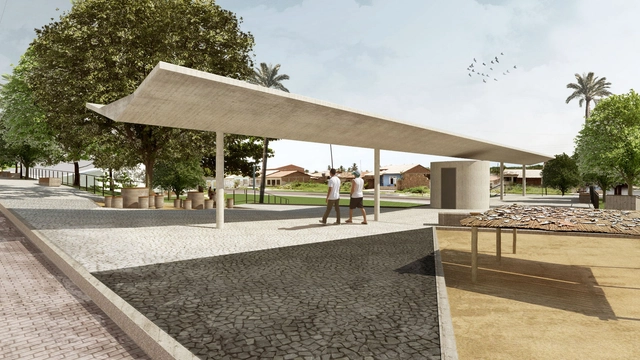
The design for a square in the village of Crasto proposes a new cultural, sports, and leisure space for this fishing community located on the southern coast of Sergipe. The project also addresses accessibility issues, interconnecting the new plaza with the pre-existing built environment.
Applications are now open for the 6th Instituto Tomie Ohtake AkzoNobel Architecture Prize. The initiative continues to map contemporary architectural production by highlighting, for the sixth consecutive year, significant projects built in the current Brazilian landscape that demonstrate a commitment to their site and sustainability, as well as design and constructive inventiveness.
Videos
Vladimir Tatlin's Monument to the Third International, built for the exhibition at Sesc Rio Preto. Image
The exhibition “Vkhutemas: The Future in Construction 1918-1930,” curated by Neide Jallageas and Celso Lima, opens at Sesc Rio Preto, where it runs until July 21, 2019. The anti-exhibition reconstructs around 300 projects by 75 artists and aims to explore the pedagogy of the Soviet school of art, design, and architecture as a possibility for the future. An acronym for the State Higher Artistic and Technical Workshops, Vkhutemas opened in 1928, shortly after the Soviet revolution, and was closed in 1930 by Stalin.
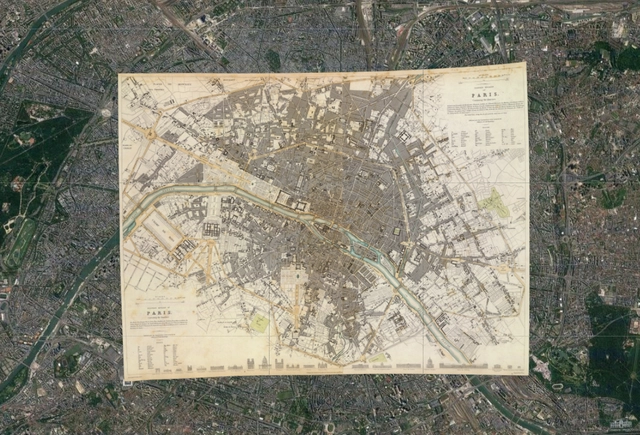
More than 120 old maps from the David Rumsey Map Collection were inserted in Google Maps and Google Earth, allowing us to learn how several parts of the globe were in the past. The maps can be seen by activating the 'Rumsey Historical Maps' layer in Google Earth or through a version of Maps developed for the project.
Building on their 2018 work, WRI Brasil and the National Front of Mayors (FNP) are presenting the "Complete Streets and Universities Online Seminar" series in 2019.
Supported by the University Professors for Complete Streets Network—established by both organizations—the series aims to identify opportunities and challenges for integrating the Complete Streets concept into the education of future urban planners.
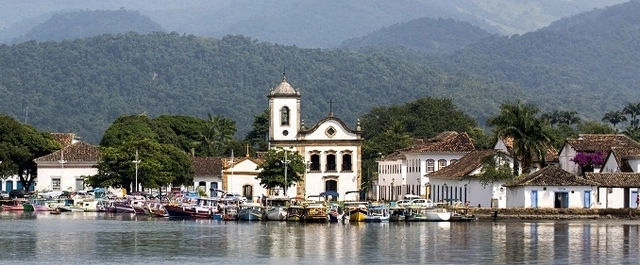
The site comprising the historic city of Paraty and the Ilha Grande Basin, in Angra dos Reis, in the southern region of Rio de Janeiro state, received a favorable technical recommendation this week from the United Nations Educational, Scientific and Cultural Organization (UNESCO) to become a World Heritage Site.

.jpg?1560952279&format=webp&width=640&height=580)


_copy.jpg?1559573929&format=webp&width=640&height=580)


.jpg?1559312649&format=webp&width=640&height=580)