Romullo Baratto is an architect with a PhD from FAUUSP and Managing Editor of ArchDaily. He previously coordinated the editorial team of the 11th São Paulo Architecture Biennial and served as Managing Editor of ArchDaily Brasil, where he led the platform to win the FNA Award—the first time the honor was granted to a media outlet. He collaborated on the editing of the book "Concrete Jungle", published by gestalten, and has curated architecture exhibitions in Brazil, Chile, Denmark, and Italy, as well as delivered lectures and moderated debates in Spain, the United States, and Portugal. His doctoral thesis investigates the urban landscapes of São Paulo through cinema. His work spans academic research and editorial practice, communicating architecture through texts, interviews, lectures, curatorship, and photography. Follow him on Instagram @romullobf.
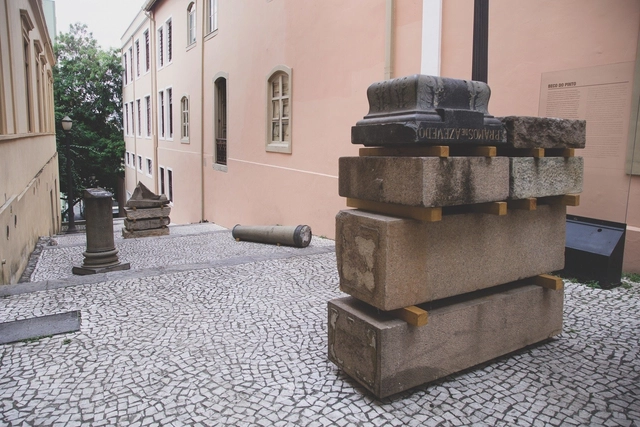
“Monumento Nenhum” installation. Photo by Ana Ottoni. Image via Press Release
The Museu da Cidade will open the installations "Chacina da Luz" and "Monumento Nenhum" by artist Giselle Beiguelman on Saturday, May 4, at 11:00 AM, at the Solar da Marquesa de Santos and Beco do Pinto, respectively. The works explore the loss of memory in public space and the city's relationship with its historical and cultural heritage. Composed of monument fragments, the installations replicate the state in which the pieces were found by the artist in public storage facilities, acting as a sort of "readymade" of oblivion.
Whether for universal accessibility, spatial fluidity, or plastic continuity, ramps bring unique and highly welcome qualities to architectural projects. That is, of course, when they can be successfully integrated into the design—typically a demanding task due to accessibility standards governing maximum slopes.
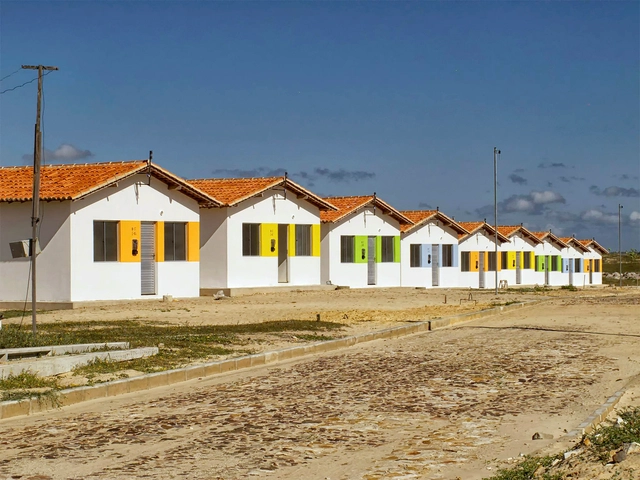
The federal government's Minha Casa Minha Vida housing program risks running out of funding starting this June, Regional Development Minister Gustavo Canuto declared this week. The current budget of R$ 4.17 billion is one of the lowest since the program was created in 2009, during the administration of Luiz Inácio Lula da Silva.
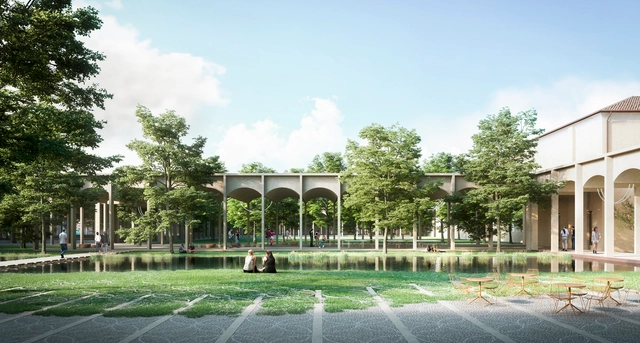
One of the most distinctive features of Padua’s urban structure is its network of porticos and covered galleries, which organize pathways and open up to define plazas—public spaces for community gathering.
Based on the 2010 Census, Nexo Jornal developed a series of maps of Brazil that reveal densely occupied and urbanized portions of the territory alongside others that are virtually uninhabited. For the study, the Brazilian Institute of Geography and Statistics (IBGE) divided the country into about 13 million squares of approximately 40,000 m² and counted the number of inhabitants in each.
Registration is open until June 30 for the National Public Competition for Architecture, Urbanism, and Landscape Design for the Morro da Manteiga Park in Camaçari, Bahia. Hosted by the Camaçari City Hall and organized by the Institute of Architects of Brazil – Bahia Department, the competition calls for a preliminary study for the implementation of a public park at Morro da Manteiga. The winning proposal will be commissioned to develop the executive project.
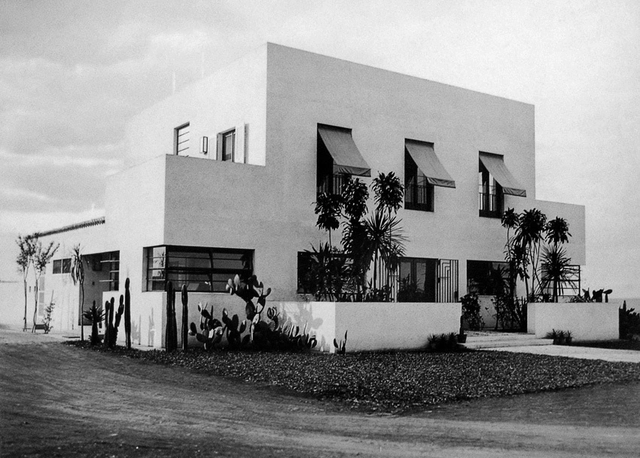
Modernist House on Santa Cruz Street. Image via Blogspot Holodeck
The 44th edition of the Itaú Cultural Occupation program honors Ukrainian architect Gregori Warchavchik. A naturalized Brazilian, he was responsible for building the first modernist work in Brazil, the Casa Modernista, located on Santa Cruz Street in São Paulo's Vila Mariana neighborhood.
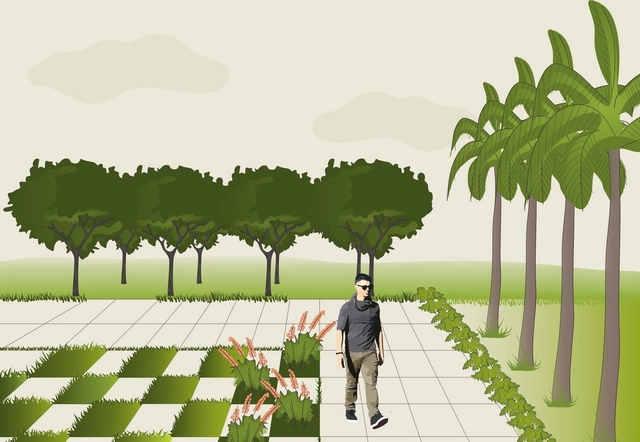
The benefits of urban vegetation are numerous and well known. In addition to shading public spaces and producing oxygen, trees and shrubs contribute to thermal comfort, by humidifying the air, and acoustic comfort, as they can be used as barriers to minimize noise.
Based on the 2012 book of the same name by anthropologist, poet, and essayist Antonio Risério, the documentary series A Cidade no Brasil offers an interdisciplinary and intercultural reflection on the aspects and dimensions of the urban phenomenon in the country, drawing on interviews with specialists and thinkers. Directed by filmmaker Isa Grinspum Ferraz, the 10-episode series is available to watch for free online on the SescTV website.
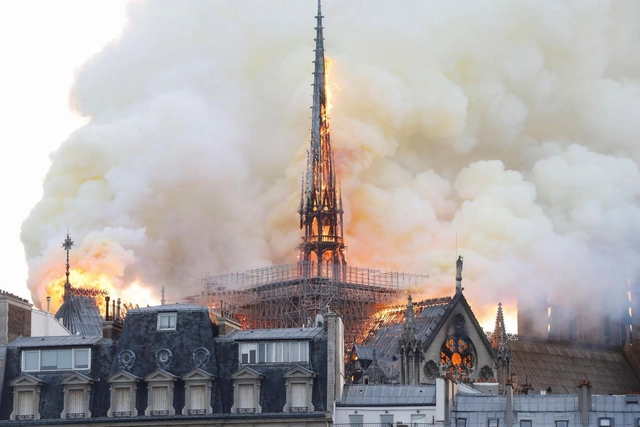
The restoration and reconstruction of Notre-Dame Cathedral—one of the most well-preserved examples of Gothic architecture, tragically devastated by a fire this week—will take several years (five, according to French President Emmanuel Macron's promise) and hundreds of millions of euros. Meanwhile, Patrick Chauvet, rector of the famous Parisian icon, has proposed building a "temporary" wooden cathedral to welcome worshippers and tourists.
Portuguese architect Eduardo Souto de Moura was recognized this week with the 2019 Arnold W. Brunner Memorial Prize, an award presented annually by the American Academy of Arts and Letters to an architect of any nationality who has made significant contributions to "architecture as an art."
Architecture, as construction, has many ways to express itself. Ideas can be conveyed through programmatic organization and the materials used; we can communicate through the rhythm of facades and openings; and we can deliver a message through the transparency or opacity of the volumes and surfaces we design. We can also express ourselves through structure and its arrangement—and this is perhaps the facet of architecture we most eagerly seek to explore.
First Place / Nachtergaele Navarro Arquitetos Associados
Developer Weefor has announced the results of its first open architecture competition, which aimed to select an architectural design for the company's first residential development in the city of Curitiba. The competition's grand prize winner is the firm Nachtergaele Navarro Arquitetos Associados, from São Paulo, whose project is scheduled to begin construction in the first half of 2020.
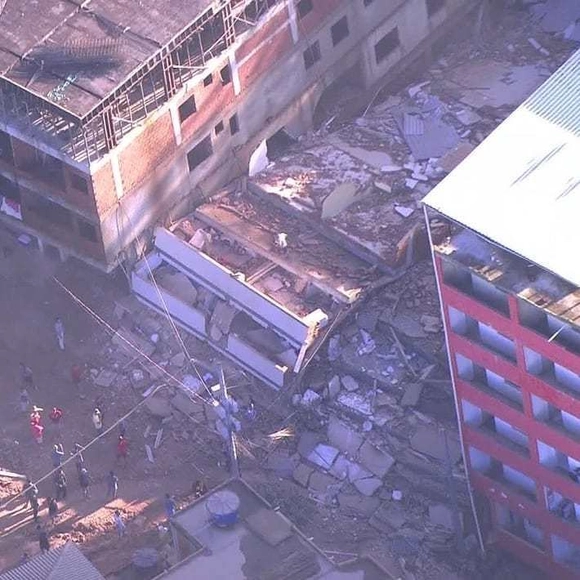
Two residential buildings collapsed this morning in Rio de Janeiro. Located in the Muzema community, in the city's West Zone, the four- and six-story structures collapsed at around 6:30 a.m. Two fatalities and three injuries have been confirmed, and another 17 people remain missing under the rubble.
The famous tube stations of Curitiba, icons of the Paranaense capital's urban development in the 1990s, will be replaced by a newer model. The goal of the City Hall and the Institute for Research and Urban Planning of Curitiba (IPPUC) is to replace twelve of these structures along the Inter 2 bus line.
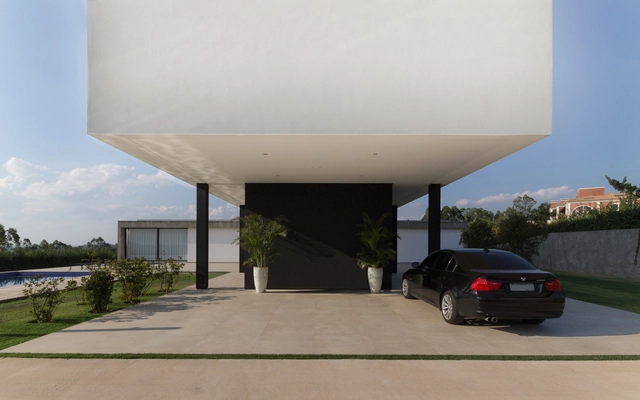
After graduating in 1960, Ruy Ohtake has practiced architecture for over five decades, having worked alongside other major names in Brazilian architecture, such as Vilanova Artigas and Paulo Mendes da Rocha. Until the mid-1980s, his work was characterized by projects closely aligned with what was being produced in São Paulo at the time—a highly Brutalist architecture, defined by a limited material palette and a well-defined vocabulary.
Primeiro lugar. Image Cortesia de Prefeitura de Ribeirão Preto
Organized by the Municipality of Ribeirão Preto last October, the competition for the city's Administrative Center has concluded with the selection of three winning projects and two honorable mentions. Discover the selected projects below:
Throughout the entire construction process—from the conception of the architectural design to its physical realization—the job site is perhaps where most issues arise. Varying widely in nature, construction setbacks become less frequent the more time is dedicated to the design and planning stages; in other words, the more time invested off-site, the lower the likelihood of major disruptions during construction.
.jpg?1556291339&format=webp&width=640&height=580)


.jpg?1555602176&format=webp&width=640&height=580)
.jpg?1555600350&format=webp&width=640&height=580)



.jpg?1554907489&format=webp&width=640&height=580)