Romullo Baratto is an architect with a PhD from FAUUSP and Managing Editor of ArchDaily. He previously coordinated the editorial team of the 11th São Paulo Architecture Biennial and served as Managing Editor of ArchDaily Brasil, where he led the platform to win the FNA Award—the first time the honor was granted to a media outlet. He collaborated on the editing of the book "Concrete Jungle", published by gestalten, and has curated architecture exhibitions in Brazil, Chile, Denmark, and Italy, as well as delivered lectures and moderated debates in Spain, the United States, and Portugal. His doctoral thesis investigates the urban landscapes of São Paulo through cinema. His work spans academic research and editorial practice, communicating architecture through texts, interviews, lectures, curatorship, and photography. Follow him on Instagram @romullobf.
Estação Júlio Prestes, 1938. São Paulo, Brasil. Image Cortesia de SouthAmerica.travel
Trains are not the primary mode of transportation in South American countries, whether for cargo or passengers. The rail networks across the continent are poorly connected and, even domestically, are largely outdated or in disrepair. Nevertheless, from an era when transportation relied primarily on rail, beautiful railway stations remain, still serving cargo and passenger trains today.
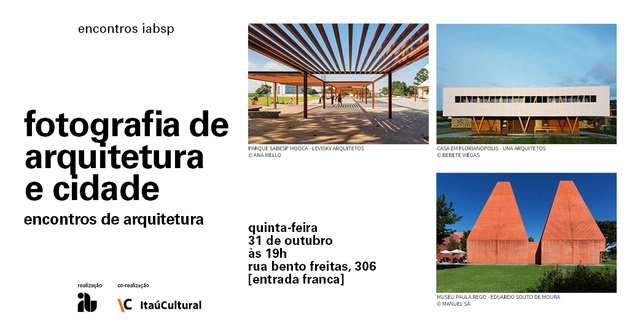
The fourth edition of the "Encontros de Arquitetura" (Architecture Encounters) will address the theme of architectural and urban photography, aiming to debate the ways in which space is represented through photography. Drawing on the contributions of each participant, the discussion will explore how differing perspectives and technical approaches result in unique narratives of the built environment.
The results of the international student competition to design the Czech Republic Embassy in Addis Ababa, the capital of Ethiopia, organized through a partnership between the Ministry of Foreign Affairs of the Czech Republic and the Department of Architecture at CTU (Czech Technical University) in Prague, were recently announced. The Brazilian team, comprising Augusto Longarine, Luiz Sakata, and Teo Butenas Santos from FAU USP, was named a finalist among 281 proposals from 38 different countries.
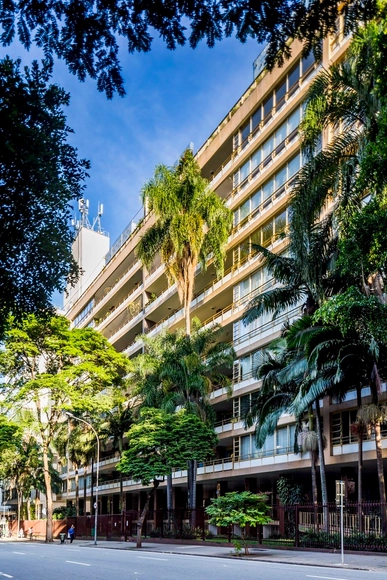
Photographer Rafael Schimidt has shared with us a recent series of photographs of the Prudência Building, designed by Rino Levi in 1944. Located on Higienópolis Avenue, near central São Paulo, "this apartment building presented, for its time, a high standard of comfort due to its dimensions—four bedrooms and large living rooms—the materials used, and central hot water and air conditioning systems, representing an initiative without parallel in its time," comments Simone Barbosa Villa in an article on Rino Levi's buildings.
"What is Ornament?" is a major question explored in this edition of the Lisbon Architecture Triennale, which aims to reframe the discussion on ornament, focusing particularly on its current appropriation and interpretation. In seeking potential answers, the exhibition, curated by Ambra Fabi and Giovanni Piovene, reveals the complexity of a multifaceted narrative that analyzes the very essence of ornament.
Illustrative photo. Credits: Agência Brasília on Visual hunt / CC BY
Starting November 5, bus riders in Vargem Grande Paulista will be exempt from paying fares. The city is the first in the São Paulo metropolitan area to offer free public transit.
The Association of Sabesp Engineers (AESabesp) has launched a competition to select the best architectural designs for the future São Paulo Water Museum. The goal is to find the best architectural concepts and alternatives for the restoration and expansion of the former water and sewage department building—currently known as the França Pinto Reservation Center—and the implementation of the cultural venue.
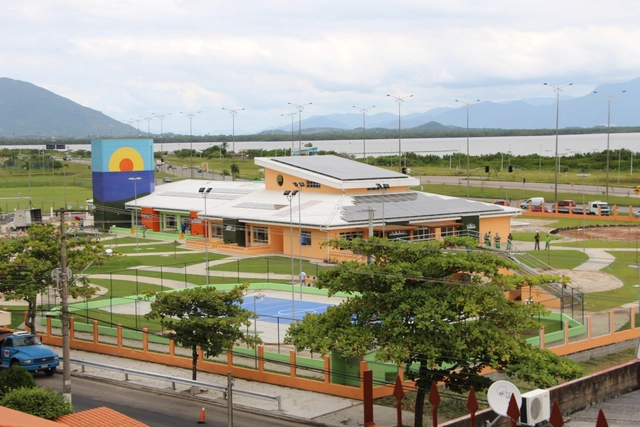
Building certified sustainable public buildings is now a viable reality. At least, that is what the Hassis Daycare project in Florianópolis, designed by architect Rachel Braga, demonstrates. The 1,182-square-meter building is the first of its kind in the world and the first public building in Brazil to receive the highest Leadership in Energy and Environmental Design (LEED) rating: Platinum.
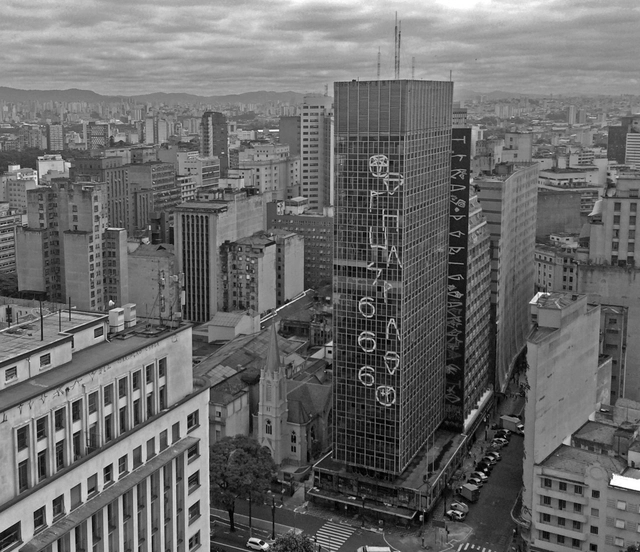
The 12th São Paulo International Architecture Biennial, on view at the Centro Cultural São Paulo until December 8, includes in its program the screening of two documentaries and a performance that reveal the struggle for housing in São Paulo, focusing particularly on the history and tragic fate of the Wilton Paes de Almeida Building, which collapsed after a fire on May 1, 2018.
In celebration of Ibirapuera Park's 65th anniversary, the Fundação Bienal de São Paulo invites the public to explore the Ciccillo Matarazzo Pavilion, designed by Oscar Niemeyer, through the Open Pavilion.
The UN-Habitat Public Space Programme has opened a call for proposals to fund public space projects with up to $100,000 in Brazil. According to the New Urban Agenda, the planning and management of quality public spaces are understood as fundamental prerequisites for poverty reduction and the fulfillment of human rights in urban areas.
The Instituto Tomie Ohtake announced yesterday the winners of the sixth edition of the Instituto Tomie Ohtake AkzoNobel Architecture Prize. The shortlist featured 12 projects in the professional category and three in the student category, which will remain on display until December 1st at the Institute's headquarters in São Paulo.
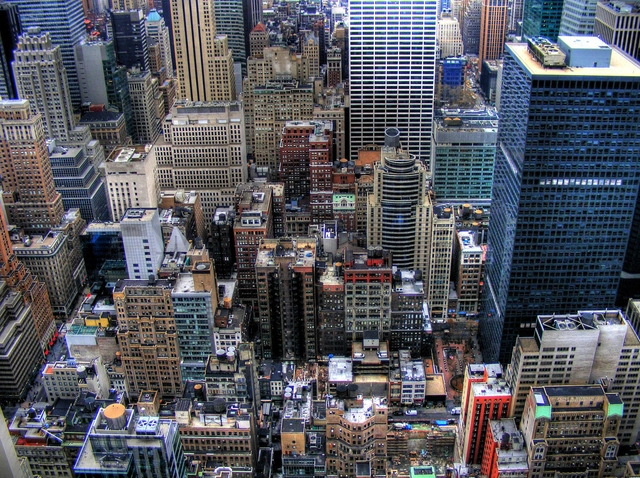
New York. Photo: CJ Isherwood, via Flickr, license CC BY-SA 2.0
The Swiss Federal Institute of Technology in Zurich (ETH Zurich) is offering free online courses on smart cities and future cities. Available through the edX platform, which is shared by institutions worldwide, the courses last ten weeks and are conducted via video.
The governor of Espírito Santo, Renato Casagrande, signed a decree this week mandating the installation of solar energy harvesting systems in new state buildings. The law also applies to facilities constructed with state funds transferred to municipalities through agreements, accords, or covenants.
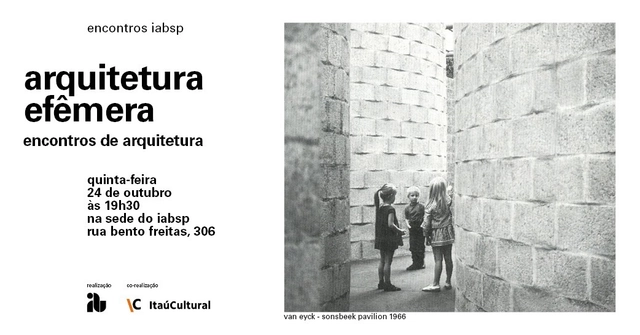
The third “Architecture Encounters” will address the theme of ephemeral architecture and public space interventions. Considering the expanding roles of architects and urban planners, this meeting aims to discuss short-term projects that impact the daily lives of the population over a brief period.
Architect and illustrator Matías Kim has shared with us a series of drawings featuring some of Oscar Niemeyer's most iconic works. With simple, precise lines, Kim explores the plasticity of the modern architect's works through static and moving images, revealing the interiors of projects such as Casa das Canoas and the Cathedral of Brasília.
As part of the Lisbon Architecture Triennale, the exhibition Economy of Means, curated by Éric Lapierre, aims to contribute to the definition of architectural rationality, much like the other four exhibitions that are part of the event.
Each of the first four sections represents a specific modality of the economy of means. The economy of repetition leads to typology and an interest in common architecture and the city. The economy of void leads to the invention of space.
Drone footage shows the debris of the building that collapsed in Fortaleza. Photo: Gustavo Pollizzon/G1
A seven-story residential building collapsed this morning in Fortaleza, Ceará. Located in the upscale neighborhood of Dionísio Torres, the building was over 40 years old and was undergoing renovations. A video recorded yesterday by a resident shows the precarious state of the structure's support columns, with exposed and corroded rebar.