Romullo Baratto is an architect with a PhD from FAUUSP and Managing Editor of ArchDaily. He previously coordinated the editorial team of the 11th São Paulo Architecture Biennial and served as Managing Editor of ArchDaily Brasil, where he led the platform to win the FNA Award—the first time the honor was granted to a media outlet. He collaborated on the editing of the book "Concrete Jungle", published by gestalten, and has curated architecture exhibitions in Brazil, Chile, Denmark, and Italy, as well as delivered lectures and moderated debates in Spain, the United States, and Portugal. His doctoral thesis investigates the urban landscapes of São Paulo through cinema. His work spans academic research and editorial practice, communicating architecture through texts, interviews, lectures, curatorship, and photography. Follow him on Instagram @romullobf.
The adaptability of architectural professionals in Brazil is indisputable. Confronted in recent years with crises of various kinds that have hindered the execution of work and, perhaps even worse, immersed in a structure that systematically undervalues the profession, the professional, and the project, the vast diversity and high quality of current production is remarkable.
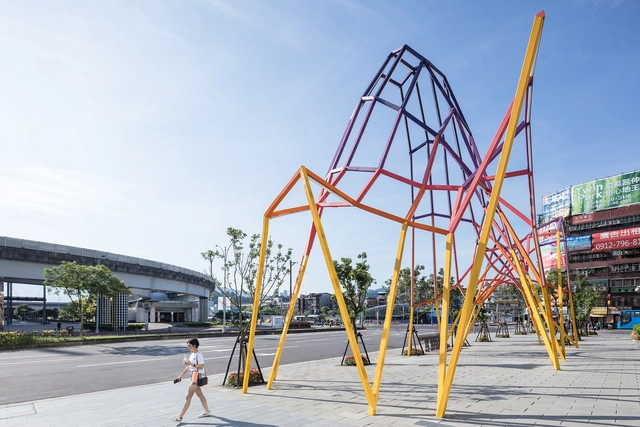
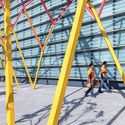
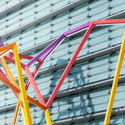
NAPPE is a permanent art installation designed by Portuguese studio FAHR 021.3 and built next to the Nangang Exhibition Center, in a redeveloped area of Taipei, Taiwan. Drawing on the country's culture and geography, NAPPE is inspired by Jade Mountain, the island's highest peak and a symbol of purity, honesty, and national values. The outdoor pavilion seeks to draw citizens into a new urban experience.
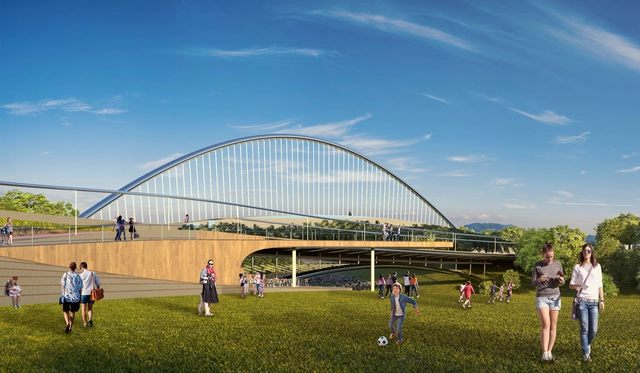
The firm EArquitetos has developed a design proposal for a bridge over the Vrbas River in Banja Luka, Bosnia and Herzegovina. The project received an honorable mention in the international competition. See the proposal below, accompanied by the project description.
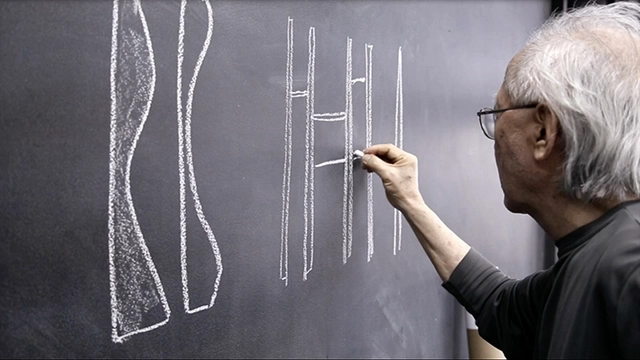
The Academia Paulista de Letras has elected architect Ruy Ohtake as its newest member, who will occupy seat number 39. The seat was previously held by fellow architect Benedito Lima de Toledo, who passed away in July of this year.
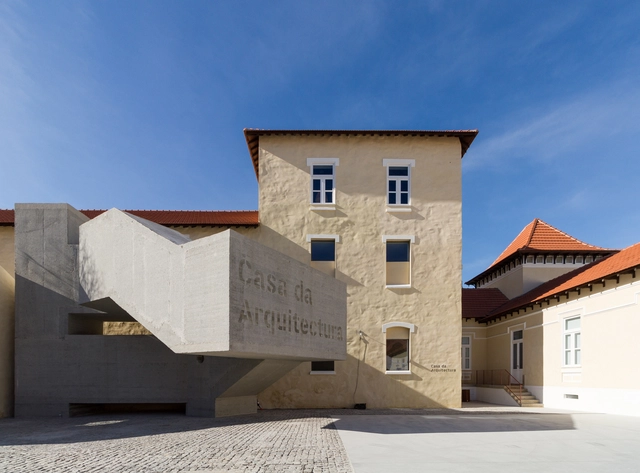
The Casa da Arquitectura – Centro Português Arquitectura will mark its second anniversary on November 15, 16, and 17 at the rehabilitated Quarteirão da Real Vinícola in Matosinhos, celebrating with a series of free events throughout the three days.
In Brazil, little is known about the reality of Paraguay, a country with a rich culture, beautiful landscapes, and a population of approximately 6.5 million people who speak its two official languages: Spanish and Guarani.
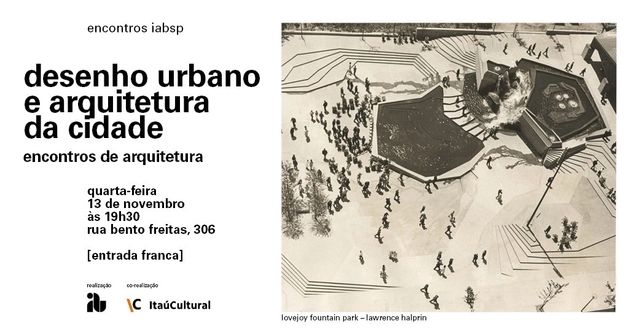
When discussing urban planning projects, one immediately imagines large-scale urban plans, master plans, and planned cities like Brasília. However, there is a scale that encompasses the design of urban or rural landscapes, with dimensions more accessible to people.
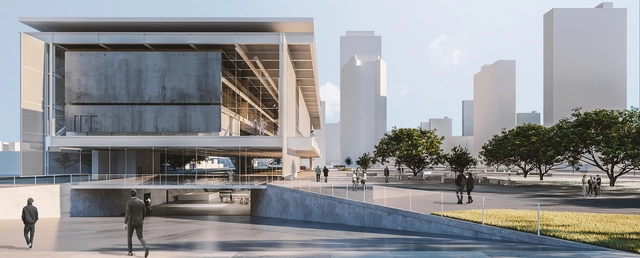
The 4th {CURA} Award continues the initiative of hosting ideas competitions centered on themes aligned with current discussions in architecture, urbanism, and society, with a focus on contemporary Brazil. For the 4th {CURA} Award, the competition theme is: Museum of Democracy.
Plans by the São Paulo City Hall to build a park along a section of the Presidente João Goulart Elevated Highway have been temporarily suspended. Minhocão Park, which would have occupied a 900-meter stretch between Praça Roosevelt and Largo do Arouche, was announced in May of this year and underwent a public consultation process via the Gestão Urbana SP portal.
Beleza Natural, one of the five main exhibitions of the Lisbon Architecture Triennale, co-curated by Laurent Esmilaire and Tristan Chadney, brings together student projects from the Trienal de Lisboa Millennium bcp Universities Award competition and works by architects from the 13th century to the present, viewed through the lens of construction rationality.
Álvaro Siza Vieira can add another award to his extensive list of global honors. The Portuguese master has just been awarded Spain's 2019 National Architecture Prize, announced during the II International Congress "Art, City, and Landscape," which concludes today in Cuenca with Portugal as the guest country.
The Fundació Mies van der Rohe, in partnership with USM, presents the EU Mies Award for Young Talent Architecture in São Paulo. The presentation will be followed by the "Architectural Education: Europe-Brazil" debate, featuring architect and professor Renato Anelli. A panel discussion will follow, featuring Anelli, Anna Sala of the Fundació Mies van der Rohe, and architect and editor Romullo Baratto, moderated by Ethel Leon, coordinator of the ATEC Cultural program.
The Federal District government announced mid-last month plans to build the Bible Museum based on Oscar Niemeyer's 1987 sketches. Local architecture and urbanism organizations have expressed concern over the plans, which could significantly affect the preservation of the federal capital's Monumental Axis.
The streets of Los Angeles will serve as a testing ground for a new asphalt compound made from recycled plastic. Developed by TechniSoil Industrial, the material incorporates plastic waste that would typically be discarded, mixing it with recycled asphalt reclaimed directly from the streets.
St. Mark's Basilica in Venice. Photo: dasu_ on Visualhunt.com / CC BY-SA
Unesp (São Paulo State University), through its virtual communication channel Univesp TV, is offering a free online course in Art History. Comprising 29 video lessons, the course is aimed at undergraduate and graduate students interested in art, history, research, and culture.
The Bahia Department of the Institute of Architects of Brazil has launched the IAB BA 2019 Awards, aimed at identifying, recognizing, and promoting the intellectual and professional work of architects and urban planners active in the state of Bahia. This year, there are 12 categories open for submissions, including Interior Architecture, Restoration and Rehabilitation of Built Heritage, Photography of Architectural Objects or Urban Spaces, and Design.
Espaço Interior is part of a research project concerning the construction of architectural imagination. It is also the title of one of the five main exhibitions at this year's Lisbon Architecture Triennale, curated by Mariabruna Fabrizi and Fosco Lucarelli. The exhibition aims to investigate the space between interior and exterior realities, seeking out those moments where these two realms interact most vividly.







.jpg?1572356608&format=webp&width=640&height=580)
