Romullo Baratto is an architect with a PhD from FAUUSP and Managing Editor of ArchDaily. He previously coordinated the editorial team of the 11th São Paulo Architecture Biennial and served as Managing Editor of ArchDaily Brasil, where he led the platform to win the FNA Award—the first time the honor was granted to a media outlet. He collaborated on the editing of the book "Concrete Jungle", published by gestalten, and has curated architecture exhibitions in Brazil, Chile, Denmark, and Italy, as well as delivered lectures and moderated debates in Spain, the United States, and Portugal. His doctoral thesis investigates the urban landscapes of São Paulo through cinema. His work spans academic research and editorial practice, communicating architecture through texts, interviews, lectures, curatorship, and photography. Follow him on Instagram @romullobf.
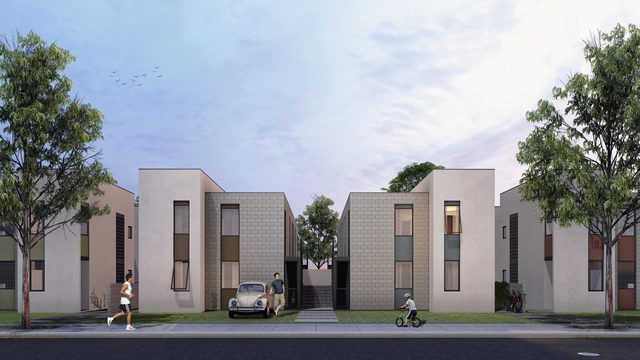
First Place. Courtesy of Oficina Urbana de Arquitetura
The Council of Architecture and Urbanism of Goiás (CAU/GO) has announced the results of the National Design Competition for Social Interest Housing, which aimed to select the best proposal for constructing homes for low-income families as part of the housing projects of the Goiana Housing Agency (AGEHAB).
The 13th São Paulo International Architecture Biennial has established reconstruction as the core theme of its 2022 edition. As a preparatory activity for the co-curatorship competition, the IABsp organized three debates to discuss the very essence of art and architecture exhibitions, while also calling on us to reflect on the role of architects, urban planners, and many other professionals in building fairer and more democratic cities.
Rocinha Sports Complex and Footbridge | Authors: Mayerhofer & Toledo Arquitetura and Oscar Niemeyer | Date: 2010 | São Conrado. Via Arqguia Colorir
Arqguia Colorir is a digital coloring book that invites everyone to visually reinterpret the main architectural landmarks of Rio de Janeiro. Available for free download in both English and Portuguese, the drawings feature QR codes providing direct access to descriptions of each work on the online architecture guide ArqGuia Rio.
In 2003, João Filgueiras Lima, known as Lelé, visited Escola da Cidade for a five-lecture series. The institution is broadcasting the fourth session, in which he discusses the industrialization of reinforced concrete in the urbanization of Salvador's favelas, as well as his partnership with Lina Bo Bardi.
Videos
Courtesy of the Lisbon Architecture Triennale
The Lisbon Architecture Triennale published on Vimeo the series of debates Talk, Talk, Talk held during its 5th edition, which was curated by Éric Lapierre. Divided into five major exhibitions, the Triennale addressed in one of them the issue of economy of means, discussed in the debates below.
Architects and urban planners seeking new sources of income during this period can find job opportunities across various regions in Brazil. For example, the City, Housing, and Health competition, organized by CAU/RJ, will award R$ 10,000 to the two best ATHIS (Technical Assistance for Social Interest Housing) proposals addressing housing and health in the era of Covid-19. Meanwhile, the Healthy House – Healthy City competition, hosted by CAU/RS, challenges participants to propose architectural solutions under different themes and will distribute R$ 100,000 in prizes.
Escola da Cidade is broadcasting, for the first time, the inaugural lecture of the Seminar on Culture and Contemporary Reality, delivered in 2002 by Aziz Ab’saber, one of Brazil's most respected and renowned geographers and scientists.
The São Paulo International Architecture Biennial is the most significant project organized by the IABsp. Since its inaugural edition in 1973, the event has sought to review, discuss, explore, and expand access to issues surrounding territorial occupation and society.
Postponed to July 2021, the 27th World Congress of Architects will host virtual debates as part of an open, collaborative platform to gather insights and proposals for addressing contemporary urban challenges.
The countdown to the event begins this week with the release of special content on the social media channels of UIA2021RIO. This includes video testimonials and interviews with speakers, collaborators, and partners discussing post-pandemic urban transformations and the role architects and urban planners should play in society.
The IAB has announced the selection of Brazilian works qualified to participate in the 3rd edition of the Oscar Niemeyer Award. Out of 33 submissions that met the open call requirements, 20 were selected by the evaluation committee. The "Oscar Niemeyer" Award for Latin American Architecture (ON Prize) is an initiative of the Latin American Network of Architecture Biennials (REDBAAL), founded in 2012 at the Pan-American Architecture Biennial of Quito.
Even before the new president of IPHAN was appointed in May 2020, guest professors Silvana Rubino and Alfredo Manevy spoke about the various challenges and contradictions guiding cultural policy in Brazil during a discussion at Escola da Cidade on June 5, 2019. Part of the course *Seminar on Contemporary Culture and Reality*, then coordinated by Professor José Guilherme Pereira Leite, the talk took the dissolution of the Ministry of Culture (MinC) as its starting point to discuss its repercussions, particularly in the fields of architecture and urbanism.
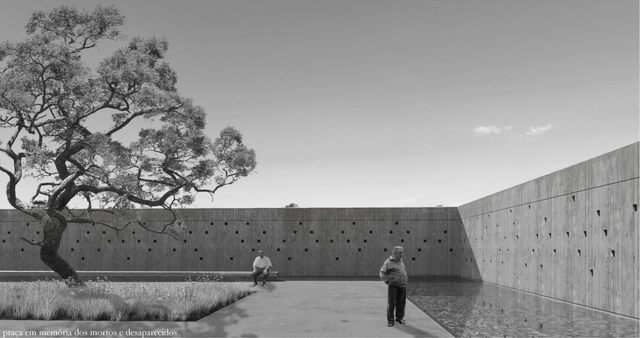
The 4th {CURA} Award continues the practice of hosting ideas competitions on themes aligned with current discussions on architecture, the city, and society, focusing on contemporary Brazil. The institutionalization of authoritarian and denialist discourse has become a real threat. For this reason, the competition's theme—a Museum of Democracy—brings forward a necessary discussion on how we treat memory and our history.
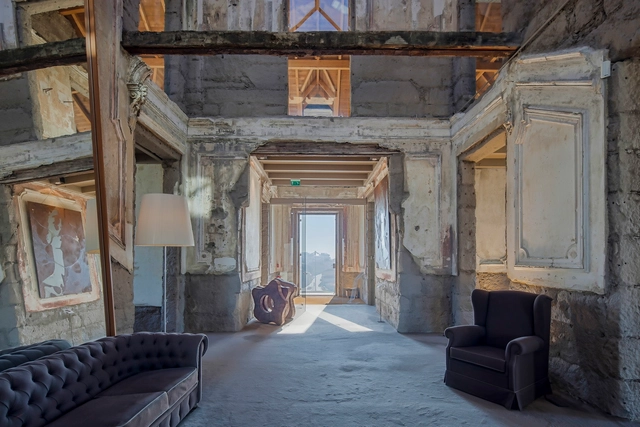
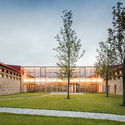
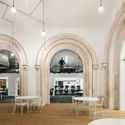
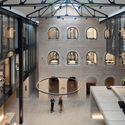
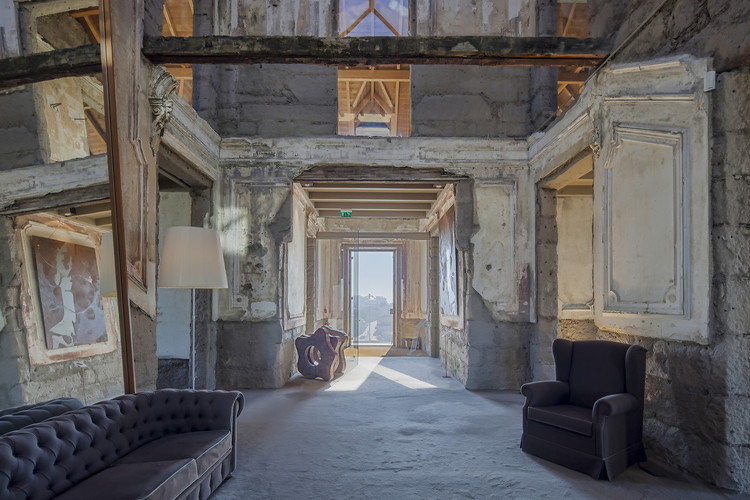
Repurposing a building is not a simple task. Not only does it require keen sensitivity to identify and acknowledge the historical value of pre-existing elements – thereby deciding what will endure over time and what will be replaced by new features, consistent with the current program – but it is also a strategy that pushes the boundaries of design and embraces issues such as sustainability and resource efficiency. After all, we are speaking of recycling a structure, or parts of it, and this impacts both design and the environment.
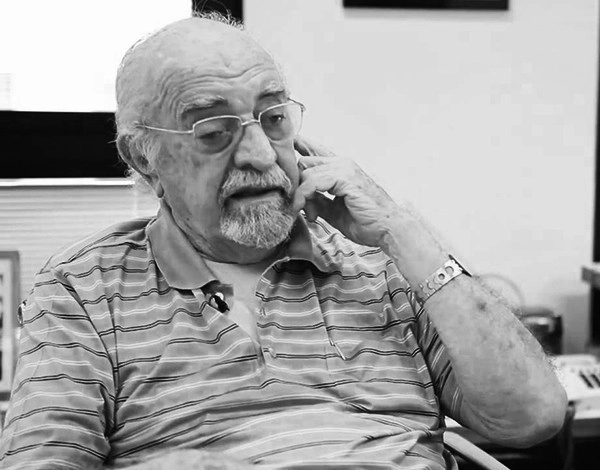
Architect Gian Carlo Gasperini passed away on the night of Wednesday, July 15, at the age of 93. He had been hospitalized for two days at Albert Einstein Hospital with pneumonia. Gasperini was responsible for several of São Paulo's landmark buildings, such as the Galeria Metrópole in the city center and the Pauliceia building on Paulista Avenue.
Escola da Cidade is hosting a discussion between Cape Verdean architect Patrícia (Patti) Anahory and the editors of América magazine, Marianna Al Assal and Maira Rios. The event marks the launch of the second issue and addresses the construction of identities through the reading of urban landscapes, as well as the displacement and production of knowledge in the fields of architecture and urbanism between the Americas and Africa today.
The Tomie Ohtake Institute and AkzoNobel continue to map contemporary architectural production, highlighting, for the seventh consecutive year, significant projects built within the current Brazilian landscape. The relationship to the urban context, the commitment to the site and sustainability, as well as design and construction inventiveness, are the core criteria guiding the 7th Tomie Ohtake Institute AkzoNobel Architecture Prize.
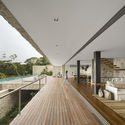
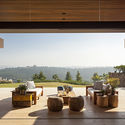
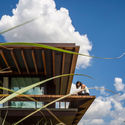
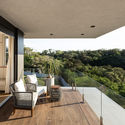
The veranda is one of the architectural elements that most powerfully fosters the connection between interior and exterior spaces. Its precise origins are difficult to pinpoint, as it can be found in vernacular architecture across the East, the Arab world, Europe, and, with particular prominence, Brazil.
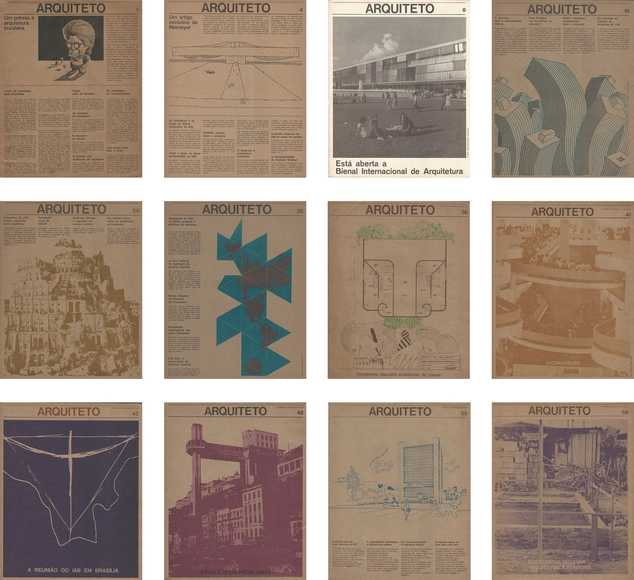
The Institute of Architects of Brazil - São Paulo Department (IABsp) has made all 74 editions of Jornal Arquiteto available online. This prominent publication in the field of architecture and urbanism was edited by IABsp in partnership with the Union of Architects in the State of São Paulo (SASP) between 1972 and 1980. Distributed nationwide, the newspaper aimed to be a "spokesperson for all architects."


.jpg?1595363051&format=webp&width=640&height=580)




.jpg?1546956437&format=webp&width=640&height=580)
.jpg?1546956437)