Romullo Baratto is an architect with a PhD from FAUUSP and Managing Editor of ArchDaily. He previously coordinated the editorial team of the 11th São Paulo Architecture Biennial and served as Managing Editor of ArchDaily Brasil, where he led the platform to win the FNA Award—the first time the honor was granted to a media outlet. He collaborated on the editing of the book "Concrete Jungle", published by gestalten, and has curated architecture exhibitions in Brazil, Chile, Denmark, and Italy, as well as delivered lectures and moderated debates in Spain, the United States, and Portugal. His doctoral thesis investigates the urban landscapes of São Paulo through cinema. His work spans academic research and editorial practice, communicating architecture through texts, interviews, lectures, curatorship, and photography. Follow him on Instagram @romullobf.
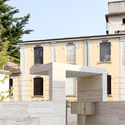
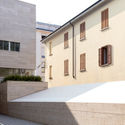
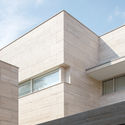
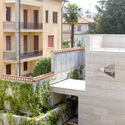
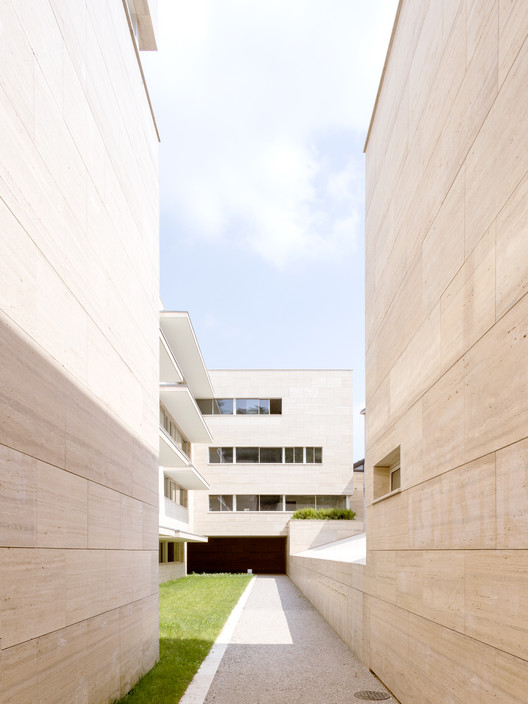
Situated on a suburban lot in Gallarate, in Italy's Lombardy region, the latest project by Álvaro Siza rises in two travertine marble blocks: a 20-unit residential complex developed in partnership with the Portuguese firm COR Arquitectos. Facing the busy Via Roma and the quiet Via Postporta, the development reinterprets two local typologies—the Lombard courtyard and the isolated villa—in a play of volumes that recalls the geometries of another Siza masterpiece, the Porto School of Architecture.
Design is more than product design. It is also the construction of personas, with their bodies and souls. The natural state is just one of the design parameters. We are the design of ourselves, in permanent transformation.
Guilherme Wisnik talks with Ivana Wonder, a persona created by designer Victor Ivanon. Possessing a powerful voice and breaking down the boundaries between masculine and feminine, Ivana leads a multisensory experience of emotion and longing. From the central spotlight of a damp cabaret, this haunting and ethereal figure emerges.
To maintain the flow of reliable information about Covid-19, facilitate hand hygiene for users, and pay tribute to the victims of the pandemic, the city of São Paulo has installed a series of multipurpose urban fixtures called “Totens Urbanos – Memorial Pró-Saúde”.
The project came to fruition following a meeting between architect Leonardo Fernandes Dias—whose design proposal won the popular vote in the international Coronavirus Design Competition by the GoDesignClass platform—and the organizers of the Rede Nacional de Apoio às Famílias e Vítimas da Covid (National Support Network for Families and Victims of Covid), an independent, voluntary civil society initiative providing specialized support. Temporary and emergency-focused in nature, the series of totems will occupy 17 high-traffic locations across the city until November.
Last week, Paulo Mendes da Rocha announced the donation of his entire project archive to the Casa da Arquitectura, a Portuguese institution based in Matosinhos dedicated to preserving and exhibiting architectural collections. The news was published at the time by ArchDaily and caused a stir among Brazilian architects, educators, researchers, and institutions—especially the FAUUSP, which expressed regret over Rocha's decision.
The donation of Paulo Mendes da Rocha's archive to Casa da Arquitectura, an institution based in Matosinhos, Portugal, has sparked intense debate among architects and academics since its announcement early last week. Both opposing and supportive opinions were widely shared on social media and news outlets, and an institutional collaboration agreement between FAUUSP and Casa da Arquitectura was even proposed.
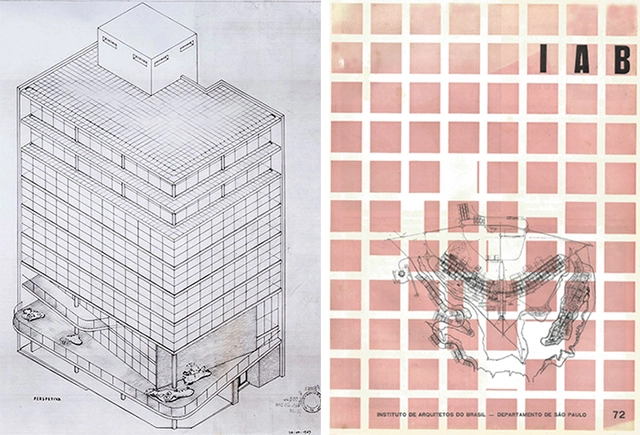
In light of the debate surrounding the preservation of architecture and urbanism collections in Brazil, IABsp published an open letter calling for a national network of archives. Read the full letter below:
Model of the National Coach Museum / MMBB Arquitetos + Paulo Mendes da Rocha + Bak Gordon Arquitectos. Courtesy of the architects
Brazilian architect Paulo Mendes da Rocha donated his entire collection to Casa da Arquitectura - Portuguese Centre for Architecture based in Matosinhos, which is dedicated to preserving and sharing architectural documents. Considered to be the world's most renowned living Brazilian architect, he signed the contract with the institution last year in December, one month after being invited to donate the material.
The arrival of the entire Paulo Mendes da Rocha collection follows the donation of the National Coach Museum project in 2015, and of a set of seven projects for the Brazilian Architecture Collection in 2018. The material which now arrives at Casa da Arquitectura will be received by more than 30 employees dedicated to inventorying and organizing the thousands of items produced during his long professional life from the 1950s to the present day.
(Image: Diego Herculano / Folhapress, via Futuro do Morar - Contrastes report)
What does the home of the future hold for us? And for whom will it become a reality? These questions served as the guiding principles for The Future of Living - Contrasts. With a keen eye on identifying the emerging movements that shape how we will live tomorrow, the research team at the Istituto Europeo di Design used the world during the COVID-19 pandemic as their primary backdrop. Drawing from this context, rather than simply discussing housing trends, the researchers address the challenges that must be resolved to make these trends a reality for everyone, rather than a mere set of forecasts that segregate rather than create opportunities.
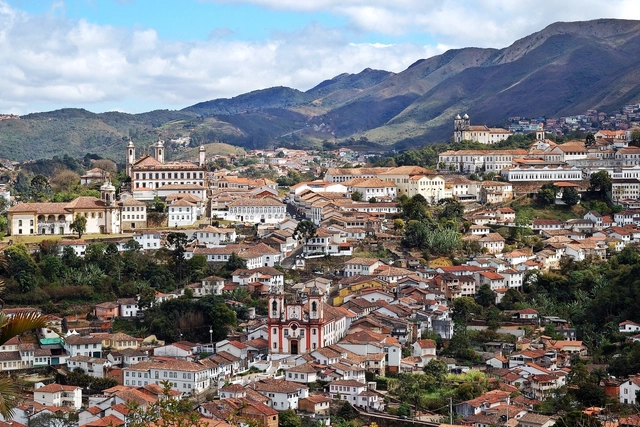
Ouro Preto, Minas Gerais. Photo by Rosino, Flickr. Licensed under CC BY-SA 2.0
In August, the city of Ouro Preto, in Minas Gerais, signed a public-private partnership for a "smart city" project, setting in motion plans to become Brazil's first historic smart city. The contract entails an investment of R$ 10 million and establishes an administrative concession for the Ouro Luz consortium to operate Ouro Preto's public lighting network and telecommunications infrastructure for 25 years.
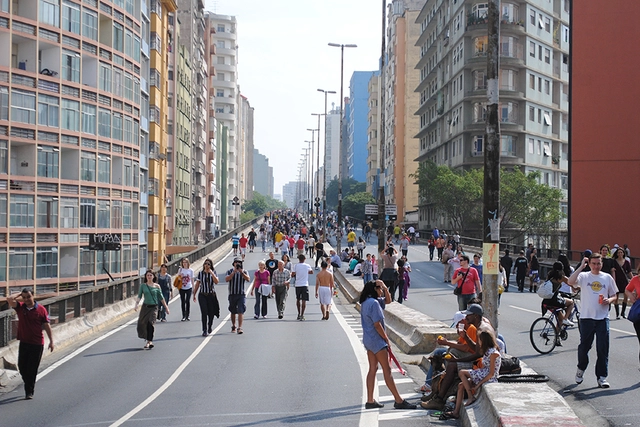
Gentrification has been one of the main points of debate regarding the project that aims to transform the Minhocão into a linear park. Image: Felipe Rodrigues
One of the most prevalent themes in current discussions about the city is gentrification. Broadly defined as "when someone different from you moves into your neighborhood," this urban phenomenon is far more complex than that, involving issues of land use, real estate speculation, public and leisure spaces, and urban planning.
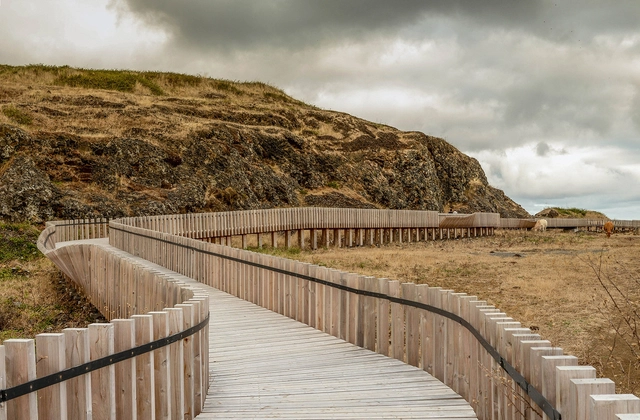
Modern Portuguese architecture has a renowned tradition of exploring the virtues of the landscape, either by integrating or emphasizing the natural elements to create new landscapes that result from the overlapping of culture and nature. Some fine examples are the Boa Nova Tea House and the Leça da Palmeira Tide Pools, both designed by Álvaro Siza, reacting to the rocky seascape where they lie, each in its own way.
However, it is not just Modern Architecture that is concerned with the landscape. In Portugal, contemporary works have been revealing exciting examples of the possibilities of approaching the natural environment, exploring its potential without compromising its integrity. To illustrate this, we have gathered 12 contemporary projects that use different resources to explore the relationship between natural and built.
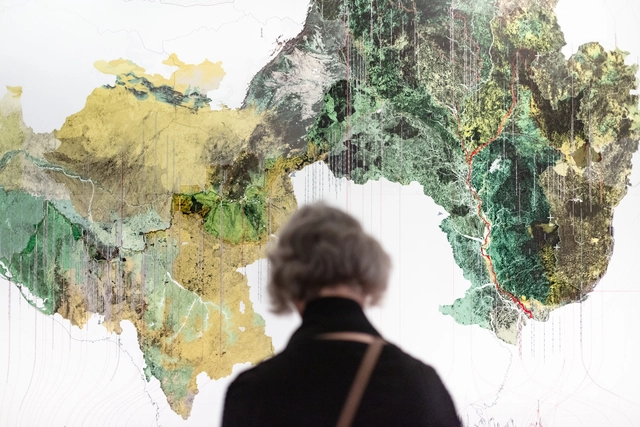
The cartographies reveal different facets of Brazil and examine the nature of the visible and invisible walls that define the country. They were produced by the exhibition’s curators Gabriel Kozlowski, Sol Camacho, Laura González Fierro and Marcelo MaiaRosa in collaboration with 200 professionals from 10 different disciplines
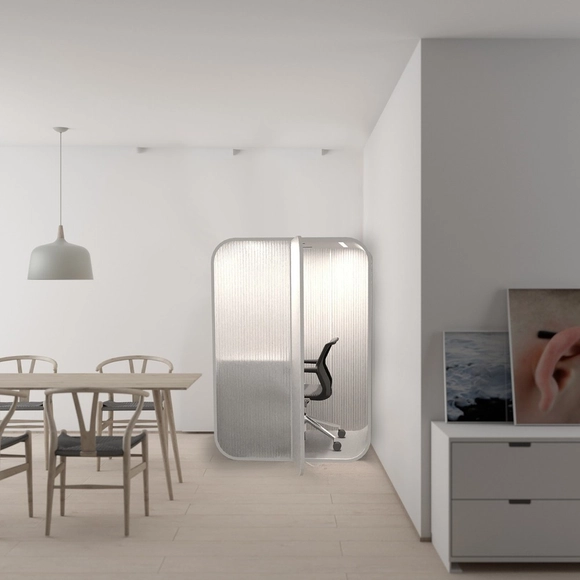
Brazilian architecture firm Atelier Marko Brajovic in partnership with the agency ℓiⱴε (Live) and Oca Brasil has just launched their new project, HOM, a kind of portable capsule that provides suitable workspace inside the house. The design explores a relatively new demand of the post-pandemic household, offering "a safe, controlled and equipped workspace," which integrates organically with the home environment.
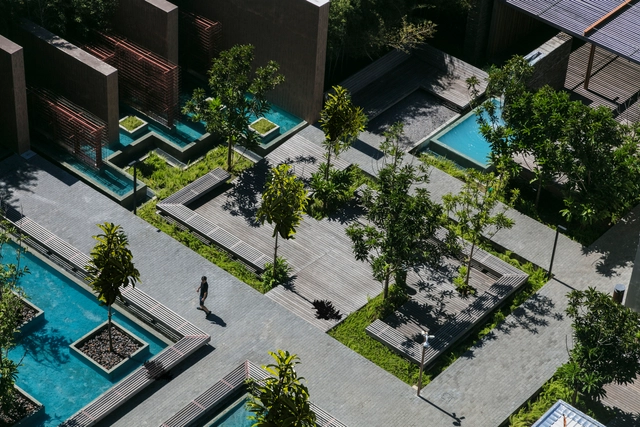
"Landscaping is the only artistic expression that includes all five human senses," says Benedito Abbud in his book Creating Landscapes – a guide to Working in Landscape Architecture. While architecture works mainly with sight and touch, landscaping also embraces smell, hearing and taste, "which provides a rich sensorial experience, by combining the most diverse and full perception experiences. The more a garden can sharpen all the senses, the better it fulfills its role."
In the year that the nation's capital turns 60, the Council of Architecture and Urbanism of the Federal District (CAU/DF) is launching the CAU/DF Seal - Architecture of Brasília. The initiative celebrates the modern architecture of the Plano Piloto Urban Ensemble, highlighting the city's non-monumental architecture. The goal is to recognize the historical value of these buildings and their authors—who are often little known by the general public—as well as to promote best practices in building conservation and maintenance that have preserved the architectural language of the Modern Movement.
“Lute” [Fight], phrases by Mariana Lacerda and Joana Amador projected by Paulinho Fluxus and Lucas Bambozzi at the 9 de Julho Occupation. São Paulo, March 12, 2020. Photo: Paulinho Fluxus
Coronavida: pandemia, cidade e cultura urbana, the new book by artist and professor Giselle Beiguelman, addresses the impacts of the coronavirus on culture and daily life in cities. The suppression of public space, new forms of activism, the pandemic of images (from livestreams to memes), the molecular surveillance of the "new normal," the precariousness of social relations, and remote work are among the topics explored.
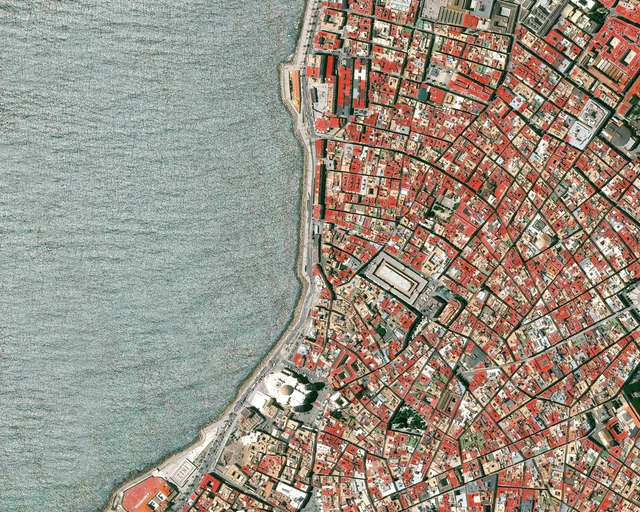
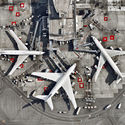
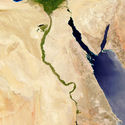
Seeing from above – the aerial vantage point – is the illusion of knowledge. This was the idea of Frenchman Michel de Certeau, a historian who was interested in the everyday practices that occur on the ground, on the streetscape. In contrast to Certeau's view, satellite images can be a powerful tool to understand, predict, and strive for a better future for humankind. This is the mission of Benjamin Grant, founder of Overview, a platform that explores human activity on Earth through aerial imagery.
Interested in fostering "an experience of awe" through elevated vantage points of our world, Overview offers snapshots featuring traces of human activity on the surface of the planet. Photos of cities and other cultural artifacts join pictures of mesmerizing topography and natural beauty in an impressive archive of drone and satellite images. Awe abounds as we face not only some of the most impressive human endeavors seen from the sky, but also as we are confronted with the rather gruesome side-effects of our very existence on Earth.

.jpg?1600719151&format=webp&width=640&height=580)
.jpg?1600719268 "© Gabriel Kiss")
.jpg?1600719212 "© Gabriel Kiss")
.jpg?1600719242 "© Gabriel Kiss")
.jpg?1600719255 "© Gabriel Kiss")
.jpg?1600719151)

.jpg?1599681232&format=webp&width=640&height=580)