Romullo Baratto is an architect with a PhD from FAUUSP and Managing Editor of ArchDaily. He previously coordinated the editorial team of the 11th São Paulo Architecture Biennial and served as Managing Editor of ArchDaily Brasil, where he led the platform to win the FNA Award—the first time the honor was granted to a media outlet. He collaborated on the editing of the book "Concrete Jungle", published by gestalten, and has curated architecture exhibitions in Brazil, Chile, Denmark, and Italy, as well as delivered lectures and moderated debates in Spain, the United States, and Portugal. His doctoral thesis investigates the urban landscapes of São Paulo through cinema. His work spans academic research and editorial practice, communicating architecture through texts, interviews, lectures, curatorship, and photography. Follow him on Instagram @romullobf.
A city's industrial past can leave unsettling imprints on the present. Large abandoned structures and forgotten facilities are very appealing not only to the voracious real estate market but also to the imagination of those who daydream about an unpromising past. Take the Ruhr valley, Germany's most populated urban area, and Europe's largest industrial region.
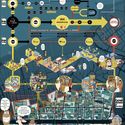
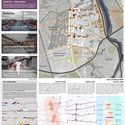
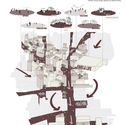
The jury of the Maré-City International Competition, organized by the 27th World Congress of Architects – UIA2021RIO, has selected the three winning projects and three honorable mentions. The choice was not easy: out of 180 entries from places as diverse as Germany, China, Egypt, Brazil, Russia, Poland, Turkey, Colombia, France, Portugal, Oman, and Ukraine, the jury shortlisted 28 finalists before deciding on the winners. Chinese entrants represent the majority of the awardees, securing first and second place, as well as the Roberto Burle Marx and Demetre Anastassakis honorable mentions. Third place went to a project by Brazilian students from São Paulo, while the Luiz Paulo Conde honorable mention was awarded to a project by students from Bogotá, Colombia.
Videos
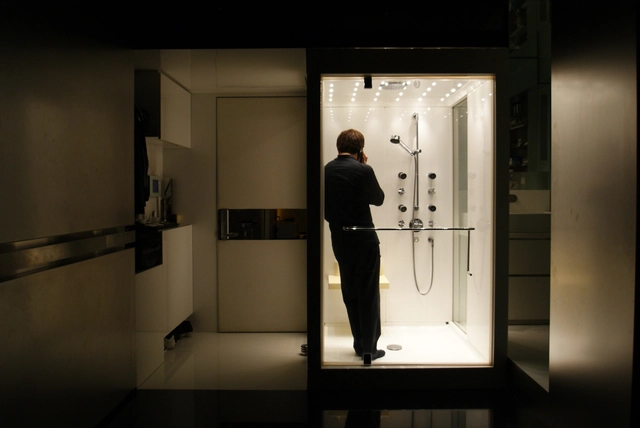
Gary Chang in his Domestic Transformer. Image Courtesy of Edge Design Institute
Compact living units have become the norm in most big cities across the globe. High density and the value of land in urban areas has made it mandatory for most developments to take full advantage of the buildable area. The result is homes that are increasingly smaller. Hong Kong is probably the most extreme case – with roughly three-quarters of the land preserved, the portion left for housing accommodates more than 7 million people in one of the densest urban environments on Earth.
We recently had the opportunity to talk with architect Gary Chang, founder of the Hong Kong-based Edge Design Institute, about his vision of compact living, small-scale architecture, flexibility, and the future of our cities.
The Covid-19 pandemic has brought unprecedented consequences for the global economy. In Brazil, it hit an economy that had barely recovered from the 2015–16 recession. However, responding to the crisis requires not only easing budget rules, but rethinking the very role of the state to address historical deficiencies that the pandemic has laid bare.
Guilherme Wisnik talks with Laura Carvalho, professor at the School of Economics and Administration of the University of São Paulo and holder of a PhD in economics from the New School for Social Research. She writes biweekly for the newspaper Nexo and is the author of "Valsa Brasileira: do boom ao caos econômico" (Todavia, 2018) and "Curto-Circuito: o vírus e a volta do Estado" (Todavia, 2020).
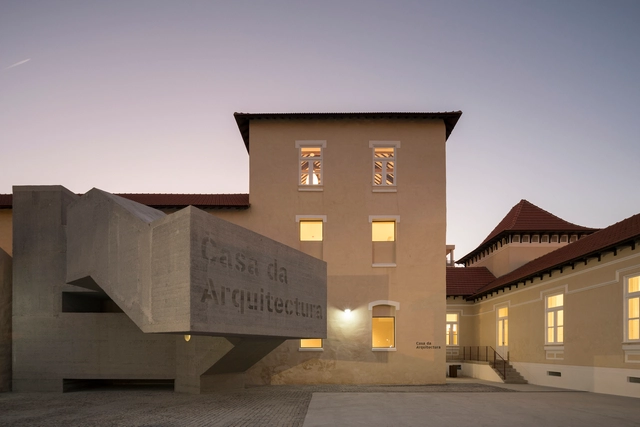
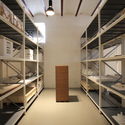
Weeks after Casa da Arquitectura, the Portuguese center for architectural documentation, archives, and exhibitions, announced that it had received the complete collection of projects by Paulo Mendes da Rocha, we spoke with Nuno Sampaio, the institution's executive director, about the processes involved in the donation, the Portuguese team's work in cataloging and making the material available online, and the next steps in safeguarding what is one of the most valuable archives of Brazilian architecture.
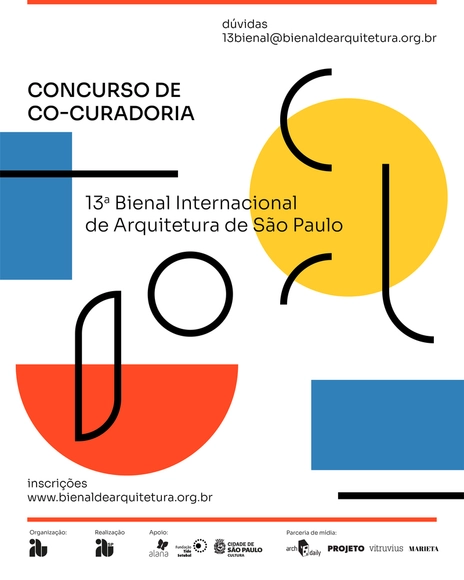
The IAB-SP, organizer of the São Paulo International Architecture Biennial, following a public consultation on the open call guidelines from October 10 to 25, is launching a competition on November 4 to select the co-curatorial team for the 13th Biennial, which will take place in 2022. Proposals can be submitted through the Biennial's website until January 24, 2021. This edition features a 12-member committee, which includes IAB representatives from other Brazilian states to ensure a diverse perspective in overseeing the event, which has both national and international reach.
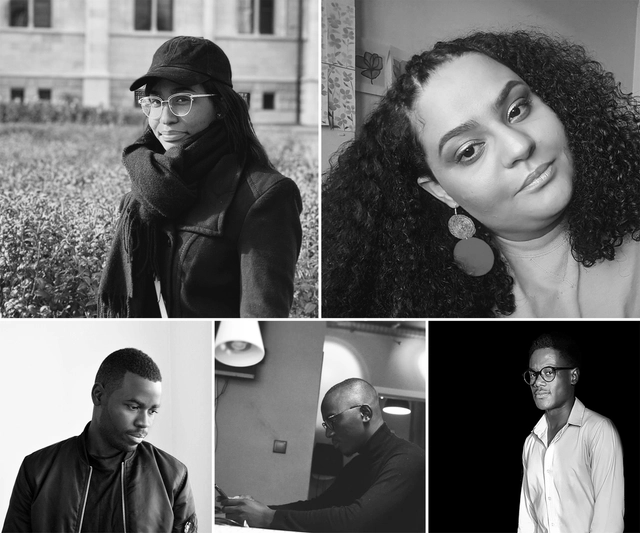
Grupo BANGA. Em sentido horário: Yolana Lemos, Kátia Mendes, Gilson Mendes, Mamona Duca e Elsimar de Freitas. Image Cortesia de Grupo BANGA
Investing in virtual projects has probably never been more timely, after all, we have been partially deprived of contact with the concrete world. Exploring the singularities of the present moment and the power of online engagement, a group of architects from Angola started an ambitious work: pursuing a new identity for Angolan architecture.
Formed by Yolana Lemos, Kátia Mendes, Mamona Duca, Elsimar de Freitas, and Gilson Menses, Grupo BANGA is responsible for the project Cabana de Arte (Art Hut), which combines the efforts of young architects and artists from Angola in virtual works that seek to bring visibility to emerging professionals and bring architecture closer to people's daily lives.
The Court of Justice of the Federal District and Territories (TJDFT) has denied an injunction request to suspend the Bible Museum project. The petition, filed by the Brazilian Association of Atheists and Agnostics (ATEA) against the Government of the Federal District (GDF), was dismissed by Judge Paulo Afonso Cavichioli Carmona of the 7th Court of Public Treasury of Brasília.
The São Paulo-based firm SPBR Arquitetos, led by Angelo Bucci, has launched a new version of its website, making vector CAD drawing files of its projects available. In addition to the drawings, photographs of the works, model images, texts, and other information about each building are also available for download.
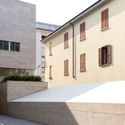
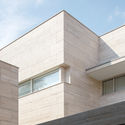
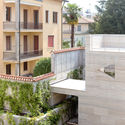
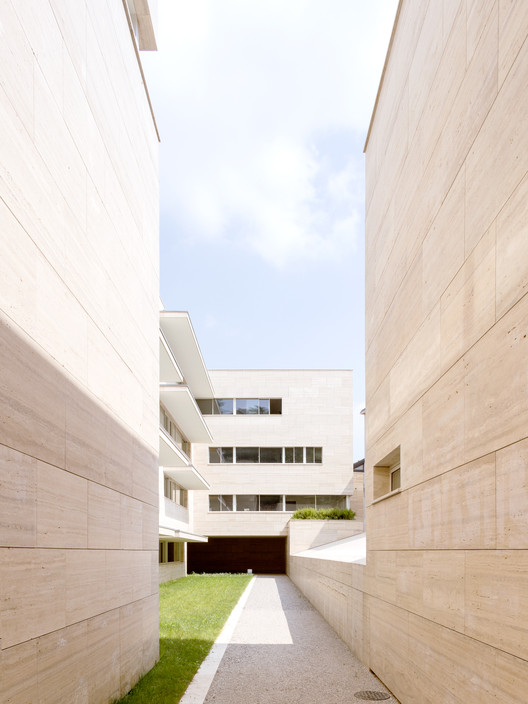
Situated on a suburban lot in Gallarate, in Italy's Lombardy region, the latest project by Álvaro Siza rises in two travertine marble blocks: a 20-unit residential complex developed in partnership with the Portuguese firm COR Arquitectos. Facing the busy Via Roma and the quiet Via Postporta, the development reinterprets two local typologies—the Lombard courtyard and the isolated villa—in a play of volumes that recalls the geometries of another Siza masterpiece, the Porto School of Architecture.
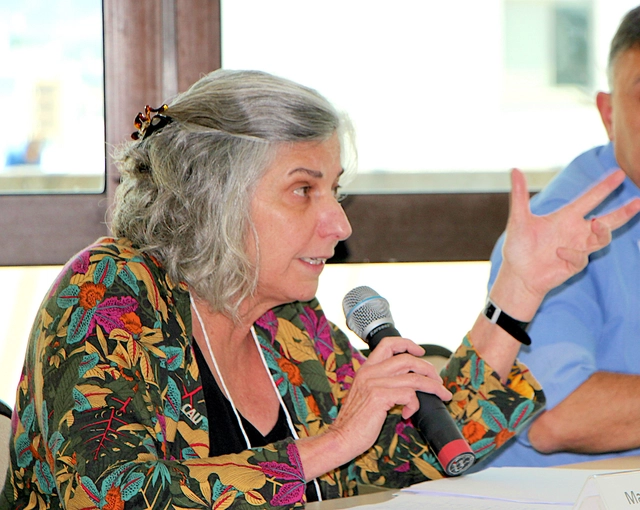
Architect and urban planner Maria Elisa Baptista is the new President of the National Board of the IAB. She succeeds Nivaldo Andrade, whose term ended on September 26 of this year. In nearly a century of existence, this is the first time a woman has held the position.
The leadership team also includes Rafael Pavan dos Passos (National Vice President, IAB-RS), Cláudio Listher Marques Bahia (Secretary General, IAB-MG), Rosilene Guedes Souza (Administrative-Financial Director, IAB-MG), Luiz Eduardo Sarmento Araújo (Cultural Director, IAB-DF), Fernando Túlio Salva Rocha Franco (Extraordinary Vice President of Institutional Relations, IAB-SP), and Luiza Rego Dias Coelho (Extraordinary Vice President of Affirmative Action, IAB-DF).
Design is more than product design. It is also the construction of personas, with their bodies and souls. The natural state is just one of the design parameters. We are the design of ourselves, in permanent transformation.
Guilherme Wisnik talks with Ivana Wonder, a persona created by designer Victor Ivanon. Possessing a powerful voice and breaking down the boundaries between masculine and feminine, Ivana leads a multisensory experience of emotion and longing. From the central spotlight of a damp cabaret, this haunting and ethereal figure emerges.
To maintain the flow of reliable information about Covid-19, facilitate hand hygiene for users, and pay tribute to the victims of the pandemic, the city of São Paulo has installed a series of multipurpose urban fixtures called “Totens Urbanos – Memorial Pró-Saúde”.
The project came to fruition following a meeting between architect Leonardo Fernandes Dias—whose design proposal won the popular vote in the international Coronavirus Design Competition by the GoDesignClass platform—and the organizers of the Rede Nacional de Apoio às Famílias e Vítimas da Covid (National Support Network for Families and Victims of Covid), an independent, voluntary civil society initiative providing specialized support. Temporary and emergency-focused in nature, the series of totems will occupy 17 high-traffic locations across the city until November.
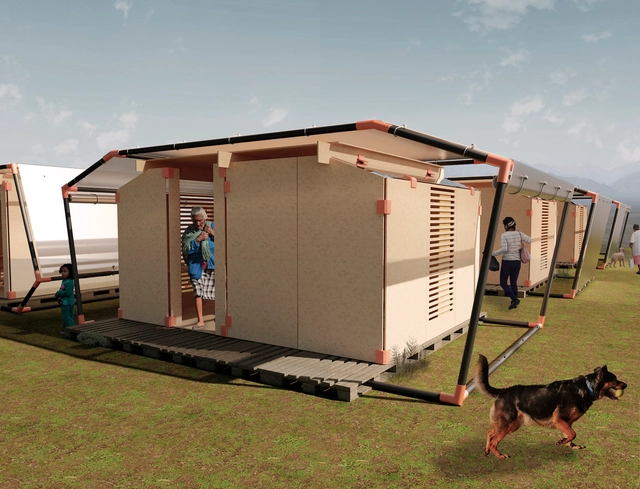
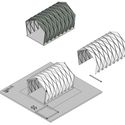
Remonte, projeto premiado com menção honrosa. Image Cortesia de Instituto Tomie Ohtake
The winners of the 2nd Tomie Ohtake Institute Leroy Merlin Design Award have been announced. Originally scheduled to take place in person at the Tomie Ohtake Institute alongside an exhibition of the projects, the awards were instead announced via video due to the novel coronavirus pandemic.
Last week, Paulo Mendes da Rocha announced the donation of his entire project archive to the Casa da Arquitectura, a Portuguese institution based in Matosinhos dedicated to preserving and exhibiting architectural collections. The news was published at the time by ArchDaily and caused a stir among Brazilian architects, educators, researchers, and institutions—especially the FAUUSP, which expressed regret over Rocha's decision.
Launched last month, the Fortaleza Mais Verde program aims to create a network of micro-parks in the capital of Ceará and implement tree-lined bicycle corridors. Execution of the plan began in August.
"The purpose of the proposal is to preserve, secure, and progressively expand the green cover of the City of Fortaleza, making these areas usable for the population to enjoy," said the city's mayor, Roberto Cláudio. "We have several landscaping and urban planning initiatives underway. We expect to receive suggestions regarding this new pilot project. We want to ensure it is implemented and made irreversible," he added.
The donation of Paulo Mendes da Rocha's archive to Casa da Arquitectura, an institution based in Matosinhos, Portugal, has sparked intense debate among architects and academics since its announcement early last week. Both opposing and supportive opinions were widely shared on social media and news outlets, and an institutional collaboration agreement between FAUUSP and Casa da Arquitectura was even proposed.
In light of the debate surrounding the preservation of architecture and urbanism collections in Brazil, IABsp published an open letter calling for a national network of archives. Read the full letter below:
Model of the National Coach Museum / MMBB Arquitetos + Paulo Mendes da Rocha + Bak Gordon Arquitectos. Courtesy of the architects
Brazilian architect Paulo Mendes da Rocha donated his entire collection to Casa da Arquitectura - Portuguese Centre for Architecture based in Matosinhos, which is dedicated to preserving and sharing architectural documents. Considered to be the world's most renowned living Brazilian architect, he signed the contract with the institution last year in December, one month after being invited to donate the material.
The arrival of the entire Paulo Mendes da Rocha collection follows the donation of the National Coach Museum project in 2015, and of a set of seven projects for the Brazilian Architecture Collection in 2018. The material which now arrives at Casa da Arquitectura will be received by more than 30 employees dedicated to inventorying and organizing the thousands of items produced during his long professional life from the 1950s to the present day.