
Launched last month, the Fortaleza Mais Verde program aims to create a network of micro-parks in the capital of Ceará and implement tree-lined bicycle corridors. Execution of the plan began in August.
"The purpose of the proposal is to preserve, secure, and progressively expand the green cover of the City of Fortaleza, making these areas usable for the population to enjoy," said the city's mayor, Roberto Cláudio. "We have several landscaping and urban planning initiatives underway. We expect to receive suggestions regarding this new pilot project. We want to ensure it is implemented and made irreversible," he added.
Ciclo Mais Verde
Fortaleza's main bike paths and lanes will be lined with trees. "The objective is to provide greater thermal comfort for cyclists, expand the street canopy, and create a thematic identity for the corridors," explains Luiz Alberto Sabóia of the Municipal Secretariat for Conservation and Public Services (SCSP).
As the pilot project progresses, the gradual implementation will cover one bike lane per month. By the end of 2020, Domingos Olímpio, Presidente Castelo Branco, Santos Dumont, and Rogaciano Leite avenues, as well as Urucutuba Street in Granja Lisboa, are expected to undergo infrastructural interventions totaling 19 kilometers of tree-lined streets.
Through the planting of 3,000 trees, the corridors will feature a variety of native species. "We will plant ipês, oitis, mungubas, angicos, sibipirunas, and chichás, among others. However, a predominant species will be used to name each green corridor," Sabóia explains.

Urban micro-parks
The program's second pillar will transform public green areas into small urban parks. The initiative will expand natural areas, create new public spaces, and foster environmental awareness.
Various components will be installed depending on the spatial and logistical availability of each park, including specialized lighting, fencing, signage totems, accessible pathways, bike racks, street furniture, contemplative areas, community gardens, sports areas, and playground equipment.
"These elements serve as references, and their installation will depend on the available space. Just 100 or 200 square meters can become a green respite in the city. These spaces will be used by the neighborhood and community, who will care for them alongside UrbFor (Fortaleza Urbanism and Landscaping Authority), the entity responsible for management and oversight. This will allow connections to be established between various environmental awareness initiatives, including the public education and health networks," Sabóia highlights.
To support this, a community council will be established to strengthen the bond between residents and city management. "We will create connections with educational programs, field trips, health initiatives, and the local economy. A network of small businesses naturally emerges when people occupy public spaces," he emphasized.
According to a preliminary survey, several areas of the municipality have the potential to host the project. The sites will be selected starting with the implementation of the first micro-park, planned for Francisco Sá Avenue. This initial intervention will cover an area of 2,000 square meters. Construction is scheduled to begin in September and be completed by November of this year.
Parallel initiatives
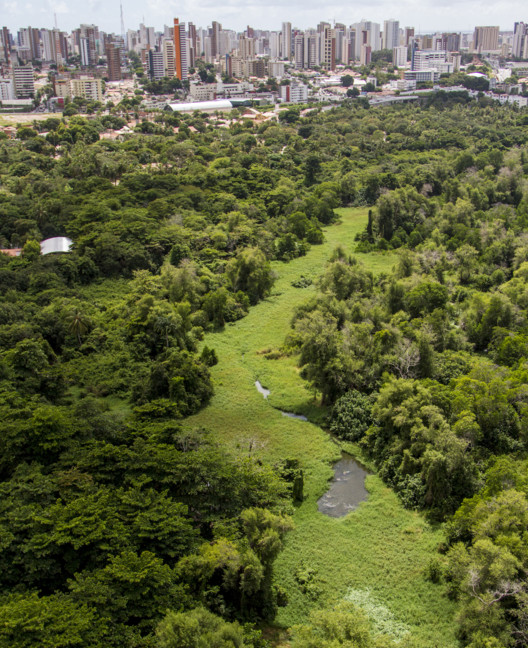
The Secretariat of Urbanism and Environment (Seuma), in partnership with UrbFor, has been developing key environmental initiatives, such as the regulation and development of urban parks. "Several areas are currently being protected, urbanized, and improved, including, among many others, the Passaré region, Lagoa da Viúva, and Rachel de Queiroz Park. We will also begin work on Lagoa do Papicu and Lagoa da Messejana," the mayor announced.
According to Sabóia, a survey by Seuma shows that the green space per inhabitant in Fortaleza is around 18 square meters. "This is due to a series of projects implemented by the municipal government. 'One Child, One Tree' and 'Tree on the Sidewalk' are good examples of fostering environmental awareness. Since the beginning of this administration, 23 new urban parks have been officially designated, including Riacho Pajeú, Maceió, and Guararapes," he concluded.
Via CicloVivo
This article was written by Romullo Baratto. The translation is powered by AI.


