Romullo Baratto

Romullo Baratto is an architect with a PhD from FAUUSP and Managing Editor of ArchDaily. He previously coordinated the editorial team of the 11th São Paulo Architecture Biennial and served as Managing Editor of ArchDaily Brasil, where he led the platform to win the FNA Award—the first time the honor was granted to a media outlet. He collaborated on the editing of the book "Concrete Jungle", published by gestalten, and has curated architecture exhibitions in Brazil, Chile, Denmark, and Italy, as well as delivered lectures and moderated debates in Spain, the United States, and Portugal. His doctoral thesis investigates the urban landscapes of São Paulo through cinema. His work spans academic research and editorial practice, communicating architecture through texts, interviews, lectures, curatorship, and photography. Follow him on Instagram @romullobf.

BROWSE ALL FROM THIS AUTHOR HERE

Circular economy project transforms sururu shells into cobogós in Alagoas

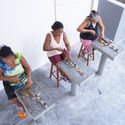
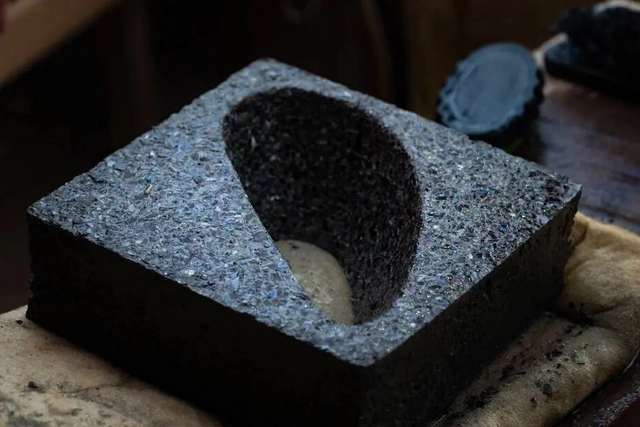
Considered an intangible cultural heritage by the State Council of Culture (CEC) of Alagoas, the sururu is a mollusk whose harvesting is the main source of income for several communities in the state. Around the Mundaú lagoon alone, in Maceió, five communities living below the poverty line produce approximately 300 tons of sururu shells annually—a massive amount of waste that previously had no use and ended up in the Alagoas capital's landfills. 

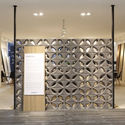
Recognizing its significant economic and social engagement potential, designers Marcelo Rosenbaum, Adriana Benguela, and Rodrigo Ambrósio developed the Cobogó da Mundaú project, which incorporates sururu harvesting waste into the manufacturing of architectural screen blocks.

Circular economy project transforms sururu shells into cobogós in Alagoas - Image 1 of 4Circular economy project transforms sururu shells into cobogós in Alagoas - Image 2 of 4Circular economy project transforms sururu shells into cobogós in Alagoas - Image 3 of 4Circular economy project transforms sururu shells into cobogós in Alagoas - Image 4 of 4Circular economy project transforms sururu shells into cobogós in Alagoas - More Images+ 5

Landscaping on an Urban Scale: 12 Linear Park Projects

Subscriber Access | 

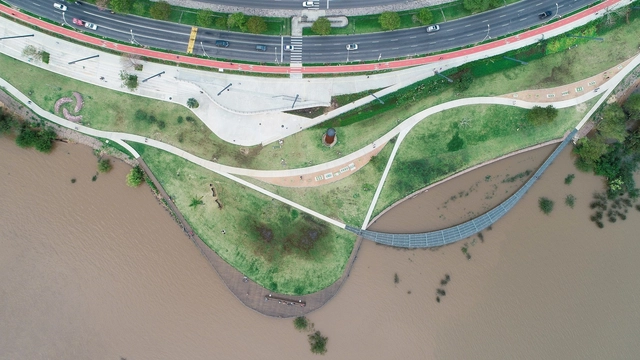
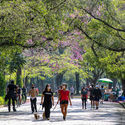
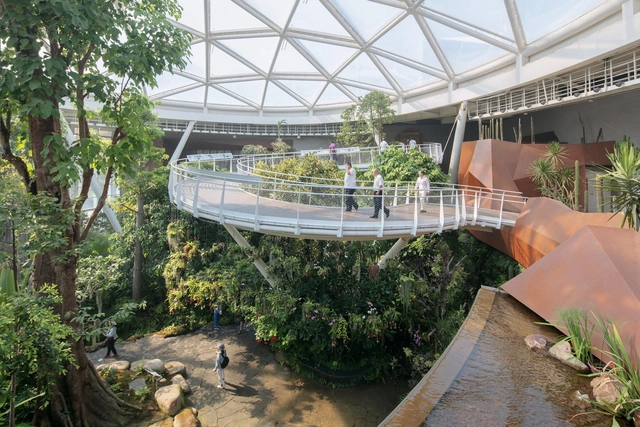
Linear parks exist in many different contexts - along riversides, coastal areas, or inserted in the urban fabric - and represent a very particular type of public space that evokes the idea of a vector and, consequently, the sense of movement. However, they can provide more than just activities and programs associated with mobility, proving to be an appealing solution to the lack of spaces for leisure, contemplation, and relaxation in the most varied urban situations.

Below, we have gathered 12 examples of linear parks built in different parts of the world, illustrated by photographs and floor plans.

Landscaping on an Urban Scale: 12 Linear Park Projects - Image 1 of 4Landscaping on an Urban Scale: 12 Linear Park Projects - Image 2 of 4Landscaping on an Urban Scale: 12 Linear Park Projects - Image 3 of 4Landscaping on an Urban Scale: 12 Linear Park Projects - Image 4 of 4Landscaping on an Urban Scale: 12 Linear Park Projects - More Images+ 21

More greenery, gathering spaces, and active mobility: what Paulistanos want during the pandemic

Subscriber Access | 

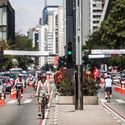
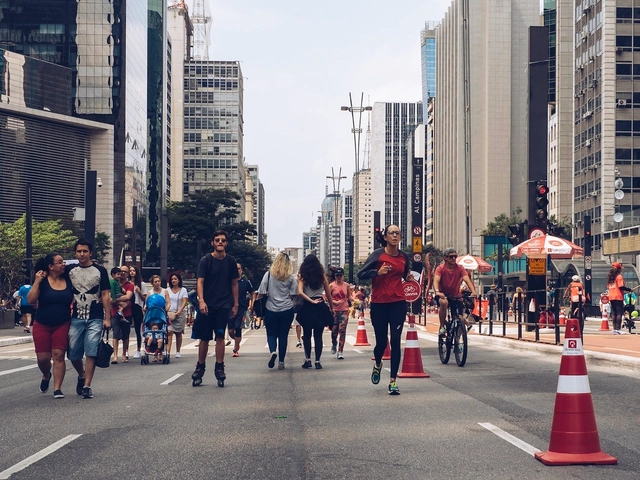
Urban resilience was put to the test as the pandemic swept quickly and drastically through cities. Limiting movement, contact, and access to public spaces was the most effective strategy for containing the virus. However, the city's infrastructure, compounded by a lack of emergency public policies, proved far from resilient. This vulnerability was exposed as a large portion of the population was forced to continue commuting long distances on public transit to work in essential services, and as the physical and mental health of residents suffered from a lack of access to safe spaces for physical activity—underscoring the city's precarious supply of public spaces.

More greenery, gathering spaces, and active mobility: what Paulistanos want during the pandemic - Imagen 1 de 4More greenery, gathering spaces, and active mobility: what Paulistanos want during the pandemic - Imagen 2 de 4More greenery, gathering spaces, and active mobility: what Paulistanos want during the pandemic - Imagen 3 de 4More greenery, gathering spaces, and active mobility: what Paulistanos want during the pandemic - Imagen 4 de 4More greenery, gathering spaces, and active mobility: what Paulistanos want during the pandemic - More Images

27th World Congress of Architects Begins in March with Digital Content

The 27th World Congress of Architects UIA2021RIO will be a hybrid event, featuring virtual sessions starting in March, and in-person activities from July 18 to 22 in Rio de Janeiro, broadcast live online to congress participants worldwide.

The first UIA2021RIO World Architects Week, featuring digital content, will take place from March 22 to 25. During this week, the content will be free to access; afterward, it will only be available to registered Congress participants. The theme chosen to open UIA2021RIO in March is one of the most pressing global concerns today: social vulnerabilities and inequalities.

Artist explores the poetics of dwelling through the deconstruction of domestic floor plans

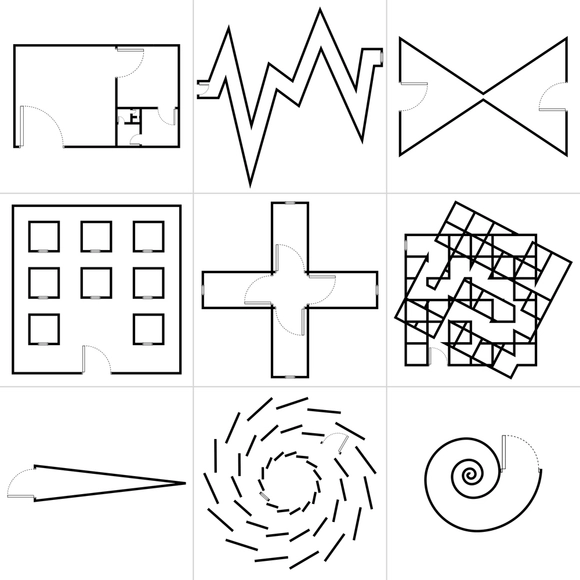
Moradas is a visual-literary project initiated in 2020 by Rafael Baldam, using illustrations based on floor plans and short texts to reflect on domestic space and the act of dwelling. At the beginning of quarantine, the architect and poet began contemplating the domestic sphere, anticipating that it would become a permanent backdrop for the coming months—a reality that indeed materialized and, as of February 2021, still persists.

Artist explores the poetics of dwelling through the deconstruction of domestic floor plans - Imagem 1 de 4Artist explores the poetics of dwelling through the deconstruction of domestic floor plans - Imagem 2 de 4Artist explores the poetics of dwelling through the deconstruction of domestic floor plans - Imagem 3 de 4Artist explores the poetics of dwelling through the deconstruction of domestic floor plans - Imagem 4 de 4Artist explores the poetics of dwelling through the deconstruction of domestic floor plans - More Images+ 21

UFRJ makes over 2,000 free e-books available for download

The Federal University of Rio de Janeiro (UFRJ), through its Library and Information System (SiBI), has conducted a detailed survey of academic publishers across Brazil's leading universities, compiling a list of 2,650 titles available for free download.

First bus converted into a Covid-19 healthcare unit is already in operation in Brazil

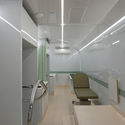
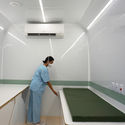
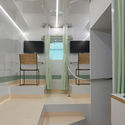
Developed by the Brazilian studio Democratic Architects, the O-SI - Immediate Health Bus (Ônibus de Saúde Imediata) was conceived by designers and doctors focused on creating a modular platform to provide public healthcare services in a modern, safe, and efficient way, based on cutting-edge technology and contemporary concepts of mobile healthcare, sustainable reuse, and social inclusion.

First bus converted into a Covid-19 healthcare unit is already in operation in Brazil - Image 1 of 4First bus converted into a Covid-19 healthcare unit is already in operation in Brazil - Image 2 of 4First bus converted into a Covid-19 healthcare unit is already in operation in Brazil - Image 3 of 4First bus converted into a Covid-19 healthcare unit is already in operation in Brazil - Image 4 of 4First bus converted into a Covid-19 healthcare unit is already in operation in Brazil - More Images+ 5

"Success is the appropriation and use of built space": Interview with Noelia Monteiro

Subscriber Access | 

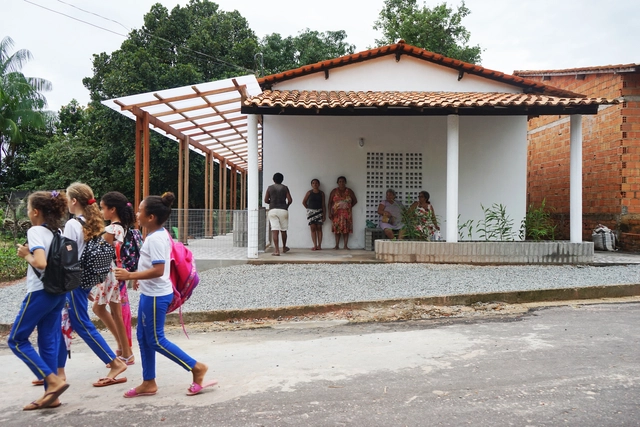
It is easier said than done, and when it comes to the practice of architecture—an activity heavily conditioned by countless external factors—this statement carries even more weight. Few professionals are willing to help solve problems in remote, relatively isolated communities facing social and environmental vulnerabilities. However, this is precisely the focus of Noelia Monteiro, an Argentine architect working in Brazil who, along with Christian Teshirogi, founded Estúdio Flume in 2015.

Developing projects alongside multidisciplinary teams that include professionals from architecture, engineering, social sciences, geology, and anthropology, the architect's approach is, nonetheless, deeply personal. In fact, it requires a significant degree of community engagement, bringing people close to the design process from the very beginning to completion. The results of this practice have been recognized with major national awards, and more recently, ArchDaily selected Noelia for its list of Best New Practices of 2020.

"Success is the appropriation and use of built space": Interview with Noelia Monteiro - Image 1 of 4"Success is the appropriation and use of built space": Interview with Noelia Monteiro - Image 2 of 4"Success is the appropriation and use of built space": Interview with Noelia Monteiro - Image 3 of 4"Success is the appropriation and use of built space": Interview with Noelia Monteiro - Image 4 of 4Success is the appropriation and use of built space: Interview with Noelia Monteiro - More Images+ 11

Artist Criola reclaims the history of São Paulo's Liberdade neighborhood with an urban mural

In celebration of São Paulo's 467th anniversary, street artist Criola gifted the Liberdade neighborhood with a massive mural. Produced in partnership with Instagrafite, the work was funded by a special edition of the Street Art Museum (MAR) and prompts a deep reflection and reclaiming of a long history as a stronghold of Black resistance in the city, starting with the neighborhood's very name.

Urban space and the daily lives of Indigenous peoples in Brazil

Subscriber Access | 

In 2017, Escola da Cidade—through its Seminar on Culture and Contemporary Reality course, then coordinated by Professor José Guilherme Pereira—welcomed anthropologist and PhD in Social Sciences Manuela Carneiro da Cunha to discuss the history, spatialization, and daily life of Indigenous peoples in Brazil, highlighting issues from not only a cultural standpoint, but also a legal and environmental one.

Iphan announces winners of the 2020 Rodrigo Melo Franco de Andrade Award

Iphan has announced the winners of the 33rd edition of the Rodrigo Melo Franco de Andrade Award (2020 Rodrigo Award). The 12 selected initiatives will each receive R$ 20,000 in funding from the National Institute of Historic and Artistic Heritage, while five others were recognized with honorable mentions. Organized by the institute, the awards program has been held since 1987 and is the largest in the field of Cultural Heritage in the country, recognizing exemplary initiatives of excellence.

Nadia Somekh is the first woman elected president of CAU/BR

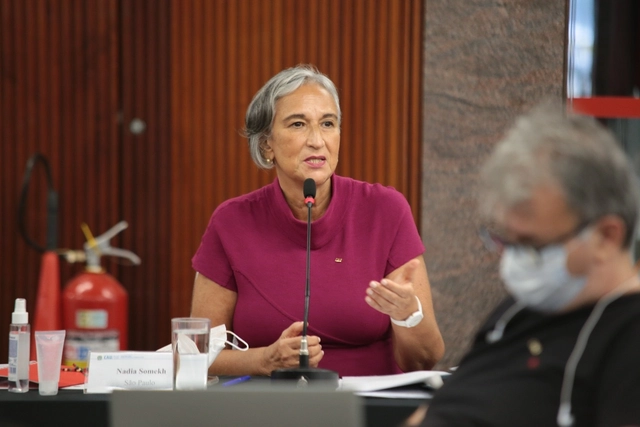
Architect and urban planner Nadia Somekh, from São Paulo, was elected today as president of the Council of Architecture and Urbanism of Brazil (CAU/BR) for the 2021-2023 term. This is the first time a woman has held the position. The selection was decided by secret ballot among the 28 federal councilors, with Somekh receiving 19 votes. In her management plan, Nadia Somekh states that “the country's current situation and the ongoing threat to representative professional organizations demand a dual approach.”

Designer captures daily life in isolation in an illustrated book

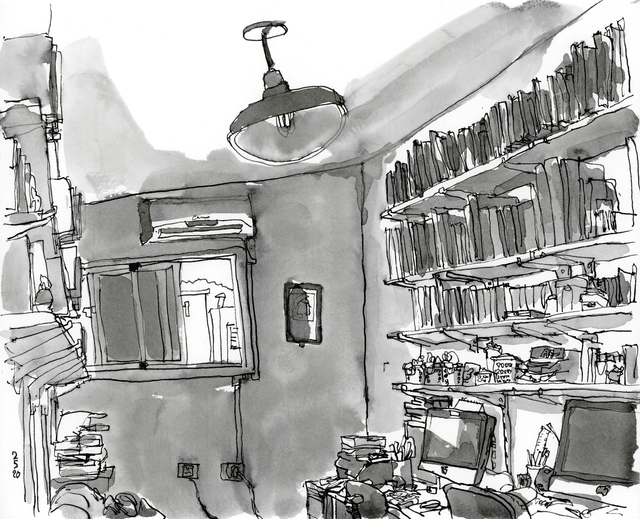
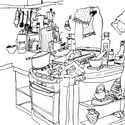
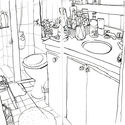
During the first two months of isolation due to Covid-19, designer Ivan Jerônimo accumulated more than forty drawings depicting objects and rooms in his apartment. These are ordinary scenes that were suddenly brought to the forefront during the pandemic.

Designer captures daily life in isolation in an illustrated book - Image 1 of 4Designer captures daily life in isolation in an illustrated book - Image 2 of 4Designer captures daily life in isolation in an illustrated book - Image 3 of 4Designer captures daily life in isolation in an illustrated book - Image 4 of 4Designer captures daily life in isolation in an illustrated book - More Images+ 2

Buraco do Lume in Rio de Janeiro: Between Rescues, Erasures, and Threats

Subscriber Access | 

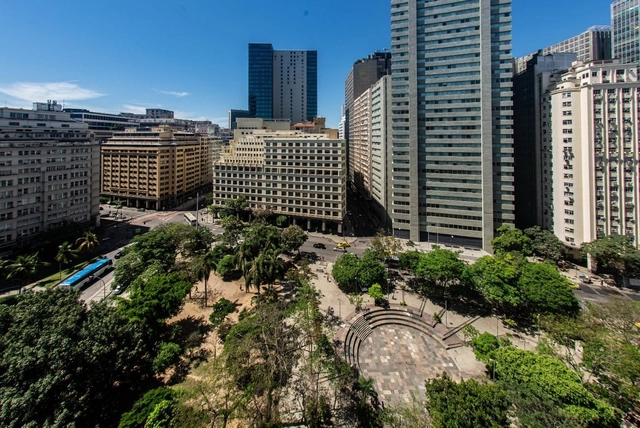
The approval of the controversial draft legislation dubbed the “Lei do Puxadinho” in mid-2020, which relaxed zoning parameters in the city of Rio de Janeiro, sparked widespread debate across various sectors of society—particularly among architects and urban planners, many of whom have strongly criticized the proposal. The debate, however, intensified even further when, under the auspices of this law, a surprise amendment was published in the Official Gazette. This amendment temporarily lifted several restrictions on the Buraco do Lume site, which is adjacent to the square officially named Praça Mário Lago—an important venue for political demonstrations in the city, landmarked by the municipality in 1989 and by the state government in 2019.

Project transforms vacant spaces into urban gardens in Roraima

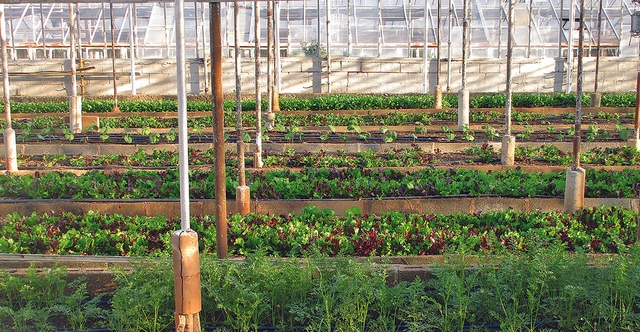
Having a backyard and the willingness to learn how to grow their own food are what unite low-income families participating in an innovative project in Roraima. This is "Sustainable Backyards" (Quintais Sustentáveis), an initiative by Embrapa in partnership with Lar Fabiano de Cristo (Casa de Timóteo unit) and funded by CNPq, which seeks to stimulate the production and consumption of vegetables, fruits, and medicinal plants in backyards across Boa Vista.

Launched in 2018, the project's pillars include sustainable agroecological production, food and nutritional security, income generation, and the social and productive inclusion of vulnerable populations.

Project transforms vacant spaces into urban gardens in Roraima - Imagen 1 de 4Project transforms vacant spaces into urban gardens in Roraima - Imagen 2 de 4Project transforms vacant spaces into urban gardens in Roraima - Imagen 3 de 4Project transforms vacant spaces into urban gardens in Roraima - Imagen 4 de 4Project transforms vacant spaces into urban gardens in Roraima - More Images

The Best Architecture Interviews of 2020

One of the most rewarding aspects of working with architecture publications is the possibility of meeting and becoming closer to the experts that are effectively transforming the discipline, either with built projects, research, experiments, theories, or even with works in other fields. In this sense, interviews perform a special role among all the different types of content published every day by ArchDaily, as we can get a closer insight into what some of the most distinguished and promising people have to say about the present and the future of architecture and cities.

With more than two hundred interviews published in our platforms, in English, Spanish, Portuguese, and Chinese, conducted in various formats – video recordings, transcripts, interviews by e-mail, video calls, or even podcasts –, it's safe to say that 2020 was a year of intensive learning during which we have become, paradoxically, closer than ever before to an inspiring group of architecture professionals.

"Brazil is Synonymous with Inequality": Aerial Images Reveal Wealth Gap in Brazilian Cities

Subscriber Access | 

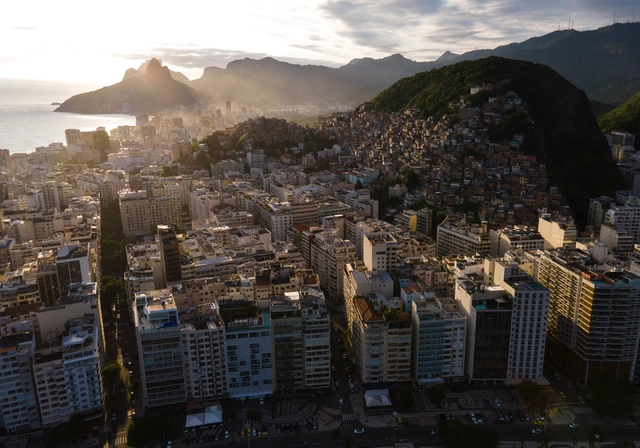
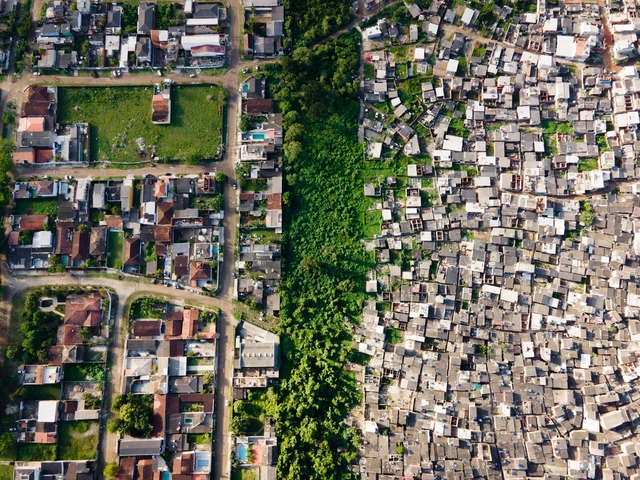
"Brazil is Synonymous with Inequality": Aerial Images Reveal Wealth Gap in Brazilian Cities - Imagem 1 de 4"Brazil is Synonymous with Inequality": Aerial Images Reveal Wealth Gap in Brazilian Cities - Imagem 2 de 4"Brazil is Synonymous with Inequality": Aerial Images Reveal Wealth Gap in Brazilian Cities - Imagem 3 de 4"Brazil is Synonymous with Inequality": Aerial Images Reveal Wealth Gap in Brazilian Cities - Imagem 4 de 4Brazil is Synonymous with Inequality: Aerial Images Reveal Wealth Gap in Brazilian Cities - More Images+ 7

Most people are familiar with the concept of social and economic inequality, but although it affects a large part of the world's population, it is still somewhat abstract for many people. Photographer Johnny Miller intends to make it visible through his project Unequal Scenes, capturing images of spatial inequality from a very revealing perspective: aerial imagery.

The project started in South Africa, a country that is socially and spatially marked by apartheid, and now has been taken to Brazil to document scenarios in which extreme poverty and wealth coexist within a few meters, showing how distance is not only a measurement of physical length but can also imply more complex aspects, deeply rooted in our society.

Do more walkable neighborhoods promote social mobility?

Subscriber Access | 

In a revealing use of big data, Raj Chetty and his colleagues at the Equality of Opportunity Project used anonymous tax records to track the childhood-to-adulthood income of individuals who grew up in the United States. The results show that the neighborhoods and metropolitan areas where these individuals were raised have a major impact on their lifelong economic prospects.

Surprisingly, children from low-income families who grow up in certain neighborhoods—particularly those with mixed-income demographics and lower levels of racial segregation—fare much better economically.