Romullo Baratto is an architect with a PhD from FAUUSP and Managing Editor of ArchDaily. He previously coordinated the editorial team of the 11th São Paulo Architecture Biennial and served as Managing Editor of ArchDaily Brasil, where he led the platform to win the FNA Award—the first time the honor was granted to a media outlet. He collaborated on the editing of the book "Concrete Jungle", published by gestalten, and has curated architecture exhibitions in Brazil, Chile, Denmark, and Italy, as well as delivered lectures and moderated debates in Spain, the United States, and Portugal. His doctoral thesis investigates the urban landscapes of São Paulo through cinema. His work spans academic research and editorial practice, communicating architecture through texts, interviews, lectures, curatorship, and photography. Follow him on Instagram @romullobf.
No País dos Arquitectos is a podcast created by Sara Nunes, who also runs the architectural film production company Building Pictures. The podcast aims to profile the professionals, projects, and stories behind contemporary Portuguese architecture. With just over 10 million inhabitants, Portugal is a highly compelling country in this professional field, with an architectural output that punches far above its demographic or territorial weight.
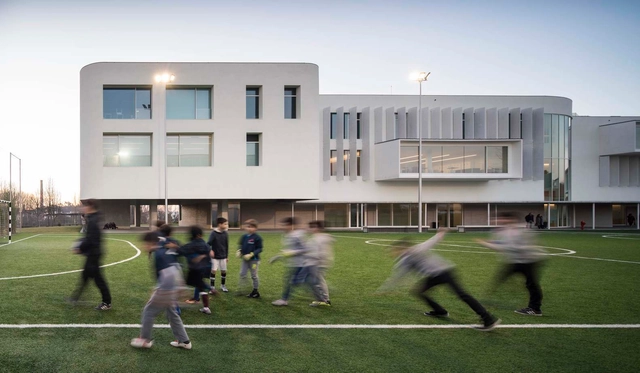
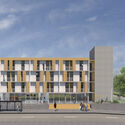
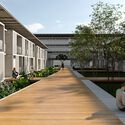
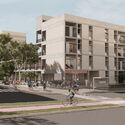
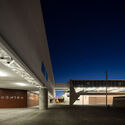
In this week's episode, Sara talks with architect Paula Santos about the Colégio Efanor, Campus II project, located in Senhor da Hora. Listen to the interview and read the transcript of the conversation below:
Registration for the 8th Instituto Tomie Ohtake AkzoNobel Architecture Prize has been extended until September 9. Submissions can be made online and free of charge on the award website.
The initiative—aimed at Brazilian or foreign architects who have lived in Brazil for at least two years and present projects built over the last ten years—continues to map contemporary architectural production, highlighting significant projects in the current Brazilian landscape. Commitment to the site and sustainability, as well as design and constructive inventiveness, are key aspects of the evaluation process.
The Institute for Advanced Architecture of Catalonia (IAAC) has launched a scholarship for Brazilian students up to 28 years old. Created in partnership with the Brazilian consulting firm Quanta Consultoria and the IAAC Redes Platform, the Jaime Lerner Scholarship honors the influential urban planner who passed away in May of this year, and covers all tuition costs for the Online Master in Cities (MOeC): Proximity Urbanism, for the 2021-22 academic year.
Following a one-year hiatus imposed by the coronavirus pandemic, Open House Porto (OHP) returns in an adapted format that aims to celebrate the relationship between citizens and public space. On July 3 and 4, the public will be able to visit and explore 16 spaces in Matosinhos, Porto, Vila Nova de Gaia, and, for the first time, Maia, which is making its debut in the event.
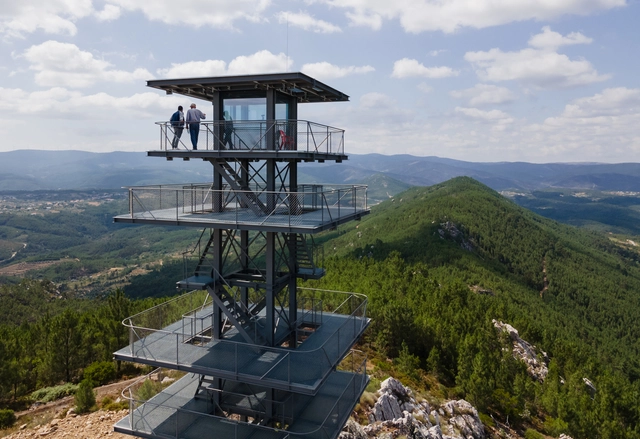
Álvaro Siza's latest project in Portugal is a 16-meter high watchtower built with a lightweight steel structure featuring photovoltaic panels on the roof. This project is very different from most of Siza's works, both in terms of scale and materials. The watchtower is located in Serra das Talhadas, in the municipality of Proença-a-Nova, and is part of a larger project comprising several structures dedicated to ecotourism in the area, including the still unbuilt Miradouro do Zebro.
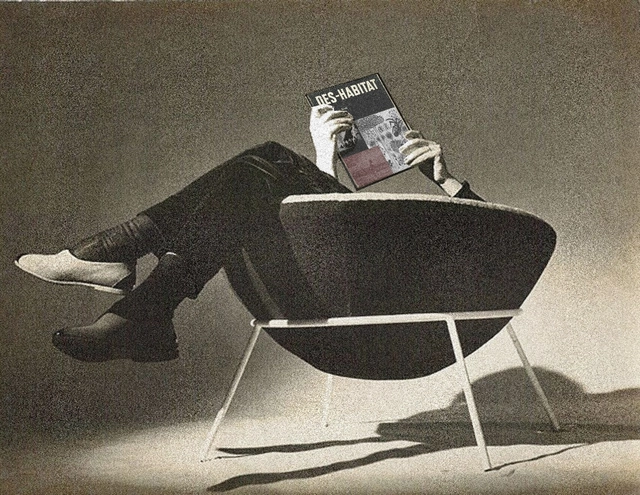
Collage showing Lina Bo Bardi in the Bowl chair holding a copy of "Des-Habitat." Courtesy of Paulo Tavares
Between the 1950s and 1960s, Lina Bo Bardi was the editor of Habitat magazine, known for publishing articles and research on the cultural and artistic expressions of Indigenous peoples. The publication, which remained in circulation until 1965, was a pioneer of the synthesis between universal modernism and local primitivism—a central element in the mythology of Brazilian modernity. Nearly six decades later, architect and curator Paulo Tavares undertakes a sort of "un-editing" of the magazine, putting this notion of synthesis into perspective in light of contemporary debates exploring the intersection of modernity and colonialism. Recently published by n-1 edições, Des-Habitat utilizes graphic and editorial devices to create a near-facsimile of the original publication led by Bo Bardi, overlaying a new layer—critical, revisionist, and necessary—onto a discussion that continues to reveal new ramifications.
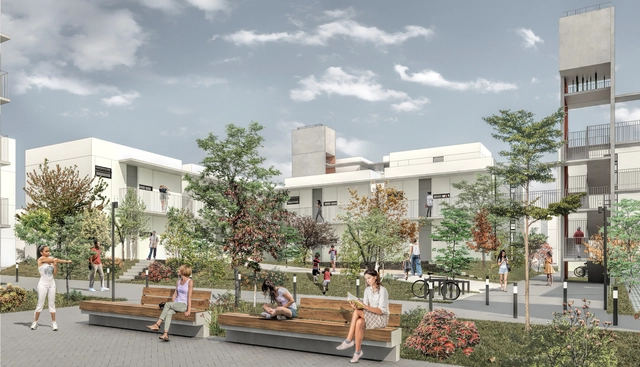
Primeiro lugar: Síntese Arquitetura. Image Cortesia de Secretaria Nacional de Habitação/MDR e Agência Alemã de Cooperação Internacional – Deutsche Gesellschaft für Internationale Zusammenarbeit GmbH (GIZ)
To bring together innovative, sustainable social housing architectural designs that reduce energy consumption. This was the goal of the National Competition of Architectural Ideas for Energy Efficiency in Social Housing, organized by the German government cooperation agency Deutsche Gesellschaft für Internationale Zusammenarbeit (GIZ) GmbH.
No País dos Arquitectos is a podcast created by Sara Nunes, who also runs the architectural film production company Building Pictures. The podcast aims to showcase the professionals, projects, and stories behind landmark contemporary Portuguese architecture. With just over 10 million inhabitants, Portugal is a highly compelling country in this professional field, and its architectural output far exceeds what its population or territorial scale would suggest.
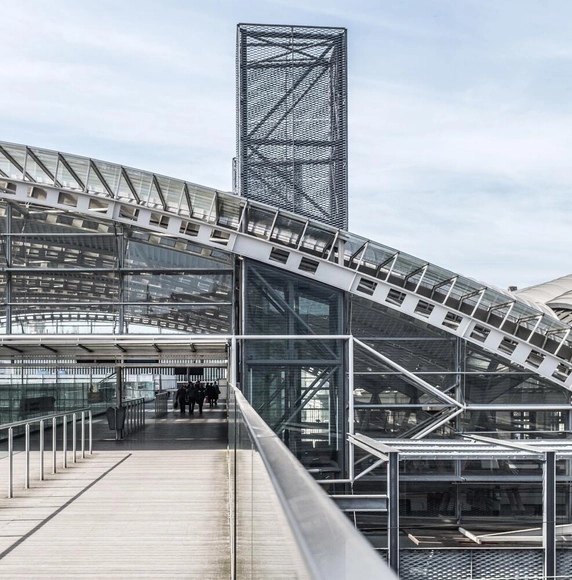
Leuven Station, Belgium. Photo by Bernard Hermant, via Unsplash
The Brazilian Center for Steel Construction (CBCA) has launched its 2021 call for proposals for its Undergraduate Research Scholarship. The nationwide selection process is open to undergraduate students in architecture and civil engineering, who must be supported by an advising professor from the same higher education institution.
No País dos Arquitectos é um podcast criado por Sara Nunes, responsável também pela produtora de filmes de arquitetura Building Pictures, que tem como objetivo conhecer os profissionais, os projetos e as histórias por trás da arquitetura portuguesa contemporânea de referência. Com pouco mais de 10 milhões de habitantes, Portugal é um país muito instigante em relação a este campo profissional, e sua produção arquitetônica não faz jus à escala populacional ou territorial.
No episódio desta semana, Sara conversa com os arquitetos Cristina Veríssimo e Diogo Burnay sobre o projeto da Residência Universitária do campus da Ajuda na Universidade de Lisboa. Ouça a entrevista e leia a transcrição da conversa, a seguir:
The 13th São Paulo International Architecture Biennale and the Vitruvius portal have launched Preâmbulo, an open call for articles, essays, drawings, and projects reflecting on the central theme of the 13th Biennale—Reconstruction—and its five thematic axes: democracy, bodies, memory, information, and ecology. Submissions are open until June 30.
Conceived by IABsp, the 13th edition of the Biennale, scheduled for 2022, uses the idea of Reconstruction to spark debates addressing the challenges arising from the crisis caused by the Covid-19 pandemic. It considers reflections and proposals pointing toward innovative social practices and urban-architectural arrangements, as well as the possibilities that emerge in this new scenario.
Yona Friedman (1923-2020) at the Museum Without a Building [Musée sans Bâtiment], held at the CNEAI = Centre National Édition Art Image, Pantin, France (2018). Courtesy
The Memorial da Resistência de São Paulo, an institution of the State Secretariat of Culture, opens the biographical exhibition “Yona Friedman: Democracy” on Saturday, June 26, 2021. Curated by Ana Pato, the Memorial's coordinator, the exhibition presents a selection of works by the French-Hungarian architect, artist, sociologist, and anthropologist Yona Friedman (1923-2020), featuring animations, manuals developed with the UN, installations inside and outside the building, urban interventions in partnership with collectives from the central region, as well as public events in partnership with Sesc Bom Retiro.
Applications are now open for the National Wood Architecture Award, PNAM’21. Submissions for this prestigious Portuguese architecture award are open until June 30, 2021. Held biennially, PNAM aims to encourage and promote Portuguese forest reserves through innovation, enhancement, circularity, and the promotion and use of wood and wood-derived products in buildings.
Portuguese architecture firm Sastudio, in partnership with Icelandic studio Huldajons and engineering firm Exa Nordic, has won the international design competition for a kindergarten in Garðabær, Iceland. Organized by the city municipality, the competition schedules the construction of the winning design for completion by 2022.
This is the second collaboration between the two offices, which were founded by Tiago Sá and Hulda Jóns, both of whom worked at Bjarke Ingels Group before establishing their own practices. Their first collaboration was also for a kindergarten competition, with their proposal being acquired by the Icelandic capital, Reykjavik. Discover the winning project below, along with the project description provided by the architects:
A capsule-based transportation system that runs on magnetic propulsion, moving people and cargo at speeds of up to 1,200 km/h using renewable energy, could soon become a reality in Brazil. This futuristic concept is being brought to the country by Hyperloop Transportation Technologies (HyperloopTT), which develops and licenses the Hyperloop—the urban mobility technology originally conceived by Tesla entrepreneur Elon Musk.
Resembling a wingless aircraft without turbines, the Hyperloop has a capacity of up to 50 passengers and operates in a low-pressure environment, allowing it to travel at high speeds with virtually zero friction.
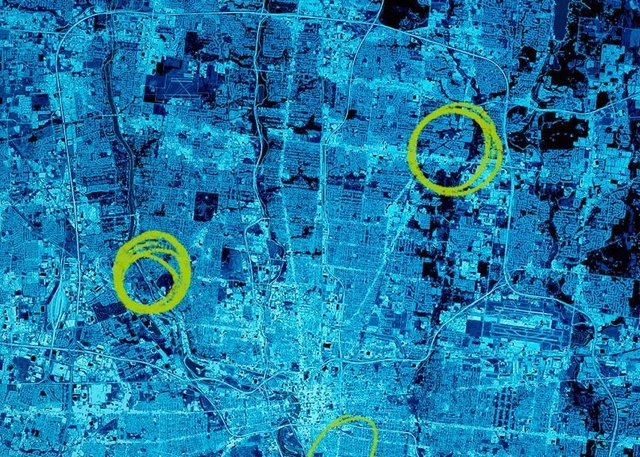
“If you gave me your shoe, I could tell you with about 90% accuracy the city in the world from which you came,” says Christopher Mason, Ph.D., a professor at Weill Cornell Medicine in New York, NY, co-author of the first global atlas of urban microorganisms. The study, carried out by the international Metagenomics and Metadesign of Subways and Urban Biomes (MetaSUB) consortium, creates a map of the microbiome of some of the largest cities in the world.
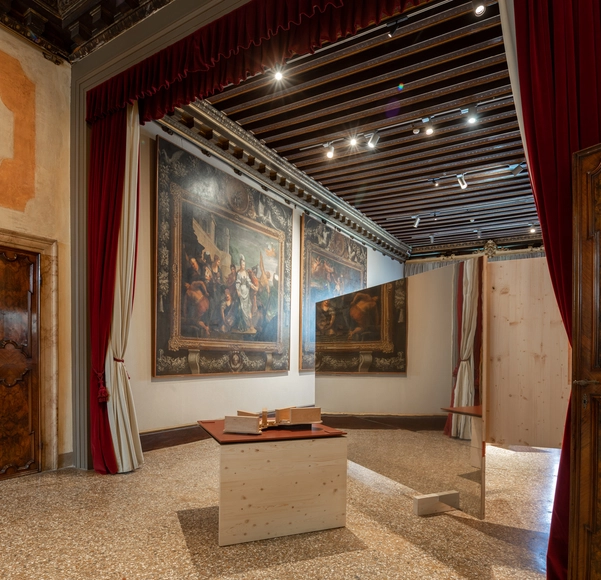
In Conflict, the Portuguese Official Representation at the 17th Architecture International Exhibition La Biennale di Venezia, 2021, is co-curated by Carlos Azevedo, João Crisóstomo, and Luís Sobral of depA architects, and Miguel Santos. The exhibition addresses public spaces as arenas of conflict, understood as the action of opposing forces translated as dissension. In Conflict responds directly to the question 'How will we live together?' posed by Hashim Sarkis, curator of the Biennale Architettura, and is based on seven architectural processes involving collective dwellings that were the subjects of broad media coverage and public involvement.
Known worldwide for pushing the limits of formal experimentation with reinforced concrete, Oscar Niemeyer relied in many of his works on the indispensable collaboration of a civil engineer as inventive and daring as the architect himself: Recife-born Joaquim Moreira Cardozo, who graduated in civil engineering in 1930 from the School of Engineering of Pernambuco, today part of the Federal University of Pernambuco (UFPE).
Responsible for the design of the Alberto Torres Rural School in 1936 – a project that already showed synergy with modern architecture at the time – Cardozo met Niemeyer while working at the National Historical and Artistic Heritage Service (SPHAN) in Rio de Janeiro. During this time, he developed the structural design for the Pampulha Ensemble in Belo Horizonte, inaugurated in 1943. This was the initial collaboration of a partnership that would last 30 years and find its most prolific period in the construction of Brasília.