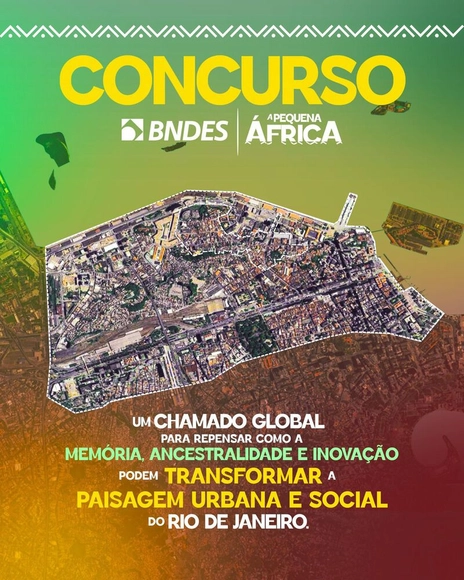
Pequena África is a space of singular significance, where culture, memory, and resistance intertwine along every path and within every evolving narrative. This territory has established itself as a bastion of Afro-Brazilian heritage, serving as a benchmark in the construction of Brazilian identity. To enhance its visibility, the Brazilian Development Bank (BNDES) is launching the BNDES Pequena África Competition, open to national and international participants. This represents a historic opportunity for recognition and reparation, ensuring that the memory of the formation of the Brazilian people is preserved and celebrated.
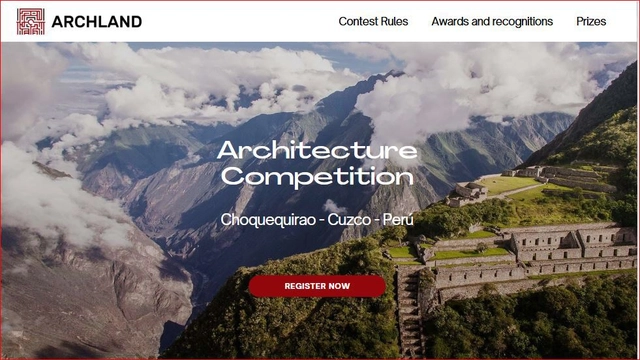
ARCHLAND, a firm specializing in the organization of architecture competitions, is honored to present its most significant competition to date. This initiative will enable the Choquequirao Citadel to achieve World Heritage status and be recognized as Peru's second archaeological wonder, following Machu Picchu, within the tourism circuit. This circuit will be part of the proposal and included through the competition itself, promoted to reach over 5,000 architects worldwide to address and promote this remarkable site.
Collage of digitally manipulated images. Full image credits for the collage are available on the congress website.
The UIA 2026 Barcelona World Congress of Architects (UIA2026BCN) is launching the International Emerging Workshop, a special congress format designed for students and young professionals to participate in a laboratory led by twelve renowned emerging architecture firms.
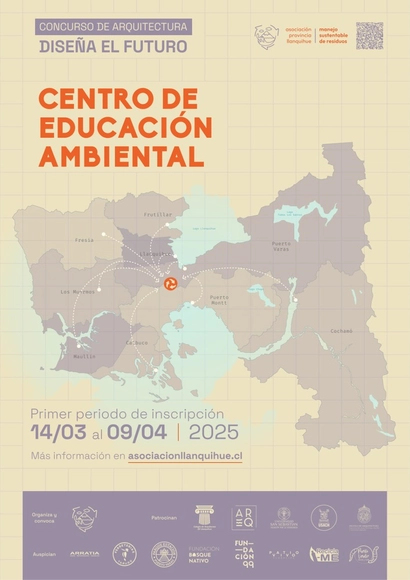
The architecture competition to design the future Environmental Education Center at the La Laja landfill seeks to propose a space that promotes understanding the landfill as an educational site for human adaptation toward responsible consumption and a shift in how household solid waste is conceptualized, focusing on reduction, reuse, recycling, and composting.
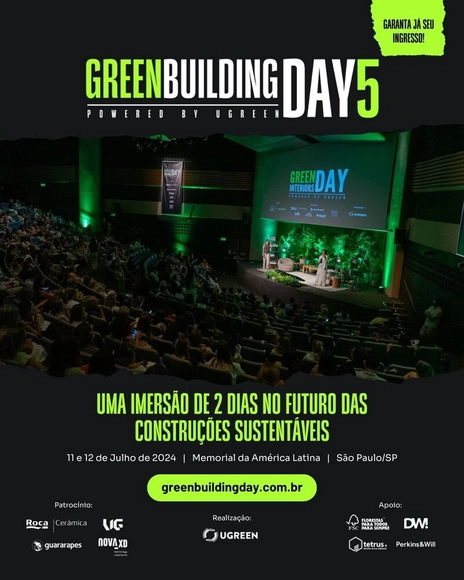
The future of sustainable construction starts here! Green Building Day 5 arrives in São Paulo on July 11th and 12th, 2025, bringing together experts and leaders to discuss innovation and strategies toward a low-carbon economy. Don't miss it!
The event offers a two-day immersion into the future of sustainable construction, gathering global leaders, innovative companies, and industry professionals to discuss practical strategies, high-impact networking, and business opportunities within the sustainable building sector.
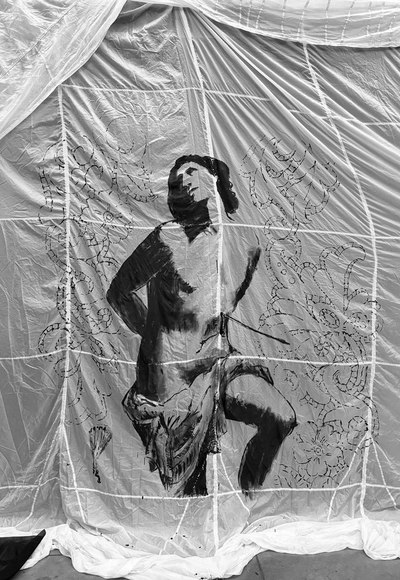
"in Limbo" opens on Thursday, March 13, at 4 PM A solo exhibition by Russian artist Katerina Kovalena presents large-scale installations crafted from parachute fabric at Parque Glória Maria, in Santa Teresa.
"About Painting" opens on May 15 Galeria Patrícia Costa presents a solo exhibition by Alberto Saraiva, featuring paintings in dialogue with the pictorial and metaphysical inquiry
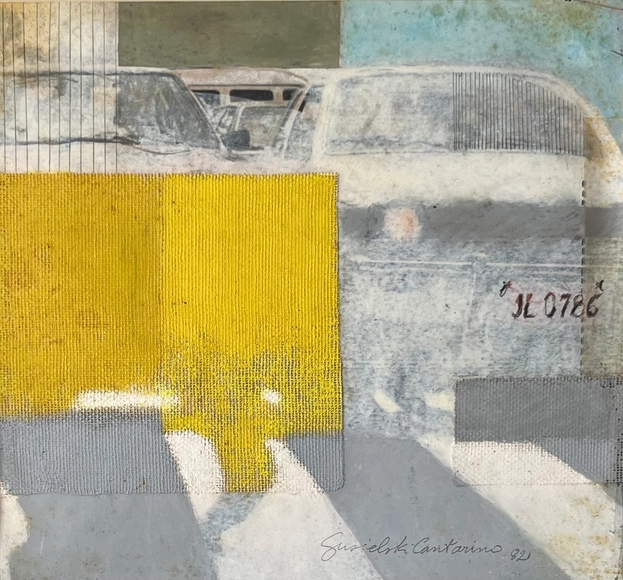
The “FROM TRASH TO TREASURE: Recycling” project returns for its second edition at Galeria Metara. This event, which focuses on sustainability and environmental awareness, will feature an exhibition of works by Susi Sielski Cantarino and Osvaldo Gaia, alongside paintings produced during workshops.
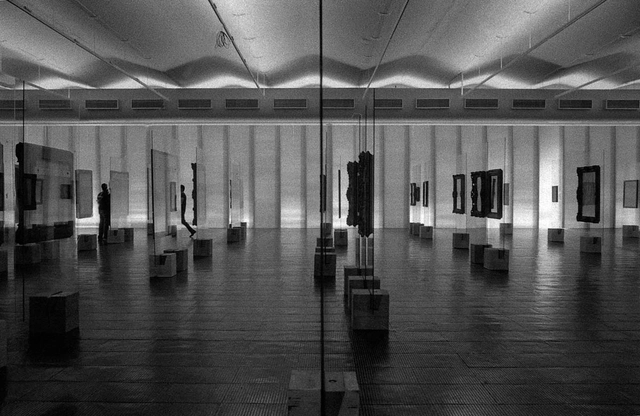
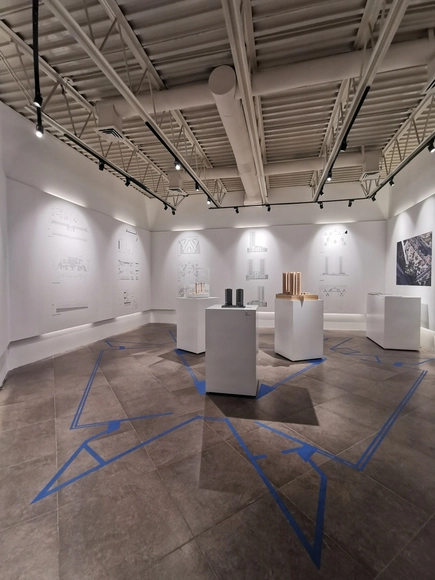
The course investigates the relationship between architecture, exhibition design, and art, analyzing museums as potential territories for experimentation, contestation, and cultural reinvention. By examining case studies such as MoMA in New York, the Centre Pompidou, and the Palais de Tokyo in Paris, the course discusses the "white cube" model and its ties to modern art, in contrast to other spatial and architectural approaches associated with contemporary art.
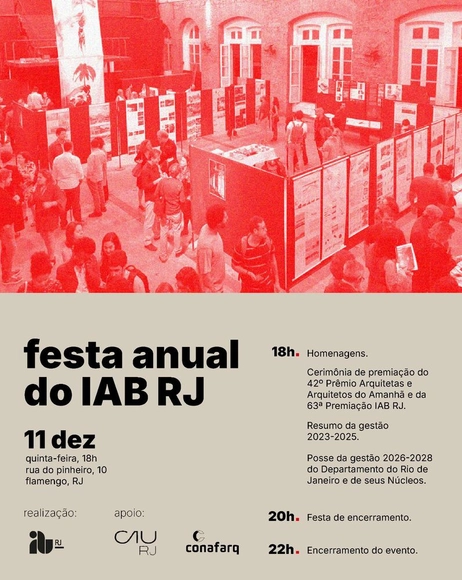
IAB RJ hosts its Annual Party on Thursday, December 11th
The Rio de Janeiro Department of the Institute of Architects of Brazil (IAB RJ) will host its Annual Party on Thursday, December 11, starting at 6:00 PM. The event, which celebrates Architect and Urban Planner Day, will bring together professionals, architecture and urban planning students, and guests at the Department's headquarters in Flamengo.
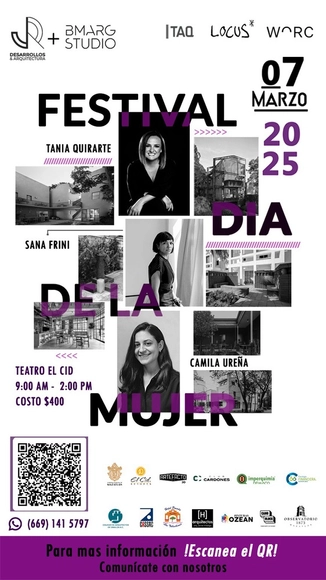
This festival aims to highlight architecture in the northern part of the country and the contributions of women to Mexican architecture through a series of lectures and discussions with invited architects.
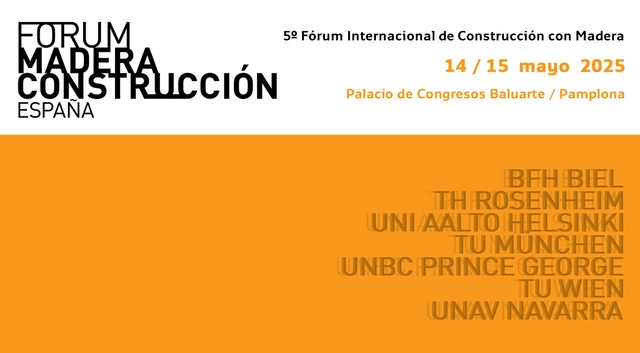
5th International Timber Construction Forum. In its fifth edition, the International Timber Construction Forum (www.forum-maderaconstruccion.com) returns with the goal of raising awareness and exploring the opportunities and possibilities of timber as a sustainable construction alternative.
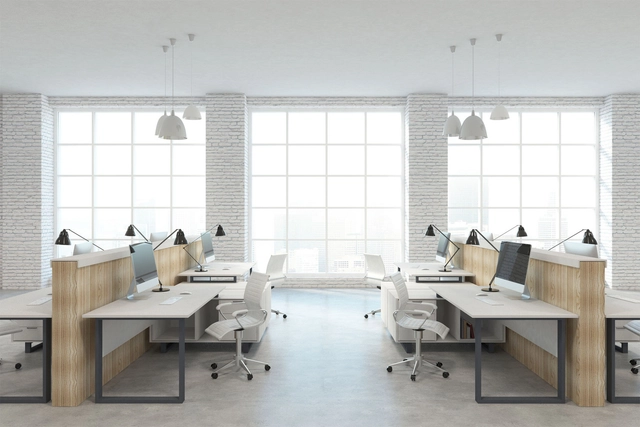
COVID-19 will likely change the way we live and work for an extended period. In this landscape, organizations have been seeking short-, medium-, and long-term solutions to guarantee their staff a safe return to work. Protecting the health of employees exposed to contact in the workplace requires implementing biosecurity strategies, social distancing, occupancy limits, cleaning, and disinfection. This article explores preventive measures recommended by HID Global, based on the application of identification technologies.
With the emergence of COVID-19, we have had to adapt to living differently than we were used to, which has been directly reflected in our working style. Where and how do we work today? A large portion of the workforce has transitioned to working from home, where feasible. While comfortable for many, for others it has meant a radical shift, bringing new spatial and resource requirements. For architects, engineers, builders, and contractors, this challenge has been particularly complex, as much of their work involves handling large, high-cost devices.
In this article, we present 3 innovative solutions that replace the traditional, bulky plotter, allowing us to print in large formats from our own homes.