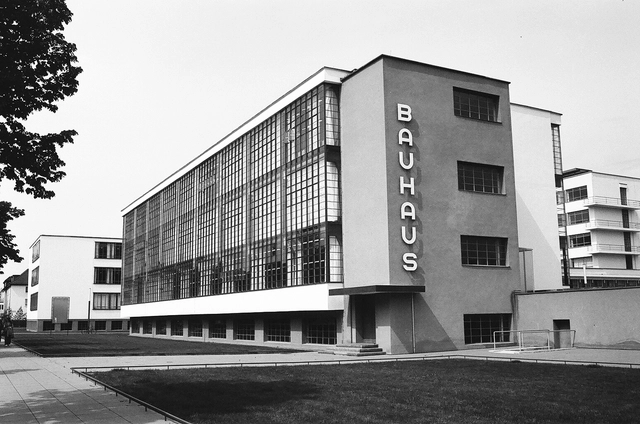
The Bauhaus in Germany was a dynamic think tank and its ideals were spread worldwide. Next year, all of Germany will be celebrating the centenary of the Bauhaus with a colorful festival program. To impress in conversations about next year’s big event, we have compiled 10 surprising facts.
The FIBRA Award rewards teams that incorporate plant-based materials in their buildings while proposing innovative solutions, giving added value to local resources and know-how, and taking into account aesthetic values. The ambition of its initiators is to promote the current dynamics that encourage the use of locally-sourced bio-based materials.
Aarhus School of Architecture proudly announces the sixth joint venture competition: Drawing of the Year 2018. We invite architecture students from all over the world and call for drawings that demonstrate their ability to dream and create drawings that inspire for change.
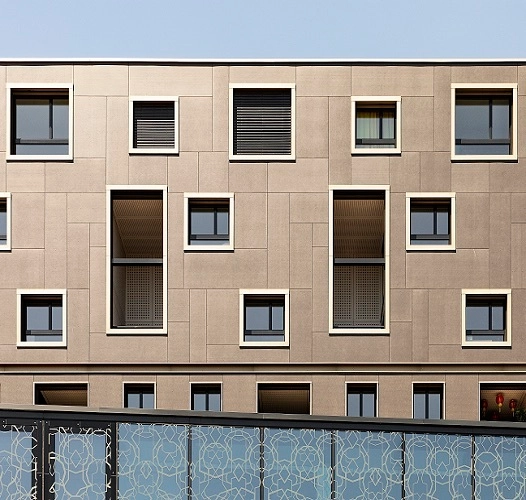
Innovative and sustainable products made of natural raw materials, such as the new large size façade panels Texial, are borne of ingenuity and expertise. The fine surface structure gives the appearance of a fabric and is always one-of-a-kind because it is embossed by hand.
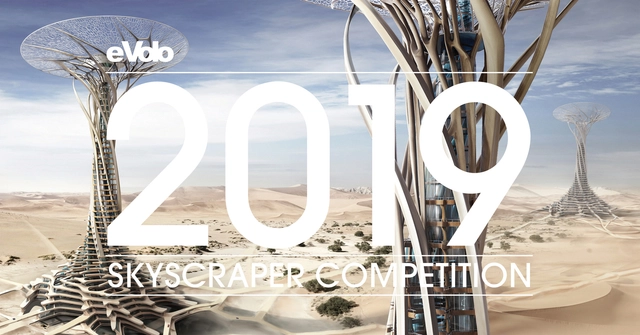
eVolo Magazine is pleased to invite architects, students, engineers, designers, and artists from around the globe to take part in the 2019 Skyscraper Competition. Established in 2006, the annual Skyscraper Competition is one of the world’s most prestigious awards for high-rise architecture. It recognizes outstanding ideas that redefine skyscraper design through the implementation of novel technologies, materials, programs, aesthetics, and spatial organizations along with studies on globalization, flexibility, adaptability, and the digital revolution. It is a forum that examines the relationship between the skyscraper and the natural world, the skyscraper and the community, and the skyscraper and the city.
With Den-City – Urban Landscape, Sergei Tchoban lets us feel the essence of density: façades of the buildings are pushing pedestrians, dangling street cables are covering the view of the sky, and places hum about merging of stone, glass and steel. And suddenly moments of complete silence latch on the viewer, as a thinking break from all the dust and noise.
Image: Bangladesh Friendship Centre. Credit: Aga Khan Trust for Culture / Rajesh Vora.
On September 12, join James Wescoat ASLA, Professor of Landscape Architecture at MIT, for a presentation on the growing importance of landscape architectural design in the Aga Khan Historic Cities Programme, and how it addresses the needs and aspirations of societies across the world.
This seminar will evaluate the health impacts that should be incorporated into transport projects, as well as their implications for public policy in the sector.
Architecture of the Future is the biggest architecture conference in Eastern Europe that brings together authorities, architects, engineers, developers, media – all who seek to change the city through the development of advanced technologies and the creation of iconic projects.
Description via Amazon. Life in Tehran proliferates and thrives in its interiors. When public space is policed and controlled, domestic interiors become art galleries, clubs, cultural centers, factories and offices. Interiors cease to be the exclusive domain for individual life and family matters; homes become the spaces in which new forms of collective life are explored and nurtured, and the battleground for social conflicts and political constituencies. Through its extensive apparatus of drawings, Tehran: Life within Walls presents an archeological inquiry over the politics and the ecologies of the interior spaces of the Iranian Metropolis, from its foundation as the Iranian capital till today. The book also provides an accessible entry point for the study of Tehran and Islamic/Iranian architecture, as well as a methodological experiment for the study of contemporary cities. An appendix of six projects provides an imaginative―yet radically pragmatic―vision for the future of Tehran.
Aquatecture 2018, a competition that challenges to explore innovative designs on water for our aquatic future Come join the movement and define the next big thing on Water!!
Water – an element in nature that life is constantly surrounded by; an element that has given birth to life on Earth and continues to support it. Although we made our shift to land, our bond with water still remains significant as ever; it is an element that is a basic necessity for our survival. The life on Earth is today plagued by adverse climate changes, global warming, the increasing toxic emissions, rising population, and scarce land resources. With various countries, such as Holland , fighting rising water levels for decades and with the current trends, it is now time to brace ourselves against the unseen future and design solutions to cope with the ever-changing community on Planet Earth. Today, the discourse of ‘smart cities’ has overtaken every conversation discussing the future of architecture. It is a glaring question as to how are we going to address the equation between the contrasting aspects of ecological crises and technological advancement for building our futures. Covering 71% of the Earth, it is now time to look at the water again as a harbinger of life in the near future; a place where human life can again thrive in its original glory. Creating living spaces on water will soon become a need to survive as a “What happens in the Arctic, does not stay in the Arctic” Extract - Greenpeace report on melting ice in Arctic paradigms of nature.
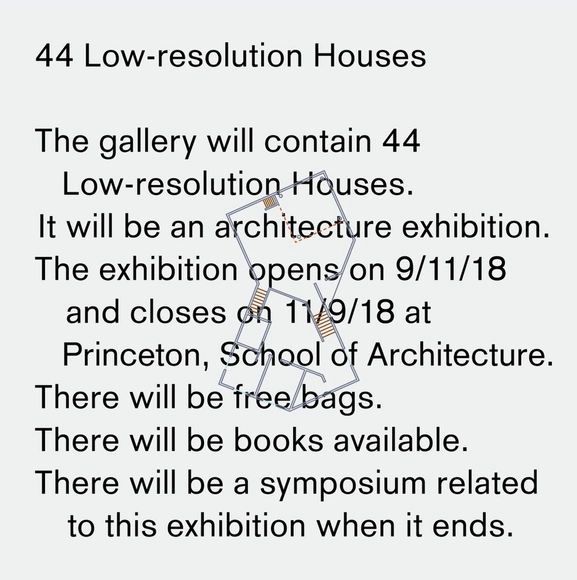
The term Low-resolution precedes Houses in order to make the exhibition-goer think about houses through this double technological and representational-aesthetic lens. All 44 houses exhibited fall into one or more of the following categories of Low-resolution: first, houses that vaguely resemble houses, using familiar house elements, such as pitched roofs, etc.; second, houses that appear to be constructed, in that you can see the construction, joints and the materials, there is a sort of cheap unfinished quality to the work; and third, houses that are composed of basic geometric primitives—squares, circles, triangles—arranged in a non-compositional or abstract manner. By these terms Low-resolution is against high-resolution architectural sophistication, gestural complex curvature, and models of architecture focused on seamlessness....
The housing projects built in Camden in the 1960s and 1970s when Sydney Cook was borough architect are widely regarded as the most important urban housing built in the UK in the past 100 years. Cook recruited some of the brightest talent available in London at the time and the schemes – which included Alexandra Road, Branch Hill, Fleet Road, Highgate New Town and Maiden Lane – set out a model of housing that continues to command interest and admiration from architects to this day.
The city of Seogwipo is holding the “International Design Competition for Landscape of Columnar Jointing Area, Jeju” to improve the stunning scenery of the columnar jointing area near Jungmun Daepo Coast that reveals Jeju’s unique geological features, culture, and natural landscape. It will be conducted in the form of an international competition with 5 to 7 invited teams. Refer bellow for competition outlines.
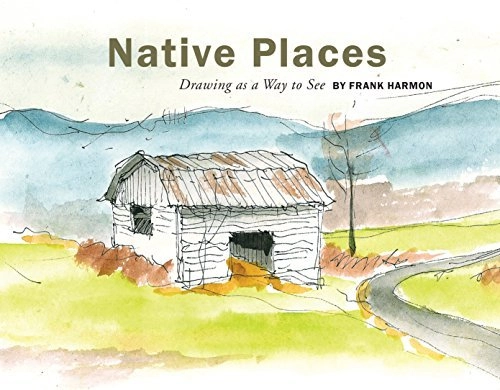
Description via Amazon. Native Places is a collection of sixty-four watercolor sketches paired with mini-essays about architecture, landscape, everyday objects, and nature. The sketches relate the delight found in ordinary places. The short essays, rather than repeat what is visible in the sketch, illustrate ideas and thoughts sparked by that image and offer a fresh interpretation of ordinary things. The goal of Native Places is, in part, to transform the way we see. Through its pages, barns become a guidebook to crops and weather; a country church is redolent of the struggle for civil rights and human dignity; a highway rest stop offers a glimpse of egalitarian society. Also exploring the belief that hand drawing and writing are not obsolete skills, both disciplines offer us the opportunity to develop a natural grace in the way we view the world and take part in it.
The chosen proposals for Exit Architecture: Speculations on the Hereafter will be on display upstate at Art Omi inside Charles B. Beneson Center this winter. (Robert Prochaska/Original Copy)
Humans have been enshrining and memorializing their dead for millennia. While forms and rituals vary widely across cultures and religions, we are nonetheless reacting to similar desires: memorializing a life, coping with loss, religious symbolism, returning to nature, etc.