The work of Andrés Jaque has brought about a radical transformation in how architecture is understood, communicated, and practiced. Its impact is global, though particularly notable within Spanish architecture. Through microhistory, his work reveals architectures seemingly omitted from architectural histories, their archives, and their operational platforms. While grand narratives have focused on works, figures, and events that confirm the relationship between the discipline and power structures, Jaque emphasizes the role of human and non-human agents that operate in daily life and are fundamental to understanding contemporary spatial politics. Mies y la gata Niebla is the first publication to collect the essays of Andrés Jaque and the platform he founded in 2003, Office for Political Innovation, from which he operates.
Over two days, the Museo de la Solidaridad Salvador Allende will bring together diverse voices from the fields of art, literature, poetry, and art history to explore the works of Hugo Rivera-Scott and his fellow artists and poets, centered on the exhibition Ancla 637.
In the latest installment of the Arquitectura de Selección series, the School of Architecture at Universidad Finis Terrae invites you to the lecture "Works Are Processes," to be delivered by architects Rodrigo Sheward and Martín del Solar on Friday, June 7, at 12:30 PM.
The Art History course (covering architecture, photography, painting, music, and cinema) is now in its third module. This month's sessions will explore the relationship between art and psychoanalysis. We have invited researchers in these fields and specialists in the artists, architects, and works to be discussed. The modules are not sequential and may be taken individually.
Aiming to create a network of educators connected to global education trends, the "HUB: Connections for the Future of Education" conference will bring together education professionals on June 7th and 8th at Exc.Rio in the Jockey Club of Rio de Janeiro—a vibrant space for major gatherings with an inspiring view. Now in its second edition, the event has established itself on the annual calendar of major industry meetings and reinforces its identity as part of a movement to transform education through inspiring experiences.
The Architecture Program at the Faculty of Engineering and Architecture of the Universidad Arturo Prat, in collaboration with the Institute of Heritage Studies, has compiled academic, research, and outreach projects focused on showcasing construction techniques applied to timber architecture—a material resource present from the 19th-century nitrate era to the present day.
From June 4 to 7, architecture students at the Universidad de la Costa will present their final semester projects, focusing on urban or architectural design themes such as housing, public space, high-rise buildings, and heritage interventions, among others.
Studying canonical or exemplary buildings brings the researcher and the reader closer to the methods and design processes of the masters who shaped humanity through architecture. This work focuses on the study of the house for Edith Farnsworth, an archetype of the finest modern architecture designed by the German architect Mies van der Rohe in the mid-20th century. The analysis unfolds by tracing—from the initial design schemes to the construction of the house—a series of architectural operations the architect employed to achieve this sublime building.
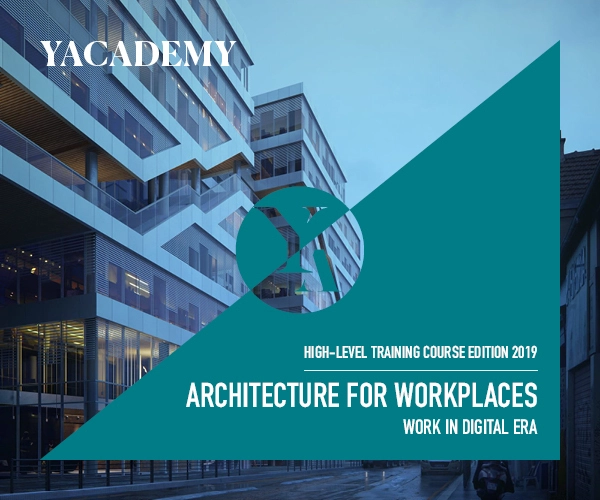
YACademy launches the first edition of Architecture for Workplaces, a high-level training course offering 8 scholarships and internships in internationally-renowned architectural firms.
102 hours of lessons, a 30-hour workshop, lectures and placement opportunities in internationally-renowned architectural firms like UNStudio, Alfonso Femia, L22, Morphosis, 3XN, and Amdl Michele De Lucchi.
In October 2016, the School of Architecture at the Universidad San Sebastián launched a series of inter-school workshops aimed at promoting critical discussion in architecture, using the project as a vector.
Large openings are a popular inclusion in the modern home, but loading and structural movements that cause few problems with regular sized door openings can have very significant consequences in a bigger opening. Your structural engineer will generally be able to ensure your building complies with all statutory regulations and does not fall down, but the movement of and around large openings can often cause unnecessary problems for the builder or the homeowner.
Here, Centor explores three of the most common problems that can arise with large openings and shows how all of them are avoidable if planned for in advance.
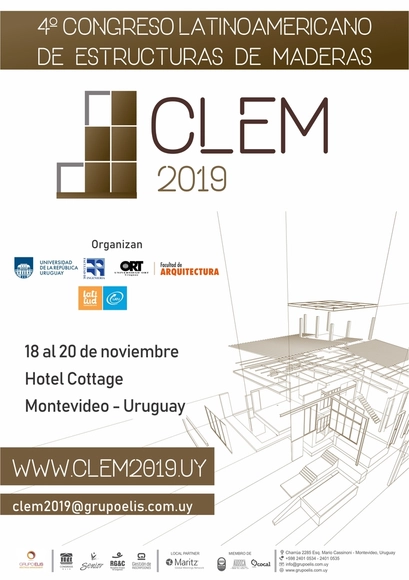
2019 marks the tenth anniversary of the first edition held in Concepción, Chile. That pioneering congress in Latin America brought together academics, professionals, technicians, and companies from the forestry and timber sector, building a solid foundation of critical mass that, over the years, has led to productive exchanges, shared approaches, and the development of strategies among countries in the region. Subsequent editions in 2017 in Junín (Argentina) and 2018 in San Carlos (Brazil) solidified its status as a synergistic forum.
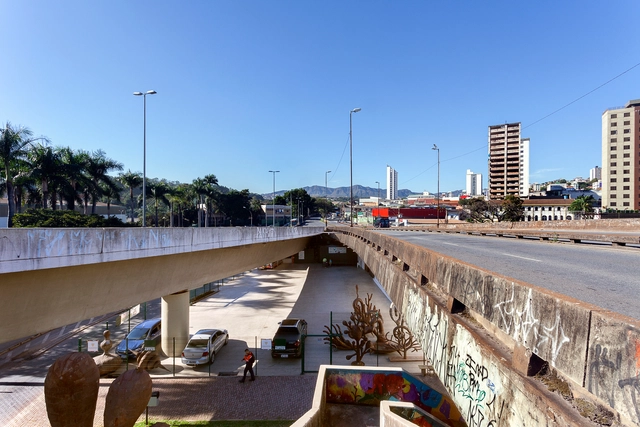
Aiming to shed light on the possibilities of urban voids, the International Open Call for Urban Intervention Projects “Outros Territórios” (Other Territories) was recently held, gathering proposals for ephemeral interventions for the “stilt structures” of buildings in the Buritis neighborhood of Belo Horizonte.
Objective images_Alin Veliz + Nicolás Socías, Workshop V 2018 UTEM
Collective Housing in Chimbarongo: Reflections on a Rural Collective Habitat is an exhibition of academic projects by third-year students from the Architecture program at the Universidad Tecnológica Metropolitana in Chile.