Towards A Region Of Short Distances Call for Entries featuring photos of Seattle's current urban fabric. Image by Lisa Awazu Wellman
Before the Second World War, central Puget Sound cities grew around neighborhood nodes that were naturally limited to walkable radii around transit access. Development after the 1940s prioritized automobile mobility. Automobile dependence became a hallmark of late-20th and early-21st century American life, and the Seattle metro area is no exception.
Cross-pollinating public health initiatives with physical infrastructures
Similar to our #mOOO3 ISO[NATION] competition, we are donating everything we receive to the World Health Organization (WHO) COVID-19 Solidarity Response Fund. This time, we invite you to cross-pollinating public health initiatives with physical infrastructures.
Renowned Architects & Designers are here to generate an inquiry and an architectural/urban expression of the “Open City”, the participative and inclusive city, the life-affirming city. In doing this, the proposal is to create an alternative narrative, a creative challenge to the notions of 'city' that remain purely organizational, narrowly symbolic, exclusionary, and controlling.
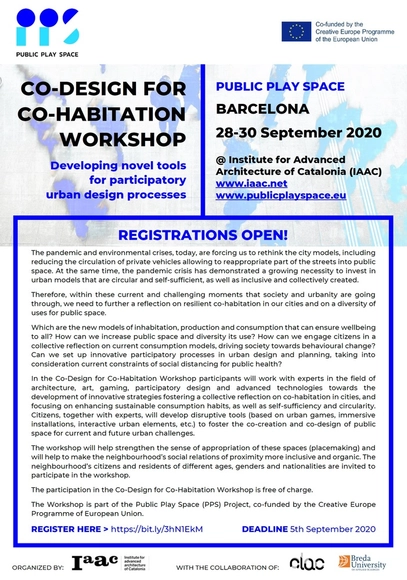
Are you interested in learning more about novel tools for participatory urban design processes? On 28-30 September 2020, PPS will be having its third Creative and Capacity Building Workshop in Barcelona titled ‘Co-Design for Co-Habitation Workshop’, developed by IAAC in collaboration with its partners of BUAS and CLAC.
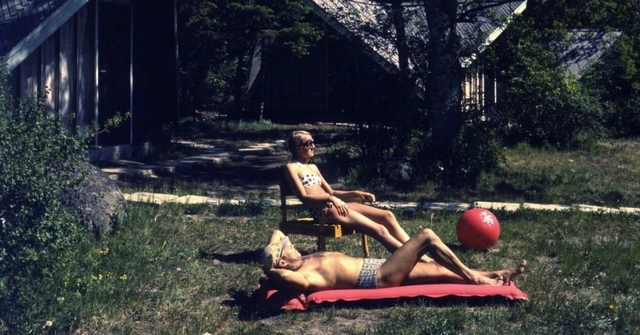
Camping ground near Tallinn, 1960ies. Photo: Estonian National Museum
The first major exhibition on holiday architecture of the Soviet period opens in the Estonian Museum of Architecture. The exhibition gives the first overview of Estonia’s rich Soviet-era holiday and summer cottage architecture heritage – buildings that made holidays accessible for a majority of people in the 20th century. It provides insight into a little-researched topic that explores the system related to holidays and the architectural context governed by regulations and codes, and also introduces outstanding buildings. It allows an important facet of Soviet life to be investigated – the expressive meeting point between institutionalized and individualized worlds.
Videos
Beyond COVID19 Open Call Poster. Registration: https://beyondcovid19-opencall.org/main
What is the question to be asked now? In the crisis from living environment that we called earth, architecture and city are facing due to COVID19, What is To be Asked Platform_WTA Platform is set up, to reflect and gather wisdom from professionals, researchers and citizens globally.
The Faculty of Architecture and Design at the Universidad de los Andes is pleased to invite you to the third virtual meeting of the "Señales del futuro" (Signals of the Future) series on August 27 at 4:00 pm Colombia time (UTC/GMT -5 hours).
Description via Amazon. Good buildings require an understanding of the principles of structure, light, space, and material, but great buildings require an understanding of people. The most successful inspire through the interactions and connections made within them.
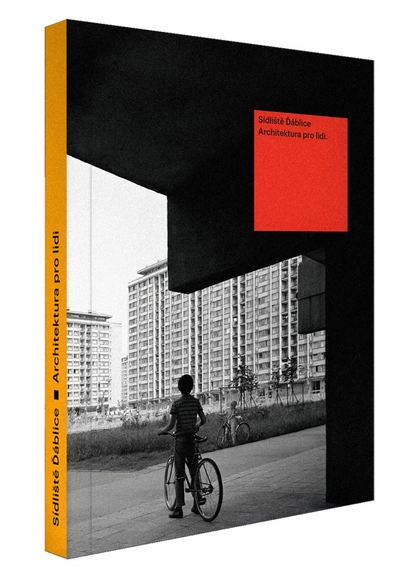
Ďáblice Housing Estate: Architecture for the people
The book The Ďáblice Housing Estate: Architecture for the People is dedicated to one of the most successful housing estates in the Czech Republic, lying in the northern section of Prague near the hill of Ládví and the Ďáblice Forest.
The Colegio de Arquitectos de Chile is celebrating another anniversary with a series of free, entirely online activities. The milestone began on Tuesday, August 4, marking 78 years since the enactment of Law 7.211, which established the Colegio de Arquitectos de Chile in 1942 during the administration of President Carlos Ibáñez del Campo, and signaled the start of Architecture Month in Chile.
This year, the way we inhabit our cities and homes has undergone a radical shift due to the pandemic. Diseases, plagues, wars, and catastrophes have forced us to reorganize our cities and create new systems and typologies. Similarly, this pandemic has prompted us to question how we work, study, rest, and inhabit. WAUM 2020 will reflect on potential scenarios through interventions that allow us to "repair the current city" based on three visions: the city of delights, the distributed city, and the healthy city. Each participating group, composed of students from different universities and guided by a faculty team, will adopt one of these three visions to propose an artifact, system, building, or structure that functions as a "repairing" prototype—one that is non-site-specific yet applicable to various situations.
Safety and design are not mutually exclusive - especially when you choose EGGER products with certified antibacterial surface property. The wood-based materials manufacturer makes it easy for architects and fabricators in their projects with high hygiene requirements: the antibacterial property is included in products with the proven EGGER decor and material combination.
The Municipal Secretariat of Culture, through the Department of Historical Heritage (DPH), is hosting the 15th Heritage Appreciation Week. On August 12, 13, and 14, three online sessions will explore the theme "Our City, Our Memories." The free broadcast will be available on the DPH YouTube and Facebook channels.
Where is the teaching of Architecture and Urbanism heading in the contemporary era, in light of the global transformations driven by information and communication technologies?
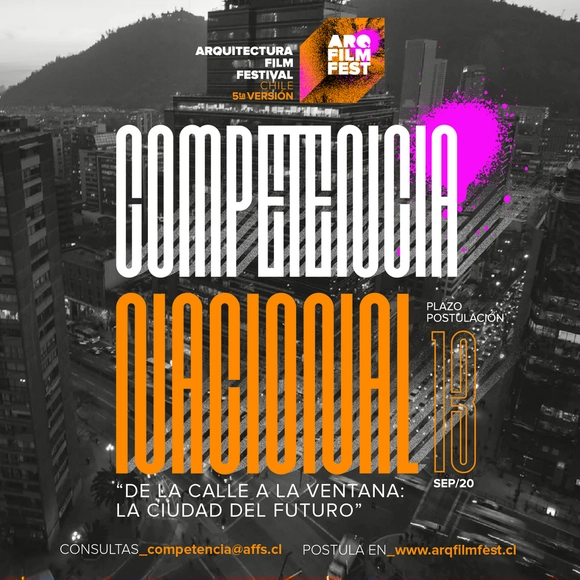
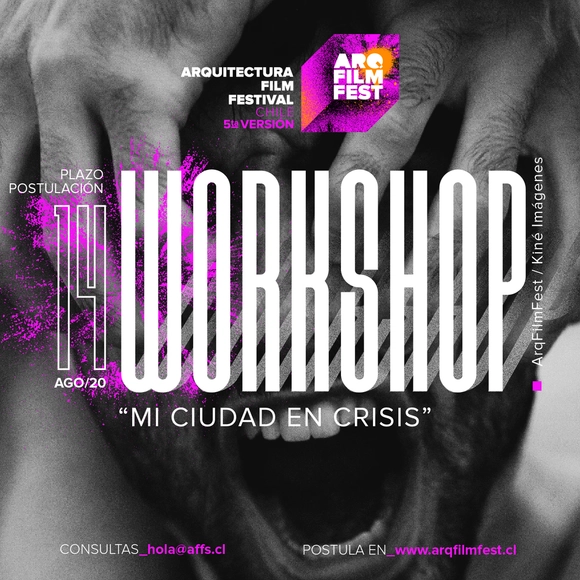
Approaching its tenth anniversary, the Arquitectura Film Festival Chile (ArqFilmFest) continues its mission to reflect the urban environment where most of our lives unfold through the lens of cinema. In its 5th edition, titled “FUTURE CITIES: And what comes after the crisis?”, this concept takes on even greater significance in light of the powerful events that have reshaped our cities over the past year.
This Wednesday, August 12, the talk "Urban Challenges Amid the Water Crisis" will be held, organized by the Technology and Sustainability and Energy Committees of the Colegio de Arquitectos de Chile.
As a city develops, it constructs its own physical and social geography. Consequently, each sector or "neighborhood" develops its own way of inhabiting space, and the combination of these modes forms the city's identity.
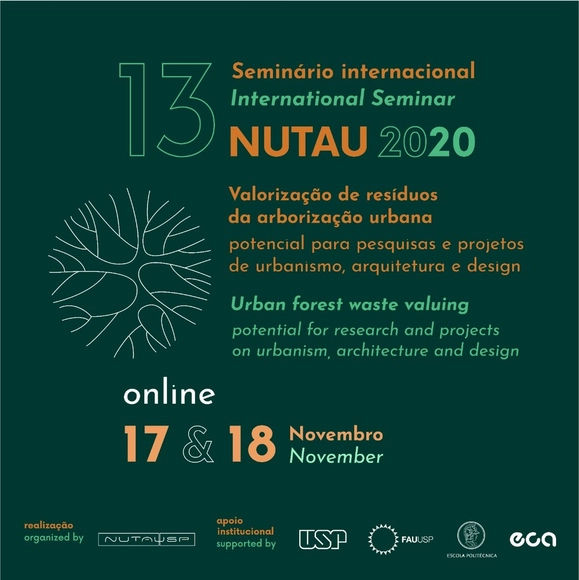
NUTAU 2020 promotional material. Credit/art: Carla Bartholomeu and Caio Dutra Profírio de Souza
This year, the 13th International NUTAU 2020 Seminar, scheduled for November, will be held entirely online. The central theme, “Valorization of Urban Forestry Waste,” seeks to discuss its potential for research and projects within its fields of activity.