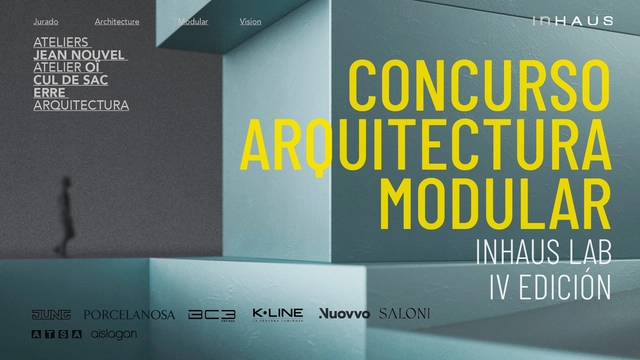
Registration is now open for the 4th inHAUS International Architecture Competition: Design Your Modular Home.
Registration is now open for the 4th inHAUS International Architecture Competition: Design Your Modular Home.

Affective Ecologies is an independent learning environment for observing and experiencing the affective realities that drive us in relation to design and contemporary ecology.
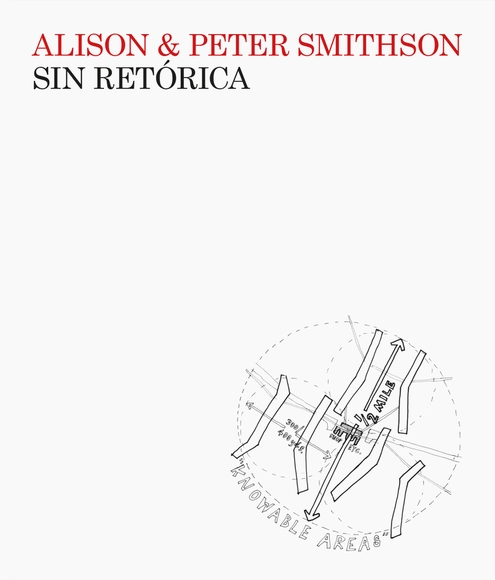
Sin retórica (Without Rhetoric) compiles the findings of twenty years of research by the British architectural duo Alison & Peter Smithson, offering the reader a direct, unadorned perspective—"without rhetoric," in short—on their interests and obsessions: New Brutalism, British pop culture, the current state of architecture, the role of advertising and media in the field, their fascination with the work of Mies van der Rohe, the use of repetition, and Greek and Japanese architecture.

Sanctuary features a series of eighteen recent projects from the award-winning firm de Reus Architects. As a follow-up to Tropical Experience, de Reus Architects continues to add inspired, carefully crafted, timeless, and site-appropriate design to its growing body of work. Essays by Mark de Reus and Joseph Giovannini reveal the continued search that is inherent in design and the relentless effort to reveal how sprit of place contributes to design thinking. Each project is introduced with spectacular exterior and interior photography and gives the reader an in-depth look into de Reus Architects’ design thinking. With select projects from Hawaii, Mexico, and the Pacific Northwest, Sanctuary explores a wide range of buildings showcasing de Reus Architects’ timeless and well-executed architecture.
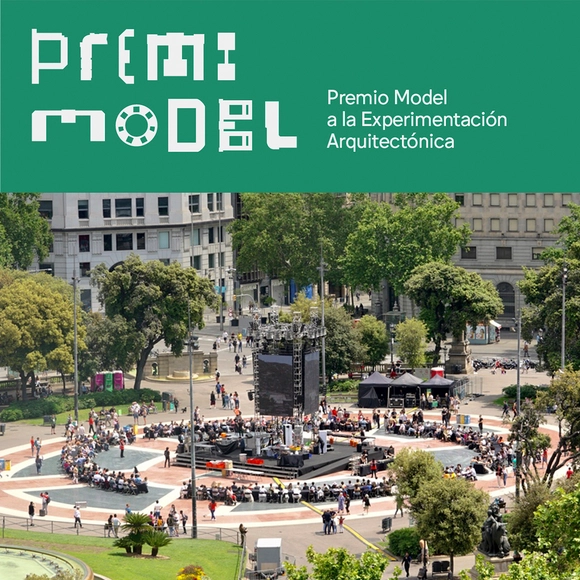
Model. Barcelona Architectures Festival (Model) is the latest experimental and visionary architecture festival on the global cultural scene. The project was founded by the Barcelona City Council and the Architects' Association of Catalonia (COAC) in 2022, and this year, it will be managed by the Mies van der Rohe Foundation.

The first comprehensive book on the River Padma, considered the last leg of the Ganges, with a rich collection of new photographs and maps. ‘The Great Padma’ defines the life and history of the Bengal Delta, the largest delta in the world. The book contains original essays by well-known writers, researchers, and academics from diverse fields, including geography, history, literature, architecture, and food history. The preface is written by the renowned author Amitav Ghosh (The Hungry Tide). Besides unpublished photographs documenting the magnificence and diversity of the great river, and wonderful set of maps and diagrams, the book has a rich content in depicting the life and times related to this turbulent river. The wonderful design and layout of the book will make this a collectible item.
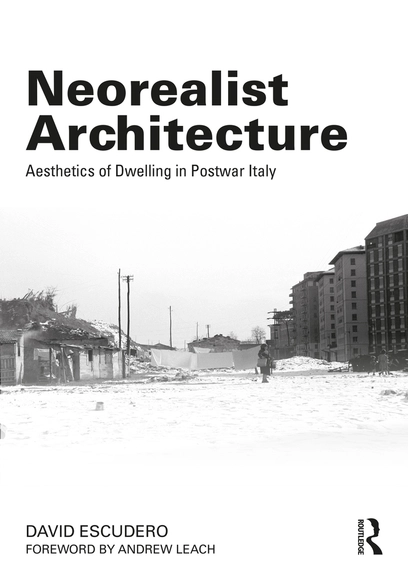
Neorealist Architecture: Aesthetics of Dwelling in Postwar Italy is the new book by David Escudero, published by Routledge and a recipient of a Graham Foundation grant. Illustrated with over 120 images—most of which are previously unpublished—the book explores the links between architecture, film, and the built environment in postwar Italy (1940s–50s) to reveal whether and how neorealism manifested in architecture.

The 3D Design and Printing for Architecture Workshop is organized by the Doctorate in Architecture and Urbanism at the University of Bío-Bío, with the support of CITEC-UBB and FONDECYT 1221730. It is aimed at architects, engineers, designers, students, and/or academics who wish to begin or deepen their knowledge of design, programming, and the robotic execution of additive manufacturing at an architectural scale.
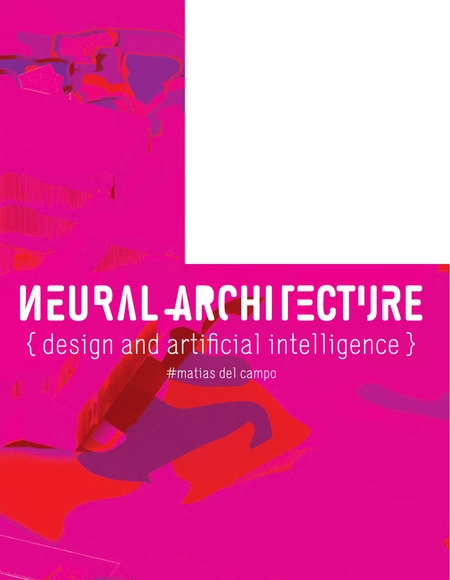
This book explores the interdisciplinary project that brings the long tradition of humanistic inquiry in architecture together with cutting-edge research in artificial intelligence. The main goal of Neural Architecture is to understand how to interrogate artificial intelligence—a technological tool—in the field of architectural design, traditionally a practice that combines humanities and visual arts. Matias del Campo, the author of Neural Architecture is currently exploring specific applications of artificial intelligence in contemporary architecture, focusing on their relationship to material and symbolic culture. AI has experienced an explosive growth in recent years in a range of fields including architecture but its implications for the humanistic values that distinguish architecture from technology have yet to be measured. The book provides an opportunity to survey the emerging field of Architecture and Artificial Intelligence, and to reflect on the implications of a world increasingly entangled in questions of the agency, culture and ethics of AI.
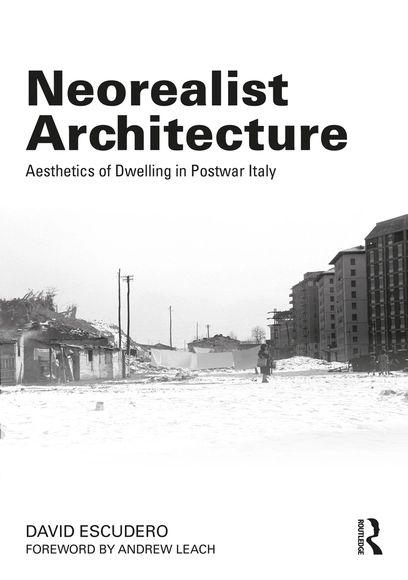
Neorealist Architecture: Aesthetics of Dwelling in Postwar Italy is the new book by David Escudero, published by Routledge and awarded with a Graham Foundation grant. The book, beautifully illustrated with more than 120 images—most of them unpublished—explores the links between architecture, filmmaking, and the built environment in postwar Italy (194X–5X) seeking to ascertain whether, and how, neorealism manifested itself in architecture. It is the first book specifically oriented towards building an idea of "architectural neorealism". Hinted at in those years, the concept was internalized by Italian architectural history, but transfers between neorealism—as an aesthetic and ethic—and architecture—as one potential medium of its embodiment or expression—are still not fully understood. Therefore, the book provides an in-depth discussion of the concept of "neorealist architecture", demonstrating that the connection between both terms is not meaningless.

An interdisciplinary team from The University of Melbourne, Deakin University, The University of Tasmania and The Australian National University have collaborated on a new exhibition exploring the significant relationship between mass migration and the modernisation of Australia post-WWII.

The Sea Design Contest 2023 is the first international design competition entirely dedicated to the nautical sector and open to students and recent graduates from all over the world.
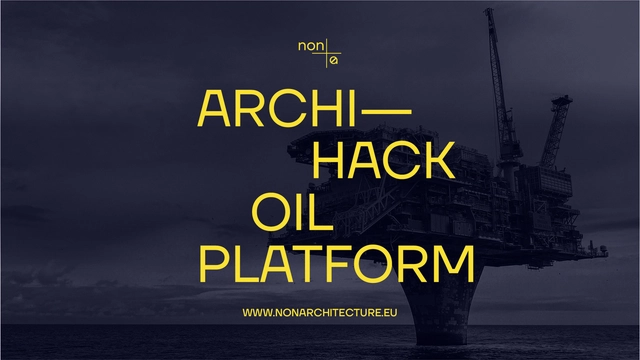
🔖 How to re-use, re-cycle or re-porpuse an oil platform? Create a single axonometric drawing!
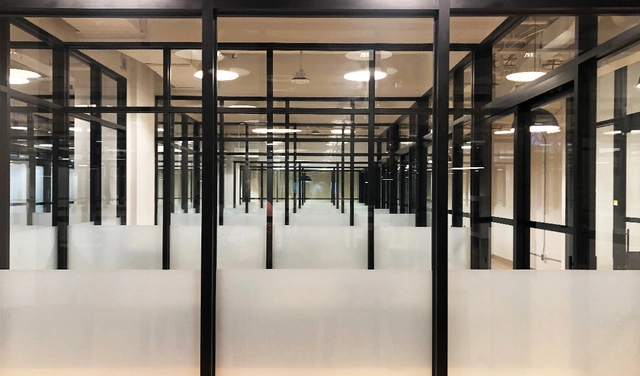
WeWork’s rise, failed IPO, and subsequent ousting of its CEO have been thoroughly documented in countless articles, podcasts, books, and television series. Less widely understood, however, is the extent to which WeWork challenged — and changed — the way spaces are designed, delivered, and operated.

Organizers:

The biggest trade show of its kind in Nigeria and West Africa has created an avenue to expand the frontiers of the Nigerian Water and Hvac environment with an enlightened Workshop and also had strong supported presence of various Engineering bodies.
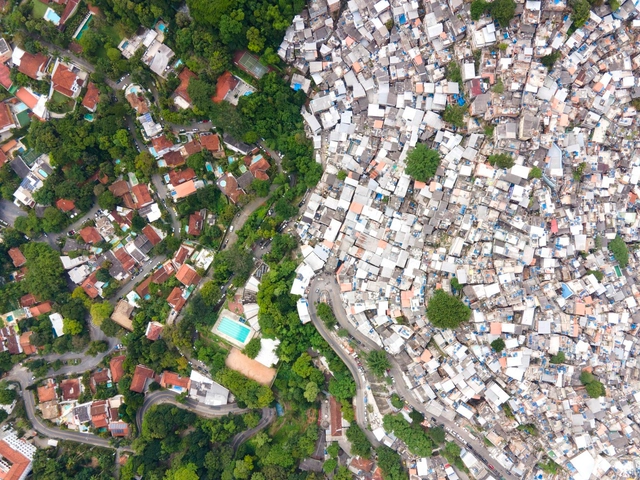
On October 10, 2023, more than 200,000 Brazilian architects and urban planners will choose their representatives for CAU Brasil and CAU/UF for the 2024–2026 term.
Activities related to the 2023 CAU Elections begin on January 1, starting with a campaign to update professional registration data, ensuring everyone can vote and run for office. The deadline to complete the update is May 31.
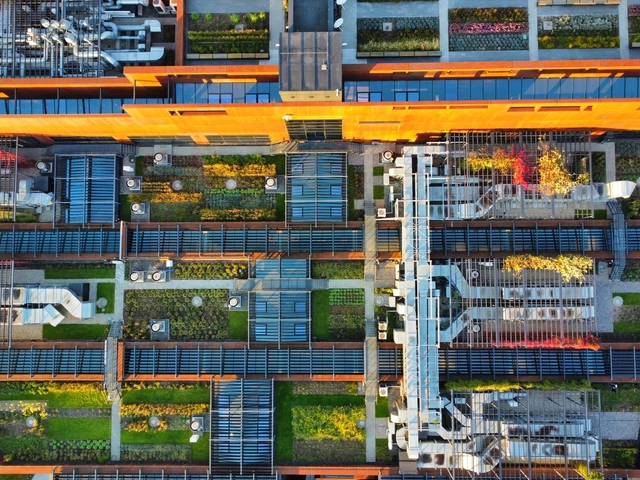
Nearly 40% of the energy produced in the U.S. is used for building operations. The near-central role of buildings in the global climate and energy scenario makes it crucial for architects, engineers and building owners to take appropriate action. These stakeholders can help reduce the carbon footprint of the building through strategic design decisions.
Conventionally, the active modes of heating, cooling, ventilation and lighting utilize energy-intensive electrical processes. On the other hand, passive measures help maintain indoor thermal comfort using the inherent physical and thermal properties of the building envelope and its surroundings
Typically, a well-designed and well-operated building uses envelope-level passive measures to minimize the thermal loads first. Then, it uses energy-efficient active modes of heating, cooling, ventilation and lighting. This article highlights 4 key envelope-level passive strategies to implement for decarbonizing building systems.