Pierre de Meuron and Jacques Herzog of Herzog & de Meuron.
The Center for Architecture and Design is thrilled to present the 36th Louis I. Kahn Award to Herzog & de Meuron. The 2001 Pritzker Prize-winning Herzog & de Meuron is known for working on projects at every scale – from furniture to territorial studies – and approaching each project without preconceptions Notable examples of their work include the Tate Modern gallery in London, Elbphilharmonie in Hamburg, Germany National Stadium in Beijing, China, the main stadium for the 2008 Olympics, and Prada Aoyama in Tokyo. In November 2022, the firm broke ground on the much-anticipated Calder Gardens dedicated to the works of Alexander Calder on the Benjamin Franklin Parkway in Philadelphia.
As part of the landmark exhibition created by NEOM entitled ‘Zero Gravity Urbanism - Principles for a New Livability’, there will be a series of public events, featuring leading architects, academics, and urban thinkers from around the world.
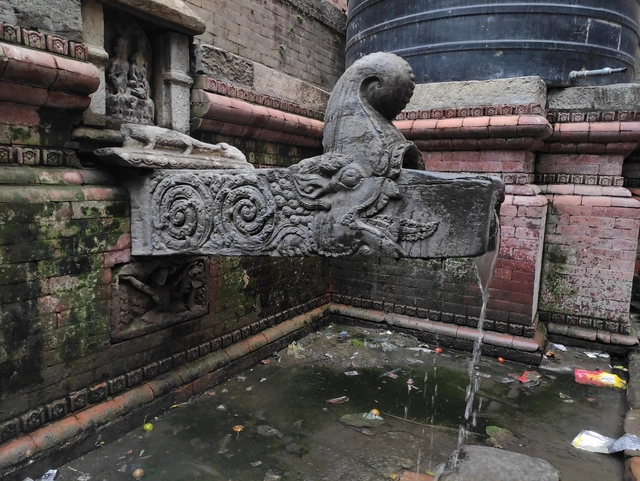
Hitis (Water Fountains) of the Kathmandu Valley, Nepal. Photo courtesy of World Monuments Fund.
Join World Monuments Fund (WMF) for panel discussion exploring ongoing efforts to tackle water insecurity in South Asia by reviving historic water management systems in India and Nepal. Moderated by WMF Vice President of Programs Jonathan S. Bell, the event will consider the opportunities presented by these efforts to address intersecting contemporary issues, including the impacts of urbanization and climate change on access to clean water.
A common scenario experienced by rapidly urbanising Indian cities today is that irrespective of their geographical location, level of development and state of economic stability, the quality of life in the public realm is extremely poor. This design challenge has been conceived by Young Leaders for Active Citizenship (YLAC) and Sensing Local in partnership with the Institute of Urban Designers India (IUDI), Curiosity Alliance Foundation, and Kasturi Nagar Residents Welfare Association aims to blend technical expertise with citizen participation to reclaim and transform parts of Bengaluru through the Urban Revamp Design Challenge.
Are you fascinated by visualizing and creating your designs? Or would you like to learn how to use professional building tools? If so, then this event is just for you!
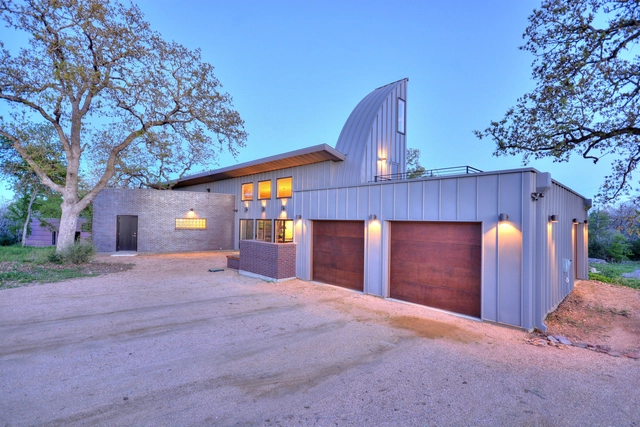
When François Lévy was asked to design a country home on a substantial piece of land, he immediately faced an issue: locating the building in a spot which required as little re-grading as possible while being able to reap the benefits of solar energy. The most desirable location —given site access and a range of mature oaks— would have left the building sitting slightly out of grade. And, if he had chosen the most obvious building orientation (long and narrow with broad elevations facing north and south), part of it would jut out of the ground and some crucial trees would be lost.
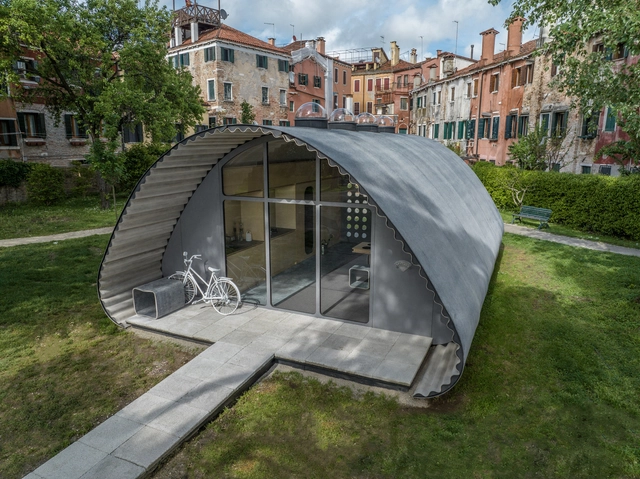
Currently at 103 million, the number of people forcibly displaced from their homes is continuously growing. Many seek shelter in settlements that are meant to be temporary, but where displaced people end up living years, even decades.
The Norman Foster Foundation and Holcim, global leader in sustainable building solutions, came together to form a response to this problem based on two firm beliefs: everyone has the right to a home, and everyone should have access to sustainable building.
Held on May 25 and 26, the 2nd Experimental Construction Site Seminar in Architecture and Urbanism was promoted by LEMC Canteiro Experimental, the PET Canteiro Experimental e Comunidades group, and GEPARQ (Research Group of PROARQ/UFRJ). The seminar aims to present pedagogical practices in experimental construction sites and research and outreach projects that engage with hands-on construction, as well as the experiences of professors and professional architects and urban planners who currently incorporate construction experiences into their professional practice within social architecture.
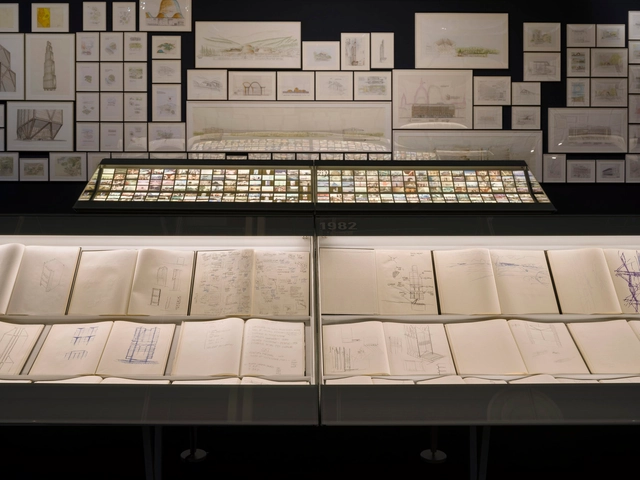
The largest exhibition of Norman Foster’s work to date, hosted by the Centre Pompidou, explores six decades of the architect’s illustrious career through a host of revealing sketchbooks, drawings, images, original models, and videos. The exhibition was designed by Norman Foster and executed with Foster + Partners and the Norman Foster Foundation. A custom-made series of modular display cases was designed by Norman Foster and a team from the Norman Foster Foundation and engineered by Goppion, world leader in the manufacture and installation of museum display cases, to display the architect’s sketchbooks and transparencies.
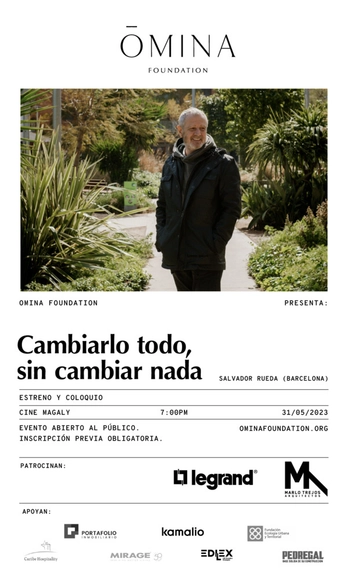
Currently, more than 50% of the global population lives in cities. In Central America, this figure rises to 80%. While cities generate more than 90% of the global Gross Domestic Product, they are also responsible for 80% of greenhouse gas emissions. The mission of the ÖMINA Foundation is to amplify and disseminate the work of global innovators and visionary entrepreneurs who are building a more socially and environmentally just future.
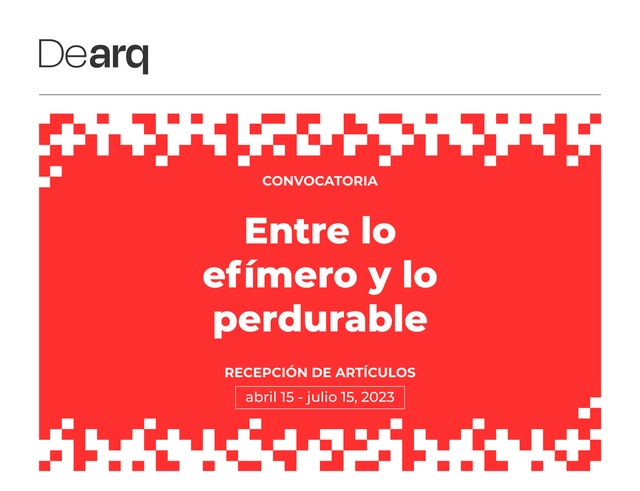
Call for Papers: Between the Ephemeral and the Enduring, Dearq Journal
Architectural production is inherently linked to time, whether through the intent to endure or through a planned duration. However, the permanence of buildings is limited: elements wear out, are repaired, and are transformed, while users change their activities, integrate unexpected uses, and adapt spaces to their evolving needs. Similarly, projects with a set duration can extend their utility, travel to new spaces with updated programs, and generate new transactions. Even more paradigmatically, projects and construction are often carried out according to the rhythms of the community rather than a fixed schedule.
Next Sunday at 8 PM, Mariana Bunn will interview Zilsa Santiago
In her series Acessibilidade de Norte a Sul: Todas as vozes do Brasil, Mariana Bunn will host a conversation this coming Sunday, May 21, with architect and professor Zilsa Santiago.
The 49th AsBEA Annual Convention is fast approaching, celebrating the association’s 50th anniversary while fostering a debate on the future of architecture and the evolving role of the architect in today’s context.
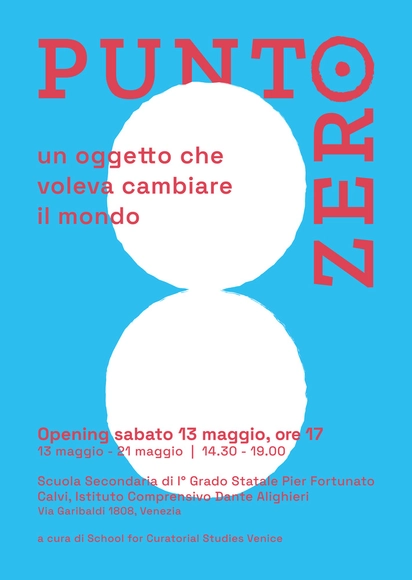
Punto Zero. An object that wanted to change the world, is an exhibition curated by the students of the School for Curatorial Studies Venice. This event has been created in collaboration with Video Sound Art Milan, a festival and production centre of contemporary art, Coordinated by Laura Lamonea (artistic director and curator) and Thomas Ba (curator). The students have developed a curatorial project investigating the invisible qualities of objects. Through installations, sculptures, sound, and site-specific performative events, the visitor will have the opportunity to confront the nature of the objects that surround us. The exhibition can be visited between the 13 and 21 of May at Istituto secondario di primo grado Pier Fortunato Calvi, located between the Giardini and the Arsenale of the Venice Biennale.