“Inhabitants of the Forest of Ourselves” opens on May 11
“Inhabitants of the Forest of Ourselves” opens on May 11
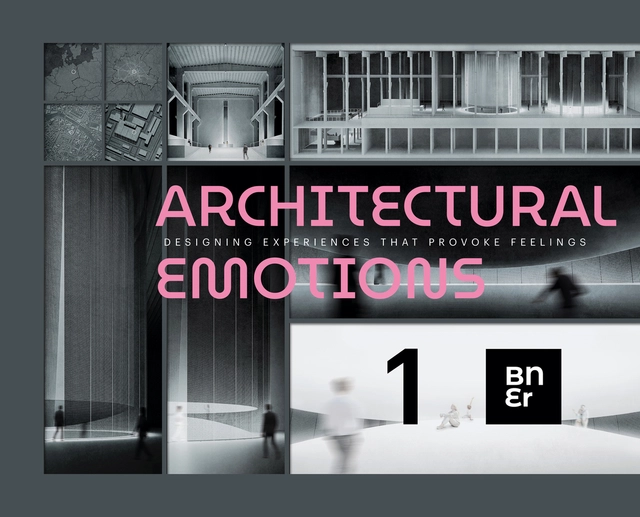
Buildner has announced the results of its Museum of Emotions Competition, an annual international design competition that tasks participants with exploring the extent to which architecture can be used as a tool to evoke emotion.
The brief calls for the design of a conceptual museum with two exhibition halls: one designed to induce negative emotions; the other designed to induce positive emotions. Participants are free to choose any site of their liking, real or imaginary, as well as choose the scale of the project. The meaning of "positive" and "negative" is up for interpretation: What two emotions might a designer consider contrasting? How might an architect conceive spaces that elicits fear, anger, anxiety, love or happiness?

The Open Day, hosted annually by the Istituto Europeo di Design (IED), invites eyewear retail giant Luxottica to this year's edition to teach the public how to prototype eyewear models as if they were for a new brand within the group. The experience will take place this Saturday, May 4, from 2:00 PM to 5:00 PM at the IED-SP campus, located at 617 Maranhão Street. The event is free and open to everyone upon registration on the website: https://ied.edu.br/eventos/open-day-o-futuro-pelas-lentes-do-design.

The 10th Docomomo North and Northeast Seminar, to be held from October 3 to 5, 2024, in Campina Grande, Paraíba, aims to reflect on and discuss the urgent need to shift toward a preservation policy more focused on the conservation of modern heritage. Specifically, the event directs the discussion toward concepts of modernity, tectonics, and the pathologies of modern buildings, while also addressing the paths to be taken for documentary safeguarding, which serves as the foundation for heritage preservation work.

From Paper Tube Emergency Shelters and his Nomadic Museum built with containers to the Swatch/Omega Campus and the Centre Pompidou-Metz, discover the altruistic practice of the Pritzker Prize–winning architect Shigeru Ban, who is lauded for his “curiosity, commitment, endless innovation, infallible eye, and acute sensibility.”

As a sequel to The Empty Room: Fragmented Thoughts on Space (Actar, 2020), this book by Canadian architect RZLBD (Reza Aliabadi) elaborates the same theme with one hundred iterations of a square room, each of which tells a different story of the emptiness between the walls.

Together with our partners Sveriges Arkitekter would like to invite you to the Second conference of the Creative Europe program UREHERIT in Stockholm. This year's theme: Reconstructing the culture of architecture in Ukraine. Register to learn more about Swedish approach to sustainable rebuilding of cities, recommendations on holistic renovation of housing in Ukraine, participatory approach in heritage reconstruction, capacity building with education and continued professional development in the practice and project ‘Future Images for Ukraine’.

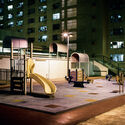
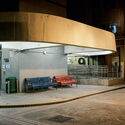
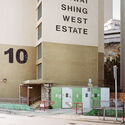
Kwai Shing West Estate is a residential complex in Hong Kong that is home to 18,000 people. It attracted the attention of filmmaker and photographer Pascal Greco because of its architecture and its atypical hillside construction. This book presents the fruits of a ten-year harvest and captures this strange fascination through both photography and film, accessible via a QR code.
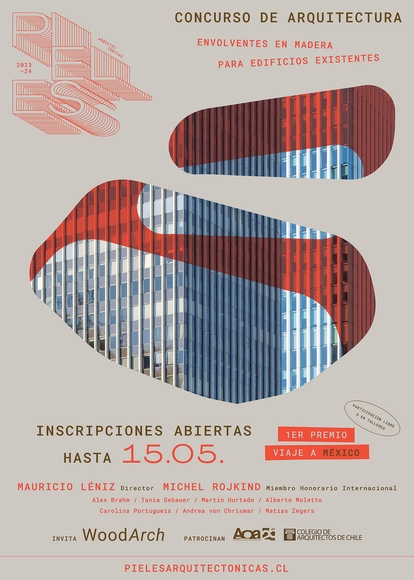
'Pieles Arquitectónicas, envolventes en madera para edificios existentes' (Architectural Skins: Timber Envelopes for Existing Buildings) is a competition that seeks to explore and research timber architecture as a means of intervening in and recovering existing urban infrastructure within the dense and programmatically diverse context of the city.

The International Timber Construction Forum is an annual event for those interested in the new possibilities offered by timber construction in Spain, Europe, and the rest of the world.
The two-day congress is geared toward professionals, with a special emphasis on technical and practical issues. The lectures are organized into five thematic blocks to provide attendees with a comprehensive overview of the timber construction field. The program, featuring leading industry experts, can be viewed on the Forum's website.

The 2024 Wood Design and Building Awards program is now open for submissions, inviting entries from talented architects and designers across North America and around the globe who are setting new standards of excellence in wood architecture. The Wood Design & Building Awards program recognizes design teams that are passionate about celebrating wood as a sustainable, versatile, and sophisticated building material. The program offers the chance to showcase innovative work and be part of a prestigious celebration of wood design.

A recurring theme in the work of artist Lígia Teixeira, the female universe and its social questions and representations are currently on display in Rio de Janeiro in the exhibition “Confinadas” (Confined), curated by Osvaldo Carvalho. This body of work was one of three selected from 300 entries in the 6th Piccola Galleria Selection Program, which she presented at the Casa Fiat de Cultura in Belo Horizonte last year. For the exhibition at the Centro Cultural Correios, several new series were developed addressing ageism, as well as issues of race and gender—illustrated by Black and trans brides, among other works—totaling approximately 50 small-format paintings and one large-format canvas. There is also a series titled “Caladas” (Silenced), in which masked women allude to the persistent difficulty regarding the female voice in society.
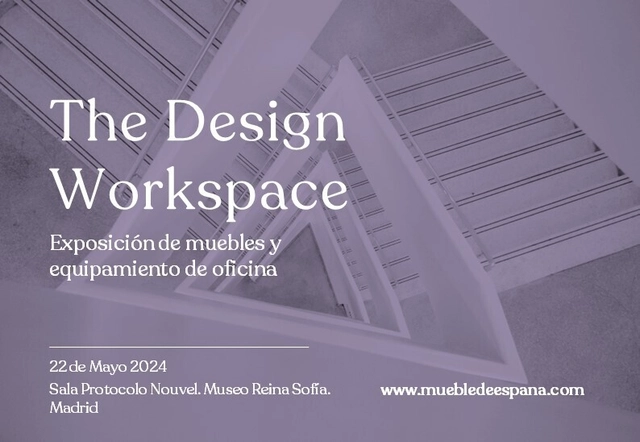
Event showcasing products for professionals in the office furniture and community equipment sectors,
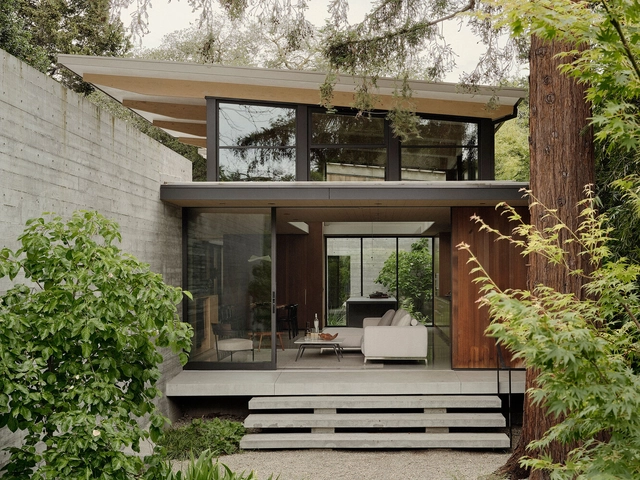
When it came to designing a nature-embracing modern home in Palo Alto, California, USA, architect Tai Ikegami took his responsibility to protect and venerate the magnificent trees on the lot seriously.
“The house is designed around a series of trees on the site—an oak in the front, another oak on the side, a redwood in the back. These are dramatic trees with a large scale,” says Ikegami, a partner at Feldman Architecture, San Francisco.
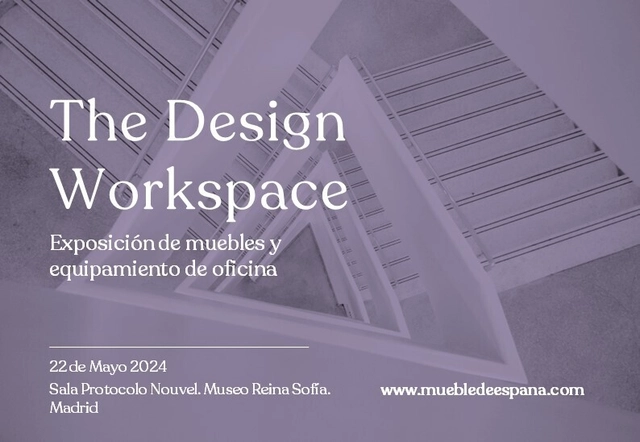
The Spanish Association of Furniture Manufacturers and Exporters (ANIEME) invites you to Design Workspace Madrid 2024. This event is aimed at the professional office and contract furniture and equipment sector, featuring leading brands in the industry at the Reina Sofía Museum in Madrid.
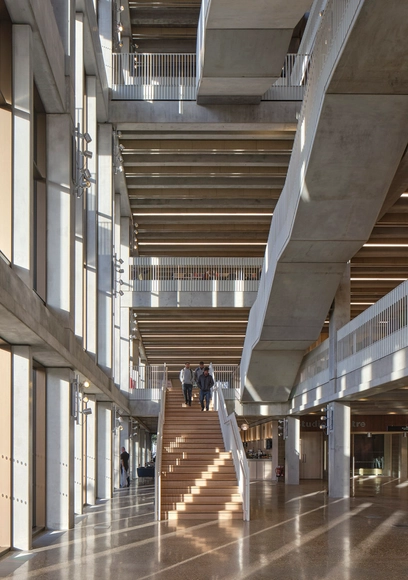
On May 16th at 18:00 (CEST), Juhani Pallasmaa, chairing the esteemed jury consisting of Dorte Mandrup, Russell Foster, Iwan Baan, Yvonne de Kort, Michael Balick, and Gerd Folkers, will present the jury's reasoning, and the 2024 laureates for Daylight Research and Daylight in Architecture will be announced. This event will be streamed live online.
The online event is open to the global community of architects, researchers, scientists, building professionals, educators, students, and members of the press. It welcomes everyone interested in daylight and its significance for life on Earth. Sign up here to receive event notifications and join the live announcement.
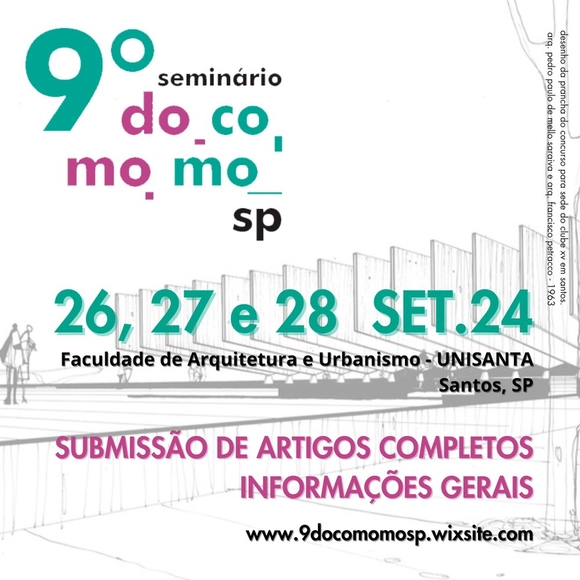
9th Docomomo SP Seminar
Dates: September 26, 27, and 28, 2024.
Location: Unisanta | Santos.
Call for papers until June 3, 2024.
More information on the website: https://9docomomosp.wixsite.com/9docomomosp
The Docomomo São Paulo Chapter and the Architecture and Urbanism program at Santa Cecília University announce the call for papers for the 9th Seminar, dedicated to the theme "Preserving and Valuing Modern Architectural Heritage: The Role of Public Institutions and Private Stakeholders."

Eran Chen discusses ODA: Office of Design and Architecture, the first book to comprehensively consider the full range of ODA's projects, all grounded in a humanistic philosophy that informs and uplifts.