Free online event with certificate issuance. Registration via our website.
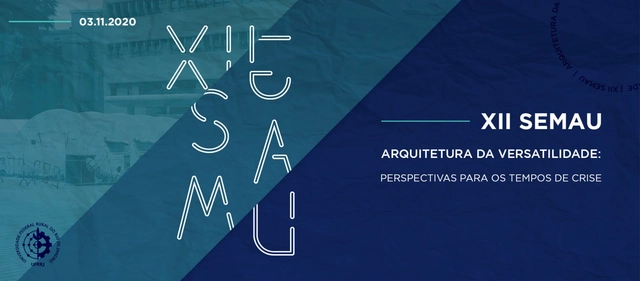
The 12th Academic Week of Architecture and Urbanism at the Federal Rural University of Rio de Janeiro (XII SEMAU/UFRRJ) aims to address the theme: “Architecture of Versatility: Perspectives for Times of Crisis.” The event consists of free lectures broadcast on the SEMAU YouTube channel and remote short courses.
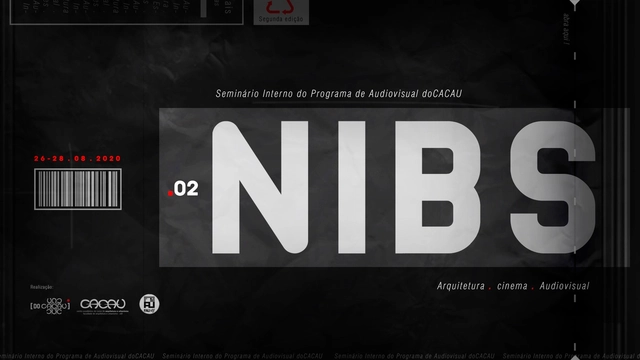
Promoted by the Student Council of the Architecture and Urbanism program at UFJF (CACAU UFJF), the doCACAU audiovisual program aims to democratize architectural education for the community, integrating cultural and social knowledge to share insights beyond the university walls. The program includes internal initiatives focused on audiovisual production and, currently, podcasts, which are also published on the Student Council's media channels.
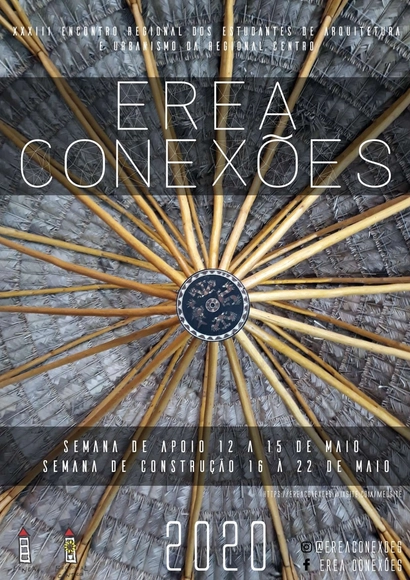
Event promotional poster. Photos and artwork produced by the EREA Conexões organizing committee.
The Cavalcante region (GO) is home to Brazil's largest quilombo, the Kalunga community. This quilombo preserves immense cultural wealth and has resisted in the area for over 300 years, with its territory only being recognized in 1991, when the state of Goiás enacted the law establishing the Kalunga Historical Site and Cultural Heritage.
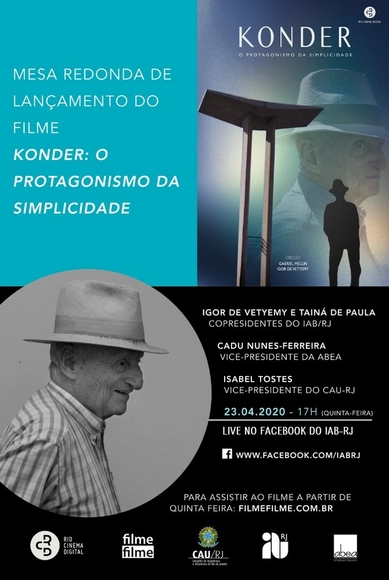
This Thursday, April 23, 2020, at 5:00 PM, the feature-length documentary “Konder: o protagonismo da simplicidade” (Konder: The Protagonism of Simplicity) will premiere. The launch includes a virtual roundtable discussion on the IAB-RJ Facebook page and the film's release on the digital platform filmefilme.com.br. Produced in partnership between ABEA (Brazilian Association for Architectural and Urban Planning Education) and IAB/RJ (Institute of Architects of Brazil – Rio de Janeiro), the film was sponsored by CAU/RJ (Council of Architecture and Urbanism of Rio de Janeiro) with the support of all Architecture and Urbanism entities in the state.
Laboratory of Architecture, Technology and Processes LAT
Minga LAB 2020 Virtual is a free academic event that addresses the complex subject of Sustainable Collective Housing from both theoretical and practical perspectives, with a national scope across Ecuador.
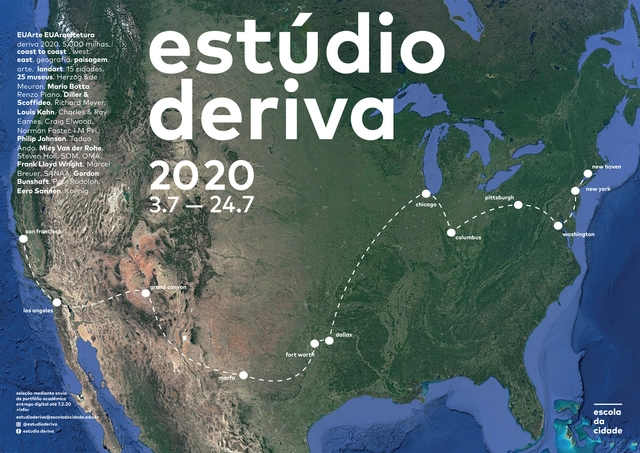
The Estúdio Deriva was created in 2017 to propose a specific pedagogical project, focused each year on exploring new territories, based on the conviction that architectural learning occurs through contact with distinct urban cultures.
"Territorial Planning": The goal of this initial workshop is to provide information on the key considerations for building a sustainable future home and community.
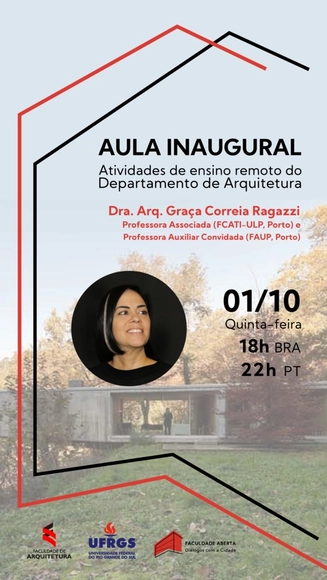
The Department of Architecture at the UFRGS Faculty of Architecture is launching a series of remote events with an inaugural lecture by Portuguese architect and professor Graça Correia Ragazzi. These events aim to engage and connect the entire academic community, while also opening the space to the general public. Graça (Porto, 1965) is an architect (FAUP, Porto, 1989) and holds a PhD in Architecture (UPC, Barcelona, 2006). She serves as an Associate Professor (FCATI-ULP, Porto) and Guest Assistant Professor (FAUP, Porto), and has served as a visiting professor at various international universities. Alongside Roberto Ragazzi, she is a partner and lead architect at the firm CORREIA/RAGAZZI ARQUITECTOS, with work that has been widely awarded, published, and exhibited both nationally and internationally.
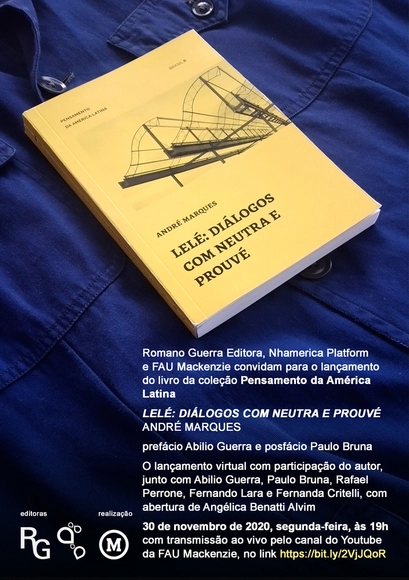
Book launch: "Lelé: Dialogues with Neutra and Prouvé"
Romano Guerra Editora (São Paulo, Brazil) and Nhamerica Platform (Austin, USA) present the Pensamento da América Latina (Latin American Thought) collection, coordinated by Abilio Guerra, Fernando Luiz Lara, and Silvana Romano Santos, with Fernanda Critelli serving as editorial coordinator. The collection provides texts on Latin American architectural culture in both print and ebook formats, available in Portuguese, English, and Spanish—the most widely used languages in the Americas.
From November 5 to 29, the Arquitectura Film Festival Chile will be held entirely online, free of charge, and accessible throughout Chile. The event will feature discussions, urban screenings, exhibitions, and much more.
Urban screenings and films exploring the intersection of architecture and art were highlights of the recently concluded second weekend of the ArqFilmFest. The festival, which runs until November 29, is being held for free and online, allowing it to reach audiences across the country and the continent.
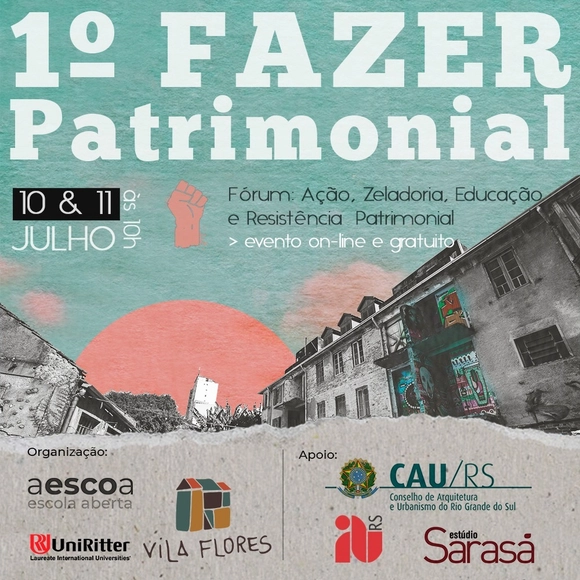
1st FAZER Heritage Forum - Action, Stewardship, Education, and Heritage Resistance
How can architecture and urbanism be considered in conjunction with cultural production and collective memory? The FAZER Patrimonial—Forum for Action, Stewardship, Education, and Heritage Resistance—was established to facilitate the exchange of knowledge regarding this powerful relationship.
In our lighting community, we have had a unique year, full of lessons that we are eager to continue exploring and expanding upon through our "Lighting Seminar," which will take place via ZOOM on Wednesday, January 13, 2021.
A talk in which three National Architecture Award winners will reflect on their past, present, and future; the simultaneous premiere of three documentaries showcasing the life and work of two icons of Chilean architecture; and a panel discussion where a National Urbanism Award winner and a Pritzker Architecture Prize laureate will outline post-pandemic cities. These are the activities with which the Colegio de Arquitectos de Chile will commemorate its 78th anniversary, free of charge and entirely online.
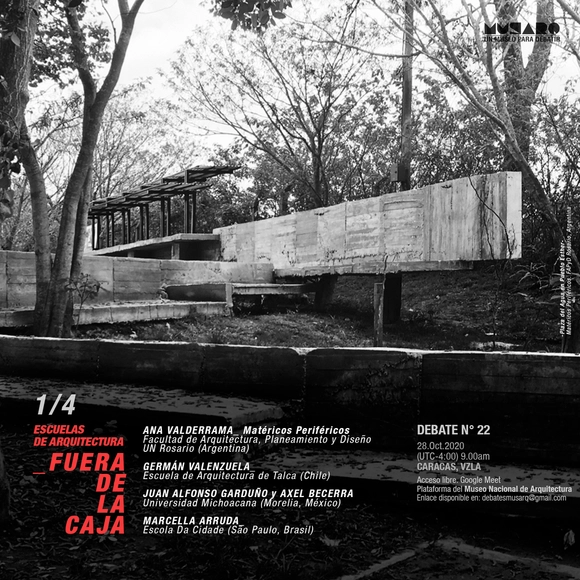
Architecture Schools Outside the Box, debate series
Speakers from Latin America and the world reflect, alongside Venezuelan architects both abroad and within Venezuela, on the exercises conducted within their educational spaces, workshops, and teaching experiences in communities and architecture schools. These "out-of-the-box" approaches depart from conventional teaching, as they embody a defiant attitude toward exploring themes, contexts, and disciplinary problems not typically found in standard curricula.
Launch webinar for the publication "Andar a pé eu vou: caminhos para a defesa da causa no Brasil" (I'm going on foot: paths for advocating the cause in Brazil). Credit: Projeto Como Anda.
We are pleased to invite you to the launch of the publication "Andar a pé eu vou: caminhos para a defesa da causa no Brasil," which brings together in-depth, inspiring content: experiences, tactics, and tools to support those who advocate for pedestrian mobility.
Ingrid Quintana presents a critical assessment of the Bauhaus centenary celebrations, highlighting unexplored aspects of the relationship between the legendary German school and Latin America: the diffuse transatlantic contacts woven through the migratory flows of masters and students, and their relevance as a historiographical category for the examination of transitional aesthetics in regional design.


.jpg?1609344536&format=webp&width=640&height=580)