Launched in 2022, the annual student design competition is Resin’s tool to engage with students in the industry and capture forward thinking ideas from emerging professionals. Participants are encouraged to explore creative solutions through 3D visualization and present a concept that would bring a real-world benefit to the community surrounding the project location. The competition is open to current architecture, urban planning, and interior design students and recent graduates that currently live in the United States
The 19th International Architecture Exhibition of La Biennale di Venezia features a notable presence from the SCI-Arc community, including students, alumni, and faculty. Their work appears across a range of contexts—from national pavilions to independent installations and research projects—engaging critically with this year's theme, Intelligens. The exhibition offers a compelling platform for exploring questions central to SCI-Arc's pedagogy: the future of design, the role of technology, and the possibilities of architectural experimentation.
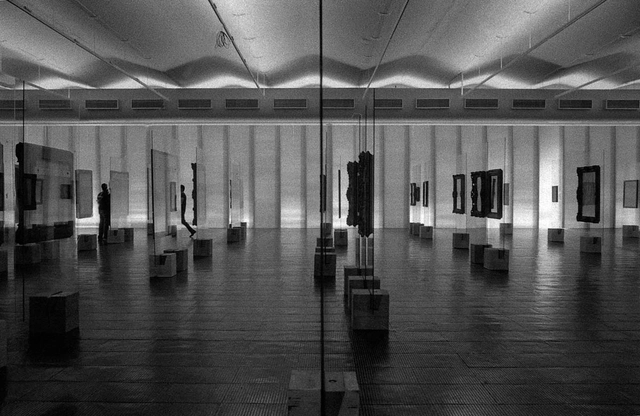
The course investigates the relationship between architecture, exhibition design, and art, analyzing museums as potential territories for experimentation, contestation, and cultural reinvention. By examining case studies such as MoMA in New York, the Centre Pompidou, and the Palais de Tokyo in Paris, the course discusses the "white cube" model and its ties to modern art, in contrast to other spatial and architectural approaches associated with contemporary art.
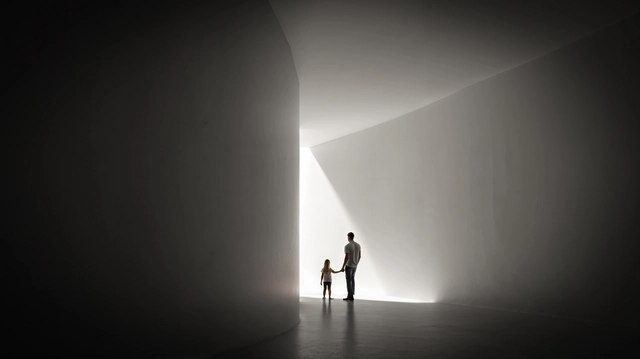
The Museum of Emotions is an annual international design competition that tasks participants with exploring the extent to which architecture can be used as a tool to evoke emotion. The brief calls for the design of a conceptual museum with two exhibition halls: one designed to induce negative emotions; the other designed to induce positive emotions. Participants are free to choose any site of their liking, real or imaginary, as well as choose the scale of the project. The meaning of 'positive' and 'negative' is up for interpretation: What two emotions might a designer consider contrasting? How might an architect conceive spaces which elicit fear, anger, anxiety, love or happiness?
The Museum of Emotions is a 'silent' competition: that is, participants must communicate ideas without text, and must use imagery alone. No form of text, whether design descriptions, annotations or even diagrammatic labels, is permitted.
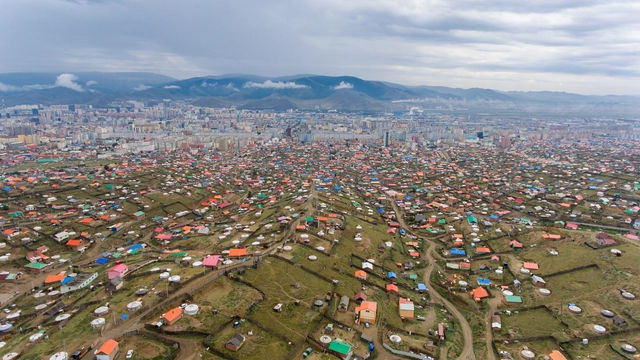
Mongolia, the world's second-largest landlocked country, spans 1.5 million square kilometers. Yet, over 50% of its population—approximately 1.7 million people—reside in Ulaanbaatar, a city that occupies just 0.3% of the nation's total land area. This disproportionate population concentration has led to significant regional development imbalances and mounting urban challenges in the capital.
In response to these issues, Ulaanbaatar has undergone a series of comprehensive urban development initiatives. Since the first master plan was introduced in 1954, six such plans have been created. The latest, the Ulaanbaatar 2040 Master Plan, includes a strategic vision to decentralize urban growth through the development of two new satellite cities—one of which is the Hunnu City project.
Collage of digitally manipulated images. Full credits available on the website.
The UIA World Congress of Architects 2026 Barcelona (UIA2026BCN) announces the UIA International Student Competition, an invitation for students from around the world to engage with the Congress's core theme Becoming. Architectures for a planet in transition. Participants are challenged to design spatial interventions that enable resistance and adaptation to predictable threats related to political shifts, social transformations and climate change, among other concerns. This competition asks students to think beyond conventional design methods, using time as a design strategy to catalyse resilient future. This single-stage student ideas competition is organised and conducted in accordance with the UNESCO Standard Regulations for International Competitions in Architecture and Town planning and the UIA best practice recommendations. The competition brief has been developed by the UIA2026BCN Curatorial Team and organised by the Higher Council of the Orders of Architects of Spain (CSCAE) and the Architect's Association of Catalonia (COAC).
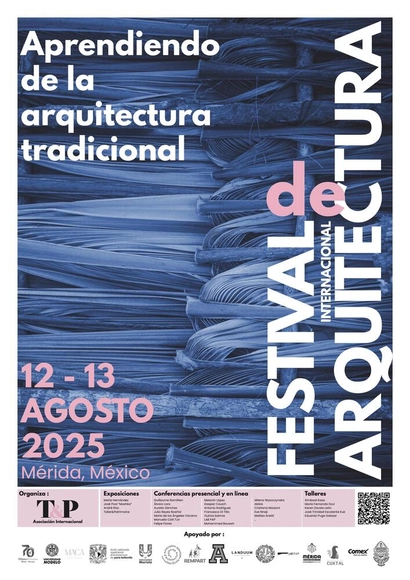
The event is proudly supported by several international universities and cultural institutions, reflecting a shared commitment to heritage, innovation, and collaboration across borders.
A two-day event bringing together architects, researchers, students, and creatives from around the world to explore architecture through conferences, workshops, and exhibitions. Held in the Yucatán region, the festival celebrates vernacular knowledge, contemporary practice, and cultural exchange in a vibrant, community-centered setting.
It all begins with an idea! Active since 2021, the Inspire Future Generations Awards (IFGA) celebrate exceptional initiatives within the built environment that centre the voices of children and young people. This annual competition welcomes entries from architects, planners, local authorities, developers, and other built environment professionals who are committed to advancing participatory design with children and young people. The IFGA recognises projects that demonstrate excellence, creativity, care, and a genuine commitment to engaging young people in shaping the spaces around them. Over the past four years, the Awards have played a key role in growing TET’s community of practice: connecting people, sharing knowledge, and fostering collaboration around inclusive and youth-centred design. Our principal aim of running this awards programme is to open up space for young people to be heard, participate in and empowered in decisions about the environments they live, learn, and play in. By highlighting the value of participation, the IFGA helps ensure that the design of our cities and communities reflects the needs, ideas, and aspirations of younger generations. Each year the winning award entries are added to the TET Resource Bank, sharing knowledge, examples and speakers for TET Dialogues. The entries are featured in our Empowering Environment Report and winners will have space to present and reflect on their work. This year the IFGA present 16 categories spread across three sections, don’t loose your opportunity: enter for the IFGA25!
Straight Talk About Building Back -CEQA Gone: Right or Wrong- Via Zoom - July 23
Join us for Hearing the Heart of LA: Straight Talk About Building Back, a timely and provocative Zoom conversation exploring the potential repeal or reform of the California Environmental Quality Act (CEQA). Taking place on July 23 from 5–6 PM, this session—titled CEQA Gone: Right or Wrong?—brings together diverse perspectives on how environmental review laws shape Los Angeles' ability to build housing, infrastructure, and more. Don't miss this essential conversation on the future of development in LA.
Sometimes, one drawing is enough to spark a revolution — not through detail or precision, but through imagination. A single image can challenge what architecture is, question what it serves, and propose what it could become.
Architecture Uncorked - August 9 - Barnsdall Gallery Theater
FORT: LA Presents Architecture Uncorked! Historic Homes, Hot Topics and Worldly Wine Don’t miss this fast-paced, design-inspired evening with FORT: LA featuring a sneak preview of Rebel Architects, episode 2 —Art and Rebellion in the ‘70s and ‘80s —before its official release! Join rebel architects Frederick Fisher and Thom Mayne in conversation with artist Chuck Arnoldi, moderated by Frances Anderton. More speakers to be announced! Sommelier India Mandelkern pairs perfect wines to match the rebel architect spirit.
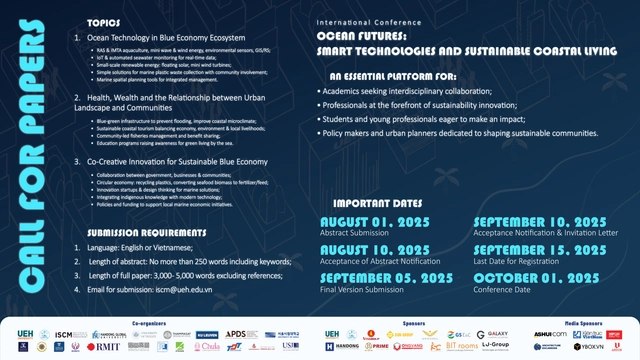
Ocean Futures Conference 2025: Smart Technologies and Sustainable Coastal Living
Join us at the forefront of change for the Ocean Futures Conference 2025. Proudly presented by the Institute of Smart City and Management (ISCM), College of Technology and Design, UEH University alongside our global and local partners, this year we set our sights on the vast potential of the Blue Economy - a theme that redefines how technology and design interact with our planet's most vital resource: its oceans. The blue economy is not only a driver of economic growth, but it also plays a crucial role in safeguarding sovereignty, ensuring national security, and promoting sustainable development.
Situated Architectural Pedagogies of Co-making/-becoming
In Situated Architectural Pedagogies of Co-making/-becoming, we are interested in those situated architectural pedagogies that specifically search for ways of co-making/becoming within the learning environment and beyond, and among human and other-than-human collectives. We would like to explore how educators and learners respond to sites of architectural practice, education and research with critical and ethical concerns. This event is a continuation of a series of others that we have collaborated in the context of SArPe: two educators' workshops; Stories of Situated Architectural Pedagogies in Istanbul and Engaged Learning in the Community University in Delft, three community-driven student workshops and a conference session called Commoning in Architectural Pedagogy. Like the previous events, this non-conference calls for educators and learners who would like to collectively create and share a non-competitive and caring environment, with the intention of disrupting the hegemonic pedagogical and academic canons. The non-conference participants will be invited to roundtable discussions, play sessions, and site visits over the course of 2 days. This event aims towards a book that speculates on the modes of co-making, co-becoming, co-authoring, and other enchanting socialities of collective imagining that dispute academic hegemony. We call for 300-word statements of interest from those educators and learners who have pedagogical experiences and experiments in such relations of co-making/becoming.
In September 2000, architect Paulo Mendes da Rocha proposed something both possible and impossible: covering the Praça da República in downtown São Paulo with a suspended pool-beach. This provocative gesture challenges latent societal issues: the right to leisure, idleness, celebration, hygiene, self-care, sociability, entertainment, and the body. "Canteens, machine-locker rooms, and ramps" are nearly all the words that permeate this narrative project and inspire our workshop.
Be part of a bold vision to create a smart, green, and resilient city rooted in Mongolia’s rich cultural heritage. This global design competition invites architects, planners, and innovators to shape the conceptual plan of Hunnu City—a next generation urban center blending innovation with tradition. With over 1.4 billion MNT in prizes and opportunities to influence a landmark project, this is your chance to leave a lasting mark on the urban future of Mongolia. Whether you're an international design studio or a cross-disciplinary team of forward-thinkers, you’ll compete to create a city that is smart, sustainable, climate-resilient, and deeply human-centered.