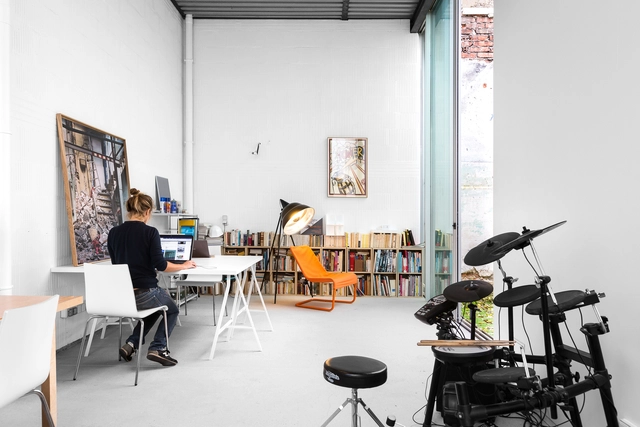
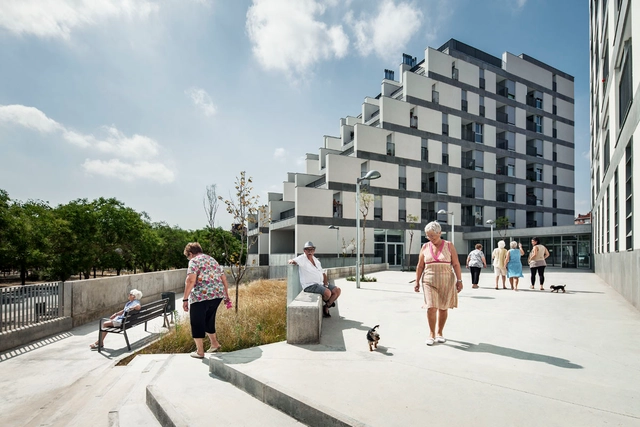
A large percentage of a city’s building stock is designated for housing. Considering that our way of life is changing significantly, housing in cities has also begun to follow these changes. This creates interesting challenges and opportunities for the materials suppliers in this industry.
https://www.archdaily.com/933309/trends-report-small-scale-homesPola Mora
As users of ArchDaily demonstrate certain affinities and greater interest in particular subjects, these topics emerge as trends. In recent years, the architecture and construction industry have incorporated digitalization into their processes. This has led to a considerable increase in the search for keywords related to "innovation" and "new technologies" within the infrastructure area.
Below, we've provided trends that relate to an emerging concept in the construction industry: "Constructech", how to take advantage of new technologies to optimize processes.
https://www.archdaily.com/916240/trends-report-constructech-and-the-digital-future-of-the-construction-industryPola Mora
Certain topics in ArchDaily become a trend when our users begin to search for the same information or show more interest in one topic in relation to others. Architecture and Construction Industry started to worry about issues as important as recycling and environmental awareness, that is why there has been a considerable increase in the searches of the concepts related to this topic.
https://www.archdaily.com/933308/trends-report-recycling-spacesPola Mora
Sunday, April 14, is the final day to visit the "Santiago, Ciudad Destino" exhibition at the GAM Cultural Center. The closing event will take place at 6:30 PM with the vote count for the Migrant Citizen Consultation, which was part of an intervention proposed by the design collective Gt2p. As part of the closing celebrations, an open Afro-dance class will also be held on Saturday at 3:00 PM.
https://www.archdaily.com/1102813/santiago-destination-city-at-gam-concludes-this-sunday-with-a-public-consultation-for-migrantsPola Mora
Instagram is one of the most popular social media platforms in the world, with more than 1 billion users searching and discovering new images, videos, brands, businesses, and content every day. According to Instagram’s User Survey, 60% of people stated they discover new products on Instagram, and more than 200 million Instagrammers stated that they visit at least one Business Profile daily.
https://www.archdaily.com/914945/how-to-use-instagram-to-promote-your-building-materials-to-architectsPola Mora
As users of ArchDaily demonstrate certain affinities and greater interest in particular subjects, these topics emerged as trends. Inclusive Architecture was one of the most searched concepts on ArchDaily in 2018.
https://www.archdaily.com/915588/trends-report-march-2019-inclusive-designPola Mora
As users of ArchDaily demonstrate certain affinities and greater interest in particular subjects, these topics emerged as trends. Gender Equality is one of the trends that will influence urban and architectural discussion in 2019.
https://www.archdaily.com/915576/trends-report-february-2019-gender-equalityPola Mora
It is, once again, the time of year where we look towards the future to define the goals and approaches that we will take for our careers throughout the upcoming year. To help the millions of architects who visit ArchDaily every day from all over the world, we compiled a list of the most popular ideas of 2018, which will continue to be developed and consolidated throughout 2019.
Over 130 million users discovered new references, materials, and tools in 2018 alone, infusing their practice of architecture with the means to improve the quality of life for our cities and built spaces. As users demonstrated certain affinities and/or demonstrated greater interest in particular topics, these emerged as trends.
https://www.archdaily.com/910525/the-trends-that-will-influence-architecture-in-2019Pola Mora
2019 will be a strong year for architecture and construction, moving between the challenges of building the cities of tomorrow and the fast digitalization of our industry. To face these challenges, we will work hard to continue being the main source of inspiration and discovery for the millions of architects who use ArchDaily every day, from all over the world.
https://www.archdaily.com/916086/the-year-in-numbers-looking-forward-to-what-2019-will-offerPola Mora
On Thursday, November 15, a new edition of the Obra del Año Awards took place—the competition that gathers votes from ArchDaily readers to determine the best architectural works built in Latin America over the past year.
https://www.archdaily.com/1113858/this-is-how-the-2018-building-of-the-year-awards-were-experienced-in-santiago-chilePola Mora
In our last two articles we’ve given you a set of tips for presenting your products and materials to architects through content that they value so that you can develop interest in your brand. This strategy is called Content Marketing and its purpose is to give such useful information that potential clients become loyal to your products. Content Marketing can take the form of online articles, videos and tutorials that target a specific audience.
In this edition, we’ll be focusing on important tips for generating engaging titles and attractive images that help to successfully deliver your message.
https://www.archdaily.com/902469/how-to-generate-content-thats-interesting-for-architects-part-3Pola Mora
In our previous article we wrote about the importance of standing out from the competition by generating content that readers find valuable; this will ensure that they associate your brand with engaging instruction--and hopefully turn them into a loyal client!
https://www.archdaily.com/900150/how-to-generate-content-thats-interesting-for-architects-part-2Pola Mora
As marketing shifts away from its earlier, more traditional format, it’s almost unthinkable that a company solely try to reach potential clients though conventional ads. And if we’re talking about reaching architects, this is even more unimaginable.
As we’ve seen in previous articles, in addition to valuing price and quality, architects chose the products they will work with based on the technical information that they can obtain from the manufacturer. It’s of vital importance for them to understand the installation process and the product’s performance over time. In addition, they need to be able to access and reference other works of architecture that have used the same material.
https://www.archdaily.com/898592/how-to-generate-content-thats-interesting-for-architectsPola Mora
For the architect, there is perhaps no greater frustration than realizing--at the end of the construction process--that the quality of the materials selected to complete the project, or the way in which said materials were installed, compromise the overall vision of the finished architecture. So it makes sense that architects are becoming more actively involved in the construction process; they understand that it can make a difference regarding their competition. Building materials manufacturers should really take advantage of the detailed-driven architect’s involvement in order to generate a productive relationship that begins way before construction starts. Manufacturers have a great role to play in the creative process.
https://www.archdaily.com/895479/the-relationship-between-architects-and-building-materials-and-productsPola Mora
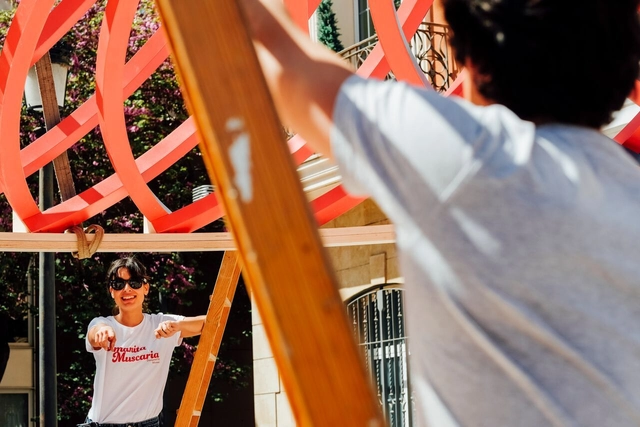
This week, the latest edition of Concéntrico, the Logroño Architecture and Design Festival in Spain, came to a close. For the second consecutive year, we have participated in this initiative, which invites residents and visitors to discover and rediscover spaces of interest in the city's historic center. Over five days, a series of temporary installations by creators from around the world became resting places for pilgrims, urban stages for enjoying a glass of wine, and adventure playgrounds for local children.
https://www.archdaily.com/1114511/this-is-how-the-latest-edition-of-the-logrono-design-and-architecture-festival-number-concentrico-was-experiencedPola Mora
If you want to understand the interests, aspirations and behaviors of architects that are 45-and-under, just perusing Bjarke Ingels' Instagram is an interesting and highly educational exercise… don’t worry, we already did the job for you.
https://www.archdaily.com/892642/know-your-clients-3-essential-characteristics-of-architects-who-are-45-and-underPola Mora
Since 2008, the Obra del Año award has celebrated the best built architecture in Spanish-speaking countries, inviting readers to choose their favorite architectural projects.
Today, we are pleased to present the three projects that have won the #ODA18 Award. Hailing from Mexico and Chile, the three winners reflect the region's architectural diversity, while serving as outstanding examples of the public impact that high-caliber architecture should deliver.
Meet the three winners!
https://www.archdaily.com/1114774/discover-the-winning-projects-of-the-2018-building-of-the-yearPola Mora
Late last year, Imagen de Chile launched the international campaign "Ask for Chile, A World of Services," aimed at positioning Chile as a competitive player in global services. As part of the campaign, several professionals from the fields of engineering, information technology, and the creative economies were selected to become "Brand Ambassadors." The selection was made through a consensus-based process involving trade associations and public institutions that evaluated leading Chilean experts in the highlighted sectors, with renowned Chilean architect Cazú Zegers among those selected.
https://www.archdaily.com/1114730/cazu-zegers-cultural-heritage-is-the-relationship-with-the-landscape-where-architecture-is-born-from-the-place-and-the-people-who-inhabit-itPola Mora




.jpg?1548884950&format=webp&width=640&height=580)
.jpg?1556570858&format=webp&width=640&height=580)