Nicolás Valencia

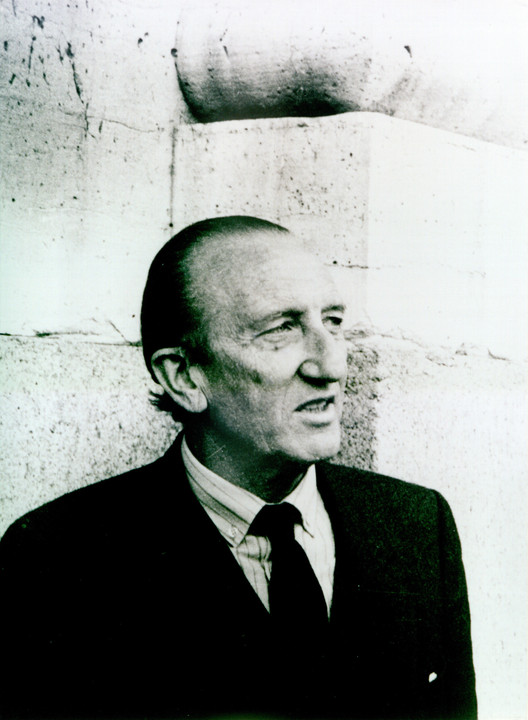
Award-winning architect Nicolas Valencia is the former Head of Editorial at ArchDaily, leading a global editorial team ---- @nicolasvalencia.cl | nicolasvalencia.cl | hellonicolasvalencia@gmail.com

BROWSE ALL FROM THIS AUTHOR HERE

Chile introduces "public real estate agency" to rent homes to vulnerable families

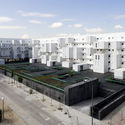
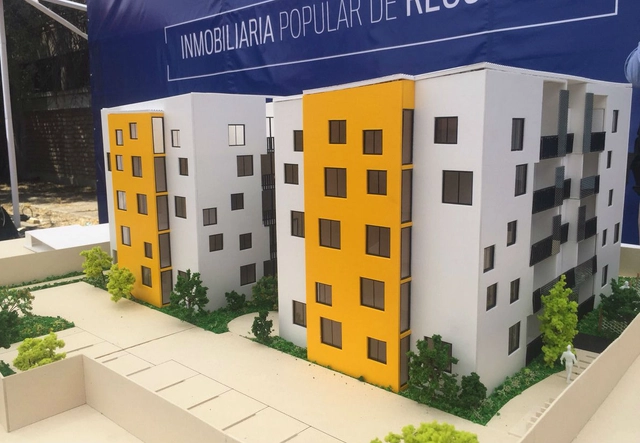
Earlier this week, the mayor of the municipality of Recoleta (Chile), Daniel Jadue, announced the creation of a municipal real estate agency. The initiative, unprecedented in the South American country, consists of the construction of two 5-story buildings with a total of 38 apartments of 55 square meters, available for rent to vulnerable families in the municipality.

According to a report by 24 Horas, the newscast of Chile's state-owned television channel, one out of four families in the municipality shares a home with another household, a common phenomenon in Chile known as allegamiento (cohabitation). At the same time, Recoleta is experiencing rapid residential densification due to saturation and rising costs in neighboring municipalities such as Santiago Centro and Providencia.
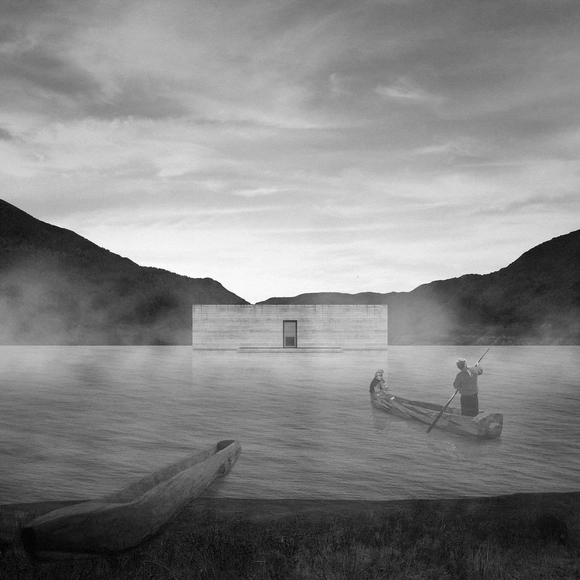
Floating Cemetery, one of the 10 winners of the 2018 Arquitectura Caliente Competition for thesis projects

Subscriber Access | 

Designed by Fabián Leiva, the Floating Cemetery project was selected as one of the 10 winners in the Thesis Project category of the 2018 Arquitectura Caliente Competition (CAC 2018), a Chilean contest organized by Grupo Arquitectura Caliente and funded by the Ministry of Cultures, Arts, and Heritage.

In 2004, the Ralco reservoir in the Biobío Region was unexpectedly and irreversibly flooded, burying the local Pehuenche community's cemetery beneath its waters. Following years of trying to recover the bodies, studies demonstrated that salvage was unfeasible, leaving the inhabitants helpless in the face of the millions of cubic meters of water separating them from the cemetery. This situation sparked the idea to create a space in memory of a sacred, violated, and unrecoverable site—one that would bring the community closer to their deceased and eternally condemn the event.

These are the finalists of the III Latin American Landscape Architecture Biennale (BLAP)

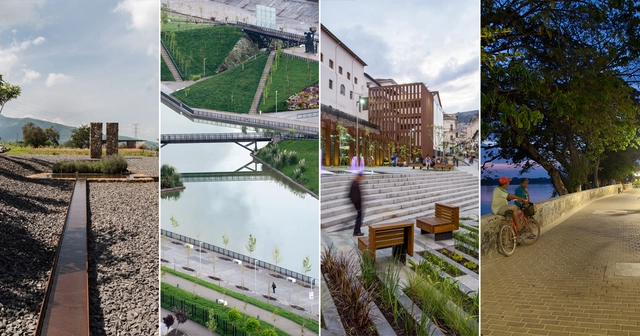
Yesterday, Monday (September 10), the 3rd Latin American Landscape Architecture Biennial announced the finalists for the competition, which will take place in Mexico City on September 26 and 27. Organized since 2014 by the Mexican Society of Landscape Architects (SAPM), the biennial seeks to highlight the role of landscape architecture in shaping the habitat in Latin America, with a particular emphasis on the environmental and social challenges facing the region.

"We seek to encourage participation in landscape construction to showcase the broad and diverse panorama of local interventions that ultimately help define a region sharing common challenges and solutions," the organizers state in the biennial's guidelines.

The 19 built works, unbuilt projects, and research papers meet the biennial's criteria, focusing on projects that respect the landscape and its values, demonstrate a commitment to sustainability, and integrate and address social issues, among other criteria.

Discover the finalists below:

XV Architecture Week pays tribute to Francisco Javier Sáenz de Oiza on his centennial

Subscriber Access | 

Architect Francisco Javier Sáenz de Oiza is undoubtedly a pivotal figure in 20th-century Spanish architecture. Designer of iconic works like Torres Blancas and the current Castellana 81, Sáenz de Oiza was twice awarded the National Architecture Award (1946 and 1954), served as Director of the Madrid School of Architecture (1981–1983), and was a figure whose work and theoretical reflections shaped the course of the Modern Movement in Spain.

This year marks the centenary of his birth in the town of Cáseda (Navarra). To celebrate this milestone, the 15th Architecture Week will pay tribute to him with a major exhibition charting his entire career. Titled Centenario Sáenz de Oiza. 1918-2018 (Sáenz de Oiza Centenary. 1918-2018), the exhibition is organized by the COAM Architecture Foundation in partnership with the Directorate-General for Architecture of the Ministry of Development, and curated by his children, architects Vicente, Javier, and Marisa Sáenz Guerra.

XV Architecture Week pays tribute to Francisco Javier Sáenz de Oiza on his centennial - Imagen 1 de 4XV Architecture Week pays tribute to Francisco Javier Sáenz de Oiza on his centennial - Imagen 2 de 4XV Architecture Week pays tribute to Francisco Javier Sáenz de Oiza on his centennial - Imagen 3 de 4XV Architecture Week pays tribute to Francisco Javier Sáenz de Oiza on his centennial - Imagen 4 de 4XV Architecture Week pays tribute to Francisco Javier Sáenz de Oiza on his centennial - More Images+ 5

Lina Toro: 'The problem lies in the system's inability to recognize excellence'

Subscriber Access | 

In this edition of International Women's Day, we have joined forces with the Colombian print publication de-Arq (Universidad de Los Andes) to showcase the work of five contemporary Colombian women architects, who represent different complementary approaches within our discipline: design, research, teaching, and experimentation.

Today we talk with Lina Toro, a Colombian architect, co-founder of dosmasunoarquitectos, current director of linatoro.arch, and professor at IE University in Spain. "I believe the problem lies in the system's inability to recognize excellence," says Toro.

Lina Toro: 'The problem lies in the system's inability to recognize excellence' - Image 1 of 4Lina Toro: 'The problem lies in the system's inability to recognize excellence' - Image 2 of 4Lina Toro: 'The problem lies in the system's inability to recognize excellence' - Image 3 of 4Lina Toro: 'The problem lies in the system's inability to recognize excellence' - Image 4 of 4Lina Toro: 'The problem lies in the system's inability to recognize excellence' - More Images+ 2

Research explores the legacy of nine industrial ruins across Chile

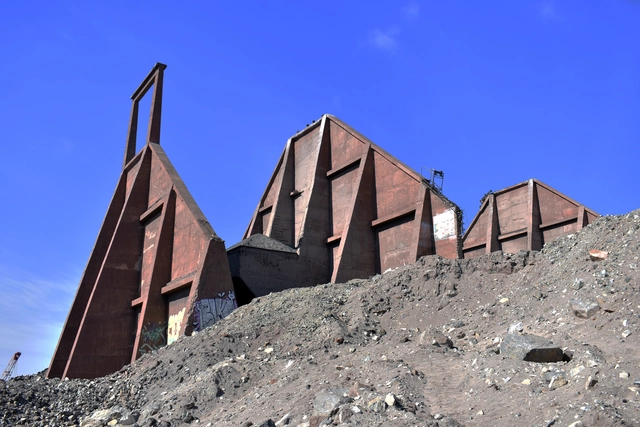
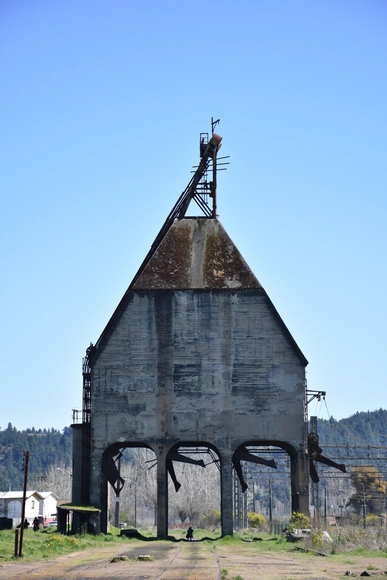
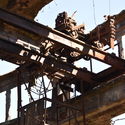
Alongside an archaeologist and a visual artist, the team led by architect and University of Chile academic Claudia Torres has documented a series of industrial ruins in rural areas throughout Chile. These are structures where geography and nature have played a fundamental role, both as a productive resource and as witnesses to their progressive deterioration after being abandoned decades ago.

Titled “From Noise to Silence: Valuing Industrial Ruins in Rural Areas,” this research, funded by Fondart 2017, selected nine cases across Chile: from the historic use of the coastline associated with mining in the northern desert (Caldera) to logging in the Patagonian forests of the far south (Contao). Each site features unprecedented photographic and audiovisual documentation that showcases the rich natural environment where they were built to spark or secure productive processes that have shaped the socioeconomic and cultural history of each region.

San Rosendo Railway Workshop, an abandoned structure in Chile that deserves protection

Subscriber Access | 

Together with an archaeologist and a visual artist, the team led by architect and University of Chile academic Claudia Torres has documented a series of industrial ruins in rural areas throughout Chile for the project “From Noise to Silence: Valuing Industrial Ruins in Rural Areas,” a research project funded by Fondart 2017.

With a diameter of 100 meters and the capacity to service 36 steam locomotives simultaneously, the authors of this article—Claudia Torres, Sandro Maino, Ricardo Labra, Valentina Soto, and Laura Gallardo—argue that the San Rosendo railway workshops must be declared a Historical Monument in Chile.

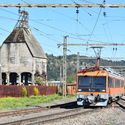
From the viewpoints of the town of San Rosendo (Chile), the railway workshop complex can be appreciated in all its splendor, situated at the foot of the town, on the banks of the Biobío River, and connected to the imposing railway bridge that crosses the Laja River.

San Rosendo Railway Workshop, an abandoned structure in Chile that deserves protection - Imagem 6 de 4San Rosendo Railway Workshop, an abandoned structure in Chile that deserves protection - Imagem 7 de 4San Rosendo Railway Workshop, an abandoned structure in Chile that deserves protection - Imagem 8 de 4San Rosendo Railway Workshop, an abandoned structure in Chile that deserves protection - Imagem 13 de 4San Rosendo Railway Workshop, an abandoned structure in Chile that deserves protection - More Images+ 10

'Confronting Informality' Awards 20 Proposals Tackling the Challenges of Informal Settlements

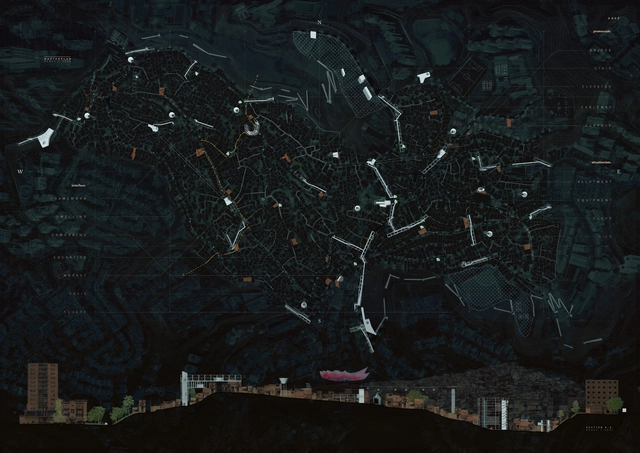
Twenty proposals for informal settlements from Brazil to Bangladesh have been awarded in Confronting Informality, the first edition of the competition organized by TU Delft's Department of Urbanism, alongside universities from around the world.

Launched last April, this ideas competition addresses the challenge of urban settlements based on the principles of the New Urban Agenda. Through their projects, architecture and urban planning students from all over the world answered the following question: how can we create healthy, safe, and resilient environments in informal settlements while simultaneously preserving social networks and a sense of community?

"We live in an urban world, but explosive, unplanned urbanization processes in developing countries mean that new informal settlements are growing in population and size—often without infrastructure, access to sanitation, or quality public spaces," the organizers explained in the competition brief.

Discover the winning projects below:

How we celebrated the 3rd anniversary of ArchDaily Colombia in Bogotá

Subscriber Access | 

On Thursday, October 25, we celebrated the first three years of ArchDaily Colombia in Bogotá. The Lamazone Gallery served as the setting for some of the local scene's most influential architects to connect with the ArchDaily Colombia team.

During his presentation, David Basulto, CEO of ArchDaily, highlighted the key milestones of ArchDaily Colombia's first three years, before moving on to an insightful analysis of Colombian architecture driven by the big data generated by our readers worldwide.

Chile, Winner of the 2018 Alacero International Competition

With the proposal 'Phytoremediation Machine for Mining Tailings,' the Chilean team won first place in the 11th Alacero Steel Design Competition for Architecture Students 2018 in Colombia.

The team, comprising Universidad Finis Terrae students Diego Concha, Tomás Aguirre, and Trinidad Hermosilla, presented a project that seeks to "recover and reuse mining waste through the use of plants with high mineral resistance to reduce and mitigate the site's environmental risks," as the authors explain in their project description. Their advisors were professors Andrés Echeverría and Cristián Lecaros.

Attend 'Tejiendo la Calle,' a project open to participation in Extremadura

Tejiendo La Calle is an open-participation project. It consists of creating sunshades using an XXL crochet technique, which are installed in the streets of Valverde de La Vera during the town's cultural week and August festivities. We began in 2013 and continue to work on the project today.

The resulting installation helps express the local identity and serves as a medium for the intentions and desires of the project's participants. It welcomes visitors and helps create a celebratory atmosphere. The pieces function as sunshades during the day and are illuminated at night, lighting the way to the town square, the main meeting point during the festivities.

Kersten Geers to lead EA USS workshop and lecture series in Santiago

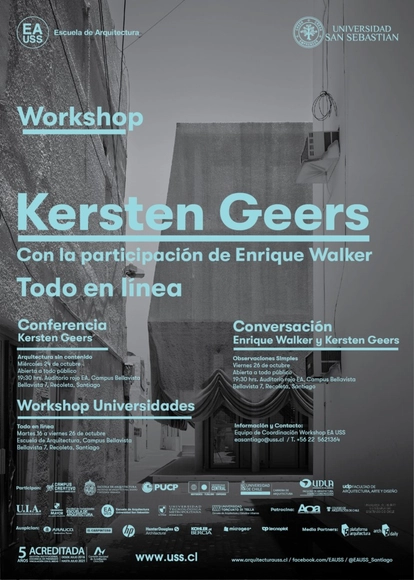
Universidad San Sebastián (Chile) has invited Belgian architect Kersten Geers, an international reference for his professional and academic practice, to lead the third edition of the EA USS Workshop in Santiago. Geers will also participate in a series of debates with participants, a conversation with the prominent architect and academic Enrique Walker, and a keynote lecture presenting his work and reflections on the discipline.

In this context, Chilean and Latin American universities are invited to join the experience by participating with teams composed of five undergraduate students and one or two faculty advisors.

Are you interested in the urban challenges of the Global South? Take this online course from TU Delft

The Faculty of Architecture at TU Delft (Netherlands) will offer a new online course on the edX digital platform, focusing on urban challenges in emerging countries.

Titled “Rethink the City: New Approaches to Global and Local Urban Challenges,” the course aims to address urban challenges in emerging countries, offering a new perspective to understand and analyze the Global South. Accordingly, the curriculum is structured around three thematic pillars: “Spatial Justice,” “Housing Provision and Management,” and “Urban Resilience.”

Attend Supertrama this summer, Extremadura's public art program.

Supertrama is a public art program in Extremadura, Spain, that promotes artistic experimentation rooted in specific environments, their urban (or rural) configuration, architecture, historical memory, and social fabric. The program fosters cultural growth across the Extremaduran territory in collaboration with architects, artists, and creatives working in the field of public art.

MINVU launches ideas competition to design the Paseo del Mar at the Barón Pier in Valparaíso

Chile's Ministry of Housing and Urbanism has launched an ideas competition to design the "Paseo del Mar," a new public space at the Barón Pier, located directly on the coastline of the city of Valparaíso.

"The Barón Pier has shaped the history of Valparaíso and Chile. This site served as the engine of the country's railway industry throughout much of the 19th and 20th centuries. However, these grounds no longer possess their former vitality and have been abandoned over time. In the 21st century, the residents of Valparaíso want this area to reclaim its place in the history of the port and in their daily lives, but transformed into a major public space," the ministry explains in the competition guidelines.

Imagina Madrid presents its program and the nine sites to be intervened in the city

Nine projects that encourage rethinking and shaping the city from a different perspective, through artistic proposals that, by transforming spaces, spark new experiences, encounters, and interactions distinct from those generated by the traditional city. The Imagina Madrid program aims to explore the potential of art to begin imagining a different city—one designed to the scale of all those who inhabit it.

The nine sites proposed for transformation in this inaugural edition of Imagina Madrid are distributed throughout the city's periphery. They were selected for their unique characteristics, challenges, and potential, serving as testing grounds for new ways to inhabit these spaces while honoring their history and identity:

The close bond between cinema and architecture in the Norman Foster Foundation's upcoming series in Madrid

In conjunction with the 15th Madrid Architecture Week, the Norman Foster Foundation presents Architecture on Screen, a film series curated by the foundation for Sala Equis in the Spanish capital.

Since the early 20th century, both architecture and film have found ways to express new ideas and develop avant-garde languages. Avant-garde movements, such as Futurism, established a close link between art, film, and architecture. As seen in the drawings of Sant'Elia, they convey the concept of the industrial city, moving trains, and buildings inspired by hydroelectric power plants, using the machine as a metaphor.

Call for entries open for the 2018 Chilean College of Architects Awards

On August 4, Chile celebrates National Architects Day, commemorating the enactment of Law 7.211, which established the Colegio de Arquitectos de Chile on that same day in 1942. For this 76th anniversary, the professional association will present its traditional CA Awards to those who have excelled in various fields of architecture.

The Colegio de Arquitectos de Chile Awards (CA Awards) are among the most prestigious honors for architects in Chile, recognizing eleven individuals for their excellence, work, and contributions to the field. The institution also honors a non-architect who has made a significant contribution to the profession.