Content Editor at ArchDaily Mexico. Architect by UNAM (2018). Her interests focus on exploring the relationship of the body with architecture through dance. She has collaborated with different international choreographers who explore dance and architecture as an event. Twitter / Instagram: @monicarellano_
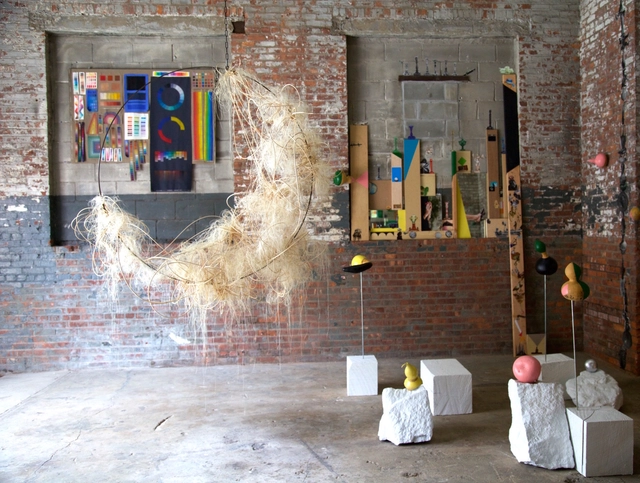
For Sofía von Ellrichshausen, architectural representation is deeply tied to how we understand and attribute meaning to our surroundings. Architecture, she believes, is not only a service for others but must also be, in her own words, 'a service for oneself.' This is reflected in many of her artistic works, which explore and seek to understand light, shadow, and color within spaces. At the Chilean firm Pezo von Ellrichshausen—which she co-founded with Mauricio Pezo—disciplinary boundaries blur. For Sofía, art and architecture merge in a practice aimed at understanding the world we inhabit.
On September 13, the awards ceremony for the XI Chiapas Architecture Biennial 2019: Architecture + Society took place. The Chiapas Association of Architects (Colegio de Arquitectos Chiapanecos) invited all architects to participate this year. The event sought to identify the state's best architectural works, publications, research, and theses, recognizing their authors and promoting the most relevant projects to foster reflection on contemporary Chiapas architecture through analysis and criticism. A total of 55 works and 5 theses were submitted, resulting in 1 Grand Prize and Gold Medal, 5 Silver Medals, and 7 Honorable Mentions across 23 categories. The winners were selected by a jury comprising architects Joel Olivarez, Óscar Martínez, Julio Gaeta, Luby Springall, and María Emiliana Oredáin.
Known as Latin America's leading art fair, ZONAMACO held its 2019 edition from February 6 to 10 at Mexico City's Centro Citibanamex. The event showcased everything from historical modern art masterpieces to contemporary works by global artists, collectible design pieces, and special editions.
As part of the annual CEMEX Awards, the recipient of the Arq. Marcelo Zambrano Scholarship has been announced, reaffirming the commitment to supporting the development of architecture in Mexico. CEMEX awards the Arq. Marcelo Zambrano Scholarship in honor of the exemplary professional dedication and leadership of architect Marcelo Zambrano, aiming to support young Mexicans in pursuing postgraduate studies at prestigious international universities.
The results of the first stage of the Pabellón Eco 2020 have been announced, following the submission of 90 portfolios from different states across the country. The jury selected 5 portfolios that will present a pavilion proposal to be developed in the courtyard of the Museo Experimental El Eco. Read on for the full list:
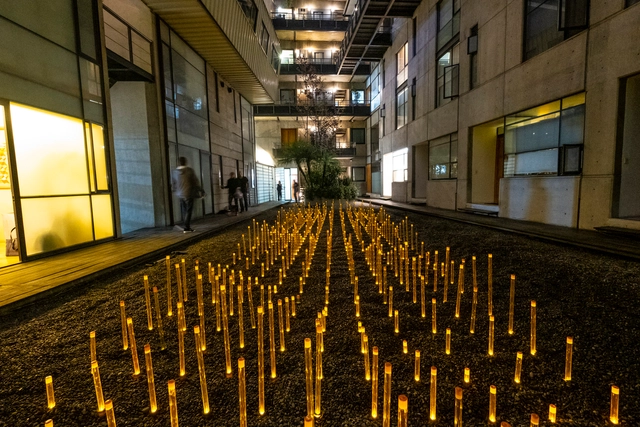
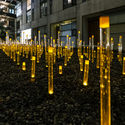
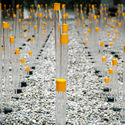
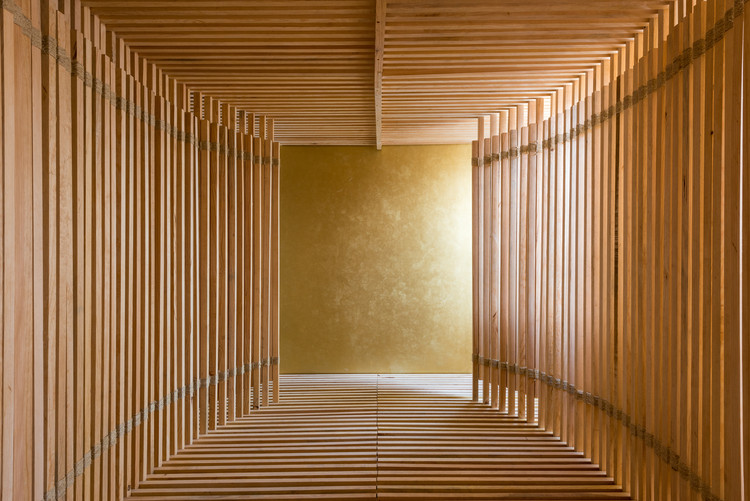
As part of the activities taking place at LIGA, Espacio para Arquitectura in Mexico City, the Mexican-Bolivian duo Escobedo Soliz has created an installation titled Tórax. Built from wooden posts, the piece forms a rhythmic oval structure whose construction evokes the ribcage of a great whale, trapped inside LIGA's gallery space.
The Venice Architecture Biennale is an event organized by the Italian State that brings together some of the world's most prestigious international architecture exhibitions. The Giardini and the Arsenale serve as the event's main venues. These spaces have hosted various exhibitions, national pavilions, and collateral events spread throughout Venice.
On August 30 and 31, 2019, the Encuentros 2019 Festival was held in Cancún under the theme Let's Talk About the City, featuring various activities that established a dialogue between residents and key stakeholders in urban development. This was the first time the event was held in Cancún and the second time nationwide, in an effort to decentralize and bring knowledge to citizens and architecture students to help them rediscover their own city.
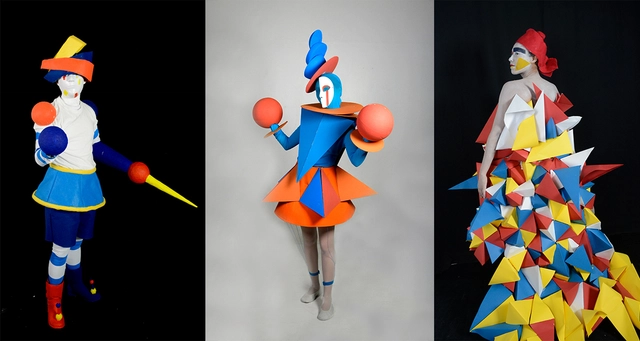
The history of the Triadic Ballet dates back to 1919, when the Bauhaus was founded in Weimar, Germany, including a theater workshop within its curriculum. Directed by Oskar Schlemmer, this theater workshop focused on staging new concepts and reflections on the relationship between humans and space, based on a geometric analysis of bodily forms and movement in space.
The volume of debates, ideas, discourses, and discussions triggered by theater at the Bauhaus—and its subsequent influence on architectural production—is almost incalculable. Schlemmer opened a door to an architectural study centered on the body. One of his most famous works is the Triadic Ballet (Das Triadische Ballett), staged in 1921. It comprised 12 small-format pieces featuring 18 costume and lighting changes spanning several hours.
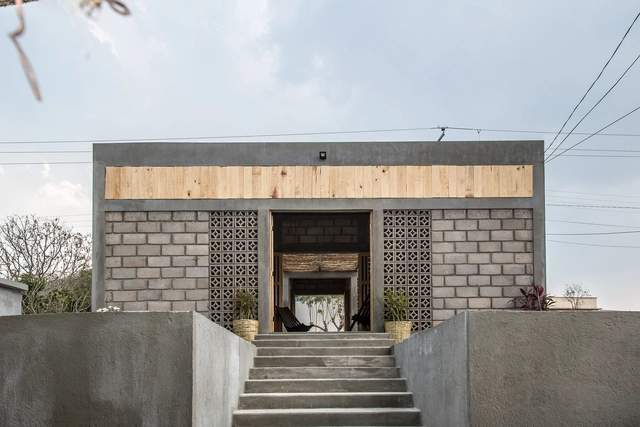
In the fall of 2017, a 7.1-magnitude earthquake struck at least nine Mexican states, leaving several areas severely damaged across Mexico City, Puebla, Morelos, Oaxaca, Veracruz, Tlaxcala, Guerrero, and the State of Mexico. Jojutla, a municipality in Morelos, was among the hardest hit, left in ruins after the September 19 disaster. Much of the local infrastructure was devastated, prompting a master plan initiated by Infonavit to reconstruct the municipality's primary public buildings.
In June, Japanese architect Go Hasegawa attended the first Porto Academy 'Visiting Barragán' Workshop in Mexico City. Held annually at the Faculty of Architecture of the University of Porto—designed by 1992 Pritzker Prize laureate Álvaro Siza—this event is the result of a profound passion for architecture and a belief that practice, as the exercise of the profession, is fundamental to the future of the discipline.
On May 31, the art gallery The Chimney presented “Twilight Chorus,” a group exhibition co-curated with guadalajara90210, a Mexican organization directed by Alma Saladin. The exhibition features works by Mexican artists Héctor Jiménez Castillo, Mariana Garibay Raeke, Ilana Harris-Babou, Circe Irasema, Mario Navarro, and Marco Rountree.
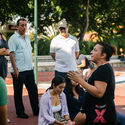
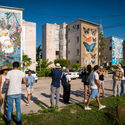
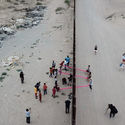
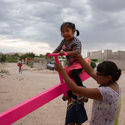
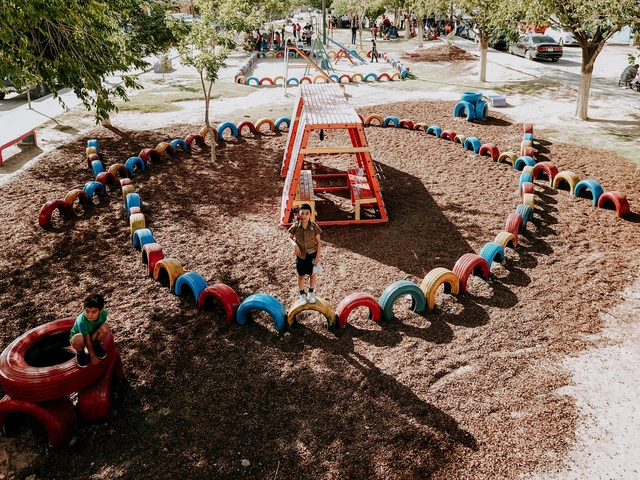
In 2014, a group of friends from Ciudad Juárez, Chihuahua, eager to contribute to their city's resilience and recovery process, came together to discuss and share ideas for reclaiming streets, plazas, and parks through sociocultural projects and urban interventions in public spaces. This is how Nómada Laboratorio Urbano was born. Ciudad Juárez is an industrial city located on the northern border with the United States, directly across from El Paso, Texas. Over the years, Juárez has been economically dominated by the “maquiladora” manufacturing industry and was once considered one of the most violent cities in the world due to a wave of crime between 2008 and 2012.
MASA is a gallery founded in Mexico City by Héctor Esrawe, Cristobal Riestra, Agé Salajõe, Brian Thoreen, Roberto Díaz Sesma, and Isaac Bissu. The space was designed by Savvy Studio, a design and architecture firm based in New York, Mexico City, and Monterrey that works across various typologies worldwide, including boutique hotels, restaurants, retail spaces, art galleries, and museums.
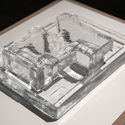
As part of the cultural program of the Abierto Mexicano de Diseño, which opened in October 2019, the Franz Mayer Museum and Nouvel present InVisible: Glass Design, an exhibition featuring over 500 pieces that offers a focused look at the technical, formal, and stylistic possibilities of glass, one of the most fascinating materials. The exhibition features pieces conceptualized by artists such as Jan Hendrix, Perla Valtierra, Edgar Orlaineta, Julie Richoz, Mauricio Lara, Brian Thoreen, and Frida Escobedo, among other prominent designers.
Each year, to mark one of Mexico's most important celebrations, architect Miguel de la Torre designs an installation that takes place on November 1 and 2. During this holiday, cempasúchil flowers—a plant native to Mexico that blooms in the fall—are used. According to a tradition dating back to pre-Hispanic times, yellow and orange cempasúchil petals are used to mark the path for the deceased during their visit, as they are believed to hold the light and warmth of the sun's rays.
_11.37.22.jpg?1553103497&format=webp&width=640&height=580)




_10.53.38.jpg?1576168199&format=webp&width=640&height=580)

















.jpg?1551729230 "© Genevieve Lutkin")
.jpg?1551729279 "© Genevieve Lutkin")
.jpg?1551729209 "© Genevieve Lutkin")