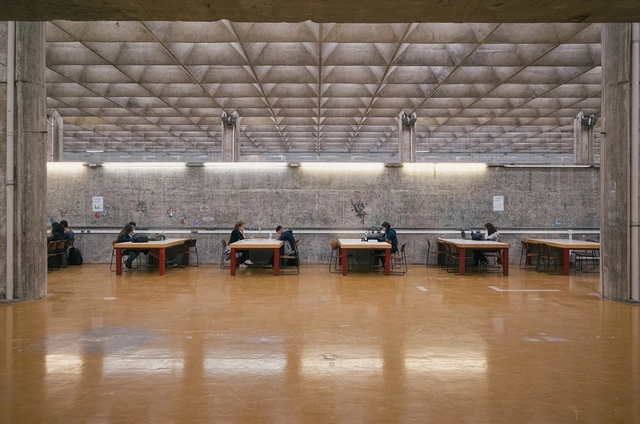
FAU USP. Image by victortsu via Flickr. License CC BY-NC 2.0
Since the first architecture programs were established in the late 19th century, little has changed in their core curricula. Most programs worldwide are geared toward a neoliberal university model, increasingly designed and defined by the production of relentless success and the demands of the construction industry.
Little is discussed regarding error and failure, and design output remains heavily geared toward training stararchitects—a term used to describe architects whose celebrity and critical acclaim have turned them into idols of the architectural world, creators of major projects and master plans.
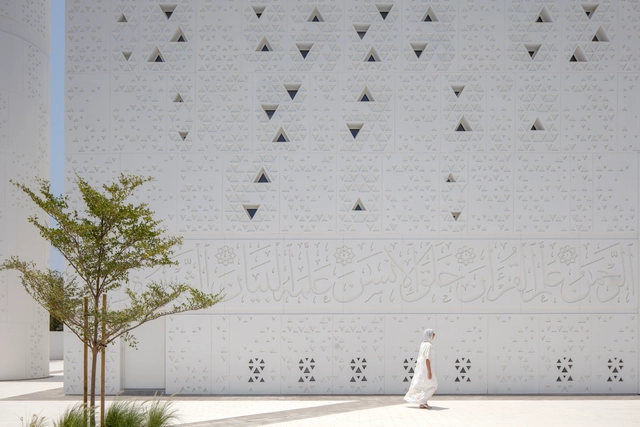
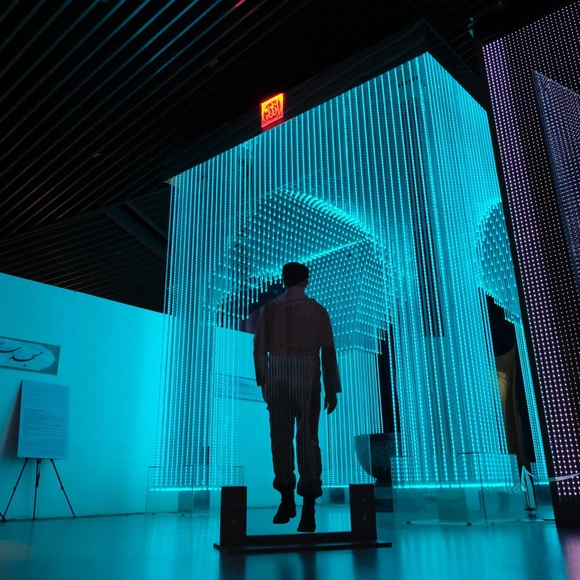
Mohammed Abdulkhaliq Gargash Mosque, Dubai, 2021. Image: Gerry O´Leary
There are and have always been inspiring women architects, urban planners, and policymakers. However, worldwide, the built environment professions—and their upper echelons in particular—remain heavily male-dominated, more so than other fields like education or healthcare.
Today, 64% of architecture graduates in Brazil are women. In engineering, there has been a 42% increase in women registered with CREA since 2016. Yet, how is this reflected in Brazilian society? Globally, progress is even slower: only 40% of architects are women, with very few in leadership roles.
Will Artificial Intelligence replace architects in their roles? In the May 2023 edition of Building magazine, Thomas Lane suggests that AI has the potential to automate up to 37% of the tasks typically carried out by architects and engineers. This automation, though, is likely to target routine and less creative tasks, allowing professionals to concentrate on more strategic and imaginative aspects of their work.
Just as Revit and 3D software did not replace architects but only transformed their workflows, the same principle holds for AI tools. AI is poised to bring about new tasks, such as AI management, alongside existing responsibilities, signaling a shift in how architects work.
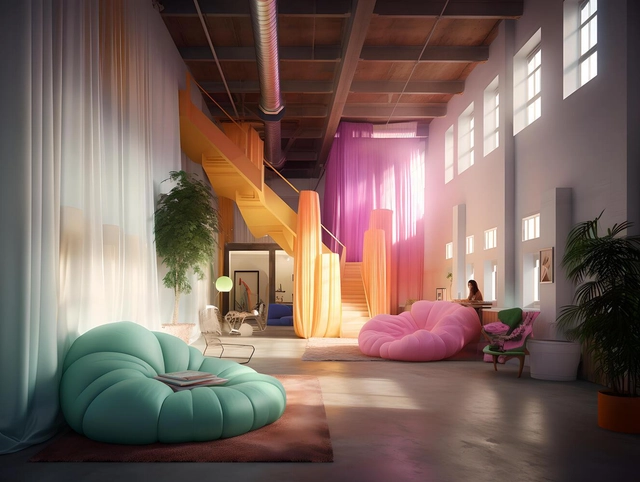
Maximalism is an artistic movement that stands in stark contrast to minimalism. While minimalism famously preaches "Less is more," maximalism embraces the opposite mantra of "More is more."
Within the broader context of the postmodern movement, which encompasses the social and aesthetic shifts occurring after World War II, maximalism can be characterized by its rejection of rigid values and rules. Instead, it celebrates imprecision, embraces diversity, blurs the lines between reality and fantasy, encourages spontaneity, and champions freedom of expression.
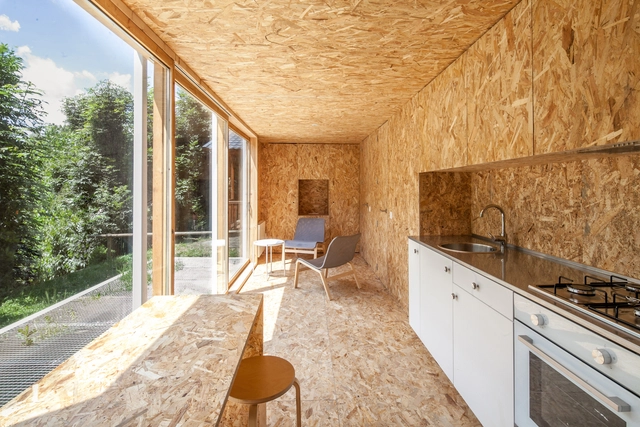
Photo by Rihards Sergis, via Unsplash. Editing: ArchDaily
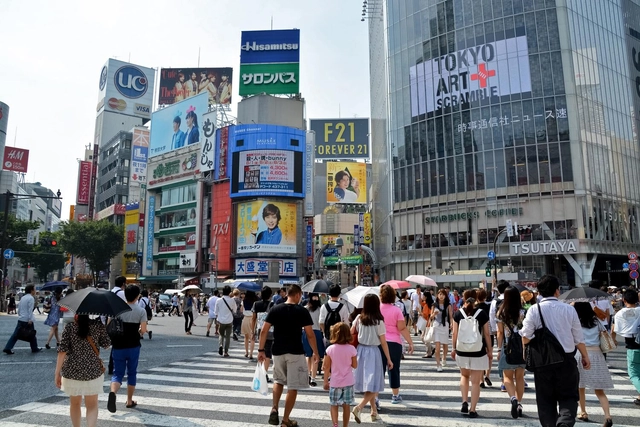
TikTok is a social network for sharing short videos that offers extensive features to edit them. It is possible to include filters, subtitles, soundtrack, gifs, make cuts and use creativity at will. As with Instagram and Twitter, you can follow other people's profiles and interact, liking their posts, making comments and even sharing via WhatsApp.
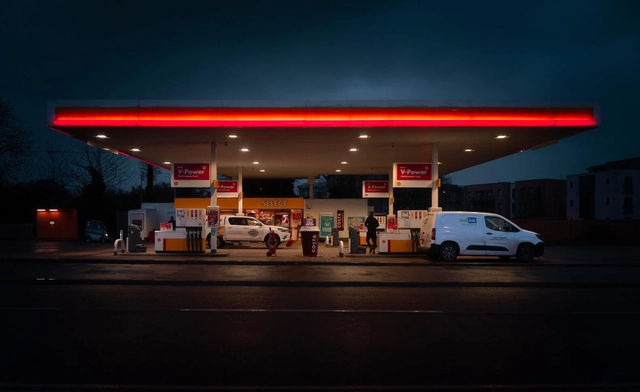
The era of petrol cars is coming to an end with the advent of batteries and electric cars – and so is the era of gas stations and the pollution they bring to communities.
Gas stations, by their very nature, are environmental hazards. Of the 450,000 hazardous locations in the US alone, half are contaminated by oil, with much of it coming from underground tanks leaking from former gas stations, creating risks of leaks and explosions.
Works in Balneário Camboriú. Source: Balneário City Hall (Reproduction)
Brazil is currently the sixth country in the world most affected by climate disasters, according to the United Nations. The primary issues are waterlogging and flooding, as they bring windstorms, landslides, and flash floods. One in three disasters in Brazil falls into this category — with more than 10,000 official occurrences recorded between 1991 and 2010.
In interior design – and many other design disciplines – it is much easier to be unsustainable. Buying or developing custom solutions for a room often requires less time and research than purchasing second-hand materials or concern for waste flow and the circular economy.
But the construction and decoration industry can no longer afford the luxury of ignoring the environmental impacts caused by their activities.
Sensory urbanism is a form of investigation of how non-visual information defines a city's character and affects its livability. Using methods that range from sound tracks and smell maps, wearables and virtual reality, researchers in this area have introduced other senses to urban centers.
Generation Z comprises people born after 1995. They grew along with the popularization of the internet and interact with the world by integrating all forms of available technology.
The diversity of available media, the speed in information traffic, the interactivity in the virtual environment and the daily use of these technological assets common today, influence the behavior of individuals of this generation, inspiring versatility, agility and curiosity.
Have you ever thought that practically all the cities in the world, since the dawn of humanity, were and continue to be created and designed by men? From urban design to building projects, from public transport to chairs – women have not been part of the process of creating everything around us.
Driven by Gen Z's preference for access over ownership, the secondhand market is beginning to see significant growth worldwide.
This includes the secondhand furniture market, which, in addition to giving a second life to items destined for landfills, helps reduce industrial CO2 emissions—manufacturing and shipping a single piece of furniture emits about 90kg of CO2, equivalent to a one-hour flight on a Boeing 747.
In the book Design of Childhood, architect and researcher Alexandra Lange states that children were considered nonpersons throughout almost the entire history of ancient and modern architecture, being excluded from the process of creating urban and interior spaces. This process has caused and is still causing several problems when children reach adulthood, since these children grew up being constantly watched by fear of movement and the eyes of adults.
Over the past 60 years, architects and engineers have surrendered to industrial construction solutions, with buildings designed to be built faster and faster and at very low cost.
Over the past 60 years, architects and engineers have surrendered to industrial construction solutions, with buildings designed to be built faster and faster and at very low cost. As a more standardized and cheaper international approach to building emerged throughout the 20th century, many professionals abandoned the vernacular traditions of their ancestral cultures, which were developed over thousands of years, to fight the climatic extremes of different regions.
Imagine explaining to someone 25 years ago what the professions of social media manager, uber driver, or drone operator are all about in 2020. Technology combined with population demands, resource scarcity, urbanization and other factors have created a number of new jobs and radically changed others. Research claims that 65% of children entering elementary school today will end up working in jobs that don't yet exist.
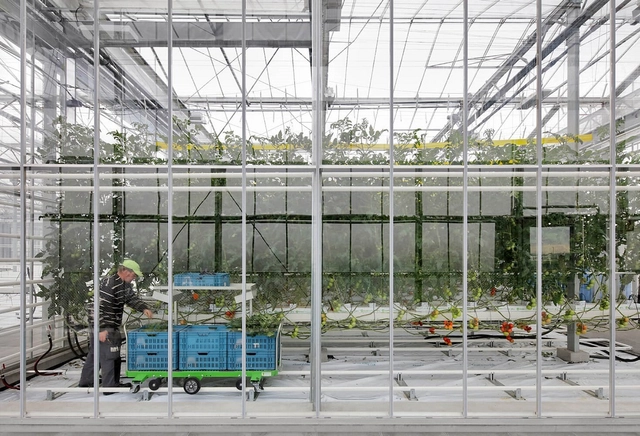
Do you know what urban farms are? Have you ever thought about growing your own food at home in your garden or in specialized freezers? Transporting food for consumption in cities is one of the major environmental (and financial) pollution problems in the world today.
Clearly, graphic designers are not architects, but collaborative projects between these two fields of knowledge, which intersect in their details, can work well.
Creative industry as a sector has evolved, and many people are now in new fields. If you're collaborating, you can move quickly and we've covered that here. The trend is to be collaborative, and very different from 25 years ago, when you should be a graphic designer alone doing layout and paper weights or an architect isolated in an office running autocad.
Have you ever heard of neuroarchitecture? What would spaces look like if architects designed buildings based on the emotions, healing and happiness of the user? Hospitals that help with patient recovery, schools that encourage creativity, work environments that make you more focused…
This is neuroarchitecture: designing efficient environments based not only on technical parameters of legislation, ergonomics and environmental comfort, but also on subjective indices such as emotion, happiness and well-being.