Marília Matoso

BROWSE ALL FROM THIS AUTHOR HERE

Copycat: Why Is Copying a Style Bad for Cities?

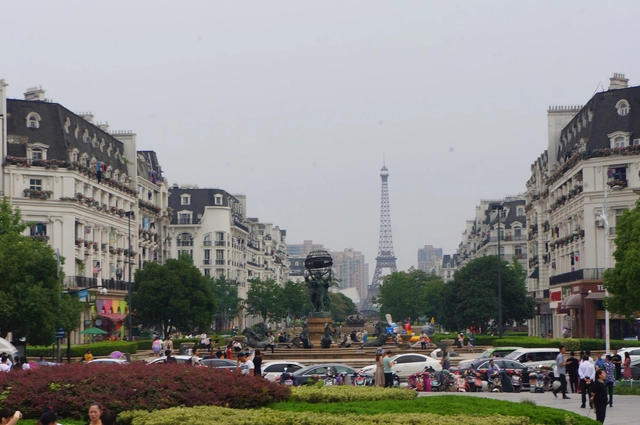
CopyCat is the act of emulating something that's already been created and using it in a different context. Copycats can exist in music, arts and design; but they are not exactly a design inspiration or a style reference, but rather a literal copy with almost no modification of the original work.

In architecture, it is as if you were inspired by an emblematic work from another space-time and placed it somewhere unconnected with the original roots of the work-style.

What is Design Justice?

Subscriber Access | 
What is Design Justice? - Featured Image
Asentamiento de Kya Sands en Johannesburgo, Sudáfrica. Photo © Johnny Miller Fotografía

Design Justice is a branch of architecture and design focused on redesigning cities, products, services and environments with historic reparations in mind.

The term emerged about 7 years ago when debates and dialogues about inclusion and diversity in spaces started to get stronger, creating movements that fought for the rights of people who had their roots and choices denied in society.

The Real Problems of Today’s Design

Subscriber Access | 

Since the emergence of the design profession, boosted in the Industrial Revolution with the increasing production of objects and the desire of a middle class eager to consume; designers, interior decorators and architects are known as professionals who create spaces and products to beautify the world.

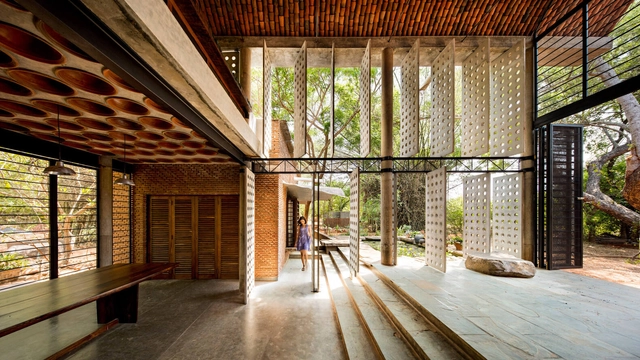
The Real Problems of Today’s Design - Image 1 of 4The Real Problems of Today’s Design - Image 2 of 4The Real Problems of Today’s Design - Image 3 of 4The Real Problems of Today’s Design - Image 4 of 4The Real Problems of Today’s Design - More Images+ 3

The legacy of women in design

Subscriber Access | 

For a long time, women have had their work excluded and erased in fields such as engineering, architecture, and design. There have always been inspiring women architects, planners, and urban policymakers, but worldwide, built environment professions—and particularly their upper echelons—remain heavily male-dominated, more so than other fields such as education or healthcare.

Metaverse: A Fertile Ground for Architects?

Subscriber Access | 

Metaverse is the name used to name an immersive, collective and hyper-realistic virtual environment, where people will be able to live together using 3D customized avatars.

It was coined by writer Neal Stephenson in his science fiction book “Snow Crash”, published in 1992. The work tells the story of “Hiro Protagonist”, a character who in real life is a pizza delivery boy, but in the virtual world – called metaverse in the story – is a samurai.

Where are the women architects?

Subscriber Access | 

Inspiring women architects, planners, and urban policymakers have always existed, yet worldwide, the built environment professions—particularly their upper echelons—remain heavily male-dominated, far more so than other fields like education or healthcare.

Three reasons why we need architects in healthcare systems

Subscriber Access | 

When we think of healthcare, we think of doctors, nurses, surgeons, radiologists, and anesthesiologists  – the people who treat illnesses and save lives.

Yet we often overlook a large group of people who make saving lives possible – medical coding specialists, healthcare service managers, hospital architects and engineers, and others working behind the scenes to deliver positive health outcomes.

Is design for those who can afford it?

Subscriber Access | 

The pioneering Black feminist Gloria Jean Watkins – better known by her lowercase pseudonym bell hooks – recently passed away at the age of 69. She leaves behind countless ideas that serve as the foundation for modern critiques of race, class, and gender.

Following her death, an essay published by hooks in 1998 resurfaced on a blog she occasionally wrote for, Lion’s Roar. The piece, titled “Design: A Happening Life,” is so relevant today that it is hard to believe it was written 25 years ago.

Ugly is the new beautiful: why we should democratize beauty

Subscriber Access | 

For designers and architects, ugliness has historically not been something to strive for. Culturally, however, we are increasingly weary of perfection.

Following decades of designs that behaved in similarly simple and orderly ways—particularly during the twentieth century, with the rationalism and purity of Modernism—we now long for expressions that are less sanitized and, at the same time, more human.

Designing for all bodies and people

Subscriber Access | 

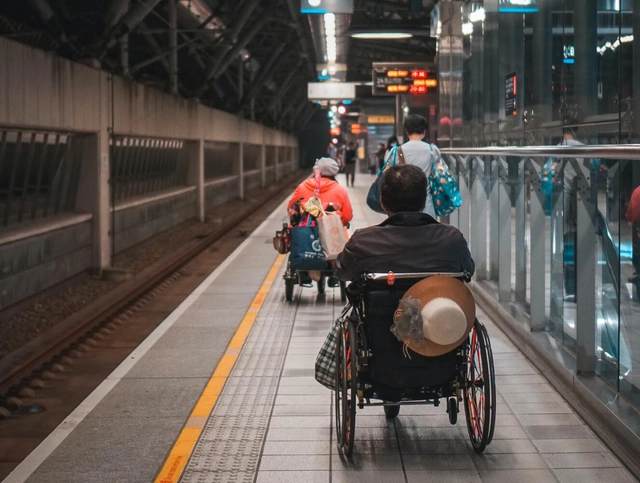
Disability and the diversity of bodies and people should be an engaging subject for architects: it is about lived experience, problem-solving, and designing a better built environment.

While the topic involves critical theory and aspirations for collective life, it is often viewed merely as a compliance-driven field—or worse, a sensitive subject fraught with outdated terminology and archaic habits of thought. Typical design routines do not always account for the variety of human bodies.

Rethinking the production and use cycles of materials in architecture

Subscriber Access | 

Have you ever heard of “agrowaste design”? This is how Filipino-Ghanaian architect Mae-Ling Lokko titles her work, a pioneering research initiative on the use of biomaterials in architecture. Alongside the growing demand for food production and housing in the 21st century, there is an equally fast-growing flow of material resources in the form of agricultural byproducts. This has the potential not only to close product lifecycle loops but also to foster forms of generative citizenship through upcycling.

Lokko seeks to rethink product cycles and use within the construction industry through a circular economy—where nothing is wasted and everything can be reused, even after it becomes obsolete.

Why the Traditional Shopping Mall Model Is Coming to an End

Subscriber Access | 

Shopping malls were a major trend in the early 1980s and '90s, when almost every major city around the world began investing in massive, climate-controlled retail complexes complete with food courts and movie theaters.

In Brazil, this shopping mall boom as a development model still persists in major cities and even in the country's interior. Shopping malls have acquired crucial importance for the development and maintenance of the logic of capital. Every city that "develops" has one or more malls woven into its urban fabric.

How to build more creative cities and housing?

Subscriber Access | 

“Since the Industrial Revolution, assembly lines have dictated a world made of parts, framing the imagination of architects and designers who were trained to think of their projects as the result of pieces with distinct functions.” These were the words of Israeli architect and MIT Media Lab researcher Neri Oxman during her TED Talk entitled “Design at the intersection of technology and biology.”

Oxman emphasizes that our traditional way of building has remained unchanged for millennia and must be reinvented. Indeed, we have been taught to construct buildings and cities in a rationalized, piecemeal manner, without considering the whole. To this day, this logic is still taught in universities.

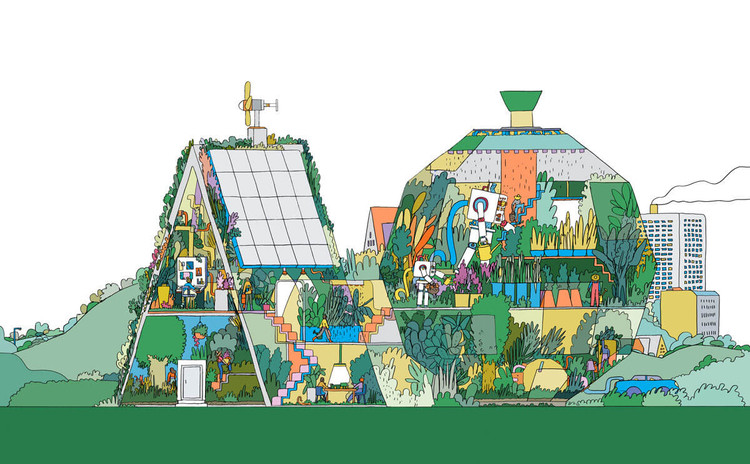
The future of food is flexible, autonomous, and passes through cities

Subscriber Access | 

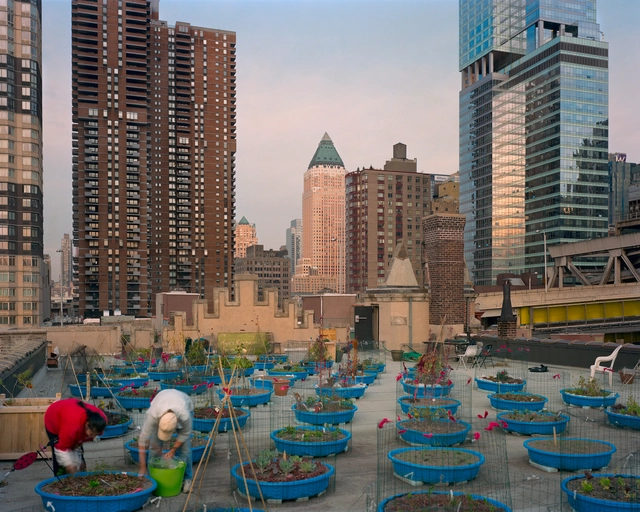
Twelve thousand years ago, our ancestors noticed that wherever a seed or fruit fell, a plant grew. Realizing they could intentionally plant seeds and harvest them later, they stopped migrating in search of food and settled permanently where they could cultivate. In doing so, they began establishing the world's first cities and inventing what we now call agriculture.

The future of food is flexible, autonomous, and passes through cities - Image 1 of 4The future of food is flexible, autonomous, and passes through cities - Image 2 of 4The future of food is flexible, autonomous, and passes through cities - Image 3 of 4The future of food is flexible, autonomous, and passes through cities - Image 4 of 4The future of food is flexible, autonomous, and passes through cities - More Images+ 1

Assisted self-construction: an unexplored path in Brazil

Subscriber Access | 

Did you know that, in almost every part of the world, people build their homes every day without the help of architects and engineers?

Common in Brazil's peripheral areas, self-construction is an option for those who want their own customized home without facing unwanted bureaucracy or long-term debt. However, the choice to build one's own residence without the technical support of engineers and architects is often accompanied by a lack of information, which can lead to irregularities, poor construction quality, and risks for the residents.

Assisted self-construction: an unexplored path in Brazil - 1 的图像 4Assisted self-construction: an unexplored path in Brazil - 2 的图像 4Assisted self-construction: an unexplored path in Brazil - 3 的图像 4Assisted self-construction: an unexplored path in Brazil - 4 的图像 4Assisted self-construction: an unexplored path in Brazil - More Images

Creating projects through a decolonial lens

Subscriber Access | 

Decolonize. You have probably heard this word before, but if you have no idea what it means, you might guess it has something to do with colonization. We Brazilians know all too well what colonization is: we were a colony of Portugal for many years, we speak Portuguese, we eat salted cod at Easter, and we are, for the most part, Catholic because of it.

To understand the word "decolonize," however, is to recognize that colonization brought not only linguistic, religious, and culinary heritages, but also involved widespread exploitation: cultures were erased, local leaders were killed, riches were stolen, and memories were destroyed.

Creating projects through a decolonial lens - Imagem 1 de 4Creating projects through a decolonial lens - Imagem 2 de 4Creating projects through a decolonial lens - Imagem 3 de 4Creating projects through a decolonial lens - Imagem 4 de 4Creating projects through a decolonial lens - More Images