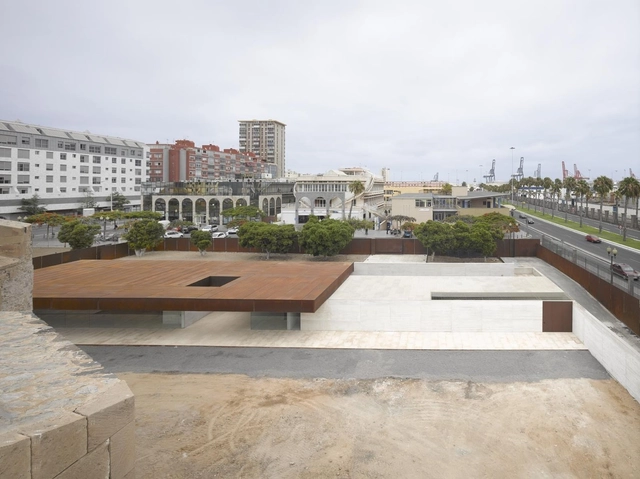
2015 Spanish Architecture Award Mention: Castillo de la Luz Museum / Nieto Sobejano Arquitectos. Image
The Spanish Council of Architects' Associations (CSCAE) is launching, for the first time jointly, its awards for Spanish Architecture, International Spanish Architecture, Urban Planning, and the Gold Medal for Architecture.
Through these, the CSCAE aims to recognize the best work in the fields of architecture and urban planning, as well as the individuals and institutions whose efforts elevate the architectural profession.
This month we presented a grim future for the world's urban centers: the temperature increase of 520 cities by 2050. The warning that "Madrid's climate will resemble Marrakech's today" highlights not only a major concern but an urgent call to action, especially for designers of the built environment.
In a timely response, the Higher Council of the Colleges of Architects of Spain (CSCAE) issued an institutional declaration of climate and environmental emergency, committing to establish and reinforce measures to halt global warming and transition the country to a low-environmental-impact economy.
The following is an overview of the declaration issued by the CSCAE.
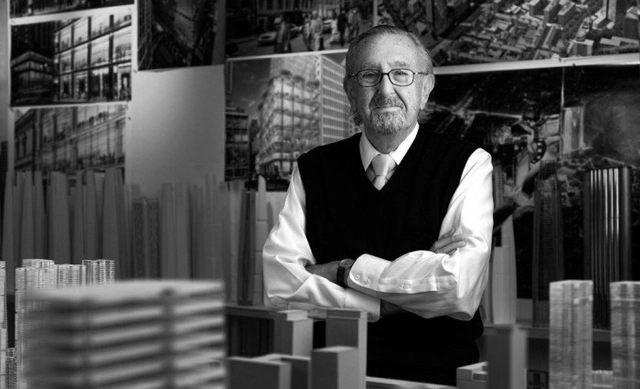
Argentine architect César Pelli, known for designing some of the world's tallest buildings, such as the Petronas Towers in Kuala Lumpur, the Torre de Cristal in Madrid, and the Costanera Center building in Santiago, Chile, passed away today at the age of 92, as confirmed on social media by Juan Manzur, governor of the province of Tucumán.
The 17th Architecture Biennale will take place in Venice from May 23 to November 29, 2020. The Patronato Cultural del Perú is currently in the first stage of its open call to select the project that will represent the country at the Biennale.
ArchDaily is working with CityMakers to publish a series of articles, conversations, and interviews with the various actors in urban co-production behind the Barcelona CityMakers Lab 2019, an event taking place from October 14 to 20, 2019.
CityMakers promotes the transformation of cities and territories by connecting professionals from around the world with benchmark cities to learn about their practices in global positioning, mobility, the built environment, economy, and governance, inspiring change in their own communities.
For this first installment, we have compiled excerpts from a conversation with architect and urban planner Camilo Osorio, Executive Director of CityMakers, who discusses a paradigm shift in urban planning and the birth of CityMakers as a community that seeks to inspire change through the on-site study of exemplary cities around the world.
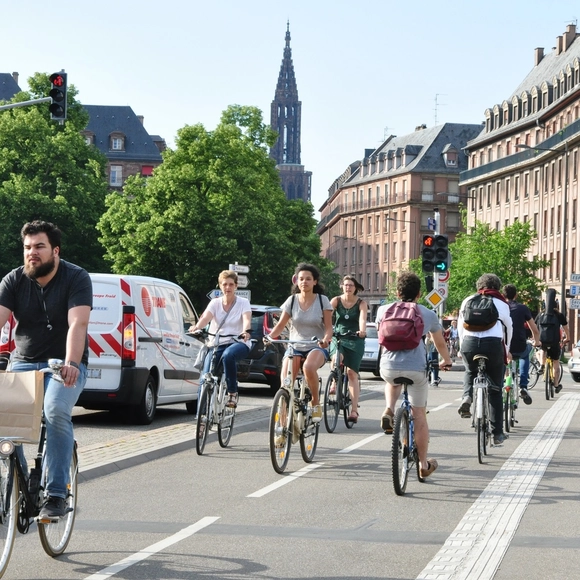
It should come as no surprise that one of the most respected surveys about bicycle use comes from a Danish organization. This ranking by Copenhagenize Design Company uses a point system to compile a list of the cities looking to re-establish the bicycle as an accepted and practical mode of transportation.
"Since childhood, I had lived by the warmth of the stove that heats and at the same time gathers the family. Seeking that warmth was a necessity in southern Chile. Here in the tropics, it is the cooling shade that gathers us, and unlike the stove, it is everywhere."
Based in Costa Rica, Bruno Stagno does not simply initiate reflections on how environmental responses can form the basis of architectural inspiration and identity; he proposes to go further, advocating for an architecture tailored to a specific latitude.
The inaugural “Barcelona CityMakers Lab 2019” will take place from October 14 to 20, offering a week to learn about and experience Barcelona. Over the course of seven days, city-making professionals from around the world will participate in workshops, lectures, panels, urban itineraries, specialized site visits, and interactions with the leading figures and institutions currently reinventing the “Barcelona model.”
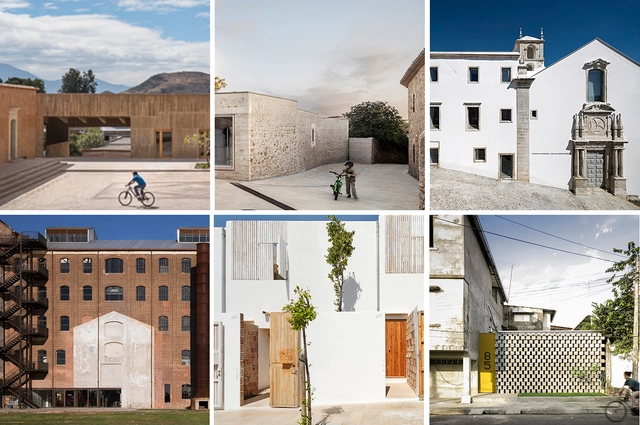
The open call for the Panorama of Works section sought architecture and urban planning projects built in Ibero-America by architects, either individually or in teams, completed between January 1, 2016, and December 31, 2018, that had not been submitted in previous editions.
Unlike its TV and film counterparts, which imagine the future as an over-populated dystopian nightmare overrun with violence and chaos, Black Mirror paints a picture of a near future that aligns far more with our current reality--and nowhere is this more apparent than in the architecture shown in the series.
I met Vera Primavera in Ibarra, Ecuador, during the sixth edition of EARQ (PUCE-SI)—a graffiti and tattoo artist whose work revolves around mysticism, magic, intimacy, and women in the city.
One of the first things I hear upon arrival is that the sixth edition of the Academic Event of the School of Architecture (EARQ) was not only organized by students, but is also part of the graduation requirements to become an architect at the Pontifical Catholic University of Ecuador (PUCE-SI). This management work, without a doubt, carries conditions that closely align with what we recognize as necessary in our discipline today.
The winners of the Richard H. Driehaus Building Arts Awards, presented annually to four master craftspeople in various traditional building trades in Spain, have been announced.
The UNESCO World Heritage Committee has decided to remove the Humberstone and Santa Laura Saltpeter Works in northern Chile from the List of World Heritage in Danger, a status they had held since 2005.
via Flickr user: icelight Licensed under CC BY 2.0
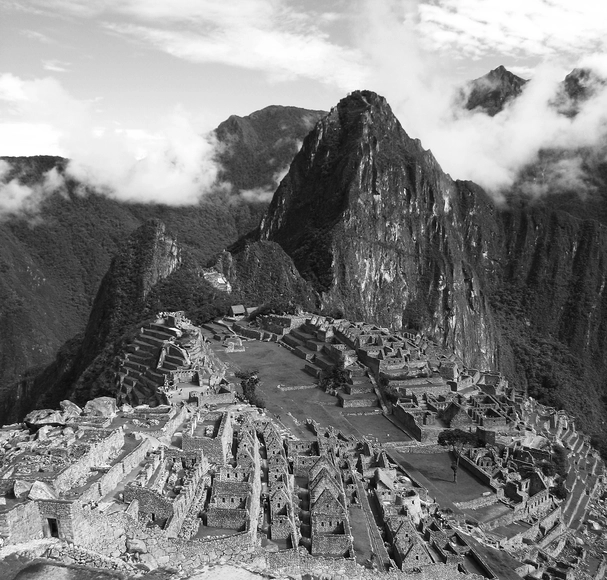
Media outlets and social networks have been abuzz with controversy surrounding the Chinchero Airport project, a new international air terminal in Peru. The project aims to replace the current Alejandro Velasco Astete International Airport in downtown Cusco and improve direct connections to nearby destinations, most notably Machu Picchu.
For 25 years, the MAC Valdivia Museum of Contemporary Art has hosted exhibitions by more than 2,000 artists. Now, construction is set to begin on its latest restoration and expansion project, designed by Cristián Undurraga, under an agreement signed by the Los Ríos Regional Government, the Directorate of Architecture of the Ministry of Public Works, and the Universidad Austral de Chile.
.jpg?1563469230&format=webp&width=640&height=580)
.jpg?1563467808&format=webp&width=640&height=580)