We all know that architecture is a complex field that requires input from many disciplines to be realized. While design lies at the core of every project, without technical expertise, many would not be what they are today. What would Brasilia be without Roberto Burle Marx's landscape design? Would OMA's CCTV Headquarters in Beijing stand without ARUP's structural calculations? Would ELEMENTAL's housing projects be the same without the contributions of their future residents?
We want to give you the opportunity to openly share your thoughts and experiences on this particular topic. Tell us what you think multidisciplinary design in architecture is, and share your story. Selected responses will be featured in an upcoming article.
The upcoming edition of Open House Madrid, taking place from September 24 to 26, will pay tribute to Spanish architect Luis Gutiérrez Soto, a key figure and promoter of the Modern Movement in España.
At ArchDaily en Español, we recognize the need to stay in constant contact with architecture students, who will be responsible for designing and building the cities of the future. For this reason, we periodically open a call for applications to join our editorial team through our internship program.
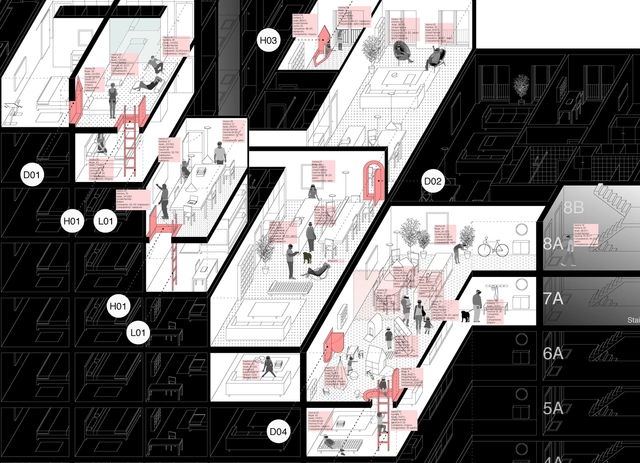
Bloque de viviendas genérico tras ser parcialmente hackeado (simulacro gráfico de modos subversivos de coexistencia). MAPAa, 2021.. Image Cortesía de Marcos Parga
Marcos Parga, director of the Madrid-based studio MAPAa, presents a speculative essay titled "Everyday Rebellions." This is a series of reflections on new domesticities and some considerations regarding the challenges we face in architecture following the COVID-19 pandemic, focusing primarily on how to reimagine and update domestic groupings in our cities.
One of the key questions of Parga's research: What if we were provided with a new type of "retroactive" tools to recalibrate and unlock our domestic life and community interactions, exploring the hackable potential of today's housing blocks?
"Domingos Libro" is hosted by Carmelo of Enorme Studio, where every two weeks, he delves deeply into forgotten architectural publications, books, and magazines from the '60s, '70s, and '80s that have the most interesting stories behind them.
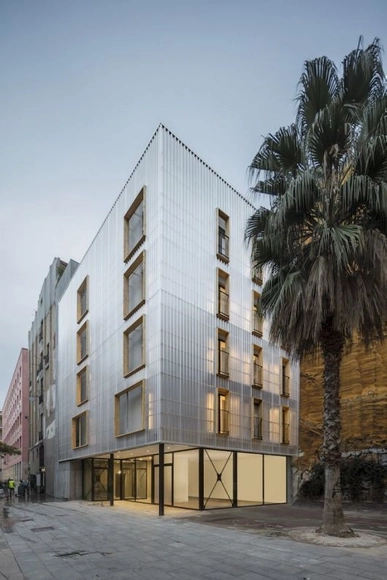
Yaiza Terré founded her own architecture studio in Barcelona in 2008, where she currently focuses her professional practice on renovation and reinterpretation projects based on reuse and recycling. Aprop Ciutat Vella is one of her works: a modular emergency housing building made from recycled containers, developed in collaboration with Straddle3 and Eulia Arkitektura. Recently, it was awarded first place in the 2021 Building of the Year Award (highlighting the best built architecture in Latin America and Spain). We reached out to her to learn more about her architectural practice.
In this interview with Yaiza Terré, we explore how this latest recognition helps open up the debate on urban regeneration and the housing crisis in cities. At the same time, we delve into her inspirations, interests, and motivations regarding restoration and adaptive reuse; examine her collaborative and reflective design process; and discuss her upcoming projects and vision for the future of Spanish cities.
When we speak of a field, we necessarily establish a measure. That reference of and about that field is currently modeled in relation to the historical events we are experiencing and the various phenomena that keep us in suspense regarding the uncertainty of what is to come.
When we speak of a field, we necessarily establish a measure. That reference of and about that field appears today, shaped by the historical events we are living through and the various phenomena that keep us on edge regarding the uncertainty of what is to come.
When we speak of a field, we necessarily establish a measure. Today, that reference of and about that field appears shaped by the historical events we are experiencing and the various phenomena that keep us on edge regarding the uncertainty of what is to come.
How can we design spaces that are healthy for our minds and bodies? This is the central question we will address this March as we focus on the topic of interiors and well-being.
When we speak of a field, we necessarily establish a measure. Today, that reference to and of the field appears shaped by the historical events we are experiencing and the various phenomena that keep us on edge regarding the uncertainty of what is to come.
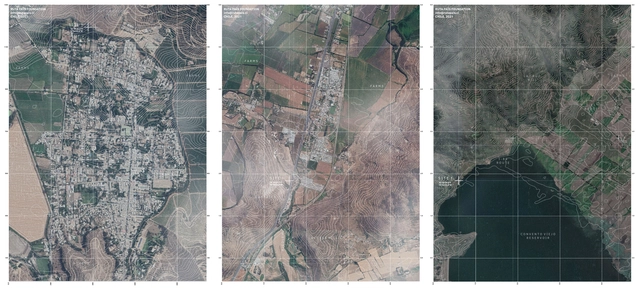
The Chilean organization Ruta Pais Foundation has invited international architects and local artisans to design a series of architectural interventions in order to create 3 artisan routes in the Chilean Central Valley: Wicker Route in Chimbarongo, Clay Route in Pomaire, and Stone Route in Pelequén.
"Domingos Libro" is presented by Carmelo of Enorme Studio. Every two weeks, he delves into forgotten architectural publications, books, and magazines from the '60s, '70s, and '80s that have the most interesting stories behind them.
In this eighth episode, titled "I'm Gonna Be a Rock & Roll Star," he discusses issue 231 (February 1984) of the French magazine L'Architecture d'aujourd'hui, which was dedicated to Jean Nouvel's projects from 1977 to 1983. Among these, an interview with the French architect stands out, where his words are accompanied by staged portraits that fictionalize everything he says in the interview.
Concéntrico, Logroño's International Architecture and Design Festival, has announced the winning proposals for their three open competitions in three locations in the historic center of Logroño, in Spain.
This edition of the competitions sought to create a Pavilion in the Plaza de Escuelas Trevijano and two interventions, one in the River Ebro walk and the other in Viña Lanciano by Bodegas LAN.
On Thursday, April 22, 2021, at 11:00 AM (Buenos Aires time), Zaida Muxí and Claudia Santaló will discuss gender perspectives in architectural education. This event is organized by the Cátedra Antonio Díaz at FADU - UBA.
The 12th Congress on the History of Spanish Modern Architecture will take place on April 14, 15, and 16. Originally scheduled for last year, the event was postponed due to COVID-19. This edition will be held online.
The Congress is titled "Industrial Buildings: Icon and Space of Progress for Architecture at the Dawn of Modernity."
We sat down with Azócar and Catrón to discuss their current interests and motivations, their collaborative processes, their career trajectory, their upcoming projects, and their predictions about the future of architecture in their native Chile.