Archivo de Ideas Recibidas is an interdisciplinary research and dissemination project that seeks to document and connect the ideas of individuals contributing to the contemporary creative ecosystem through art, design, and architecture. It is built upon conversations between the team and various creators, exploring topics related to memory, academia, cultural context, key influences, and working methodologies. This time, they share an interview on cinema and architecture with Mauricio Freyre (Estudio Rien).
Fabian Dejtiar
Architect and Project - Team Lead at ArchDaily Instagram: @ fabe.de
BROWSE ALL FROM THIS AUTHOR HERE
↓
Archive of Received Ideas: Mauricio Freyre / Estudio Rien
https://www.archdaily.com/1127657/archive-of-received-ideas-mauricio-freyre-estudio-rienFabian Dejtiar
This Too Shall Pass: The Story Behind the Museum of the Ephemeral and the Sacred in Taccone
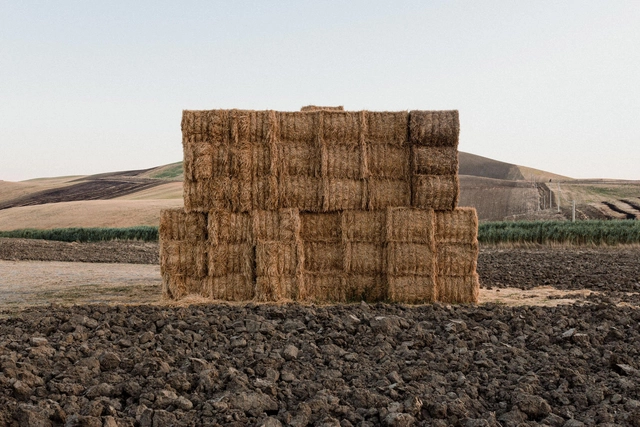
Carlos Hevia Riera is a Chilean architect and photographer driven by highlighting the value of daily life in rural and isolated territories. In this context, his latest project, 'Esto también pasará. Taccone città effimera' (This Too Shall Pass: Taccone, Ephemeral City), is the result of his artistic residency in Taccone, in the municipality of Irsina, from August to October 2019. This residency enabled him not only to build a temporary museum made of straw bales but also to uncover a surprising and little-known history.
In the following interview, he shares an in-depth look at his work, from his initial impressions to each of the steps behind this collective construction of memory.
https://www.archdaily.com/1127663/this-too-shall-pass-the-story-behind-the-museum-of-the-ephemeral-and-the-sacred-in-tacconeFabian Dejtiar
70 Continental Winning Projects of the 2021 Prix Versailles
.jpg?1638218309&format=webp&width=640&height=580)

.jpg?1638218309)
18 shops and stores, 16 shopping malls, 18 hotels, and 18 restaurants have been selected as continental winners of the 2021 Prix Versailles awards across six regions: Africa and Western Asia; Central America, South America, and the Caribbean; North America; Central and Northeast Asia; South Asia and the Pacific; and Europe. The selected projects will now compete for the world titles, which will be announced on December 15, 2021.
As in previous years, the selection criteria focused on innovation, creativity, the reflection of local, natural, and cultural heritage, and ecological efficiency, as well as the values of social interaction and participation. Discover all the continental winners below.
https://www.archdaily.com/1127760/70-continental-winning-projects-of-the-2021-prix-versaillesFabian Dejtiar
Anne Lacaton at #laciudadquequeremos: "Housing must be the pillar of any urban policy"

September 10 marked the closing of the sixth edition of the Pamplona International Architecture Congress: “The City We Want.” Over three days, 16 speakers from various disciplines shared their expertise to reflect on the global challenges facing the future of cities, addressing dimensions such as ecology, sustainable mobility, social equity, health and well-being, and the humanization of public spaces.
One of the opening keynotes on the first day was delivered by 2021 Pritzker Prize laureate Anne Lacaton of the firm Lacaton&Vassal. Her presentation emphasized housing as the core of social well-being and urban policy, and she advocated for the right to open space within the home. “Housing must be the pillar of any urban policy,” she asserted.
https://www.archdaily.com/1127858/anne-lacaton-at-number-laciudadquequeremos-housing-must-be-the-pillar-of-any-urban-policyFabian Dejtiar
Open Question: Is it time for an architecture for all uses?
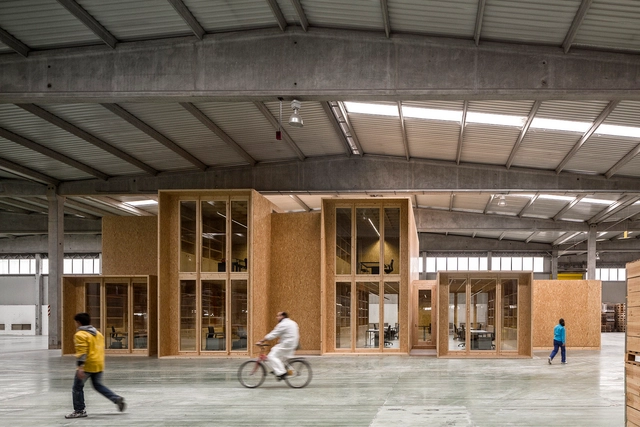
Driven by necessity, various building types have changed their use. Churches that are now libraries, abandoned warehouses turned into cultural centers—and while much has been written on the subject, from N. John Habraken's 1970s Open Building concept to Adamo Faiden's contemporary From Mixed-Use to Diff-Use, today we are experiencing, more than ever, a compelling global debate surrounding housing adaptability. Is it necessary to dedicate so much square footage to offices when, during the pandemic, we realized that a large portion of work can be done remotely? This was one of the central questions during the lockdowns of recent years.
Undoubtedly, buildings are on the radar for what we can do with them in the near future—especially as the climate crisis enters the equation. "The greenest building is the one that is already built," says Carl Elefante. Adaptive reuse and adaptability will surely be the defining terms on the lips of architecture professionals worldwide. Thus, it is time to reflect further on how design can address this challenge.
https://www.archdaily.com/1127847/open-question-is-it-time-for-an-architecture-for-all-usesFabian Dejtiar
Sergio Baeriswyl on Human Cities: Exploring the Theme of the 2021 Southern World Triennial
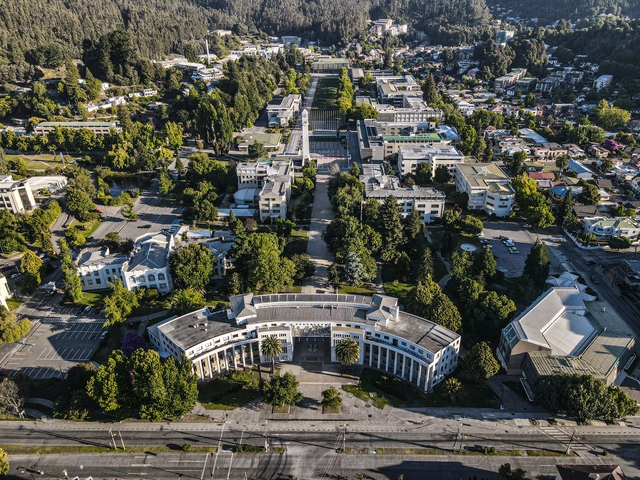
The primary goal of the Trienal Sur del Mundo, taking place from November 26 to December 4 in Concepción, Chile, is to foster debate around the challenges facing intermediate cities and how to improve the quality of life for their inhabitants.
Sergio Baeriswyl—an architect and urban planner who has dedicated much of his career to public administration in Concepción—is serving as the general curator. We interviewed him to get a preview of what to expect in this upcoming edition.
https://www.archdaily.com/1127873/sergio-baeriswyl-on-human-cities-exploring-the-theme-of-the-2021-southern-world-triennialFabian Dejtiar
Building of the Year 2021: The winners of the award for the best architecture in Spanish
Last week we announced the 15 finalist projects for the 2021 Obra del Año Award, which since 2008 has celebrated the best built architecture in Latin America and Spain, calling on our jury of experts—you, our readers—to choose your favorite built projects from nearly 1,000 works published in 2020.
Today, the day has come to announce the winners of ODA2021!
The 2021 Obra del Año Award is brought to you by Dornbracht, renowned for its leading architectural designs, which can be found in bathrooms and kitchens worldwide.
https://www.archdaily.com/1127864/building-of-the-year-2021-the-winners-of-the-award-for-the-best-architecture-in-spanishFabian Dejtiar
Ad Urbis: "Architecture practices are an obsolete concept for operating in Cuba"
.jpg?1611317602&format=webp&width=640&height=580)
Ad Urbis is a Cuban collective navigating the complexities of inserting contemporary architecture into a high-value heritage context like Havana, prioritizing above all architectural research, theory, and practice across the realms of design and education.
We interviewed the collective to explore their reflections, workflows, the relationship between practice and academia, and their upcoming projects and outlook for the future of architecture in Cuba.
https://www.archdaily.com/1127883/ad-urbis-architecture-practices-are-an-obsolete-concept-for-operating-in-cubaFabian Dejtiar
"They aren't used in big cities simply because they aren't regulated": Our readers weigh in on local materials
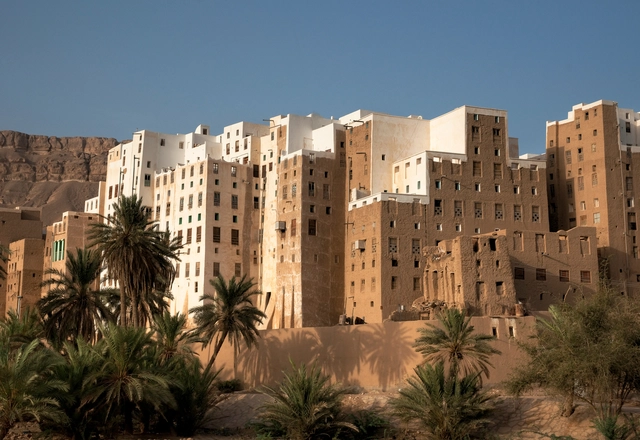
The construction industry's role in today's climate crisis is deeply concerning—between material production, building execution, and operations, the sector is one of the largest emitters of greenhouse gases. At the same time, urban populations are growing at unprecedented rates. Within the shaping of major cities—which consume massive amounts of energy—reducing the discipline's impact seems to rely on small-scale interests and personal initiatives rather than sweeping action from the academic, professional, or political spheres.
History has provided us with numerous construction techniques and local material uses that have proven sustainable over time. This involves the efficient use of resources that bypass major industrial processing stages and eliminate the need for long-distance transport. In some cases, at the end of their life cycle, they can even be returned to the environment, such as adobe and timber. In other instances, reclaimed materials—such as recyclable waste and debris generated directly on-site—can also be integrated. Undoubtedly, modern technology and knowledge can help optimize these materials for large-scale application in major cities. Is it possible to develop projects with low environmental impact and adapt them to dense urban contexts? Is this the future path for building materials?
https://www.archdaily.com/1127884/they-arent-used-in-big-cities-simply-because-they-arent-regulated-our-readers-weigh-in-on-local-materialsFabian Dejtiar
12 Christmas Tales by Superstudio
"Domingos Libro" is hosted by Carmelo from Enorme Studio. Every two weeks, he delves into forgotten architectural publications, books, and architecture magazines from the '60s, '70s, and '80s that carry the most fascinating backstories.
This new episode is a holiday special focusing on the December 1971 issue of Architectural Design magazine and the "12 Cautionary Tales for Christmas" proposed by Superstudio.
https://www.archdaily.com/1127846/12-christmas-tales-by-superstudioFabian Dejtiar
Óscar Borasino, José Canziani, Juvenal Baracco, and Frederick Cooper: Winners of the Lifetime Achievement Award at BIALIMA 2021
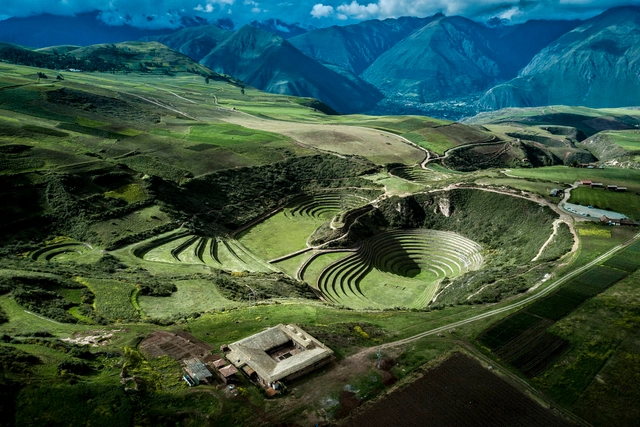
Following the restoration of the building originally designed by architects Óscar Borasino and Ruth Alvarado—the Mil Centro renovation by Estudio Rafael Freyre—one can quickly understand the importance of legacies.
This is precisely what the CAP-RL Lifetime Achievement Award - Casa Rosselló Award sought to celebrate. Organized by the Lima Regional Chapter of the Peruvian Association of Architects as part of the I Lima International Biennial of Architecture (BIALIMA 2021), the award aimed to recognize and highlight architects and professionals whose significant project, cultural, academic, and public service contributions have consistently demonstrated a combination of coherence, talent, vision, and commitment over time, and whose work has made a consistent and meaningful contribution to society, the profession, and the built environment.
https://www.archdaily.com/1127747/scar-borasino-jose-canziani-juvenal-baracco-and-frederick-cooper-winners-of-the-lifetime-achievement-award-at-bialima-2021Fabian Dejtiar
Houses for Sale at Leo Castelli Gallery: Another Way to Buy Housing Projects in 1980
"Domingos Libro" is presented by Carmelo from Enorme Studio, where every two weeks, he delves into forgotten architectural publications, books, and architecture magazines from the 60s, 70s, and 80s that have the most interesting stories behind them.
In this new episode, he discusses the catalog of the exhibition "Houses For Sale," published by Rizzoli and B.J. Archer in 1980. Through the Leo Castelli Gallery, one could purchase the designs for eight houses by renowned architects (Emilio Ambasz, Peter Eisenman, Vittorio Gregotti, Arata Isozaki, Charles Moore, Cesar Pelli, Cedric Price, and Oswald M. Ungers), upending the traditional "client commissions architect for their dream home" relationship.
https://www.archdaily.com/1127732/houses-for-sale-at-leo-castelli-gallery-another-way-to-buy-housing-projects-in-1980Fabian Dejtiar
"We must anticipate population mobility and build faster," our readers share their thoughts on migration in cities

Economic crises, health emergencies, and natural disasters, followed by social conflicts, political disagreements, and the search for new places to live, have historically driven the displacement of hundreds of thousands of people. The result: changes in residence, habitat, and culture.
https://www.archdaily.com/1127744/we-must-anticipate-population-mobility-and-build-faster-our-readers-share-their-thoughts-on-migration-in-citiesFabian Dejtiar
Weaving the Street: Testimonies of Participation and Recycling for Summer Shade
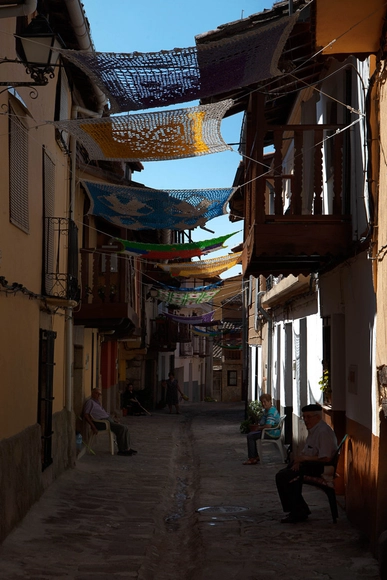
"You should know that Mr. Matías took down one of the sunshades from where you installed it and put it on his balcony, because he wants the shade right at his doorstep," says Pepe, a resident of Valverde de la Vera, a small rural municipality in Extremadura, featured in the book "Tejiendo la Calle." This new publication gathers nearly ten years of testimonies from weavers and residents who brought to life the project of the same name, initiated by Marina Fernández Ramos in 2013.
https://www.archdaily.com/1127826/weaving-the-street-testimonies-of-participation-and-recycling-for-summer-shadeFabian Dejtiar
Architecture students reimagine the Bauhaus in the 21st century
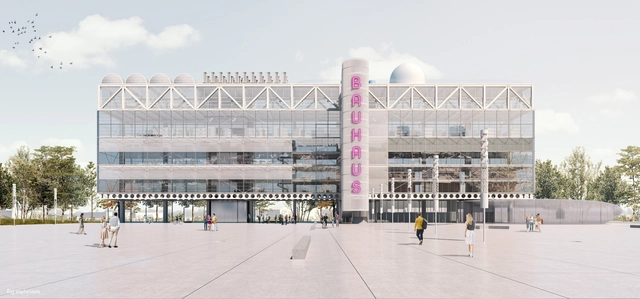
The Bauhaus Campus 2021 Student Architecture Competition, organized by Arkitekturo, brought together future professionals from around the world to reimagine what the Bauhaus could become in the 21st century.
https://www.archdaily.com/1127829/architecture-students-reimagine-the-bauhaus-in-the-21st-centuryFabian Dejtiar
The Best Student Projects in Latin America and Spain 2021
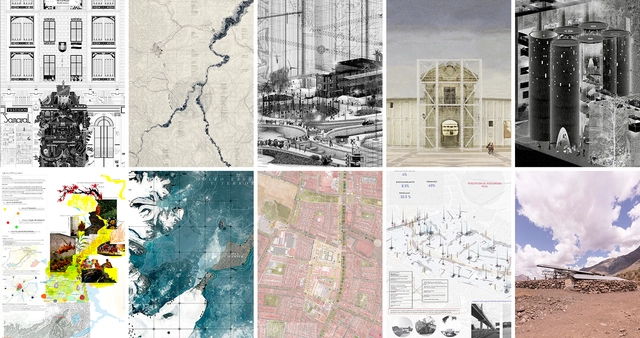
To showcase the valuable academic production of Latin American and Spanish universities, we launched an open call this year, inviting architecture students to submit their thesis projects completed in 2020.
Following a thorough review of 305 submissions, our editorial team selected and highlighted 10 projects that demonstrate rigorous critical thinking in response to their chosen issues. The selection process not only valued projects that delivered the best possible architecture through efficient design suited to their context, program, and users, but also those demonstrating significant attention to human scale, experimentation, and novel ways of approaching architecture in cities. Additionally, we recognize 10 honorable mentions whose immense dedication and academic quality made them impossible to overlook.
https://www.archdaily.com/1127811/the-best-student-projects-in-latin-america-and-spain-2021Fabian Dejtiar
Archive of Received Ideas: Cristina Dreifuss / Criticism, Theory, and History of Architecture
Archivo de Ideas Recibidas is an interdisciplinary research and dissemination project that aims to document and connect the ideas of those contributing to the contemporary creative ecosystem through art, design, and architecture. It is built upon conversations between the team and various creators, exploring topics related to memory, academia, cultural context, key influences, and working methodologies. On this occasion, they share with us an interview with Cristina Dreifuss on architectural Criticism, Theory, and History.
https://www.archdaily.com/1127832/archive-of-received-ideas-cristina-dreifuss-criticism-theory-and-history-of-architectureFabian Dejtiar
Patxi Mangado and José María Ezquiaga Open the 2021 Architecture and Society Congress: “We must reclaim the public dimension of the city”
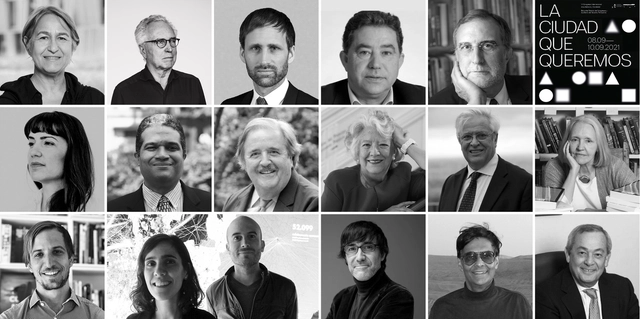
From September 8 to 10, the sixth edition of the International Architecture Congress, titled "The City We Want," will take place. For the first time, the event can be followed live via the Architecture and Society Foundation's YouTube channel.
https://www.archdaily.com/1127714/patxi-mangado-and-jose-maria-ezquiaga-open-the-2021-architecture-and-society-congress-we-must-reclaim-the-public-dimension-of-the-cityFabian Dejtiar