Eduardo Souza

Brands and Materials Senior Editor. Architect and Master from Federal University of Santa Catarina (UFSC).

BROWSE ALL FROM THIS AUTHOR HERE
↓

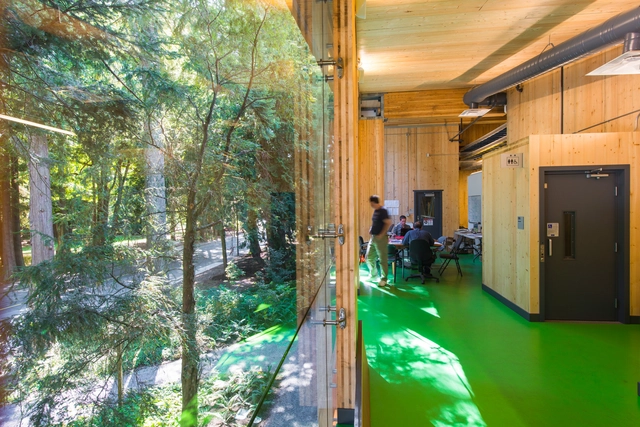
There is Life After Demolition: Mass Timber, Circularity and Designing for Deconstruction

Subscriber Access | 

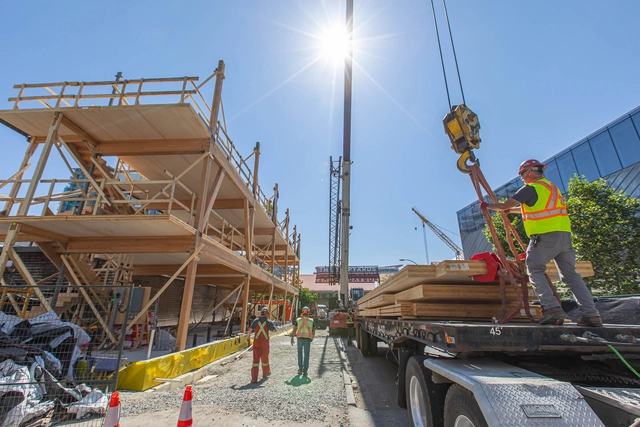
The first Shikinen Sengu was held in the year 690, in the city of Ise, Mie Prefecture, Japan. It consists of a set of ceremonies lasting up to 8 years, beginning with the ritual of cutting down trees for the construction of the new Ise Shrine and concluding with the moving of the sacred mirror (a symbol of Amaterasu-Omikami) to the new shrine by Jingu priests. Every 20 years, a new divine palace with exactly the same dimensions as the current one is built on a lot adjacent to the main sanctuary. Shikinen Sengu is linked to the Shinto belief in the periodic death and renewal of the universe, while being a way of passing on the ancient wood construction techniques from generation to generation.

The idea of creating a building that will have an expiration date is not a common one. In fact, the useful life of a structure is often given little consideration. When demolished, where will the materials go? Will they be disposed of in landfills or could they be reused in new projects? There are certain construction methods and materials that make this process easier. Others make reuse unfeasible, due to several factors. 

Keyboards can be a part of and enhance the aesthetics of an architectural design.

Subscriber Access | 

When entering a dark, unfamiliar room, our hands instinctively grope along the wall, searching for a keypad to turn on the lights—and, with luck, finding it. It is one of those many things we only truly notice when they are poorly designed. When designing a space, placing controllers in accessible and intuitive locations requires careful attention from designers. Keypads belong to that category of objects we want to be easily found when needed, yet prefer to remain hidden when not in use. This is because their design often draws more attention than it should, potentially clashing with the space's aesthetic. But this does not always have to be the case. There are options that seamlessly combine design and functionality, offering customization that allows controllers to fit into any type of project.

Copper Can Be Endlessly Recycled: 8 Projects With Sustainable Cladding

 | Sponsored Content

It is believed that copper was the first metal to be found by men and used in the manufacture of tools and weapons. This occurred in the last period of prehistory, more than 10,000 years ago, in the so-called Metal Age, when groups, until then nomadic, started to become sedentary, developing agriculture and starting the first urban settlements. Copper has since been used in diverse ways. Used for decorative objects, jewelry, automotive parts, electrical systems, and even for dental amalgams, the material has had huge demand. In architecture, copper coatings are greatly appreciated for their aesthetics and durability. But a factor worth mentioning is that copper can be recycled infinitely, practically without losing its properties.

Where Does Wastewater Go?

Subscriber Access | 

When water runs down the drain or we flush it down the toilet, we usually don't care where it ends up. This is because with adequate basic sanitation, wastewater shouldn't be a concern. Yet, although humanity has already taken man to space and plans to colonize Mars, it continues to fail to provide basic living conditions for a large part of its population. A comprehensive study estimates that 48% of global wastewater production is released into the environment untreated. The UN, in turn, presents a much less encouraging figure, citing that 80% of the world's sewage is released without treatment. But returning to the question of the title, there are basically two destinations for sewage if it is not being released directly into the natural environment: it can be treated locally through septic tanks, or connected to a sewage treatment plant through the sewage network, eventually returning to nature after a series of treatment processes.

The Beauty of Stone Floors: Types, Textures, and Options for Architecture

Subscriber Access | 

The study of rocks allows us to understand the formation of our earth. Its types, the formed designs, the layers, all reveal the story. Along with the atmosphere and the hydrosphere, the lithosphere is one of the great pieces of the earth system, supporting the biosphere. This outermost solid layer of the planet is made up of rocks and soils; as for rocks, there are several ways to classify them. The most common is to separate them according to their formation processes, such as igneous, sedimentary, or metamorphic. While sedimentary rocks constitute about 5% of the earth's crust, the remaining 95% are igneous or metamorphic rocks.

Because of their durability and strength, along with their varied designs and colors, stones have been used as building and cladding materials for hundreds of years. For floors, stone remains a noble and elegant option, which in addition to having high thermal inertia and structural stability, has a pleasant texture to the touch.

Concave and Convex: Designing with Curved Wood

Subscriber Access | 
Concave and Convex: Designing with Curved Wood - Image 4 of 4
Sculptform Design Studio / Woods Bagot. Image © Peter Bennetts

Curved shapes have always sparked architects' fascination for evoking nature's beauty, fluidity, dynamism, and complexity. To replicate these shapes, however, is no easy task. From their two- or three-dimensional representation to their execution in their final materials, this represents an enormous difficulty, which requires technical expertise and a great amount of knowledge to achieve strong results. Thinking of new ways to produce organic shapes from natural materials is even more complicated.

In addition to this, working with a natural material such as wood carries its own set of peculiarities. Factors such as the species of wood, where the tree grew, what climate it faced, when it was cut, how it was sliced or dried, among many other variables, largely influence the final result. But it's hard for other materials to compare to the beauty and warmth that wooden surfaces bring to the built environment. If the appropriate processes are used, wood can be curved and remain in the desired shape - and for this, there is a number of known techniques which Australian company, Sculptform, has perfected.

How Does Radiant Floor Heating Work?

Subscriber Access | 

Caius Sergius Orata is credited, by Vitruvius, with inventing the hypocaust. The word, from the Latin hypocaustum, in a literal translation, means access from below. The hypocaust is a raised floor system on ceramic piles where, at one end, a furnace—where firewood is burned uninterruptedly—provides heat to the underground space, which rises through walls constructed of perforated bricks. Hypocausts heated, through the floor, some of the most opulent buildings of the Roman Empire (including some residences) and, above all, the famous Public Baths.

With a similar function, but in the East, there existed the ondol. It is estimated that it was developed during the Three Kingdoms of Korea (57 BC-668 AD), but researchers point out that the solution was used long before that. The system also manipulated the flow of smoke from agungi (rudimentary wood stoves), rather than trying to use fire as a direct heat source like most heating systems. It even caught the attention of Frank Lloyd Wright, as pointed out in this article, who adapted the system to use it in heating homes in the United States and in his important Imperial Hotel in Tokyo. How do radiant floor heating systems currently work?

How an Insulated Metal Panel Envelope Can Meet Fire Safety Codes

 | Sponsored Content

The way in which a fire evolves largely depends on the materials that constitute the building, as well as how it is designed. For this reason, there exist a number of fire safety requirements in building codes that must be followed during the initial design stages, as well as the physical construction of a building. In addition to these building codes, there are other considerations that must be taken into account such as thermal comfort, acoustics, and accessibility. When specifying a material or product for part of a building, the architect or design professional must pay close attention to meeting these demands. An example of a suitable material choice is the Insulated Metal Panel (IMP), which can have superior thermal properties, various appearance possibilities and good fire resistance.

How Can We Make Future Megacities Become Smart as Well?

Audio available

Cities are so deeply rooted in the history of mankind that we hardly ask ourselves why we live in them or what the reason is for us to group together in urban settlements. Ciro Pirondi, Brazilian architect, points out that we live in cities because we like to have someone to talk to, while Paulo Mendes da Rocha classifies the city as “the supreme work of architecture.” The city is the world that man builds for himself. These are immense collective constructions, palimpsests, and collages of stories, achievements, and losses.

Earth has been mostly urban since 2007. By 2050, the percentage of people living in cities should reach 70%. In the coming years, megacities with more than 10 million inhabitants are expected to multiply, mainly in Asia and Africa, and often in still-developing countries. Such a projection raises questions about sustainability and climate change that cities inevitably catalyze. It also raises questions about how cities can provide an adequate quality of life for its inhabitants, and how they can prosper and develop in contexts that are often not ideal. How can urban spaces benefit their population and vice versa? While old centers will require transformations and updates, city peripheries will require new homes and public facilities, in addition to adequate infrastructure. How can this process help urban centers become more intelligent, using the technology already available to benefit their inhabitants in a creative and efficient way?

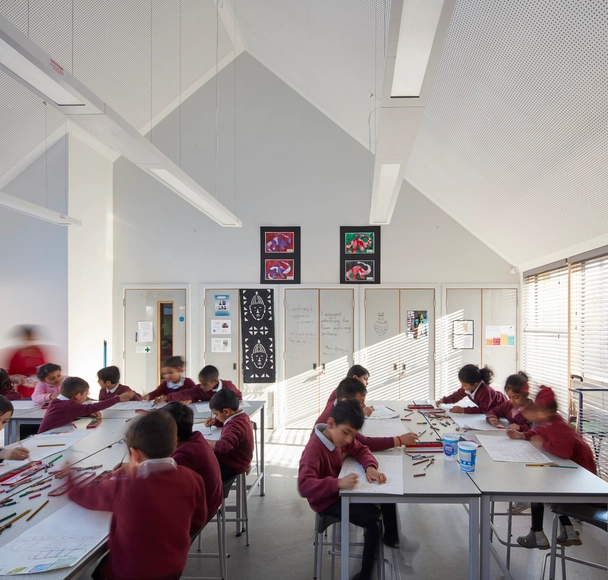
Poorly Designed Acoustics in Schools Affect Learning Efficiency and Well-being

Few things irritate us more than exposure to excessive noise or inability to hear what we need to hear. Whether it's a nearby construction site, highway traffic, air conditioning, or a neighbor learning saxophone, research shows that noise can contribute to cardiovascular disease, high blood pressure, headaches, hormonal changes, sleep disturbance, reduced physical and mental performance, and the reduction of well-being. On the other hand, in an acoustically "comfortable" environment, in addition to listening to what we want, we focus better and feel calmer.

The concern about creating acoustically comfortable environments is often relegated to cinemas, concert halls and recording studios. But it is particularly important in learning environments, such as classrooms, as it directly influences the teaching-learning relationship. Acoustic discomfort can harm the process of knowledge acquisition, interfering with attention and worsening student-teacher communication.

Poorly Designed Acoustics in Schools Affect Learning Efficiency and Well-being - More Images+ 4

Vertical Partitions Redefine Spaces Quickly, Easily, and with Style

 | Sponsored Content

The ability to detach dividing walls from fixed structural frameworks has been one of the most notable contributions of modern architecture. The moment came when Le Corbusier's conceived the Dom-ino system, in 1914, and was brought to life in the Villa Savoye, where the structural lattice of pillars contrasted with an independent and even organic distribution of the interior partitions. The so-called open plan has been used and reinvented by architects since then for multiple scales and programs, with a flexibility that allows for the creation of large spaces with or without partitions. But one important nuisance that plagues the open plan it that is often difficult to create closed spaces when necessary, which can improve acoustic qualities and the possibility of natural light. Operable partitions serve this purpose through various mechanisms, such as sliding, folding, or wheeled panels, but they do not always facilitate the necessary conditions. Directly addressing these issues, Skyfold has developed the solution: operable walls that fold vertically and remain hidden when retracted.

Jaime Lerner, Influential Brazilian Urbanist Passes Away At 83

The prominent Brazilian urbanist Jaime Lerner has passed away this Thursday, May 27, at the age of 83. Trained as an architect, Lerner was chosen by the American magazine Planetizen as the second most influential urban planner of all time, only behind Jane Jacobs. In addition to his career linked to architecture and urban planning, Lerner was three times mayor of Curitiba and twice governor of Paraná (1995-1998 and 1999-2002). Lerner graduated in Architecture in 1964 from the Federal University of Paraná (UFPR) and worked at the Curitiba Institute for Research and Urbanism (Ippuc) since its creation in 1965.

Materials at the Intersection of Nature, Technology, Art and Architecture

Popularly known as the lotus, the aquatic species Nelumbo nucifera has a useful particularity. Its leaves are self-cleaning, or ultra-hydrophobic. This means that no particles of dirt or water adhere to its leaf, which is especially useful in the humid and muddy environments where the plant typically grows. However, this effect does not derive from a perfectly smooth surface or a resinous layer on the leaves. The lotus is, in fact, full of tiny folds that reduce the area of the contact surface and repel all the particles that try to adhere there. The lotus effect has been studied by nanotechnologists in order to apply this same effect to products, such as surfaces, paints, fabrics, and tiles that can easily clean themselves. As trivial as this may seem, when we think of the resources applied to cleaning skyscraper glass or even of the reduction in photovoltaic energy generation due to dust on solar panels, we can get a sense of the infinite possibilities that hydrophobic surfaces could represent.

Nature, over billions of years, has developed adaptive solutions that are beginning to be understood by us with new technologies applied to the needs of areas such as the construction industry. When professionals such as scientists, biologists, engineers, architects, and others join forces and focus on understanding aspects of nature, with an empathetic and respectful view, the results can be impressive.

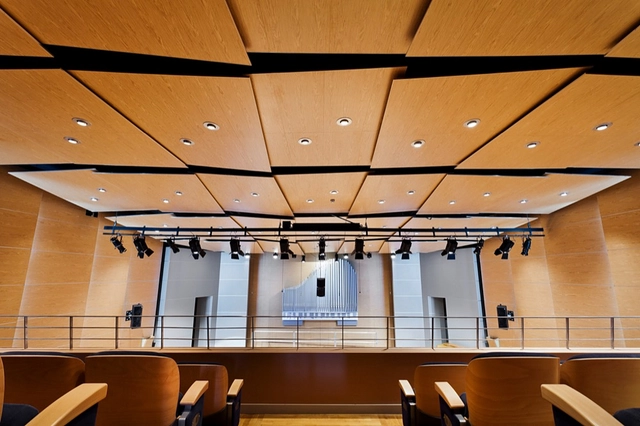
How To Improve the Acoustics of a Room

If you live in an apartment, you may unintentionally know the details of your neighbor's life by overhearing conversations through your shared walls. Or you keep awake when the dog that lives in the apartment above decides to take a walk in the middle of the night. If so, you may live in an apartment with inadequate sound insulation in its walls and/or slabs. As cities grow increasingly dense and builders seek to increase their profit margins, it is not uncommon for acoustic comfort to be overlooked in many architectural projects. When the resulting noise is excessive or unwanted, it impacts the human body, the mind, and daily activities. While not all spaces need to seal all types of sound, creating spaces with an adequate degree of soundproofing improves the quality of life of all users.

How To Improve the Acoustics of a Room - Image 1 of 4How To Improve the Acoustics of a Room - Image 2 of 4How To Improve the Acoustics of a Room - Image 3 of 4How To Improve the Acoustics of a Room - Image 4 of 4How To Improve the Acoustics of a Room - More Images+ 2

Why Should Architects Understand and Care About Carbon and Life Cycle Assessment?

Subscriber Access | 

Yes, we know. We have been talking a lot about carbon. Not only here, but everywhere people seem to be discussing the greenhouse effect, carbon dioxide, fossil fuels, carbon sequestration, and several other seemingly esoteric terms that have increasingly permeated our daily lives. But why is carbon so important and why do we, as architects, architecture students, or architecture enthusiasts, have to care about something that seems so intangible?

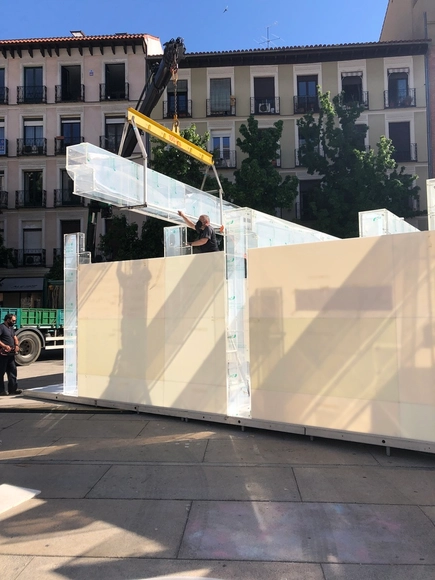
A Museum About Plastic, Made of Plastic, That Will Be Completely Recycled

Plastic is an incredible material. The big problem with it is how we are using it and discarding it in nature. It was with this idea in mind that The Plastic Museum was created: to show the vital role that plastic plays in our lives and the possibilities that its reuse and recycling offer. Opened in Madrid on May 8, it not only contains plastic but was built entirely from this material. Through the artifacts displayed inside, including objects for health care, communication, construction, food, and sustainable mobility, the visitor will learn about the essential functions that plastic provides us when used correctly.

Urban Farming: Food Production in Community Parks and Private Gardens

Subscriber Access | 

As urban dwellers become more aware of the environmental impacts of food production and transportation, as well as the origin and security of what they consume, urban agriculture is bound to grow and attract public and political eyes. Bringing food production closer, in addition to being sustainable, is pedagogical. However, generally with small size and other restrictions, the concerns of growing food in cities differ somewhat from traditional farming.

Urban gardens can occupy a multitude of places and have varied scales - window sills and balconies, slabs and vacant lots, courtyards of schools, public parks and even unlikely places, such as subway tunnels. They can also be communitarian or private. Whatever the case, it is important to consider some variables:

Urban Farming: Food Production in Community Parks and Private Gardens - More Images+ 14

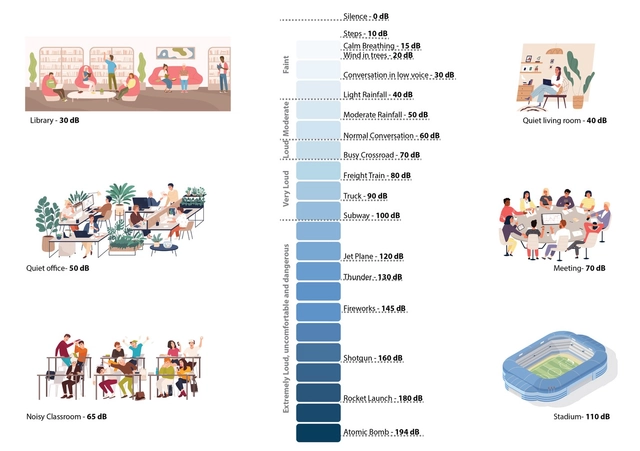
What Are Decibels? (Or How Noises Affect Our Health)

Noisy environments can significantly and negatively effect our bodies, and are a great villain to concentration, learning, and productivity in classrooms and offices. Headaches are one momentary symptom of noise. But staying exposed to very noisy places can bring greater problems such as hearing loss, lower concentration, high blood pressure, and even poor digestion. It can also trigger high levels of stress, sleep disturbances, mood changes, increased heart rate, and ringing in the ears. This is an invisible enemy and is often neglected in big cities with the noise of heavy traffic, demolition. and noisy equipment, such as generators and air conditioners. However, effective measures can be taken to avoid this unnecessary noise.