English: Architect from the Faculty of Architecture, Design and Urban Planning of the University of Buenos Aires (FADU-UBA). Collaborator at ArchDaily. Her interests involve projecting and thinking about urban planning and architecture from people. Born and raised in Buenos Aires, Argentina. Instagram: @agustinainiguez_
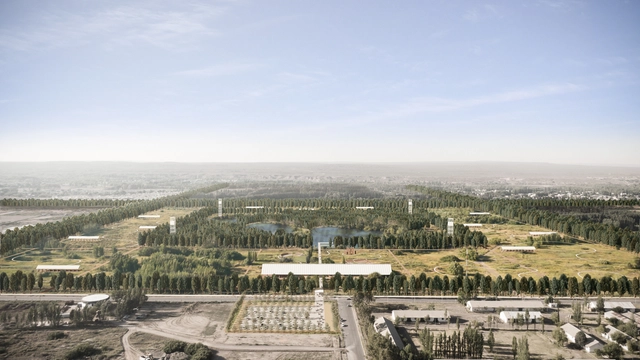
Primer Premio. Image Cortesía de FARO Arquitectura
The Government of the Province of Neuquén, along with Region 1 of the Neuquén Association of Architects (CAN) and the Argentine Federation of Architects' Organizations (FADEA), launched a national competition for ideas and preliminary designs for the Neuquén Memory and Identity Park. The park will be developed on a four-lot federal plot belonging to the Argentine National Army in this region of Argentine Patagonia.
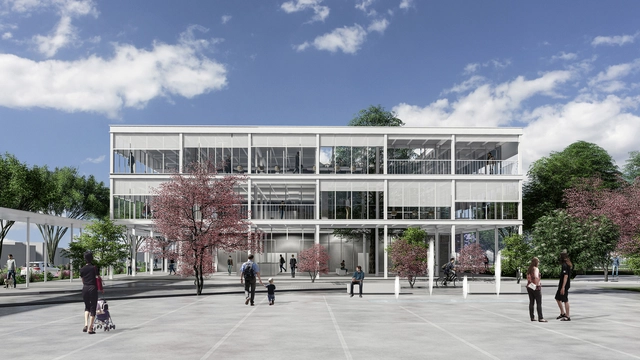
Organized by the College of Architects of the Province of Córdoba (CAPC) and sponsored by the Argentine Federation of Architects' Associations (FADEA), the Provincial Ideas Competition was held for Freyre Central Park, located on the former grounds of the Argentine Central Railway in the town of Freyre, Córdoba, Argentina.
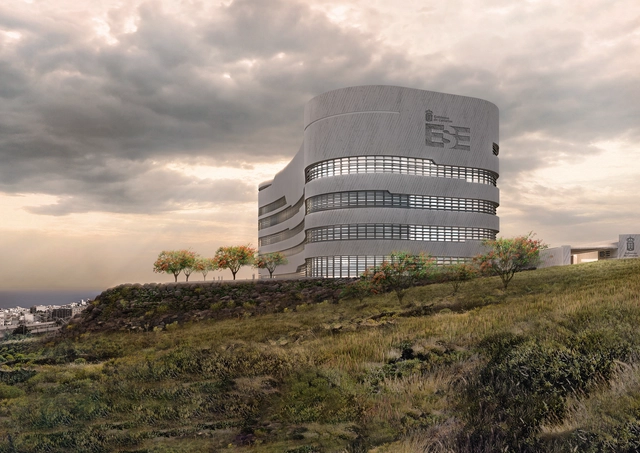
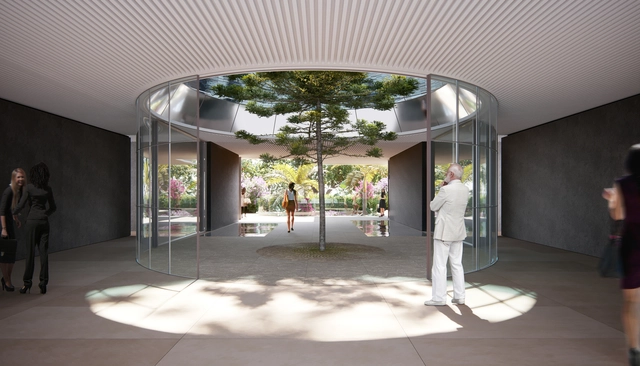
In 2021, Spanish architect Fernando Menis won the public competition to build the two Essential Services Buildings (ESE) of the Canary Islands, to be located on each of the archipelago's largest islands, Santa Cruz de Tenerife and Gran Canaria. By implementing a project focused not only on operational safety but also on hyperconnectivity, functional flexibility, worker well-being, and environmental regeneration, the Government of the Canary Islands aims to enhance public safety, risk prevention, and emergency management to address potential natural hazards, climate change, and other threats such as pandemics, cyberattacks, or terrorism.
Menis's proposal, which features two identical yet autonomous buildings, is expected to achieve greater economic sustainability through lower long-term maintenance and operating costs. Energy-efficient and adaptable to external factors, the Essential Services Buildings (ESE) will provide citizen services year-round.
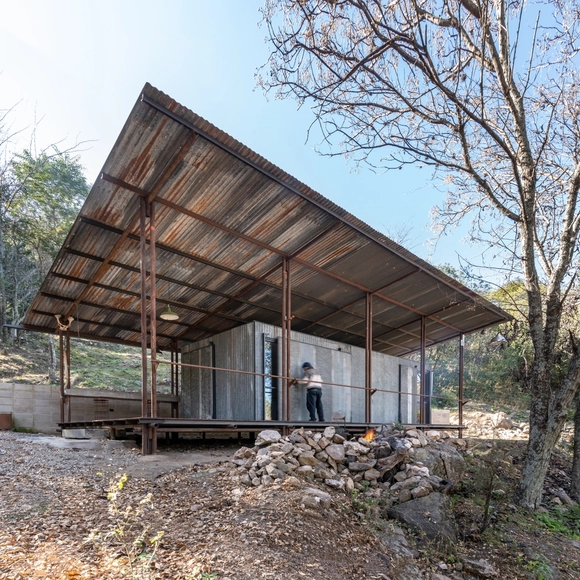
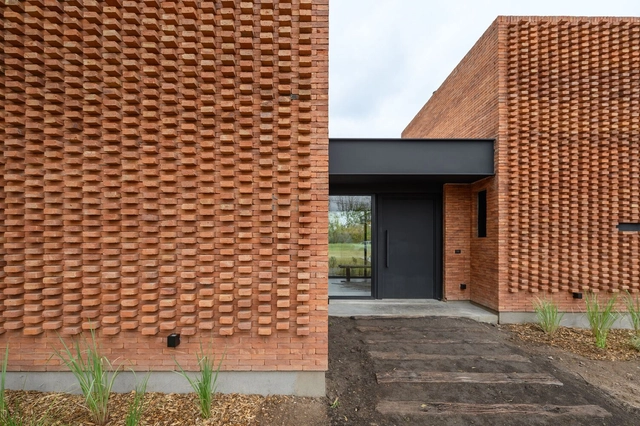
Although the circular economy involves other principles such as the regeneration of natural systems, the reuse or recycling of materials plays an important role in contributing to the reduction of waste generation by giving a second useful life to elements that could be considered waste. Wood, metal sheets, bricks, and stones, among others, can be reused, bringing sustainability and efficiency criteria to the projects, helping to consolidate this concept that still has a long way to go.
Within the Latin American territory, many architecture professionals have proposed to apply in their design and construction processes the implementation of strategies that collaborate with the use of resources, either by reusing, recycling, or restoring different materials and elements in search of satisfying the needs and concerns of those who inhabit the spaces.
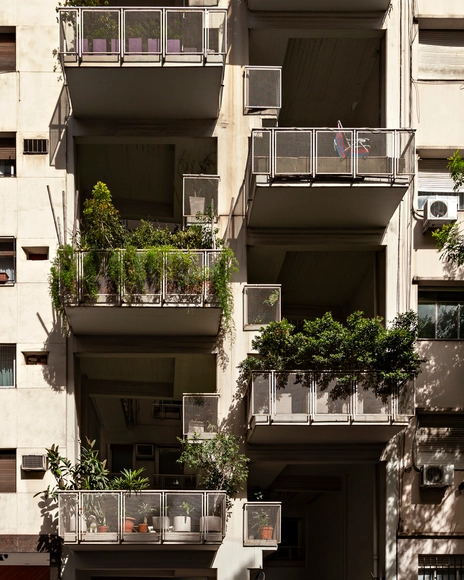
In the heart of the Recoleta neighborhood in Buenos Aires, the building designed by Clorindo Testa, Héctor César Lacarra, and Elena Acquarone stands on a lot with an 8.66-meter frontage and a 42-meter depth. Designed between 1975 and 1978, following the enactment of the horizontal property law, the building's facade reveals a series of terraced balconies, voids, and accessible walkways. These elements create an alternating play of double-height spaces, providing abundant natural light and ventilation to the residential interiors.
The process of materializing architectural ideas involves taking into account various construction and economic factors, among others, which in one way or another will have an impact on the quality of life of its future inhabitants or users. Achieving the highest thermal comfort in interior spaces and achieving the lowest possible environmental impact are just some of the objectives that architecture professionals set for themselves when designing and defining the materials that will accompany their projects.
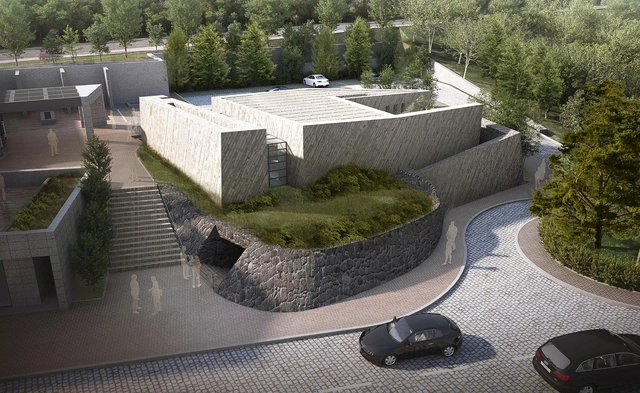
On Jeju Island in South Korea, Spanish architect Fernando Menis is designing the Park Seo Bo Museum of Contemporary Art, dedicated to the legacy of the Korean artist. Inspired by both his introspective work and collection and the volcanic nature of the site, the building aims to merge with its surroundings. Built mostly underground and utilizing local materials, natural light and shadow combine to form the essence of its interior spaces.
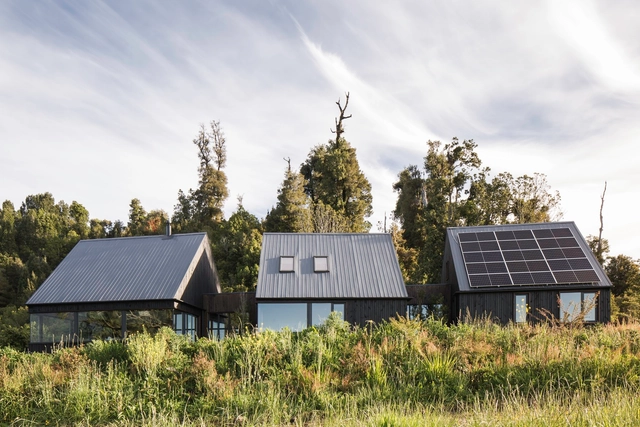
What design strategies or new technologies can be integrated into architectural design without compromising the environment? In recent years, renewable energy has been gaining significant momentum worldwide, and photovoltaic solar energy is one of many showing exponential growth.
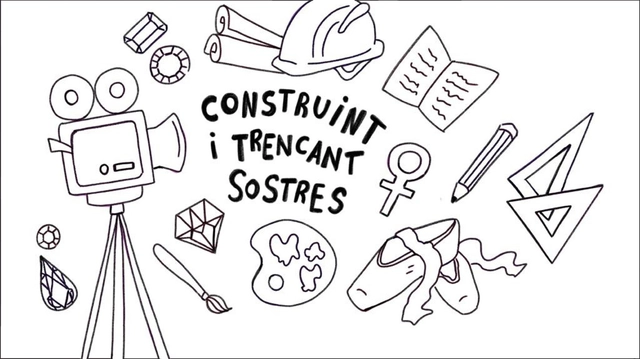
“Construyendo y rompiendo techos” / Laia Ollé Ramos - Instituto Gabriel Ferrater i Soler de Reus. Image Cortesía de Fundación Mies van der Rohe
To mark International Women's Day, the high school research projects awarded the Lilly Reich Grant for Equality in Architecture were presented at the historic Barcelona Pavilion, designed by Mies van der Rohe and Lilly Reich for the 1929 Barcelona International Exposition. In addition, the call for applications for the new 2023/2024 edition has been opened.
via Wikipedia user: Tktktk. Licensed under CC BY 2.0. Image author: Wagner T. Cassimiro "Aranha"
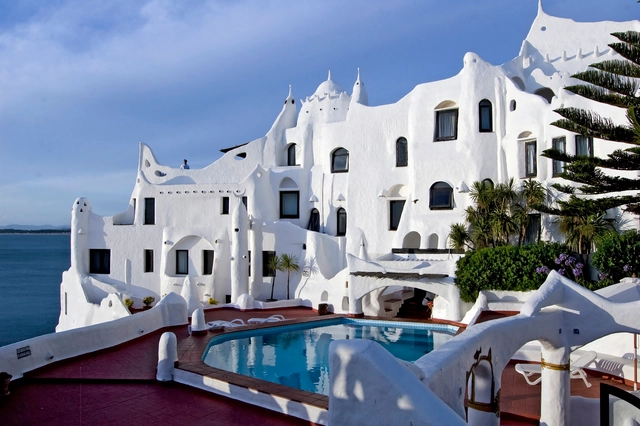
About thirteen kilometers from Punta del Este stands the complex known as Casapueblo, a manifest expression of sculpted architecture that has become a cultural and architectural landmark in Uruguay. The work of artist Carlos Páez Vilaró, it was initially conceived as a summer home and studio before eventually becoming his permanent residence and workspace. Today, it is renowned for its museum, art gallery, café, and hotel.
Since 2015, the renowned Concéntrico International Architecture and Design Festival of Logroño has fostered dialogue between the city, its heritage, and contemporary architecture, inviting citizens to reflect on the urban environment. For its ninth edition, taking place from April 27 to May 2, 2023, the festival has announced its participating architecture and design teams.
Various experts in the design, construction, and monitoring of sustainable buildings in Latin America come together on Emisor Cero, the new podcast from Proyecto CEELA produced by podcastera.mx. The show aims to highlight the concrete challenges and actions capable of mitigating the climate crisis affecting us all, while simultaneously exposing and debunking various myths about green architecture.
The International Contemporary Art Fair of Spain, ARCOmadrid, is taking place at IFEMA, Madrid, through February 26, 2023. As one of the main platforms for the contemporary art market, the 42nd edition of the fair features the program "The Mediterranean: A Round Sea," which involves the art scenes of the countries surrounding this sea. It is curated by Marina Fokidis and features advisory support from Bouchra Khalili, Hila Peleg, and Pedro G. Romero.
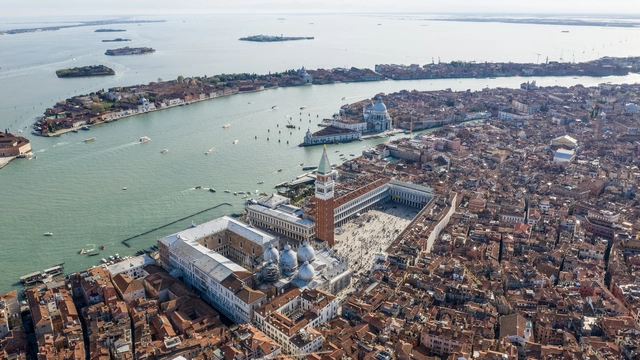
Vista aérea de Venecia, Italia. Imagen de Lukas Kastner. Image via Shutterstock
The proposal "EN OPERA. Future Scenarios of a Young Forestry Law" by INST/MAPA + Carlos Casacuberta has been selected to represent Uruguay at the 18th International Architecture Exhibition of the Venice Biennale, to be held from May 20th to November 26th, 2023.
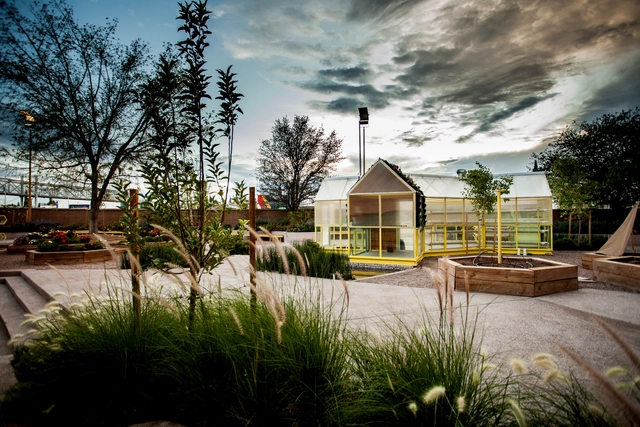
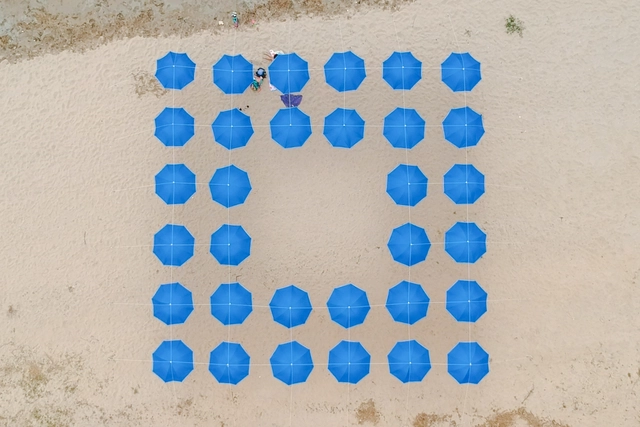
As part of the FUGAZ Greater Concepción Urban Interventions Festival, a team comprising Álvaro Parraguez, Beatriz Harriet, Bárbara Schumacher, Josefa Acevedo, and Luis Cambiaso developed an installation at the Villarrica coastal resort in Dichato (Concepción, Chile) that won the 2022 Ephemeral Installations Competition. The competition called for an ephemeral installation to serve as a functional venue for the festival, accommodating various daytime performances and activities across dance, theater, music, and other disciplines.
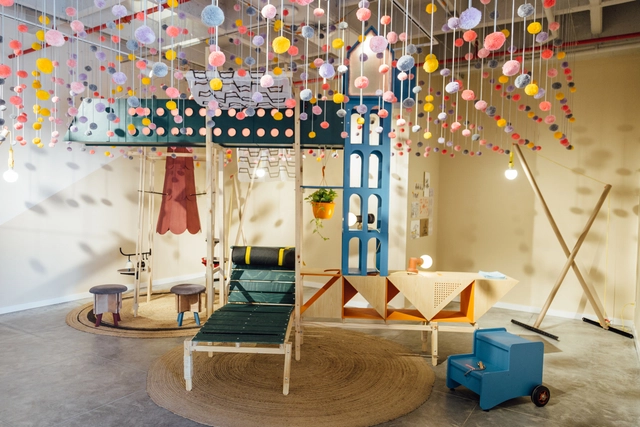
"Fábrica de afectos" is an exhibition by Antonio Yemail on view at the Policroma Gallery in Medellín until February 17, 2023. The exhibition is the result of a long-term process involving various case studies on the relationship between cats and humans. Yemail has spent over a decade researching a specific architecture for elusive beings, spanning research, academia, practice, and exhibitions with a combined scientific-architectural and artistic approach.
Foster + Partners and Uruguay-based firm Ponce de León Arquitectos have unveiled The Edge, a residential project comprised of eight apartments in Montevideo's coastal landscape in Uruguay.
Since 2016, the Patronato Cultural del Perú has been responsible for producing and organizing the Peruvian Pavilion at the Venice Architecture Biennale, promoting and representing the works and projects that reflect the country's architectural landscape.