One could say we have waited for sunset to rekindle the warmth of this experience—and thus blend nostalgia with the newly arrived autumn.
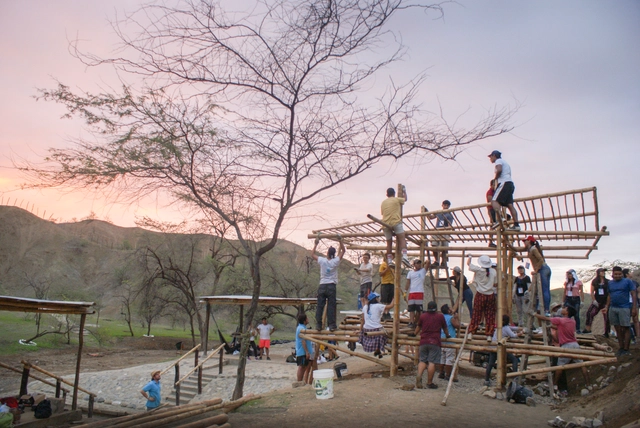
The end of summer has arrived in the southwestern hemisphere, and among the many new lessons each climate leaves behind in these parts, in one of Peru's warmest regions, TSI 2019 left footprints and works that sooner or later we would be ready to reveal. All, or most, of those who participated have already returned to their school or work routines, yet at the end of the season, this remains a place to return to.
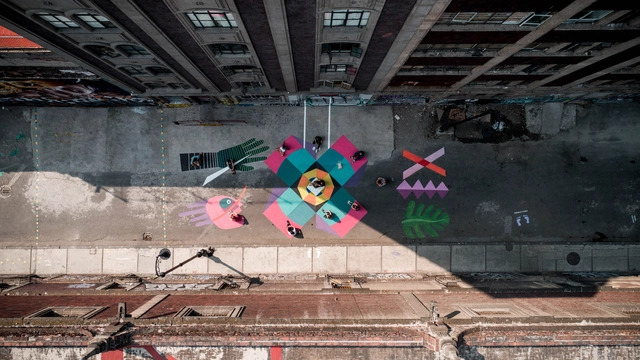
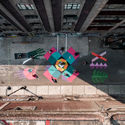
As part of the 2nd Placemaking Latinoamérica gathering –organized by Lugares Públicos A.C.– which took place in Mexico City during the first and second weeks of November, various activities were carried out, including the restoration of eight public spaces led by Mexican and Latin American participatory urban planning specialists in the boroughs of Cuauhtémoc, Iztacalco, and Miguel Hidalgo.
Perspectiva. Image Cortesía de Arquitectos Rodrigo Schiavoni y Adán Yenerich
Rodrigo Schiavoni and Adán Yenerich, founding partners of SY arquitectos, have won the open competition organized as part of the eighth International Congress of the Spanish Language, held in the city of Córdoba from March 27 to 30, 2019. This competition called for the design of an urban-scale commemorative landmark to serve as a civic symbol.
Organized by the Córdoba Province Chamber of Tourism and open to artists, designers, and architects, this interdisciplinary competition called for the creation of urban-scale pieces to intervene in the public space of a prominent sector of the city: a portion of the historic founding district located just steps from the Jesuit Block, a site designated as a World Heritage Site by UNESCO.
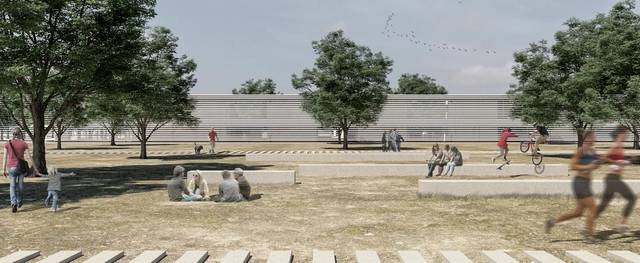
Vista desde parque. Image Cortesía de Guillermo Canutti
On November 15 of last year, the national ideas and preliminary design competition for the Norpatagónico Hospital in Neuquén was launched. Organized by the provincial government through the Ministry of Health and the Ministry of Economy and Infrastructure, the competition was endorsed by the Argentine Federation of Architects (FADEA) and sponsored by the College of Architects of Neuquén Province.
The site—where the objective was to build a facility that provides high-complexity services while connecting with the natural environment—is located on the Neuquén plateau and spans an area of 32,700 square meters. First prize was awarded to La Plata-based architects Guillermo Ariel Canutti, Bernardo Luna, Clara Gallardo, Agustín Ichuribehere, and Fernando Sebastián Fariña. Read on to discover the project in detail below.
"An old skating area, a forgotten garden beneath bridges, and the reconstruction of a skatepark in a working-class neighborhood serve as the backdrops for this documentary. The parallel narrative of the construction of three new public spaces in Barcelona shows how once-marginalized territories are integrated into the urban fabric while respecting the site, its memory, its people, and its everyday life."
The premise of the documentary Landskating, directed by Kike Barberá, with a script and production by Sergi Carulla and Oscar Blasco (Scob), is highly promising. Filmed between 2013 and 2015, this period saw the realization of participatory processes led by the youth themselves, alongside the construction of Barcelona's first three urban sports parks: the Landskate Parks.
To mark the documentary's public premiere, we interviewed the team at SCOB to learn more about their work.
The Venice Architecture Biennale is an event organized by the Italian State that brings together some of the world's most prestigious international architecture exhibitions. The Giardini and the Arsenale serve as the event's main venues. These spaces have hosted various exhibitions, national pavilions, and collateral events spread throughout Venice.
In the fall of 2017, a 7.1-magnitude earthquake struck at least nine Mexican states, leaving several areas severely damaged across Mexico City, Puebla, Morelos, Oaxaca, Veracruz, Tlaxcala, Guerrero, and the State of Mexico. Jojutla, a municipality in Morelos, was among the hardest hit, left in ruins after the September 19 disaster. Much of the local infrastructure was devastated, prompting a master plan initiated by Infonavit to reconstruct the municipality's primary public buildings.
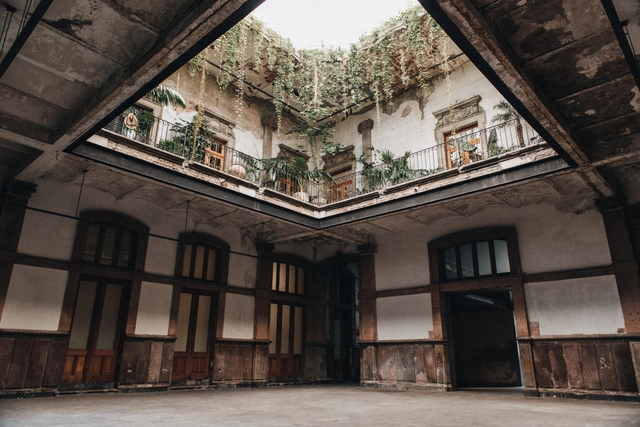
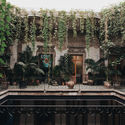
In 1900, Dr. José Ignacio Capetillo and his wife, María de la Luz Servín, purchased the land located at General Prim 32 from Archbishop Eulogio Gregorio Gillow. On this site, the Capetillo-Servín family began construction on an apartment building commissioned to architect Manuel Gorozpe, who designed it in the eclectic style characteristic of the period and completed construction in 1906.
https://www.archdaily.com/1119858/discover-the-history-of-one-of-mexico-citys-most-famous-porfirian-venues-proyecto-publico-primFabiola De la Miyar Martínez y Diana Fonseca Sepulveda
This reportage was originally published in issue 207 of Revista El Malpensante (Colombia), with Spanish translation by Andrés Hoyos.
Once subjugated by illegal armed groups and devastated by the largest urban military operation in Colombia's history, the Las Independencias neighborhood, located in Medellín's Comuna 13, is today an open-air graffiti gallery. Access and transit through the area are facilitated by an outdoor escalator system—the only one of its kind in the world installed in an informal settlement.
The concept of the margin implies the existence of a center. Consequently, anything that is not part of this central focus is deemed external or peripheral. This division between center and margin, or center and periphery, extends beyond the architectural sphere into political, social, and regional realms. Therefore, when we speak of practices on the margins of architecture, we are also discussing multidisciplinary approaches—efforts focused more on understanding the context of the work and less on merely answering pre-established questions. In cultures or contexts shaped by historical discontinuities and interruptions, there is a distinct effort to define identity through self-knowledge and discovery, ultimately designing projects to address specific needs. As a result, research, the dissemination of knowledge, and alternative methods of architectural production become essential steps in this process.
“I decided to call it Silos because this building used to store food, which is, of course, essential for life. For me, just like food, clothing is also part of life” [1].
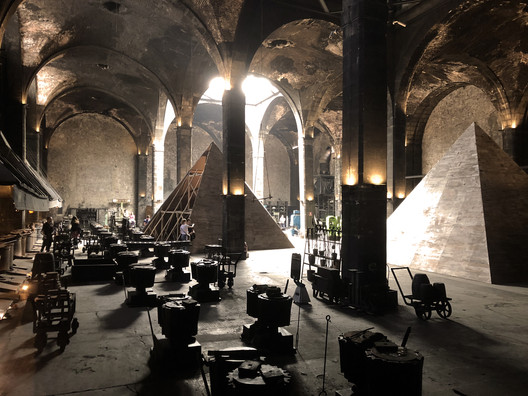
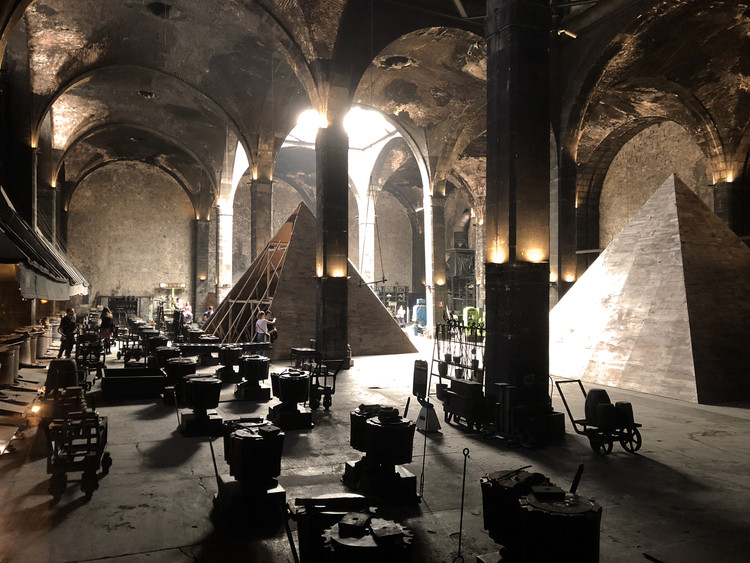
Built in 1950, the 4,500-square-meter grain storage facility Armani Silos by Giorgio Armani has been expanded and transformed into Armani/Silos, a unique four-story space housing an astonishing collection and selection of some of the designer's creations, organized by themes, color palettes, and textures where each tells a different story.
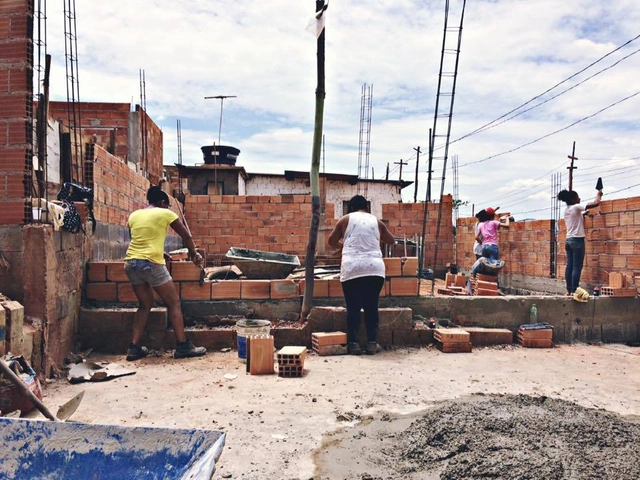
The spirit of the women participating in housing rights movements in Brazil is remarkable. Predominantly active in land occupations, they vigorously coordinate the organizational and political practices of the settlements and the construction of popular housing. It is no coincidence that many occupations of the MST (Landless Workers' Movement) or the MTST (Homeless Workers' Movement) bear the names of women, such as Dandara, a leader from the colonial period.
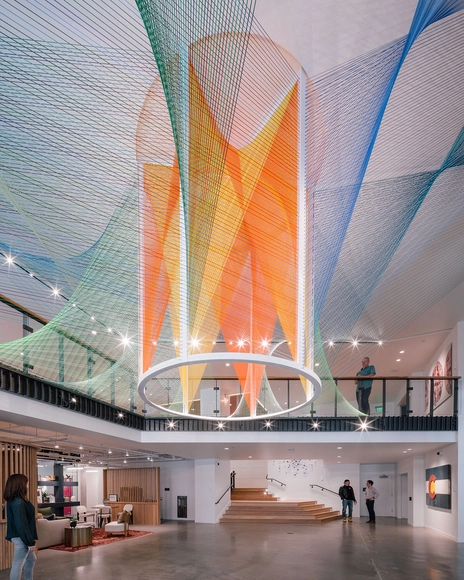
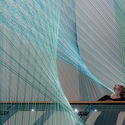
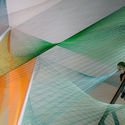
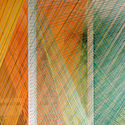
The artwork Corolla by artist Inés Esnal is inspired by the rich and vast natural landscape of Colorado, where it is currently on display at The Coloradan building in Denver. The installation interprets Colorado's state flower, “the blue columbine,” as a network of vibrantly colored cords, where warm central tones and cool hues at the outer edges evoke the flower’s pollen and petals. Viewers are invited to explore the piece through their own movement, which triggers and unfolds multiple perspectives and optical effects.
As part of the exhibitions featured in the 2019 Abierto Mexicano de Diseño, the firm Dellekamp / Schleich presented the installation Dicotomías del Poder at the Museo Numismático Nacional in Mexico City. The exhibition runs from October 9 to November 17, Tuesday through Sunday, from 10:00 AM to 4:00 PM.
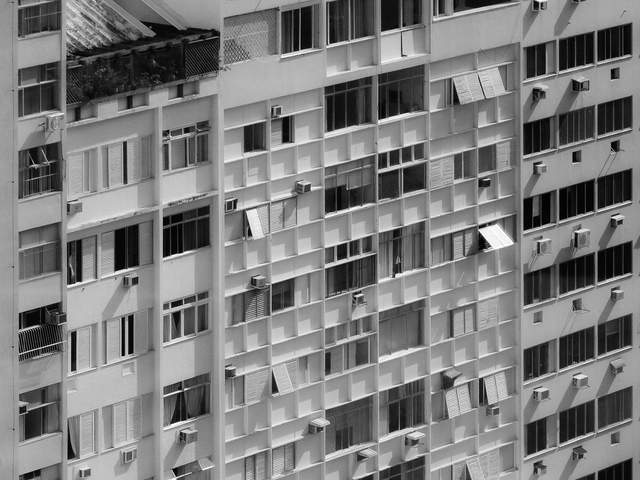
In the new Urban and Building Code of the City of Buenos Aires, approved by the Legislature in late 2018, new strategies are presented for the city's planned growth and densification. One of the code's most notable elements, which this article reflects upon, enables the development of apartments with a new minimum floor area established at 21 square meters. The supposed affordability of these minimum micro-units seeks, under a political agenda, to double the urban population in the near future, betting on a densification that would increase the city's population from 3 million to 6 million inhabitants.
Colombian practices Urbanittá and Lumaa have been awarded first place in the competition to design the Comfamiliar recreation park in Huila, Colombia.
This initiative is part of the organization's mission to expand its recreational services in the southern region of the department. The project entails the construction of a recreation center in Pitalito, strategically located near major cultural and tourist attractions, including the Tatacoa Desert and the San Agustín, Alto de los Ídolos, and Alto de las Piedras archaeological parks.
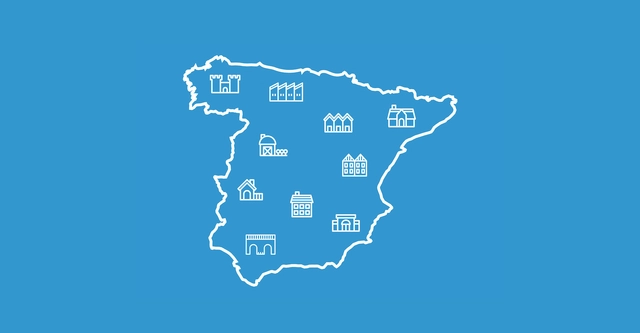
Beyond its vast and diverse geography, the Iberian Peninsula is a map of architectural examples that have successfully adapted by reinterpreting materials, technical methods, and human needs.
In this regard, vernacular architecture in Spain—referring specifically to traditional dwellings—might not be as robust today as in its heyday; nevertheless, numerous examples still stand, some even continuing to serve as viable living spaces.
Below is a selection of the most representative traditional houses across Spain's diverse regions, offering a journey through the territory to inspire new architectural perspectives.
CityMakers is working with ArchDaily to publish a series of articles, conversations, and interviews with the different actors in the co-production of cities behind the Barcelona CityMakers Lab 2019, an event taking place from October 14 to 20.
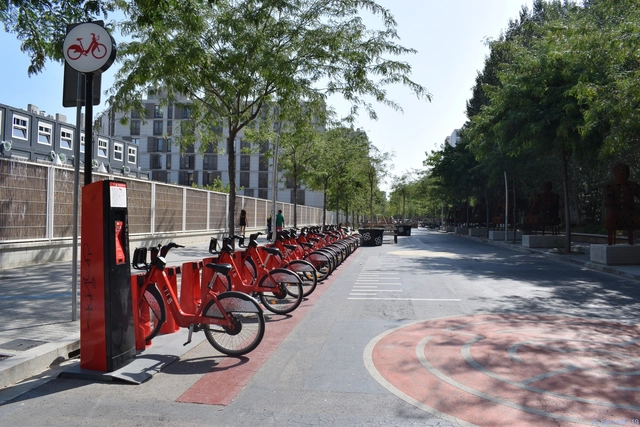
On this occasion, we feature Salvador Rueda, director of the Urban Ecology Agency of Barcelona, who will give a Masterclass at the Barcelona CityMakers Lab 2019, addressing the challenges of implementing Barcelona's Sustainable Urban Mobility Plan based on "Superblocks".
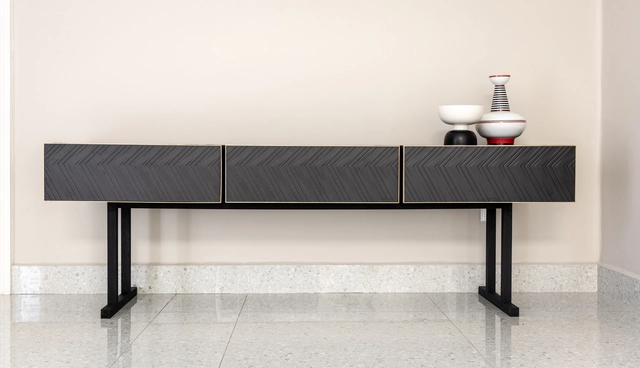
On August 8, as part of Expo Arte-Objeto—an exhibition commemorating the 60th anniversary of Llano de la Torre— Firenze invited architect Ricardo Casas to reinterpret the use of porcelain tiles with playful, exclusive designs.
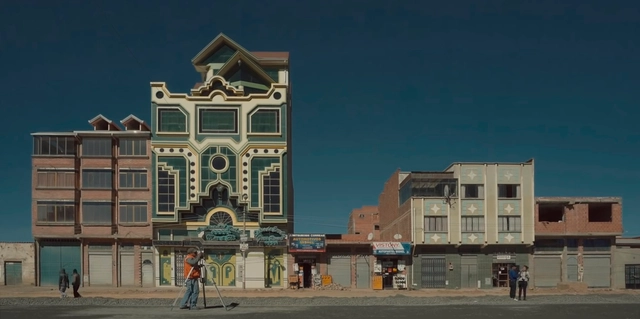
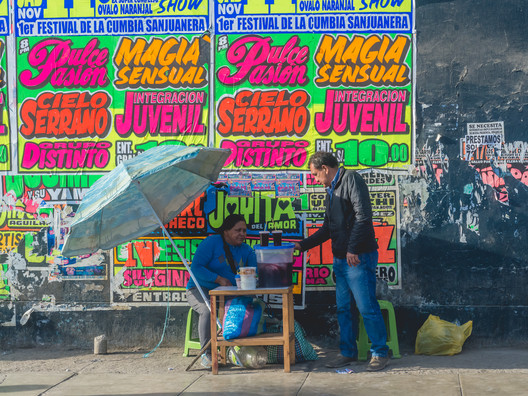
It is best to remember a diverse Lima, rather than the centralized capital. To remember that this very centrality has turned it into a meeting ground for Peru's diverse cities. Everyone comes to the capital, yes, but in this city, the three regions (coast, highlands, and jungle) blend while preserving their essence like nowhere else. "Todas las sangres" (All Bloods) is the title of the most ambitious novel (1964) by Peruvian writer José María Arguedas—an attempt to portray the whole of life through the representation of geographical and social settings from across the country. This expression, which remains relevant today, points to the racial, regional, and cultural variety of our society. Speaking of "all bloods" unites and blends us: it contains and integrates our diversity. Speaking of "all colors" evokes this colorful and intercultural nature.