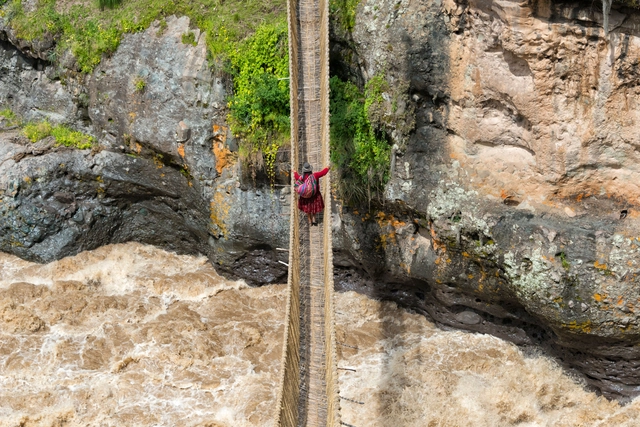
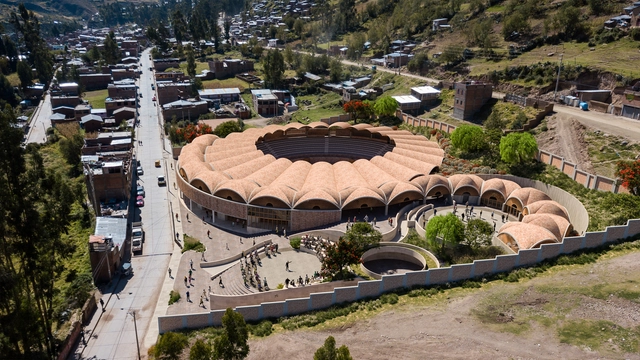
In the mountain range of the Andes in Peru, at over 3,700 meters above sea level, lies the Q'eswachaka suspension ropebridge, declared an Intangible Cultural Heritage of Humanity by UNESCO. The hand-woven bridge, which connects both sides of a gorge over the Apurímac River, has become the last remaining Inca bridge in use to survive modern times. This has been made possible through the transmission of Inca culture and engineering across generations, which renew the bridge every year to ensure its preservation.
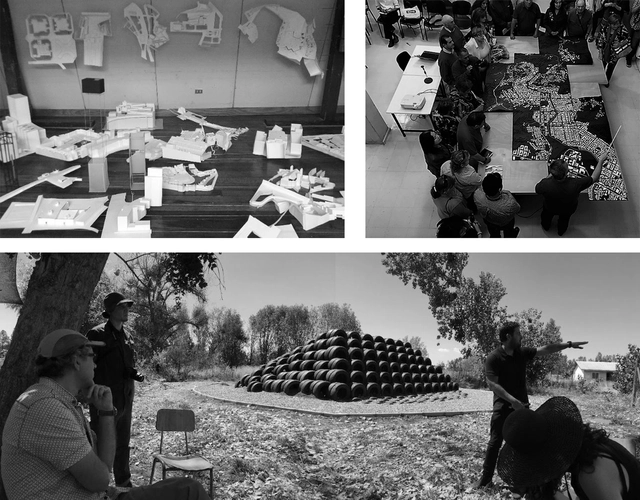
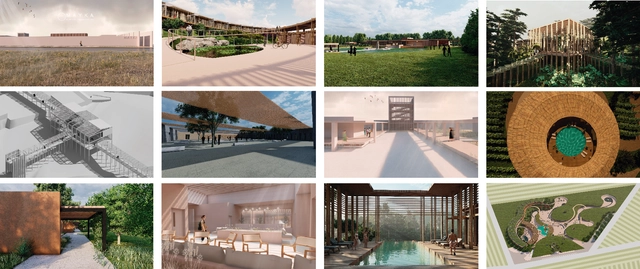
Abajo: U. de Talca. Arriba izquierda: Universidad de Valparaíso. Arriba Derecha: Taller de Barrios, GIDPRO (U. del Bío-Bío). Image Cortesía de Rodrigo Lagos Vergara y Macarena Paz Barrientos Díaz
Below, they present some of the most important points of their publication: three pedagogical actions in Chile that understand teaching as a central practice through the academic exercise of the design project.
https://www.archdaily.com/1132492/architecture-education-in-chile-1999-2019-ecological-potential-and-collective-political-senseRodrigo Lagos Vergara y Macarena Paz Barrientos Díaz
Anderson Marín Vidal and Juan Sebastián García, from the research group on Sustainable and Applied Emerging Technologies (T.E.S.A.), present an analysis of the primary impacts expected from the designs for the Río Molino Waterfront (Malecón del Río Molino). Created by the architecture firm Celeste & Piedra, the project won first place in a competition organized by the Mayor's Office of Popayán and Findeter.
https://www.archdaily.com/1132507/what-the-new-waterfront-along-the-molino-river-in-popayan-colombia-will-look-likeAnderson Marín Vidal y Juan Sebastián García
In the second half of the twentieth century, driven by the mass adoption of the automobile and exponential population growth, cities around the world expanded at an accelerated pace. Santiago, Chile, was no exception, characterized by an extensive and fragmented urban sprawl that has led to a heavy reliance on cars, environmental degradation, and the loss of agricultural land. Without planning and policies aimed at sustainable urban development, the result is a more polluted and less green city—an alarming scenario considering the climate crisis we face.
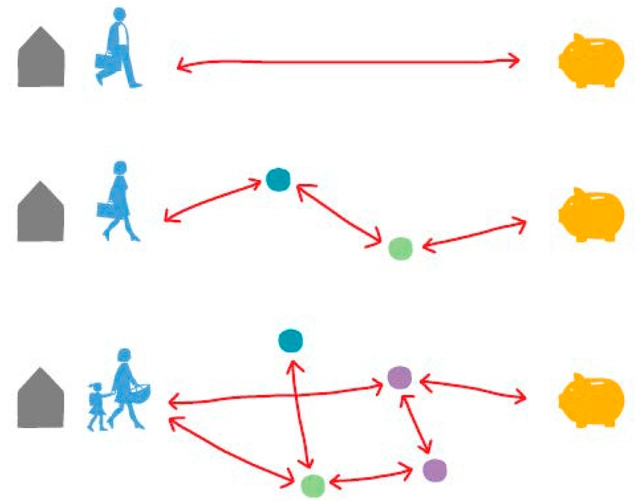
Figure 1. Everyday life itineraries. Source: own work by the authors.. Image via VAD
Proximity, understood as an urban quality that facilitates the management and pursuit of daily life, has for decades been a key tenet of feminist and gender-responsive urbanism. In the 1970s, academics from various disciplines began analyzing the link between the configuration and use of space and gender relations and roles. Since then, a robust critique of the androcentric configuration of the city has emerged, alongside proposals and criteria to rethink spaces from a gender perspective.
https://www.archdaily.com/1132448/the-precursors-of-proximity-a-feminist-genealogy-of-the-15-minute-cityCol·lectiu Punt 6
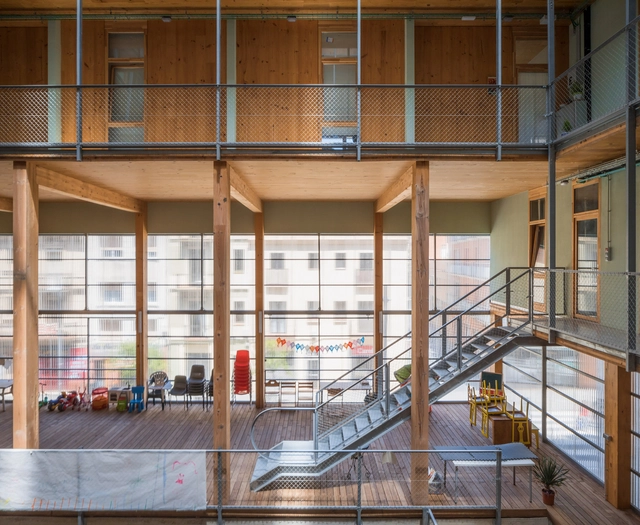
Cooperative housing, or co-housing, is a residential model that promotes access to housing in cities. This model first developed in countries like Denmark and Uruguay, and it is becoming increasingly popular throughout Europe. Indeed, it arrived in Barcelona several years ago and has since steadily expanded throughout the region, spreading beyond the boundaries of the Catalan capital. Below, we explore the cooperative housing model in Barcelona and how it contributes to a more democratic architecture for its citizens.
Cortesía de Nómena y Cuatro Cero Cuatro Arquitectura
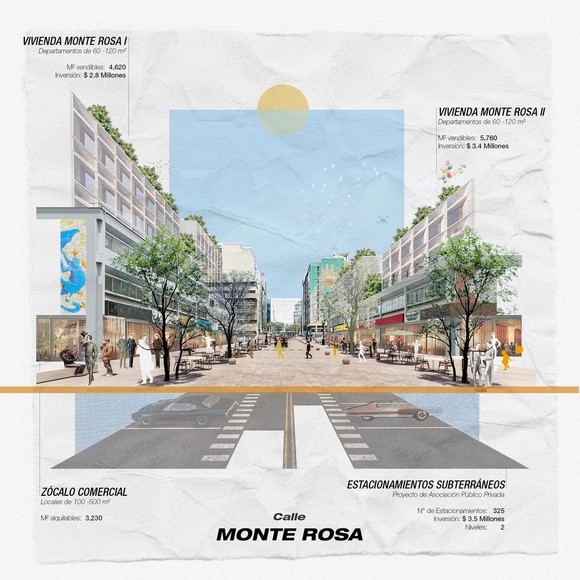
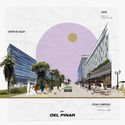
The power of visual representation in architecture fosters debate and reflection on various urban issues. "Imaginarios urbanos" (Urban Imaginaries) is a collective initiative by Nómena arquitectura and Cuatro Cero Cuatro Arquitectura. Through a series of evocative images, the project aims to raise awareness and drive change in the design of Lima's streets.
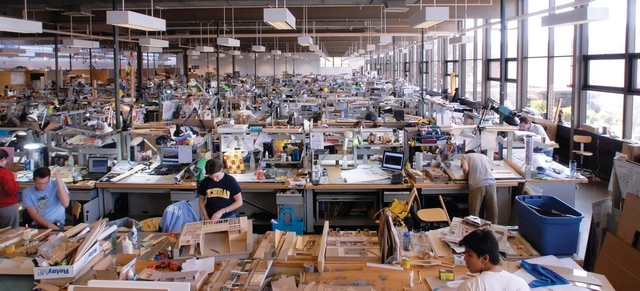
Is Apprenticeship the Way to Keep Architecture Education Relevant?. Image via University of Michigan
"I'm an architect... now what?" must be one of the most common questions for any recent graduate with an architecture degree in hand. Over the years, many will find jobs in different industries that do not necessarily involve working in an office designing and constructing buildings.
Taller Virtual de las Américas (TVA). Image Cortesía de Taller virtual de las Américas
More than a decade ago, a new initiative emerged to redefine the architectural pedagogical system. With an influence that today spans countries like Argentina, Peru, Mexico, Venezuela, Guatemala, and the United States, the Virtual Workshop of the Americas (TVA) successfully and synergistically brings together education, collectivity, and virtuality. Architects Nahuel Salcedo and Celeste Gómez Lahoz are part of the coordination team driving this project forward year after year. Here, they explain the initiative in greater detail.
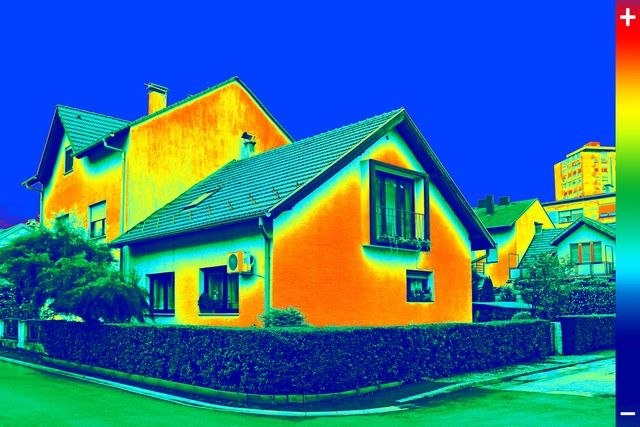
Infrared thermography image showing a home's lack of thermal insulation. Image by Ivan Smuk. Image via Shutterstock
How can we analyze the environmental impact of buildings? What strategies could be developed to improve people's quality of life and achieve a harmonious relationship with the environment? Year after year, more questions are added to the design decision-making process of thousands of architects around the world. They seek to take action and implement policies that improve the environmental performance of their buildings, reducing energy and resource consumption while also lowering greenhouse gas emissions and waste production.
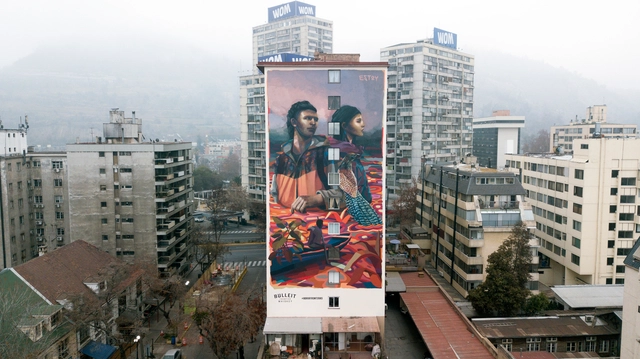
Arte Público de Estoy. Image Cortesía de Esteban Barrera
The city is in constant flux: monuments disappear, landmarks are forgotten, and new symbols emerge, prompting streets, plazas, and walls to redefine the urban landscape. In doing so, they offer new reference points, narratives, and ways of understanding the city, our history, and our society.
Thinking, discussing, and reconfiguring the city through art involves a series of processes. Researching territories, their inhabitants, sociocultural environments, and relational dynamics are essential pillars when designing and implementing installations that impact the city. The proliferation of large-scale artistic interventions that prioritize the purely aesthetic forces us to reflect on what we encounter in public spaces and how these encounters affect our daily lives.
August 19 is World Photography Day. To mark this occasion, we present the winning entries of the recent photography competition "Interculturality and Inhabited Heritage" ("Interculturalidad y Patrimonio Habitado").
Casa Domínguez. Alejandro de la Sota. La Caeyra, Pontevedra, 1973. Fotografía José Hevia. Image Cortesía de Fundación Alejandro de la Sota
The Alejandro de la Sota Foundation has created a portal to showcase the leading figures and works of the pioneers of Spanish modern architecture. The reason? When discussing the Modern Movement, it often seems that only architects like Mies van der Rohe, Le Corbusier, or Walter Gropius are mentioned. But what was happening in Spain during those years? Which figures stood out, and what were their intentions when designing?
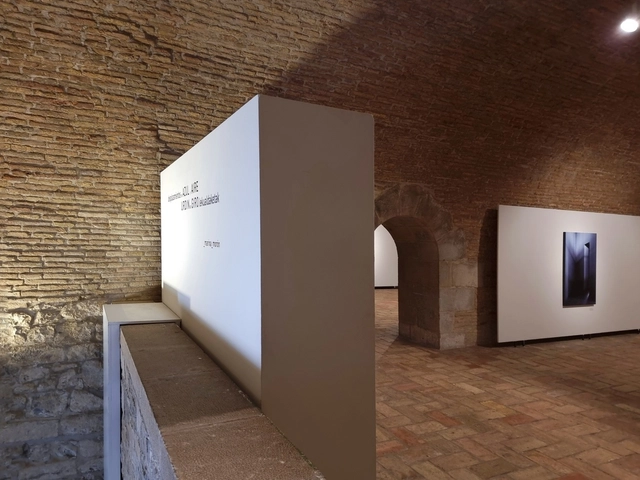
The internationally renowned art collective _marina_morón (comprising Dr. Jesús Marina, PhD in History, and architect Dr. Elena Morón, PhD) inaugurated their latest work at the Pabellón de Mixtos of La Ciudadela in the city of Pamplona. The exhibition is sponsored by the Basque-Navarrese Association of Architects and the Pamplona City Council, and will remain open to the public until March 15, 2022.
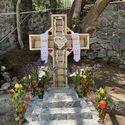
May 3rd is a holiday originating from the Finding of the Holy Cross (also known as May Cross or Feast of the Crosses), which traces its roots back to Roman rites celebrating the Cross of Christ. Over time, this commemoration has evolved and been adopted across cities in Mexico, Chile, Spain, Ecuador, El Salvador, Guatemala, Paraguay, Peru, Trinidad and Tobago, Argentina, Colombia, and Venezuela, where traditions include floral decorations, processions, and dances.
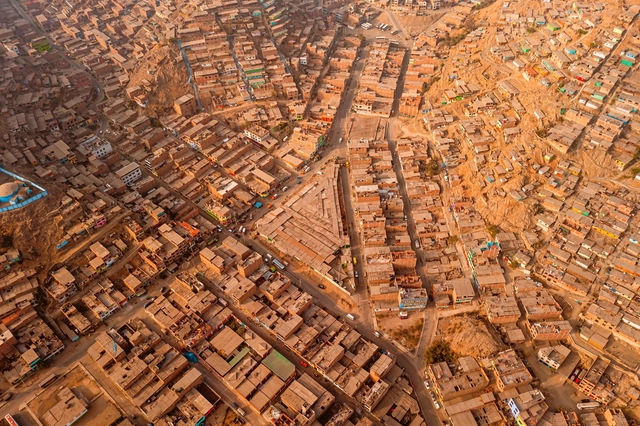
San Juan de Lurigancho, Lima, Peru. Image by MarcoRosales. Image via Shutterstock
The IPCC has published its latest report on the environmental crisis, "Climate Change 2022: Impacts, Adaptation and Vulnerability." The latest findings warn that urgent priority must be given to action on the adaptability of the built environment, noting that, globally, the most rapid growth in urban vulnerability has occurred in informal and unplanned settlements, as well as in small to medium-sized urban centers in low-income countries with limited adaptive capacity. This is a recurring reality across Latin America.
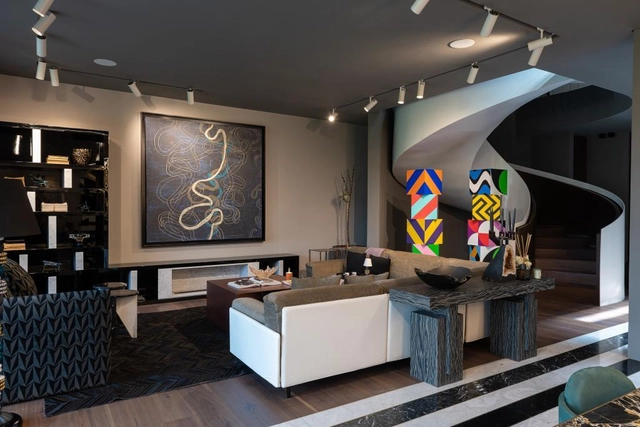
Mexican interior designer and artist Olga Hanono has been invited to present her latest exhibition, DREAMVILLE, at La Biennale de Venezia Modigliani Opera Vision, from May 1 to July 31, 2022. The collection is inspired by the human capacity to dream, reflecting on imaginary objects that might exist within a dreamscape, along with the variety of colors and shapes found in distant stars, planets, and galaxies. Hanono has created art pieces and furniture using unconventional, luxurious materials.
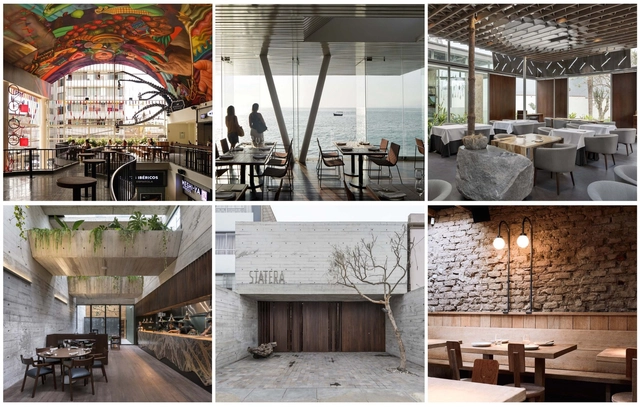
Collage: Kevin Fu Fang, Cristobal Palma, Eduardo Hirose, Renzo Rebagliati, Iván Salinero
The world of gastronomy is about far more than just food; space plays a vital role in the overall dining experience. To achieve this, architecture transcends mere functionality to cultivate distinct atmospheres through the meticulous curation of light, acoustics, color, texture, and form, ensuring both intimacy and comfort for diners.
The city of Lima—capital of Peru, a preeminent culinary destination—features a diverse array of restaurants and cafés that reflect the country's rich heritage. Below, we present a selection of 10 restaurants and cafés offering unique dining experiences across the city.
This year we celebrate the fourteenth edition of the Obra del Año 2022 award—the highest recognition in the Spanish-speaking architectural world, where the winners are chosen by popular vote. Starting today, Tuesday, March 8, our readers will be responsible for determining which projects inspired us during 2021, faithfully representing the identity of our local contexts while shaping the way architecture is practiced around the world.
With nearly a thousand projects published in 2021, you can easily find your favorites by browsing through each category and using the search engine to filter projects by country and architecture firm.
The 2022 Obra del Año Award is brought to you by Dornbracht, renowned for its design leadership in architecture, which can be found internationally in bathrooms and kitchens.
Ana García, architect and founder of NeuronaLab, recently interviewed Aureli Soria-Frish from the company Starlab. They discussed how the latest technological advances are increasingly being used to objectify neural activity and the emotional states associated with architectural spaces. Below, she shares her key reflections.
https://www.archdaily.com/1132615/neuroscience-how-to-measure-the-perception-of-architectural-spaceAna García
Through the construction of a narrative fiction, this work by Federico Lagomarsino, framed around the landscape, aims to depict everything that unfolds in contemporary society when a singular event occurs—in this case, the impact of the two largest meteorites detected to date in South America.
Could a space be one and many at the same time? Under the name Minimum Common Multiple, Estudio BNAA has designed a space of minimal footprints—typically used for commercial premises or offices—with the unique feature of being able to transform into multiple spaces simultaneously. Located in San Luis, Argentina, the project references the mathematical concept of the least common multiple (LCM) but from a different approach and function, combining movement, flexibility, and the use of magnetism as a construction system.
CHINAS CHINAS is a research project conducted by FLORA. It maps a trajectory through the city of Buenos Aires, Argentina, based on a typological analysis of Chinese supermarkets. Its objective is to recognize and explore the modes of appropriation and domestic micro-scales that occur within them, demonstrating that urban architecture is shaped by everyday banalities. Ultimately, architecture takes on meaning when living conditions are defined by the people themselves. Inhabiting—beyond mere functionality—is precisely about this.


















.jpg?1653504502)
.jpg?1651685605&format=webp&width=640&height=580)

 .
.