Housing for the low-income urban population is a central concern for contemporary Brazilian policymakers and urbanists. Over the last few decades, by focusing on building social housing complexes in peripheral areas lacking transit and sanitation infrastructure, the state has actively contributed to worsening the problem.
https://www.archdaily.com/1121851/criminalized-in-brazil-the-downtown-homeless-movement-is-featured-at-the-chicago-biennialMarisa Moreira Salles e Tomas Alvim
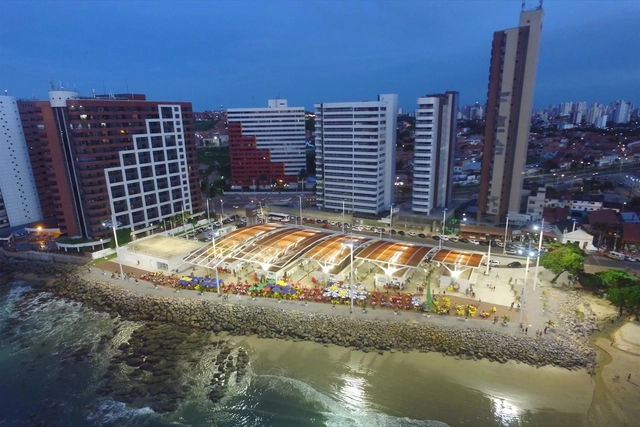
Mercado dos Peixes, Fortaleza (CE), vencedor do 10º Prêmio AsBEA de Arquitetura, na categoria Edifícios Comerciais. Projeto dos escritórios Arcosanti Arquitetura, Esdras Santos Arquitetura e Fausto Nilo Arquitetura.. Image Cortesia de CAU/BR
Architects and urban planners evaluated the services offered by CAU/BR and the state-level CAU/UFs. Out of nine services analyzed by the professionals, seven received an average score above 7 on a scale of zero to 10. These and other findings are part of the CAU Evaluation Survey conducted by the Datafolha Institute in May. The study interviewed 1,500 architects and urban planners and 500 architecture and urban planning firms by telephone to assess the effectiveness of the Council's communication channels with professionals and society, as well as to gather information to support initiatives ensuring access to the entity's information.
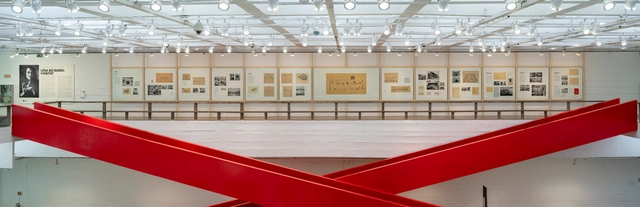
Through their narrative forms, architecture exhibitions promote the dissemination of knowledge and inquiries within the theory and practice of the discipline. Beyond the direct appreciation of a specific object or architectural ensemble by experiencing that space, architecture exhibitions present content structured through narrative paths, classifications, associations, or juxtapositions. This expands architectural knowledge, if not through in-situ experience, then through the way graphic materials are displayed. In this light, curatorial and exhibition design practices can foster new questions in the field of architecture, encouraging visitors to engage in critical reflection.
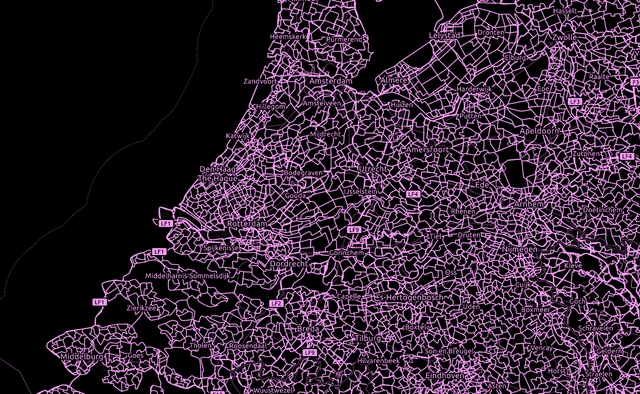
For some time now, cycling infrastructure planning has become a priority for several countries around the world seeking to seriously mitigate the challenges of rapid urbanization. In this regard, it is worth looking at which countries are expanding their cycling networks and understanding the development patterns established for each of them. OpenCycleMap is a project that makes it possible to clearly identify these countries and analyze their networks in great detail.
https://www.archdaily.com/1121824/bike-paths-of-the-world-discover-opencyclemapPedro Vada
One of the most significant contributions of modern architecture to global practice was the five points proposed by the Swiss-French architect Le Corbusier. This set of guidelines represented the formal expression of the ideals and principles of contemporary architectural thought, finding its paradigmatic application in the Villa Savoye, the iconic residence designed by the modern master in Poissy, France.
Last week, we announced the 15 finalists for the 2019 Obra do Ano, an award celebrating the best of Lusophone architecture by inviting our readers to vote for their favorite projects built in Portuguese-speaking countries. Today, we reveal the winners of ODA19.
This year, three Brazilian projects received the most votes. In addition to showcasing architectural diversity, they exemplify the public impact that architecture should deliver. Meet the three winners below!
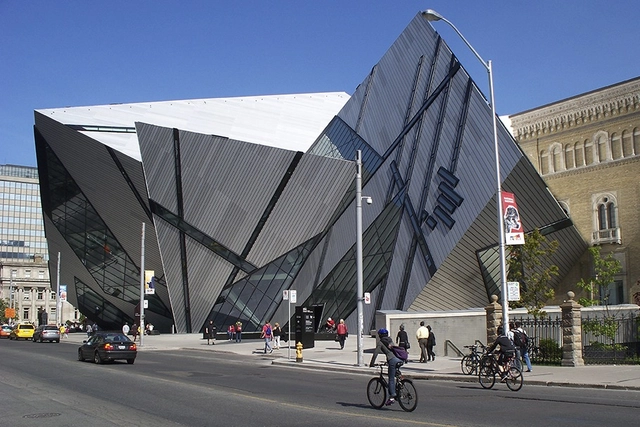
Deconstructivist architecture by Daniel Libeskind. Royal Ontario Museum, Toronto, Canada. Image: Alexandre Kozoubsky/Flickr
Modernism has ceased to exist as a movement in architecture and urbanism since at least the 1980s. In architecture, movements such as Japanese Metabolism and deconstructivism helped to move past the remnants of modern architecture. In urban planning, figures like Jane Jacobs and Christopher Alexander, as early as the 1960s, helped bury the premises of modern urbanism.
https://www.archdaily.com/1121820/after-all-why-do-we-still-talk-about-modernismPaulo Sa Vale
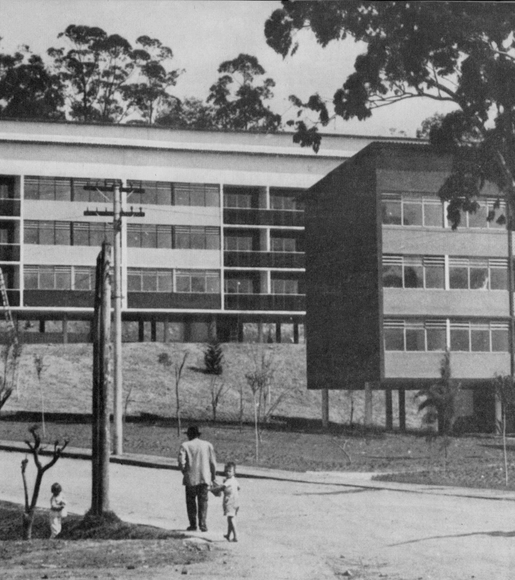
Acervo do grupo de pesquisa Pioneiros da Habitação Social. Image Cortesia de PC3 - Pensamento Crítico e Cidade Contemporânea
After studying civil engineering at the Escola de Minas de Ouro Preto, Carlos Frederico Ferreira returned to his native city of Rio de Janeiro and enrolled in the Escola Nacional de Belas Artes, graduating in architecture in 1935. In 1939, he was hired by the IAPI as an engineer-architect and soon rose to the position of head of the institute's Engineering Department. By 1943, having overseen the partial completion of the first major housing development, the Conjunto Residencial Operário in Realengo, he was able to begin expanding the model to other locations. The designs for Vila Guiomar in Santo André and Piratininga in Osasco, as well as the apartment building and IAPI Regional Office headquarters in Recife—all designed by him—demonstrate how, through his position, he sought to shape the direction of the institute's future developments.
https://www.archdaily.com/1121836/collective-housing-notebooks-vila-guiomar-housing-complexPC3 - Pensamento Crítico e Cidade Contemporânea
Carnival in Olinda, PE. Photo: Ralph Fernandes, via Flickr by Circuito Fora do Eixo; license CC BY-SA
Popular culture is an imprecise concept that lends itself to various definitions. To grasp the traits characterizing the different meanings of popular culture, one must trace the dynamics of how this term has evolved throughout the studies dedicated to the field.
Emerging in 1981 with the publication of the essay “The Grid and the Pathway” by Alexander Tzonis and Liane Lefaivre, it was Kenneth Frampton's 1983 essay “Towards a Critical Regionalism: six points for an architecture of resistance” that brought the term “critical regionalism” wider recognition. The essay was published in the anthology “The anti-aesthetic: essays on Postmodern culture,” edited by critic and historian Hal Foster, initiating a debate later revisited in "Prospects for a Critical Regionalism," also written by Frampton that same year for the journal Perspecta.
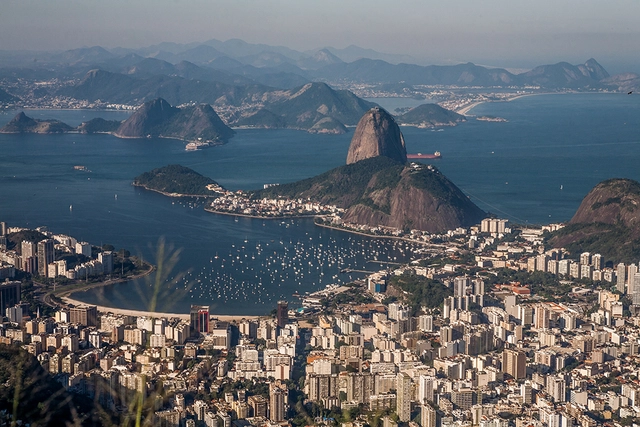
Rio de Janeiro. Photo by Sandeepa and Chetan, via Flickr. Licensed under CC BY-NC-ND 2.0
Only recently in Brazil has "cultural landscape" emerged as a new category for the preservation of cultural heritage. Understanding its meanings requires, on the one hand, evoking the preservation experience in two different spheres—both international institutions and the work developed in Brazil. On the other hand, this understanding also requires highlighting the specific academic origins of the cultural landscape concept.
Color can be an element that contributes significantly to the quality of architectural projects. Its efficient use can completely transform the atmosphere of indoor and outdoor environments, signal specific uses in spaces with different characteristics, redefine rooms, and highlight architectural elements. This has proven to be a highly successful feature, even becoming a trademark of prominent architects, such as Mexicans Luis Barragán and Ricardo Legorreta.
Over the past week, thousands of active fires in the Brazilian Amazon captured global attention in the press and on social media, where the hashtag #PrayForAmazonia was mentioned more than 150,000 times in a single day. But what can satellite data tell us about what is actually happening in Brazil's forests?
https://www.archdaily.com/1122027/what-maps-reveal-about-fires-in-the-amazonMikaela Weisse e Sarah Ruiz
Marking the centennial of its founding, Arquicast #72 discusses the Bauhaus School and its influence on shaping a generation of architects, as well as its impact on the structuring of architectural and urban planning education in various programs worldwide. We invited architect Caio Dias, from Portal Projetar, and architect and ArchDaily editor Romullo Barato for an informal yet informative conversation that delves into the history of the school, its founders, and the broader context that continuously shaped the institution's trajectory.
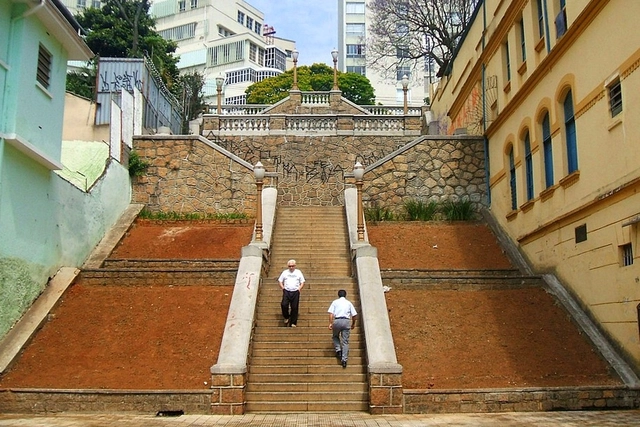
Bixiga staircase, a heritage-listed area in São Paulo. Image: Dornicke/Wikimedia
There is no doubt that preserving historical, artistic, and architectural heritage is a fundamental goal for building a just city. It is the right of all citizens, both present and future generations, to know and enjoy our collective memory and culture. However, for this to actually happen, both a discerning eye and a comprehensive vision of the city are essential.
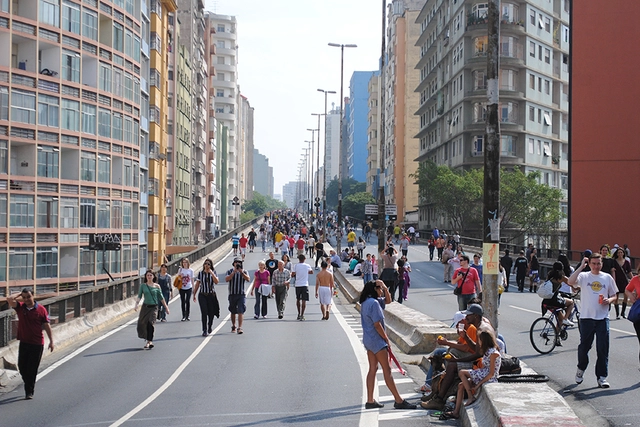
Gentrification has been one of the main points of debate regarding the project that aims to transform the Minhocão into a linear park. Image: Felipe Rodrigues
One of the most prevalent themes in current discussions about the city is gentrification. Broadly defined as "when someone different from you moves into your neighborhood," this urban phenomenon is far more complex than that, involving issues of land use, real estate speculation, public and leisure spaces, and urban planning.
One of the most controversial topics regarding professional ethics in architecture and urbanism is the so-called "technical reserve" (reserva técnica). This widespread practice refers to the payment of commissions to design professionals by construction industry suppliers and companies as compensation for client referrals or project specifications. Despite its questionable nature, this practice is adopted by many architects and has become increasingly common.
An adequate system would be capable of collecting, storing, and treating all rainwater. Courtesy of CicloVivo
Cities that absorb rainwater and allow it to follow its natural course. It should be simple, yet we chose to channel our waterways, preventing nature from doing its part: absorbing and purifying. For Chinese architect Kongjian Yu, this is the key to solving one of the greatest challenges facing contemporary major urban centers: flooding.
In the new episode of the Architecture and Cinema series, we talk with Janaina Pereira, a journalist specializing in cinema, and Laura Carone, an architect, set designer, and art director, about the film Inception, by British director, screenwriter, and producer Christopher Nolan. Released in 2010, the film features a stellar cast including Leonardo DiCaprio, Ellen Page, and Michael Caine, and received several awards, including Academy Awards for Best Cinematography, Best Sound Mixing, and Best Sound Editing.
E-scooter rider in Austin, Texas. Photo: James Cage/Flickr
Scooters are the latest trend in the new mobility landscape. You have likely seen someone riding one of these small yet agile two-wheeled vehicles in a major city. Following the explosive growth of ride-hailing apps and bike-sharing systems, it is now the turn of scooters, which logged 38.5 million trips in the United States in 2018 alone.
https://www.archdaily.com/1121964/are-the-e-scooters-taking-over-cities-safe-a-look-at-the-evidenceAlejandro Schwedhelm, Anna Bray Sharpin e Claudia Adriazola-Steil
In this doctoral thesis, architect Luciano Margotto, advised by Prof. Dr. Mônica Junqueira de Camargo, presents five lessons from architecture: Austerity, Generosity, Freedom, Public, and Spatiality. In his work, the author investigates the works of architects such as Carlos Millan, Marcello Fragelli, Eduardo Souto de Moura, Oscar Niemeyer, Vilanova Artigas, Fábio Penteado, Lucio Costa, Lina Bo Bardi, Paulo Mendes da Rocha, Brasil Arquitetura, Gabriel Guarda, Martín Correa, and Alvaro Siza. Below is the abstract of the thesis defended at FAUUSP in 2016.
https://www.archdaily.com/1122012/lessons-from-architecture-readings-through-poeticsPedro Vada
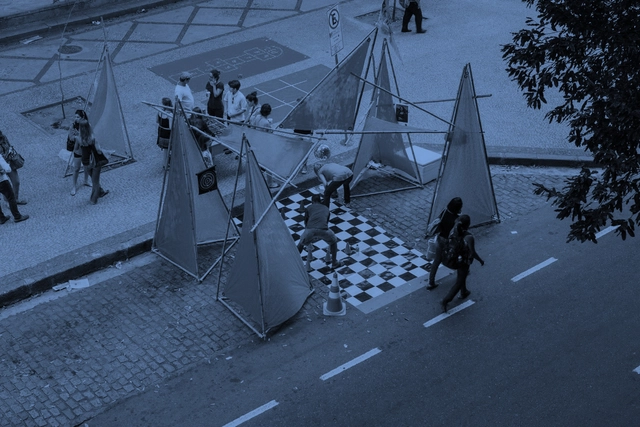
You have probably heard the term “tactical urbanism.” Though relatively recent, this approach to public space has gained visibility over the last decade, and today there are numerous examples of how to intervene in the city through a short-term, low-cost, and highly socially engaged lens. In episode #70, we chat with Rio-based architect and PhD in Urbanism Adriana Sansão, whose extensive practical work is backed by deep research on the subject. Click here to learn more!
The edícula, also known in some regions of Brazil as a meia-água, é a small outbuilding usually constructed at the back of residential lots to provide an extra bedroom within the domestic program. Generally speaking, this space typically includes—with some variations—a bathroom, service quarters, and occasionally, integrated space at the end of a garage, in addition to the bedroom.
Plasencia Congress Center and Auditorium / Selgas Cano. ImageIwan Baan
Architects are increasingly incorporating translucent materials into their facade designs to help control interior light levels, as options like polycarbonate and U-glass, for example, allow only a percentage of natural light to penetrate the building. At nightfall, however, these materials yield an entirely different, striking effect: when illuminated from within, the buildings transform into true lanterns in the urban landscape.








.jpg?1567697293&format=webp&width=640&height=580)