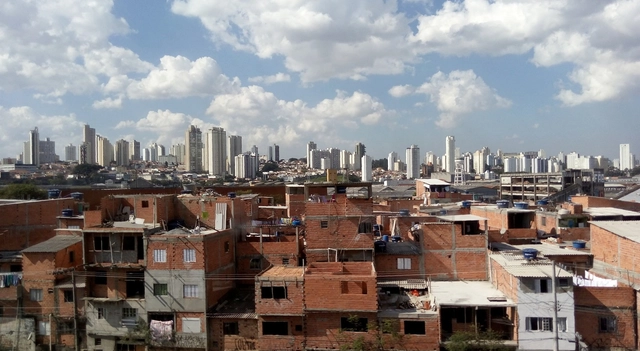
Jardim Lapenna, São Miguel Paulista. Photo: Eduardo Silva/32xSP
Residents of Jardim Lapenna, in São Miguel Paulista, in São Paulo's East Zone, have created a participatory neighborhood plan in the state capital. Out of 32 urban actions planned in areas such as lighting, security, and paving, seven were selected as priorities and are currently being incorporated into the annual budget bill (PLOA) for 2019.
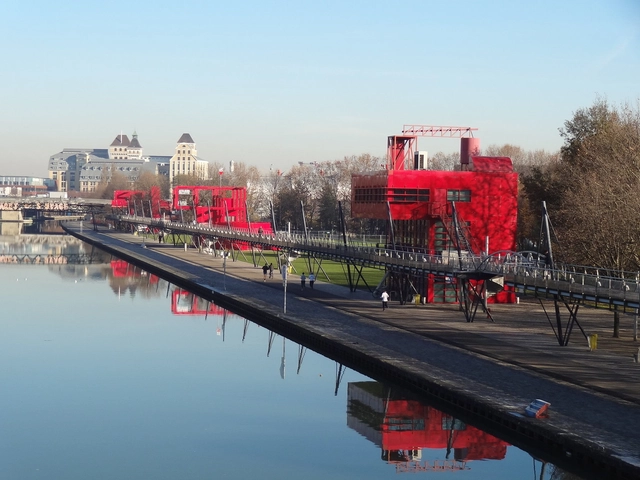
Parc La Villette. Image: William Veerbeek on VisualHunt.com / CC BY-NC-SA
In modern architecture, designing involves analyzing, predicting, and determining spaces and functions with precision, leaving no room for error. Throughout the second half of the 20th century, this rationalizing character, driven by maximum efficiency, was harshly criticized, and "erring"—in the sense of wandering, roaming without aim or destination—became recognized as an inevitable part of the human experience.
Urban intervention around the Anne Frank school in Belo Horizonte. Photo: Rafael Tavares / Octopus Filmes
In September of this year, the streets surrounding the Anne Frank School in the Confisco neighborhood of Belo Horizonte received new ground markings, featuring pedestrian crosswalks and lane boundaries to organize vehicle circulation. In addition, planters made from recycled tires, traffic cones, and street furniture for resting were installed. The following weekend, from September 20 to 22, coinciding with World Car-Free Day, motorized traffic was temporarily closed, transforming the space into an Open Street with concerts, cultural activities, and gathering spaces for local residents. The following month, in October, students aged 8 to 10 from the Anne Frank School participated in a workshop to assemble traffic signs, writing messages that would become part of the neighborhood's official street signage.
https://www.archdaily.com/1122620/tactical-urbanism-paint-cones-and-the-transformation-of-citiesITDP Brasil
In another episode of the Architecture and Cinema series, Arquicast brings the film Paris, I Love You to the discussion. In addition to the usual podcasters, the episode features advertising professional and journalist Janaina Pereira, who holds a postgraduate degree in Cinema and contributes to various entertainment outlets. Janaina previously participated in episode #58 on the film Her. Another returning guest on Arquicast is cinematographer and cinephile Kiko Barbosa, who always brings engaging insights to our conversations.
With nearly four thousand projects published on ArchDaily Brasil in 2019 alone, and with less than a month left in the year, our curators wrap up this stimulating year for architecture with a selection of the most visited residential projects published on our Brazilian platform.
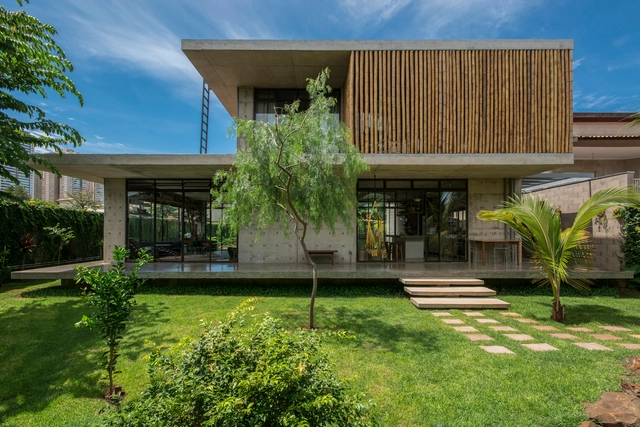
Set in urban, rural, or coastal landscapes; built using diverse structural systems, from traditional masonry to highly technological prefabricated methods; and ranging from compact dwellings to large-scale residences; this selection of 50 houses highlights the most popular projects from the past twelve months. According to our readers, these designs stood out as the most compelling in terms of innovation, construction techniques, and design challenges. Check them out below:
In episode #59 of our series on architectural figures, we invited architect and historian Renato Anelli, who is also a board member of the Bardi Institute, and architect, professor, historian, and architectural critic Ana Luiza Nobre to discuss the life and work of Lina Bo Bardi—the Italian architect who deeply absorbed Brazilian roots and translated them into her highly original architecture. Trained at Rome's traditional school of architecture, Lina went far beyond the conventional scope of the profession, also working as an illustrator, editor, designer, and set designer.
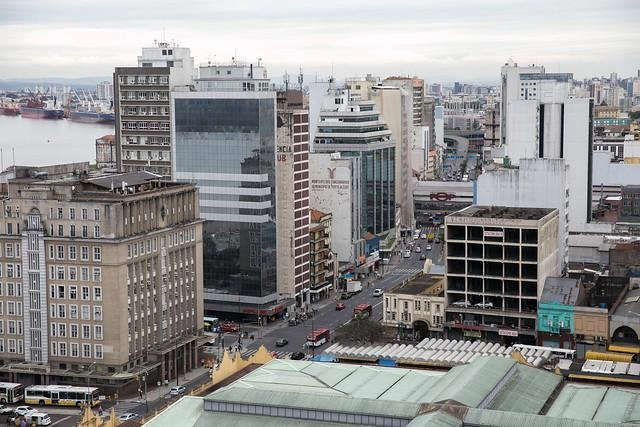
Porto Alegre has one of the highest land-use restrictions among all Brazilian capitals. Image: Anthony Ling
Urban Brazil is deeply ugly. Why did this happen? Some blame "the absence of urban planning and zoning, manipulated height limits, and the nefarious power of contractors and builders influencing the drafting of master plans."
From chopsticks to religious temples, and often associated with the culture and, more specifically, the architecture of Asian countries, bamboo is a highly versatile, safe, and durable material with exceptional ecological performance. Due to its rapid growth, it is relatively inexpensive compared to other construction methods, and its most notable applications can be found in projects that leverage its unique materiality, color, and rhythm.
Brick is one of the most widely used materials in Colombia, helping local architecture stand out globally. This prominence is due to the exceptional quality of the clay found in several regions of the country. Beyond cladding the majority of the buildings that define Bogotá's urban landscape, the material is used in all its forms, from adobe to floor tiles in rural homes.
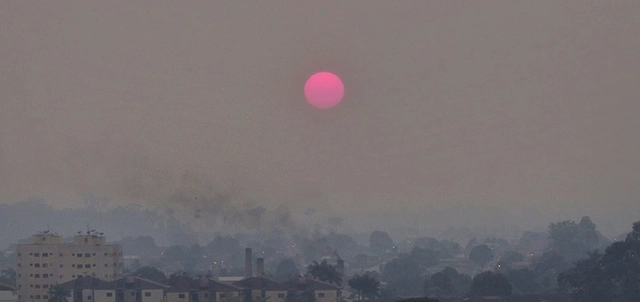
Smoke in Porto Velho, Rondônia, at dawn. Photo: Renata Silva/Personal Archive
Since the beginning of the month, thousands of fire outbreaks have been recorded in Brazil's northern states, spreading through Acre, Rondônia, Mato Grosso, and Mato Grosso do Sul, and reaching the triple border of Brazil, Bolivia, and Paraguay. According to the National Institute for Space Research (INPE), the country is experiencing its worst wave of wildfires in five years.
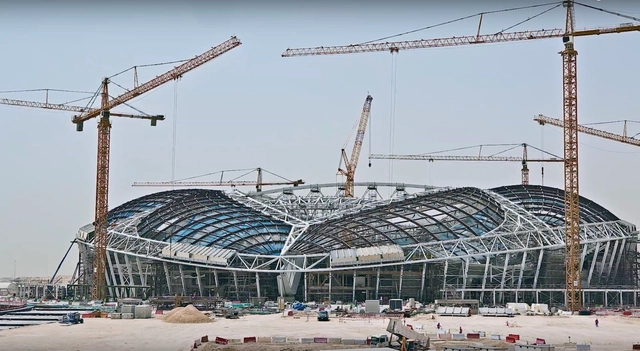
Construção do estádio Al Wakrah. Image Cortesia de Supreme Committee for Delivery and Legacy’
The year is 2010. As the first Arab country selected to host the 2022 FIFA World Cup, Qatar is already ramping up its preparations to host this highly anticipated and costly event 12 years down the line. Extensive construction and reconstruction efforts are being launched, targeting not only the facilities directly demanded by FIFA, but also, more broadly, the urban infrastructure systems of the country's major cities.
The search for the ideal city has always permeated human history, constituting a utopia pursued by rulers, artists, philosophers, and, in more recent history, by us, urban planners. Since the 19th century, various models of ideal cities have been proposed—and, at times, built—ranging from Howard's garden cities to mechanized, radial, and walking cities (like those of the Archigram group), to nomadic ones like Constant Nieuwenhuis's New Babylon, and modernist cities, among others.
Proposed Constitutional Amendment No. 80/2019, a collective proposal led by Senator Flávio Bolsonaro, suffers from blatant unconstitutionalities, in addition to posing structural risks to economic and social development. These issues are analyzed in detail below, based on the following aspects:
Guilherme Essvein de Almeida's doctoral dissertation presents an analysis of two major works of contemporary architecture: the Casa da Música in Porto, designed by Rem Koolhaas, and the Cidade das Artes in Rio de Janeiro, designed by Christian de Portzamparc. Defended in 2018, the dissertation was advised by Prof. Dr. Carlos Eduardo Dias Comas as part of the graduate program at the Federal University of Rio Grande do Sul. Read the author's abstract and find the link to the full dissertation below.
https://www.archdaily.com/1122173/casa-da-musica-and-cidade-das-artes-towards-monumentalityPedro Vada
Many of the most compelling design solutions stem from site conditions—whether climate, local materials and labor, construction techniques, or, above all, the way these factors are addressed within the highly specific context of the plot. The plot is the ultimate space for putting these strategies into practice. As cities increasingly feature smaller land parcels, designing for narrow lots has become a recurring reality.
The urbanization of Brazilian cities has been concentrated mainly in recent decades, but the process actually began at the end of the 19th century. Photo: Daniel Hunter/WRI Brasil
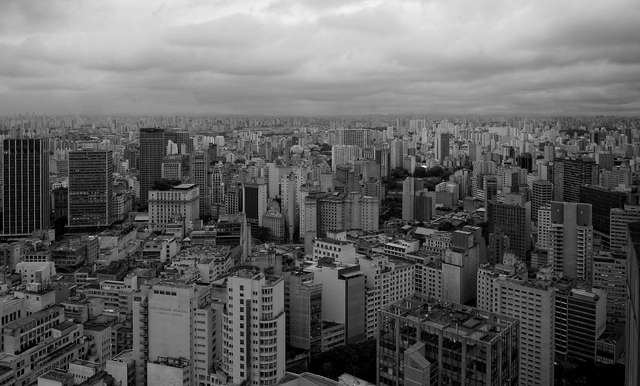
What images come to mind when we think of major Brazilian cities? Perhaps traffic jams, pollution, insecurity, and noise. Perhaps crowds of people coming and going. Pedestres. Bicycles. Buses. After all, eight out of ten Brazilians live in urban areas—regions that have undergone rapid urbanization. Over the last six decades, the country's population grew from 70.2 million to 209.3 million, and the proportion of urban dwellers surged from 44% to the current 85%.
https://www.archdaily.com/1122223/the-history-of-brazilian-urbanizationPriscila Pacheco e Laura Azeredo
A person living in Moema, a neighborhood with one of the highest income concentrations in São Paulo, lives 20 years longer than someone born in Cidade Tiradentes, in the far east of the capital. Brazil's wealthiest city exposes just how unequal the country is, and how much access to public policies varies depending on where one lives.
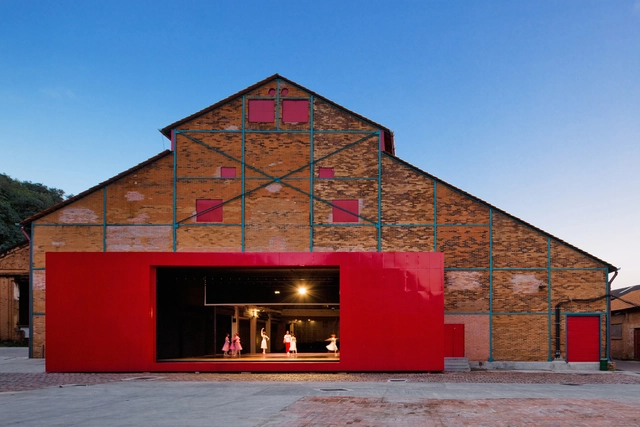
Factories, slaughterhouses, gasometers, convents, water towers, and railway stations are just a few examples of structures that often remain within the urban fabric of cities over time, even after losing their original purpose. Repurposing an existing building for new functions is what has become known as adaptive reuse. While not a contemporary concept, the practice has been widely adopted in recent years as a strategy to manage spaces in a more economical, sustainable, practical, and efficient way.
“Writing is like a city, for which words are a thousand gates.” - Walter Benjamin
No roads or maps lead to them. Yet, many of the cities imagined in literature feel more tangible than real ones, capturing the human imagination with their fantastical sparks. The rich geographical, cultural, and social detail of cities like the famous Macondo, from One Hundred Years of Solitude, frequently places a magnifying glass over the relationship between territory and its inhabitants.
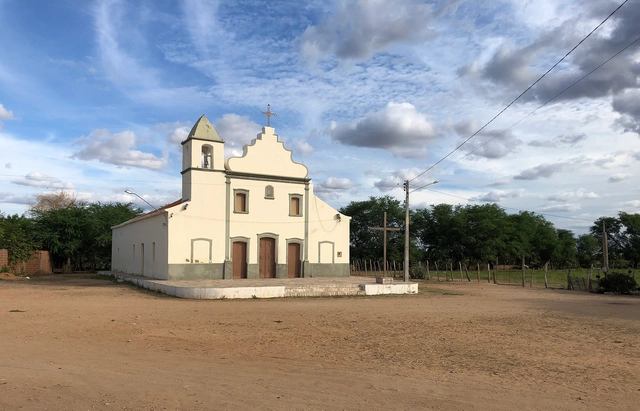
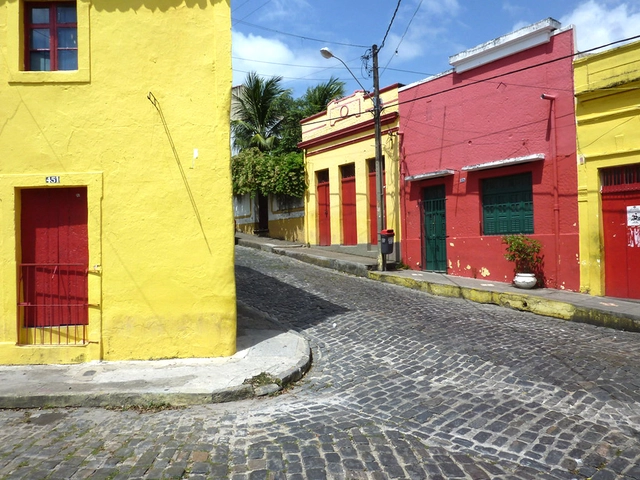
Church in Belém de São Francisco, Pernambuco. Photo by Oliver de Luccia, 2019
These river journeys are intended for on-site research, documentation, and data collection focusing on rivers. They are conducted by researchers from the Fluvial Metropolis Group of the Faculty of Architecture and Urbanism at the University of São Paulo (FAUUSP), coordinated by Professor Alexandre Delijaicov. Each researcher maps out their itinerary based on personal interests, yet shares a common goal: to gather design references for fluvial infrastructure architecture, expanding the research group's imaginary and repertoire. The driving question for the researchers is: how do people relate to the river waters flowing through their metropolises, cities, or towns within the built environment along the riverbanks? The boundary defined by the elements of land and water is the starting point for this observation.
Places are physical spaces imbued with cultural significance, to which values are assigned. In Brazil, the term was permanently integrated into the heritage vocabulary in 2000, following Decree No. 3,551—which established the four Registry Books, including the Registry of Places—and the implementation of the National Inventory of Cultural References. Within this framework, Place is, therefore, a category for classifying cultural assets.
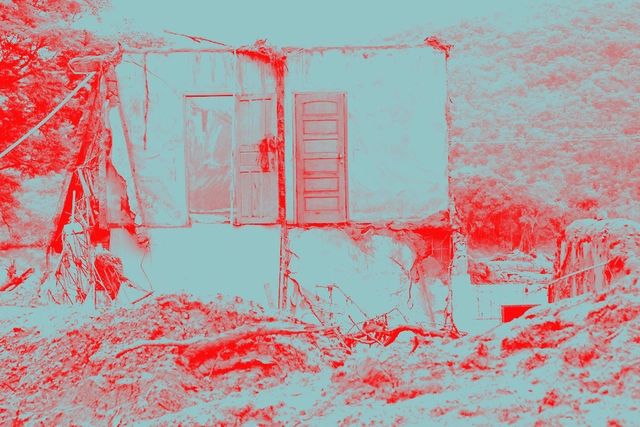
Economic and urban processes are known to drive major modifications in the urban structure. In light of the events of January 25, 2019, with the collapse of the Brumadinho dam, it is clear that environmental negligence by major mining corporations also has the power to produce profound consequences and alter the ways in which people inhabit and utilize the territory.
https://www.archdaily.com/1122572/the-importance-of-the-urban-planner-in-territorial-intervention-the-case-of-marianaAryane Diaz e Sérgio Lessa
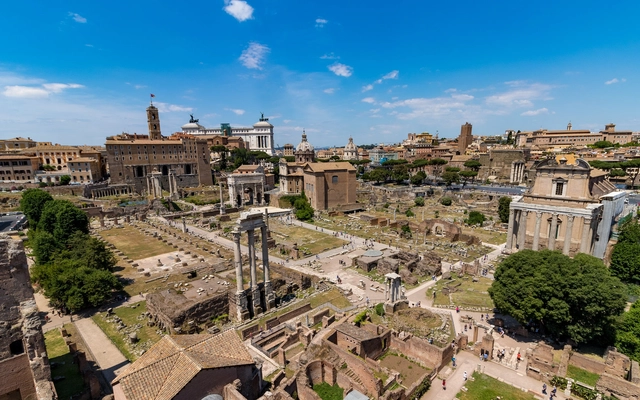
Ruins of the Roman Forum. Photo: hl_1001 on Visual Hunt / CC BY-NC
Metropolis is a word derived from the Greek metropolis, a combination of meter (mother or womb) and polis (city). Thus, the metropolis is the mother city, the most important within a context where several interconnected cities depend on one another to fully function. In most cases, metropolises feature conurbations of multiple urban clusters.
https://www.archdaily.com/1122579/what-does-ancient-rome-have-to-teach-brazilian-metropolisesPaulo Sa Vale
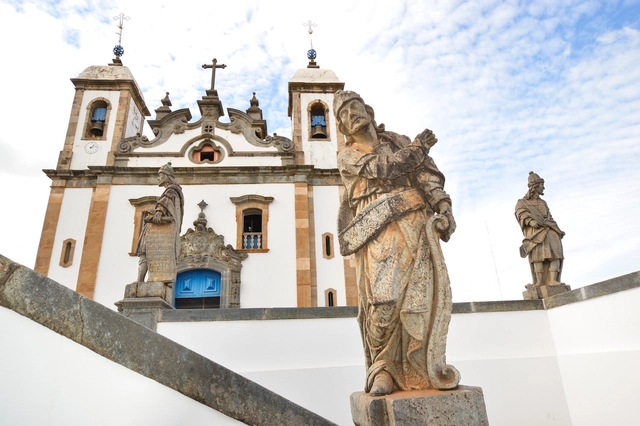
The artistic production of the Minas Gerais Baroque was considered the first genuinely Brazilian art. Sanctuary of Bom Jesus de Matosinhos in Congonhas do Campo - MG. Photo by Paulo Hulyk, via Flickr. License CC BY-NC 2.0
The term identity lends itself to various definitions depending on the disciplinary field. Discussions of the term in social theory have frequently been appropriated by the cultural heritage field. Therefore, it is useful to trace the dynamics of this expression's transformation within the social sciences. In this context, identity relates to the individual's self-conception, their sense of belonging, and their group affiliations.





.jpg?1555714480&format=webp&width=640&height=580)