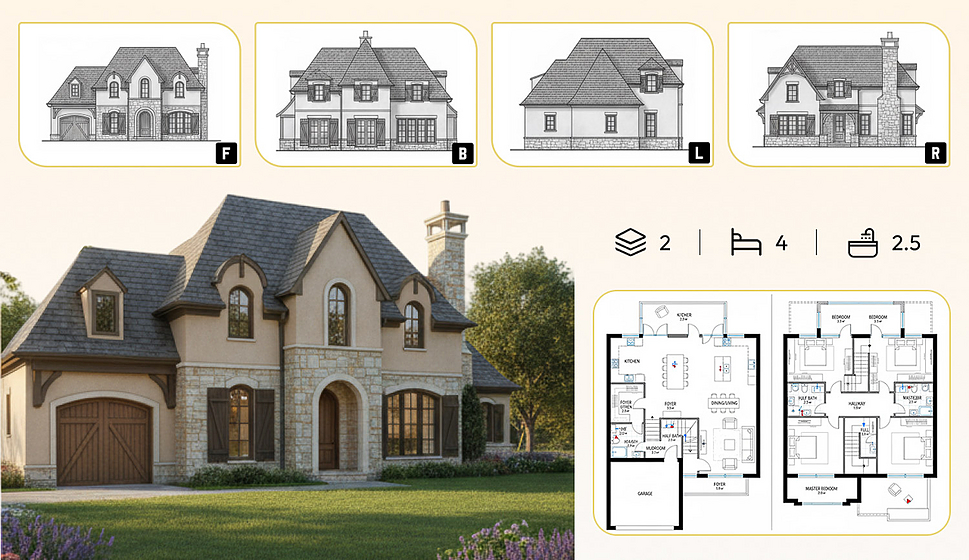
This guide covers a workflow that moves from project parameters to generated floor plans, 3D perspective views, exterior design exploration, and site context visualization, using AI tools in place of preliminary CAD and rendering work.
This guide covers a workflow that moves from project parameters to generated floor plans, 3D perspective views, exterior design exploration, and site context visualization, using AI tools in place of preliminary CAD and rendering work.
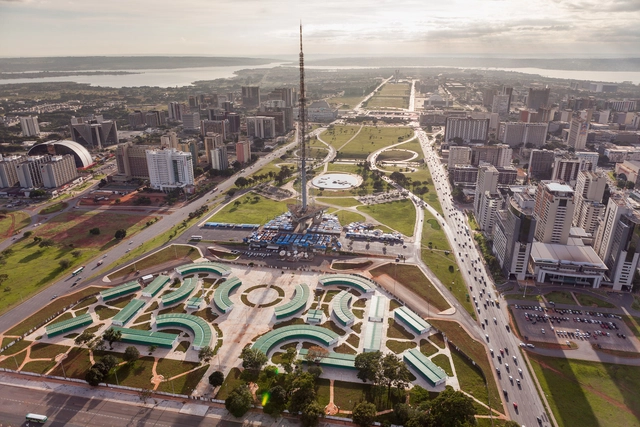
In recent years, documenting architecture and cities through photography has undergone a swift and surprising transformation. Professional and amateur photographers have been seeking new perspectives, going beyond what the human eye can see at street level. In this pursuit, aerial photography—which captures a bird's-eye view—is layered with aesthetic intentions that reveal an intimate and breathtaking look at cities and landscapes.
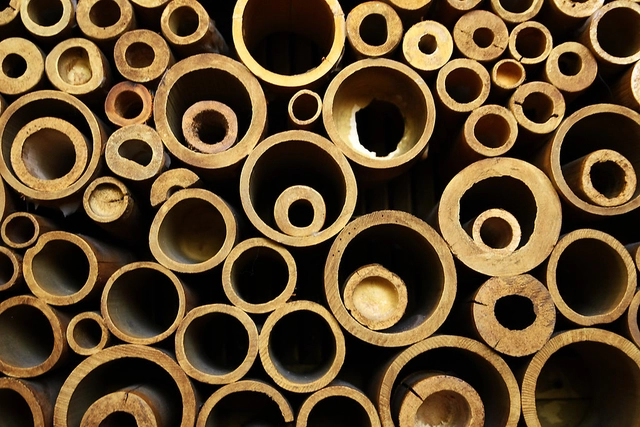

The Bamboo Experimentation Laboratory at UNESP - Bauru has shared with us the work developed by architect Roberval Bráz Padovan, who researched bamboo construction joints. In addition to analyzing various connection possibilities, Padovan concludes by proposing a joint component for space trusses. The thesis was presented in 2010 at the School of Architecture, Arts, and Communication of UNESP - Bauru, advised by Prof. Dr. Marco Antônio dos Reis Pereira and co-advised by Prof. Dr. Paula da Cruz Landim. Read the author's abstract below.
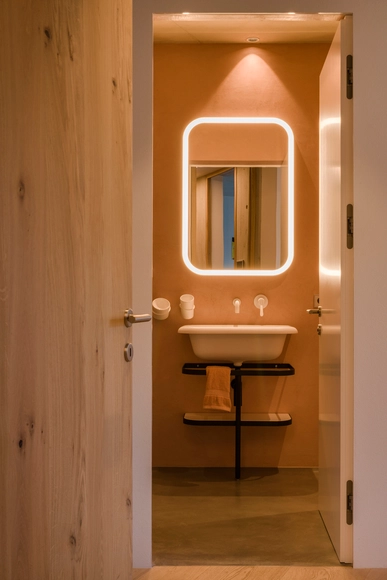
A successful interior design must be paired with a proper lighting design. It is responsible for ensuring that the quantity and wattage of the bulbs are suited to the space based on its dimensions and use.

Currently, until August 16, the second public consultation on the new Urban Intervention Project (PIU) for the city's central sector is open on the municipal government's website. The project involves the necessary revision of the Centro Urban Operation, a law enacted in 1997 whose alignment with the regulatory framework established by the 2001 City Statute had been expected since the passage of the last Master Plan (Law 16,050/2014).
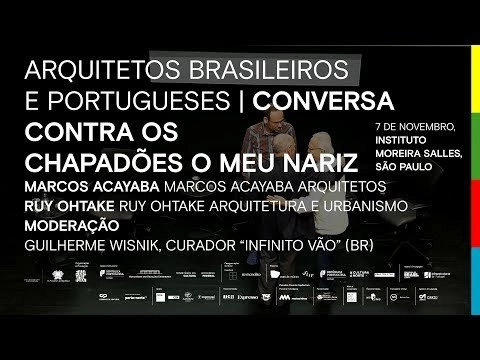

As part of the programming for the exhibition Infinito Vão, Casa da Arquitectura invited a group of architects from different generations featured in the exhibition on 90 years of Brazilian architecture for a series of talks hosted at the Instituto Moreira Salles in São Paulo. Architects Ruy Ohtake and Marcos Acayaba participated in this event, moderated by one of the exhibition's curators, Guilherme Wisnik.
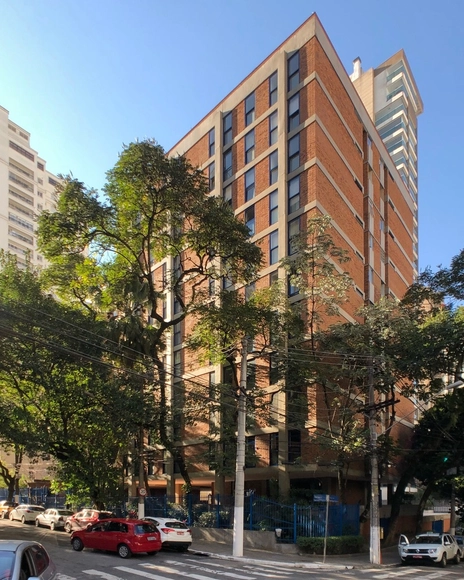

The real estate market and construction industry in São Paulo, which had been booming since the mid-1960s thanks to the creation of the National Housing Bank, allowed for broad architectural experimentation, such as a novel program: vertical multifamily housing. Nevertheless, as early as the 1950s, Revista Pilotis was already calling for architects to take a stance on the issues generated by this new program:

Residents of Jardim Lapenna, in São Miguel Paulista, in São Paulo's East Zone, have created a participatory neighborhood plan in the state capital. Out of 32 urban actions planned in areas such as lighting, security, and paving, seven were selected as priorities and are currently being incorporated into the annual budget bill (PLOA) for 2019.
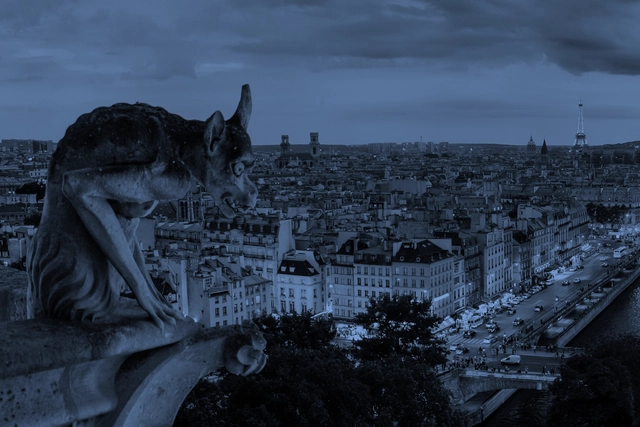

In another episode of the Architecture and Cinema series, Arquicast brings the film Paris, I Love You to the discussion. In addition to the usual podcasters, the episode features advertising professional and journalist Janaina Pereira, who holds a postgraduate degree in Cinema and contributes to various entertainment outlets. Janaina previously participated in episode #58 on the film Her. Another returning guest on Arquicast is cinematographer and cinephile Kiko Barbosa, who always brings engaging insights to our conversations.

Although more than 1.35 million people lose their lives in traffic crashes every year, these fatalities do not receive the same attention from politicians and the media as airplane, train, or ship disasters. Some believe that deaths from vehicle crashes are simply a part of daily life or inevitable—but they do not have to be.
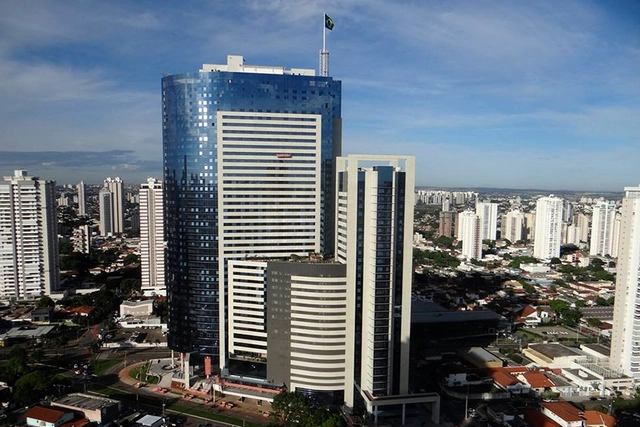
On flat terrain, where the horizon is visible in every direction, buildings with over forty stories rise across different areas of the city. Recently, a fifty-story building was completed; at 191 meters (626 feet) high, it is the tallest in the country. While some criticize this development model for its impact on the landscape, in a capital with rapid population growth, one would expect the cost of housing to rise steadily, along with the housing deficit. This, however, is not the case in Goiânia.

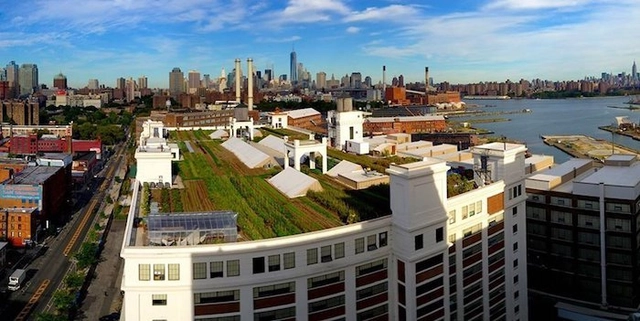
More than 36 tons of organic vegetables are grown on New York City rooftops every year. Beyond providing food, these green roofs also prevent pollutants from reaching the city's rivers.

The practice of the dérive is a subject that sparks great interest among urban scholars and professionals. The Situationists, a social critique movement founded in 1957, used this practice to propose new interpretations of the city based on individual lived experience. Jacopo Visconti, curator of the 34th Bienal de Artes de São Paulo, analyzed in his doctoral thesis artistic practices that incorporate the act of walking, seeking the characteristics that defined the Situationist practice of the dérive. Advised by Prof. Dr. Luis Antonio Jorge, Visconti defended his thesis in 2012, which was later published as a book by Martins Fontes. Read the thesis abstract below.
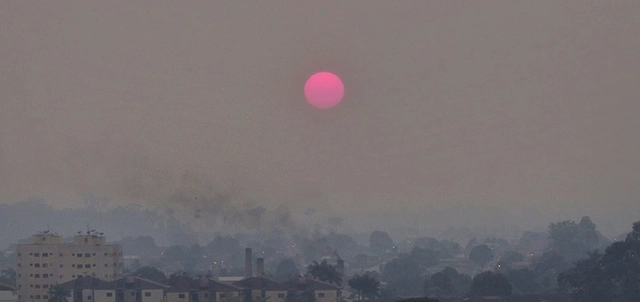
Since the beginning of the month, thousands of fire outbreaks have been recorded in Brazil's northern states, spreading through Acre, Rondônia, Mato Grosso, and Mato Grosso do Sul, and reaching the triple border of Brazil, Bolivia, and Paraguay. According to the National Institute for Space Research (INPE), the country is experiencing its worst wave of wildfires in five years.
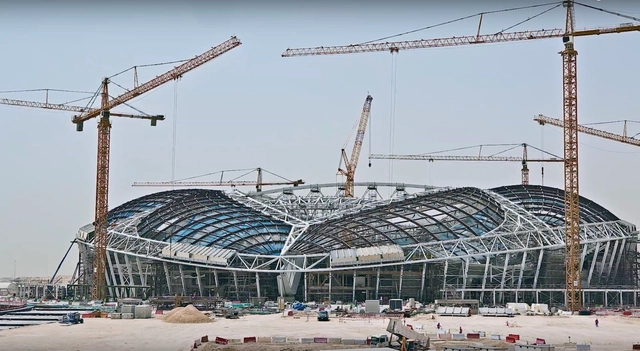

The year is 2010. As the first Arab country selected to host the 2022 FIFA World Cup, Qatar is already ramping up its preparations to host this highly anticipated and costly event 12 years down the line. Extensive construction and reconstruction efforts are being launched, targeting not only the facilities directly demanded by FIFA, but also, more broadly, the urban infrastructure systems of the country's major cities.

“Writing is like a city, for which words are a thousand gates.”
- Walter Benjamin
No roads or maps lead to them. Yet, many of the cities imagined in literature feel more tangible than real ones, capturing the human imagination with their fantastical sparks. The rich geographical, cultural, and social detail of cities like the famous Macondo, from One Hundred Years of Solitude, frequently places a magnifying glass over the relationship between territory and its inhabitants.
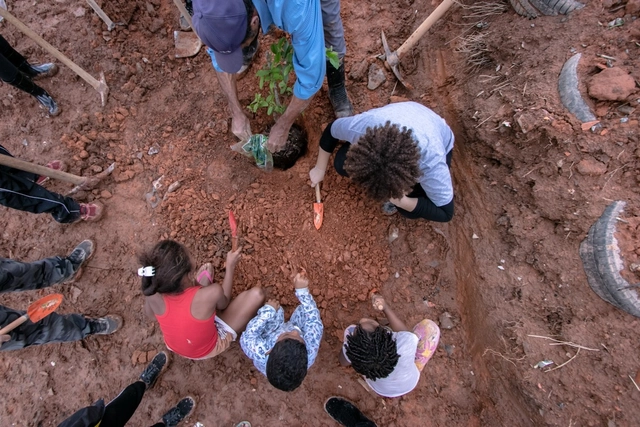
According to data released by the United Nations (UN, 2017), the global population has reached 7.6 billion, with more than half (54%) living in urban areas. In Brazil, according to data from the Brazilian Institute of Geography and Statistics (IBGE, 2010), 84.4% of the population lives in cities.

The work of the Catalan firm Barozzi Veiga is explored through the tension between tradition and invention in architecture in this article by João Paulo Rapagão, published in partnership with AMAG.
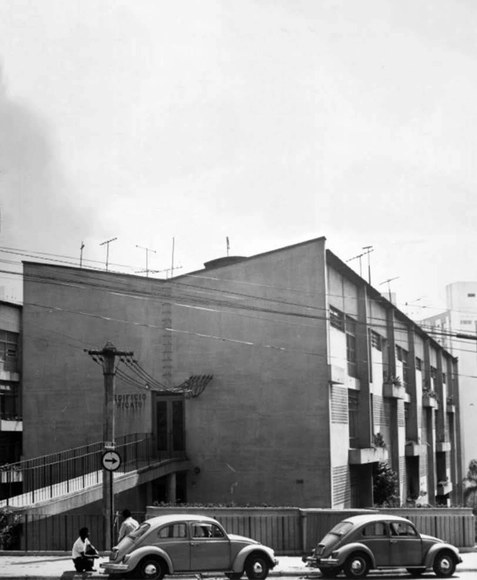

Conceived as a large-scale residential development in an expansion zone of São Paulo, the Jardim Ana Rosa Residential Complex began its subdivision design in 1950, in the Vila Mariana neighborhood, facing Largo Ana Rosa. The development, carried out by the Banco Hipotecário Lar Brasileiro, featured the participation of several prominent São Paulo architects of the time, such as Abelardo de Souza, Plínio Croce, Roberto Aflalo, and Salvador Cândia. In its initial version, the project planned for a few buildings bordering Vergueiro Avenue, with most of the area designated for single-family homes.
There is perhaps no concept so generic and comprehensive, yet at once so impersonal and difficult to reach consensus on, as that of the environment (focusing on the United Nations Conference's own definition of environment—the environment as the set of physical, chemical, biological, and social components capable of causing direct or indirect effects, in the short or long term, on living beings and human activities—we immediately find that establishing a stable, common, and assertive conceptual foundation is highly difficult to achieve, let alone universally recognize...)
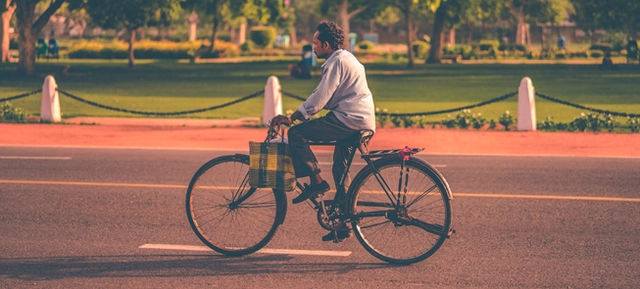
When driving alongside a bike lane, it is hard to escape comments like “it’s always empty,” “it takes away space from cars,” or “businesses lose customers.” But is there any truth to these claims? Here are some of the most common myths about bike lanes – and the reality behind them.
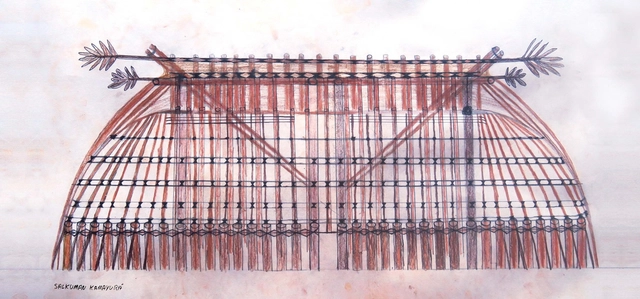
In July 2019, the habita-cidade Platform [1] organized the "Ways of Dwelling: Traditional Architectures" Travel-Workshop, which brought students and professors to the Ypawu Village in Kamayurá territory, in the Upper Xingu. The general objective of the "Ways of Dwelling" Travel-Workshops is to foster constructive reflection on the diverse forms of human habitat across the planet. This year, responding to a request from Kamayurá master builders to produce a manual on local architecture, the Travel-Workshop was designed so that the visiting group could support this important endeavor. The idea for the Kamayurá Architecture Manual was first proposed by Kanawayuri L. Marcello Kamaiurá (a local leader) to architect Clarissa Morgenroth (a graduate of Escola da Cidade) and theater director Cibele Forjaz. Escola da Cidade was then invited to join the project, which was taken on by the habita-cidade Platform, an initiative linked to the *lato sensu* postgraduate program "Housing and City."


The Master Plan is the basic instrument for defining a municipality's development model. It establishes guidelines and strategies for executing plans, programs, and projects, seeking to emphasize public participation as well as economic, social, and environmental sustainability. Yet, its influence on the city goes far beyond what is commonly imagined: it ultimately dictates the volume and form of every new building.

The construction industry drives considerable economic activity worldwide, generating countless jobs and substantial revenue. At the same time, it also carries significant negative impacts, ranging from the depletion of natural resources to high levels of waste generation during both construction and demolition phases. To put this in perspective, in Brazil, Construction and Demolition Waste (CDW) is estimated to account for 61% of all waste generated, while household waste represents 28% [1].

The use of shared e-scooters as a mode of transportation has emerged as one of the major revolutions in urban mobility in recent years. Since launching in September 2017 in the United States, e-scooters quickly became a phenomenon and, within less than two years, a reality in several major cities worldwide.
.jpg?1557928245 "Cortesia de Santa Luzia")