1. ArchDaily
  2. Articles

Articles

How are young architects prepared and trained in the United States? Mechanisms of professional practice

Subscriber Access | 

Architecture reveals the realization of a society's cultural processes at a specific moment in history, reflecting in its elements both the modus operandi of an economy and the dominant values governing its organization. The conceptualization of an architectural project sparks an intense, interdisciplinary process of formal development and technical verification for each construction component and its execution procedures. Architecture is tasked with transforming these diverse languages into a gestalt, or a formal reality that articulates and tests vital properties of reality.

Numerous factors introduce distortions into the architectural process in different regions of the globe. The state of architecture depends directly on the quality of professional training, interdisciplinarity, and available resources. A given context's culture and economy determine what architecture can do—and how it can operate.
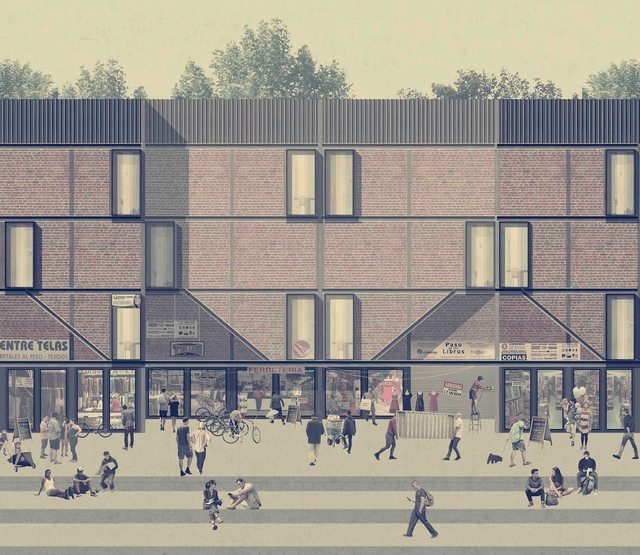
Mixed-use housing, one of the 10 winners of the 2018 Arquitectura Caliente Competition for thesis projects

Subscriber Access | 

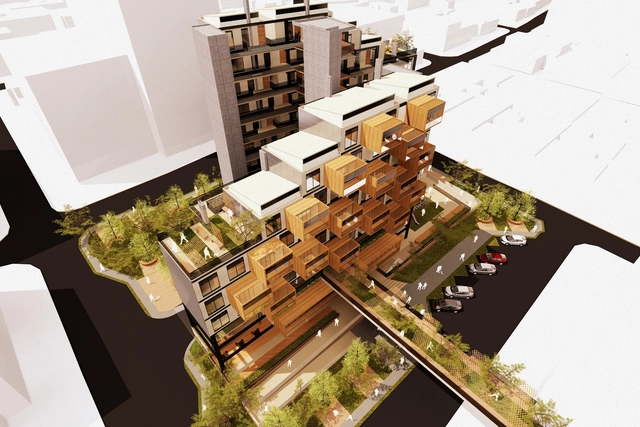
Designed by Andrea Fuentes Núñez, the project Mixed-Use Housing was chosen as one of the 10 winners in the Thesis Projects category of the 2018 Concurso Arquitectura Caliente (CAC 2018), a Chilean competition organized by Grupo Arquitectura Caliente and funded by the Ministry of Cultures, Arts, and Heritage.

Today, there is a pressing need for housing to move beyond domestic specificity. National and global economic shifts have driven individuals to seek new means of livelihood, meeting their needs by clinging to what they own and utilizing their only available land—their own property. By blending work and domestic life, the question arises: to what extent does housing yield to accommodate productivity?

Elizabeth Hirsh Fleisher: Collective Housing in Philadelphia

Subscriber Access | 

Elizabeth Hirsh Fleisher contributed to the design of the first public housing developments built in Philadelphia after World War II.

Discover the winning project of the Sustainable Timber Housing Prototype competition in Argentina

Subscriber Access | 

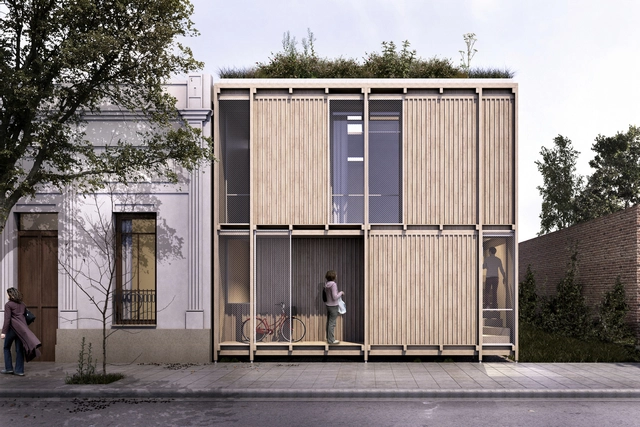
The National Ideas Competition “Sustainable Housing Prototype Built with Wood,” promoted by the Cámara de la Madera, Mueble y Equipamiento de Córdoba (CAMMEC) and organized by the Colegio de Arquitectos de la Provincia de Córdoba (CAPC), was launched with the following premise: to develop a minimal housing prototype with wood as the primary material.

The jury awarded first prize to Agustín Berzero, Valeria Jaros, María Emilia Darricades and collaborators Maximiliano Torchio and Tomás Quaglia. Below, we present the winning project in the words of its authors.

Inspiration from nature far beyond form: biomimicry in architecture

Subscriber Access | 

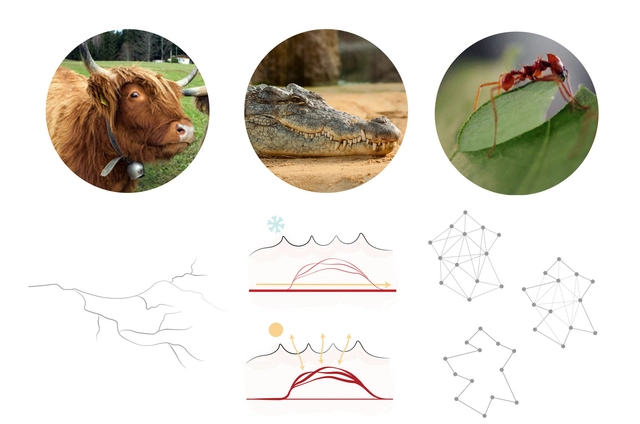
Biomimicry in architecture does not prescribe form, nor does it strive for literal resemblance. Rather, the goal is to develop architectural solutions that execute strategies observed in nature. It is not about form for form's sake, nor is it about copying shapes; instead, it seeks a deeper reasoning behind those forms. Indeed, it goes far beyond merely drawing inspiration from shapes. It examines context, systems, and interrelations, and the true beauty of biomimicry lies in these connections. Architectural creation remains free, as it is guided by a design principle—the strategy of how nature achieves the performance a project requires for a specific demand. It is a process of co-creation between biology and architecture, making it truly transdisciplinary.

Cities in Books: 26 Titles to Read in 2018

Subscriber Access | 

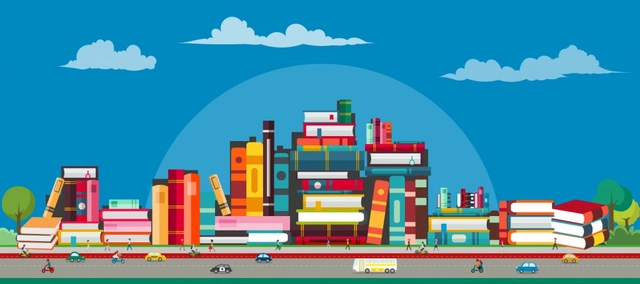
Books help us grow, tell us things we would never otherwise think of, show us places we would never visit, and teach us. Yet, someone can live their entire life in a city without ever truly seeing or understanding it. That is where books come in. In this post, we have selected 26 titles by Brazilian and international authors—works with diverse aims, but all centering on two main themes: cities and urban mobility. Through books, we can describe every street, building, or public space, reflecting on what life is like in the urban environment, how we move, and how it is all planned (or unplanned).

Cities in Books: 26 Titles to Read in 2018 - Image 4 of 4

We Are an Event: Thinking Cities through Architectural Fictions

Subscriber Access | 

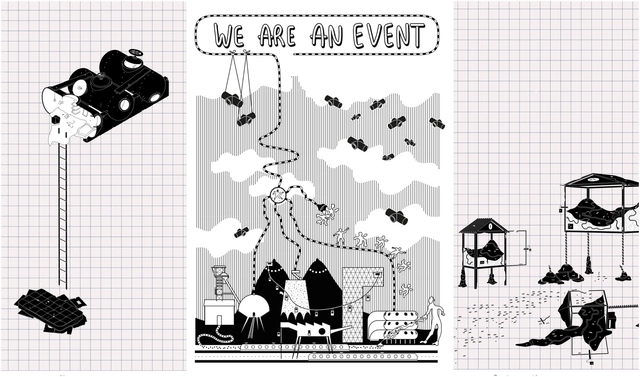
'We Are an Event' is a fictional persona born from the collaboration of Quentin Laurens-Berge and Lambert Moiroux, both of French nationality. The true moral and visual identity of this project was created to address questions about the city where it is based. This character serves as a sphere of exchange and a tool for creating distance from the work produced. Quentin and Lambert's work questions the modes of architectural production within the discipline, describing their projects as an oscillation between porno-chic and class struggle, as the aesthetics of their representation allow for a deeper exploration of themes like the Saint-Étienne International Design Biennale.

Currently, 'We Are an Event' is based in the tentacular—as they choose to call it—Mexico City, where they continue their practice with a social, moral, and cultural focus that addresses urban and spatial needs. Faced with a new territory, their goal is to deepen the practice of a different architectural discipline: real-time architectural performance.

Cazú Zegers and GrupoTalca bring value to the territory through AndesWorkshop

Subscriber Access | 

Led by Cazú Zegers and GrupoTalca, AndesWorkshop 2017 took place last May and June in Patachoique, Lonquimay (Chile), in collaboration with the Arenales Mapuche community. The project aims to design the Mirador de la Corona alongside students and local communities, a structure that has already had a significant impact on Pehuenche communities, serving as a catalyst for the macro-project Ruta Pehuenche.

5 Basic Points for Dignified Architecture

Subscriber Access | 

When Paisaje Transversal was founded, 10 years ago, one of our driving motivations was to demand and advocate for a more responsible profession—one that is respectful of both its own guild and society as a whole. At the time, we saw—and we still see today—that one of the most damaging consequences of Architecture's self-absorption and self-sufficiency (the capital "A" is ironic; we prefer talking about architectures), both in the professional realm and, to an extreme degree, in universities, is the profound ignorance it fosters around fundamental topics like labor, business management, and the law, among many others.

This widespread ignorance—proudly imposed and self-imposed because these are dismissed as dry, secondary matters—has in practice led to an anomalous system where fraud, exploitation, precariousness, and self-exploitation are all too frequent. This, naturally, ends up harming professionals, the profession, and society at large.

A less obvious cause of this phenomenon is that, in many cases, this dereliction of duty is voluntary. It stems either from an unsupportive, anti-system liberal stance, or from the precariousness of a profession that was once wealthy and now refuses to accept its new economic reality.

Below, we list five principles we believe must be shared and championed to rebuild a dignified and responsible profession:

Transforming from the Intangible: The 'In the Air' Project

Subscriber Access | 

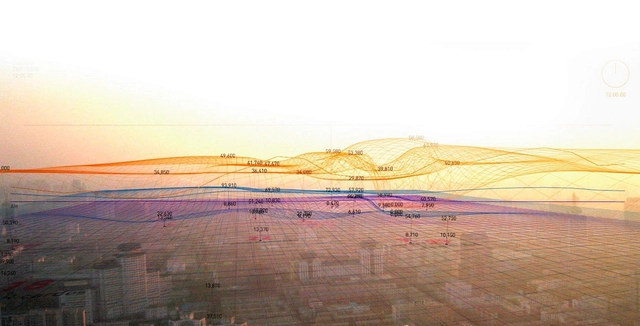
For this feature, the Fundación Arquia Blog, alongside architect Sabrina Gaudino Di Meo, brings us a conversation with architect Nerea Calvillo on how the project "In the Air" came to be. This multidisciplinary work, bridging data and ecology, visualizes urban air components to understand the behavior of microscopic agents and the implications of their concentrations for navigating the city.

Hans Scharoun: Architecture, Space, and Imagination

Subscriber Access | 

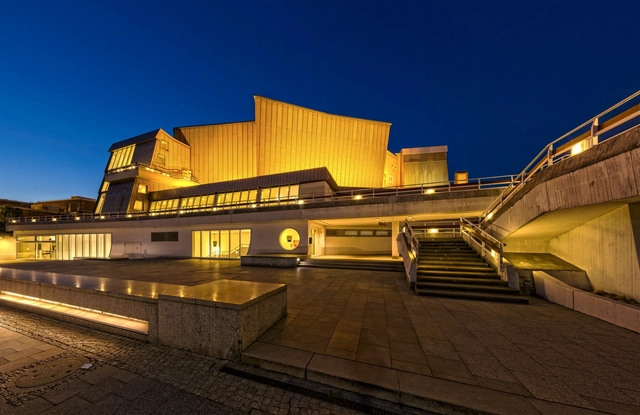
Hans Scharoun [1893-1972] drew from this language. Along with many of his contemporaries—Mies, Taut, Mendelsohn, and Häring himself—he was shaped by the expressionist milieu of postwar Germany, studying under Poelzig at his Breslau School. This expressionism first appeared in a series of watercolors he contributed to the *“Gläserne Kette” (“Glass Chain”)*, the famous correspondence network among architects and artists in Germany at the time. Conceived by Bruno Taut, this chain of letters served as a medium of communication among the group's members. In these letters, liberated from the constraints of feasibility, the members outlined their visions of an ideal society and a benevolent architecture.

By the 1920s, however, on the cusp of another conflict, a culture of resourcefulness and efficiency took root once again globally. Economic recovery demanded austerity, a trend reflected not only in household management but across many artistic avant-gardes of the period—a collective quest for material, formal, and, consequently, economic efficiency. Rationalism emerged as the dominant trend, championed by architects like Hannes Meyer and André Lurçat, who sought to strip the communicative attributes of architectural language down to zero in favor of addressing the organizational tasks demanded by technological and political developments.

These are the most popular projects on ArchDaily Colombia's Instagram.

Subscriber Access | 

2018 has been a special year for ArchDaily in Colombia: not only did we celebrate the first three years of our local site in Bogotá alongside prominent architects, and are now poised to set a new annual traffic record, but we also launched ArchDaily Colombia's Instagram account—which, thanks to you, has already reached 10,000 followers in just six months.

To wrap up this great year, we have selected the most popular projects—measured by total engagement, excluding reposts—on @archdailyco:

Operation Chamartín: Speculation or Urban Profitability?

Subscriber Access | 

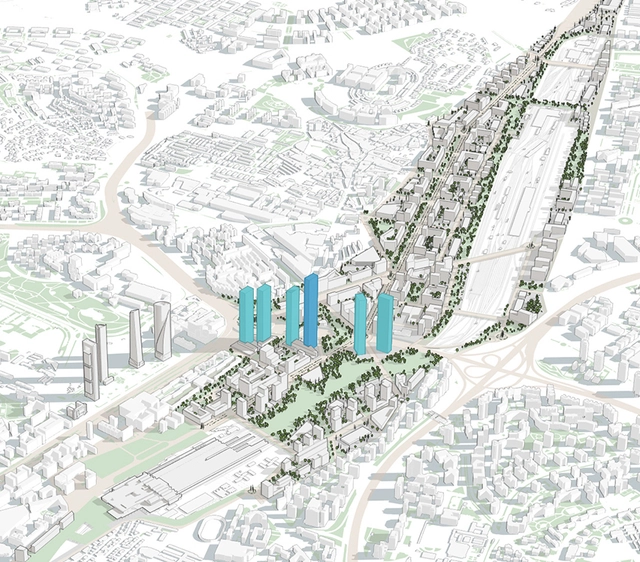
Proposed 25 years ago and never initiated, the "Chamartín Operation" has recently reached a framework agreement between the Madrid City Council, Adif/Ministry of Development, and the Distrito Chamartín Norte (DCN) consortium, which brings together the private stakeholders involved: BBVA and Constructora San José.

As is typical in such cases, the agreement strikes a middle ground between the maximum demand represented by DCN (3.37 million square meters of lucrative buildable floor area, including a total of 18,748 housing units, 90.54% of which would be market-rate) and the minimum proposal presented less than a year ago by the Madrid City Council (1.75 million square meters of buildable floor area, with 4,587 housing units, 20% of which would be subsidized).

Joaquín Vaquero and the beauty of the colossal

Subscriber Access | 

What is it about the work of Joaquín Vaquero Palacios that still surprises us after all this time, making it worthy of an exhibition at the Museo ICO and so many visits by specialists? I have often been called upon—a role I gladly accept—as the local point of contact for those coming to Asturias to see Vaquero's work. The willingness of Hidrocantábrico, and now EDP (I still speak with the same people; many thanks to Nicanor Fernández and his team), is always absolute, stoically accommodating last-minute adjustments. After all, outsiders often fail to realize, for instance, that traveling to Grandas de Salime remains a major trek that takes up—and fills with joy—an entire day, and that security protocols are paramount.

On one occasion, we brought a busload of students from the Universidad Internacional Menéndez Pelayo, and by the end of the day, they were applauding on the bus as if they had just witnessed an opera. And indeed they had: Vaquero's grand formal opera. This year, in fact, I served as a guide for the Master of Advanced Architecture program at the Universidad Politécnica de Madrid, directed by Juan Herreros—a passionate admirer of Vaquero who has joined us on many occasions—with students from five different countries who were left awestruck upon seeing the power plants. We also crossed paths in Proaza, in the offices, and in Veriña with the young team of architects designing this exhibition, who were meticulously reviewing every element and archive they found in the buildings.

A new digital platform for the architecture and design sector is born

The rocagallery.com platform, powered by Roca, aims to become a leading reference for news and trends in architecture and design, featuring over 30 international contributors and weekly content updates.

The Utopia of Social Housing in Spain

Subscriber Access | 

The social housing model currently seems like a utopia in Spain—ruled by developers and real estate firms, and mired in national policies that fail—and have always failed—to address the housing problem.

Over the years, the idea has been promoted that renting a home is almost a crime, throwing away money that could otherwise go toward purchasing property. Welcome to the wonderful world of real estate speculation. Driven by exorbitant rents set by real estate agencies or landlords with absolutely no state or provincial regulation to control them, the system itself pushes the population to take out mortgages and participate in private development. While over 50% of housing in Spain was rented back in the 1950s, those figures are a far cry from the progressive decline that brings us to the present day: nearly 80% of current housing is owner-occupied, while rentals have shrunk to just 20%.

What It's Like to Live in a House-Museum: The Blom Cubes

Subscriber Access | 

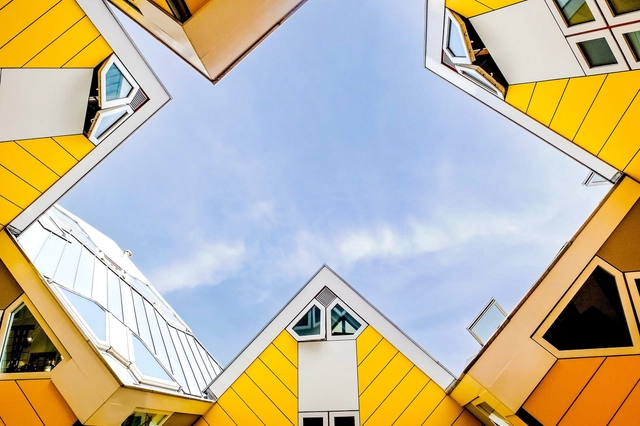
The lives of 32 families took a turn —quite literally— when the homes they occupied in the 1980s became a designated tourist attraction in 2009. Some of the residents decided to capitalize on this by offering small tours of their homes. Yet, despite the crowds of tourists that have flocked here since, the community remains as tightly knit as the cubes themselves. 

The 10 most popular projects in Peru in 2018

Subscriber Access | 

As the year comes to a close, we look back... what captivated us most? After presenting the best architecture of the year, we now focus on identifying representative projects. Among the wide range of Peruvian works published in 2018, those that had the greatest impact on our platform span various scales and typologies. Below, you will find everything from a private house to a public library, by both established and emerging architects—reflecting architecture for everyone.

May the work continue.

Most Popular Chinese Projects of 2017

Subscriber Access | 

Dear architects, thank you for your dedication and hard work this year!

Thank you for your commitment to architecture: for considering human life from every angle to create better living environments; for integrating technology and innovative design to push our era to higher aesthetic heights; and for every effort, big and small, that helps write the epic history of Chinese architecture.

Based on website traffic data, here are the most popular projects in China in 2017 (ordered by publication date; click each link to view more details). In 2018, ArchDaily will continue to support and walk alongside architects every step of the way!

BHP, a bioclimatic multi-family housing prototype developed in Colombia

Subscriber Access | 

Late last November, we published the winners of the second open call for graduation projects in Colombia, also known as theses, receiving 70 entries from 14 cities and 29 universities. Ultimately, nine projects passed the three stages of evaluation, standing out for addressing pressing systemic issues, developing deep research analyses, and posing both urban and rural challenges, just like in 2016.

In this feature, we take an in-depth look at "BHP: Bioclimatic Multi-Family Housing Prototype," developed by Natalia Carrero and Juan Celis (Universidad Santo Tomás, Bucaramanga campus) and selected for the 2017 edition of Archiprix International.

The architectural model, an exercise in style

Subscriber Access | 

Few names fit the label of “cult writer” as perfectly as Raymond Queneau, who boasts a fanatical following of near-militant devotees of the cause: literature as a very serious game. From the outset, and even upon the most cursory reading, Exercises in Style, written by the French author in 1949, is radically different from conventional literature. The book positions itself—or pretends to—in a kind of no-man's-land between literary theory and practice, giving the impression of having been crafted based on the chapters of a style manual. Queneau rejects any preconceived schema that might have grouped the “exercises” by theme, gradual complexity, or simple alphabetical order. He does not even work from a single baseline text. At times, he opts for a purely mechanical game of textual transformation to produce a sense of sheer nonsense.

It is no wonder that this seven-decade-old book still feels revolutionary and remains an essential manual in literary programs. What Queneau showed us then—that playful, mocking creative freedom—remains difficult to match today. For this reason, such an exercise in variation, of refusing to set limits on the imagination, is and must be compatible with the craft of architectural model-making. What Queneau demonstrated, starting with an unremarkable text and transforming it 99 times, is precisely what any architect should attempt to translate into their model-making. It is the art of variation and accumulation—“difference and repetition,” as Gilles Deleuze would say. It means working 99 times on the same idea, watching it transform until, at some point, we are able to recognize its ultimate synthesis.

Brazilian students awarded in Tanzania for project inspired by complete streets

Subscriber Access | 

In just over three months, Érica Oiticica and Sâmyla Souza, students at the School of Architecture and Urbanism (FAU) of the Federal University of Juiz de Fora (UFJF), designed a Complete Street project that earned them an award and the opportunity to present their ideas to a global audience at a conference in Tanzania. The “As Cidades Somos Nós” (Our Cities Ourselves) competition inspired the duo to put their best urban planning ideas onto paper to transform a street in Belo Horizonte.

9 Must-Visit Venues to Keep Celebrating Museum Day in Mexico

Subscriber Access | 

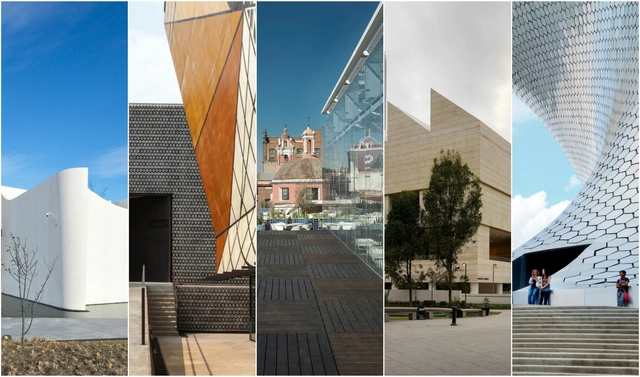
Museums are vital sources of knowledge, housing some of the most significant works of architecture in history and bringing learning closer to the curious minds who experience them. On May 18, International Museum Day was celebrated with various activities taking place across some of Mexico's most representative venues. Because the country's cultural wealth deserves ongoing celebration, we have compiled a selection of iconic museums where art and architecture merge to define unique spaces. What are your favorite museums in your city?

Free webinars show how to implement complete streets

Subscriber Access | 

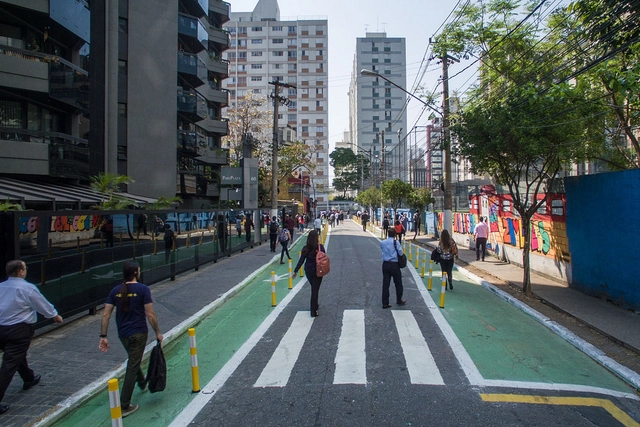
Shifting the street design paradigm that has been applied for decades in Brazil is challenging. Viewing every road through the eyes of someone who thinks first of people, rather than automobiles, is an increasingly necessary and urgent exercise in urban planning. Against this backdrop, the Complete Streets concept seeks to build safer, healthier, and more equitable streets.

To help professionals from various fields understand and implement the principles of Complete Streets, WRI Brasil and the National Front of Mayors (FNP) created the Complete Streets Online Seminars. Eight webinars were held throughout 2018, exploring various topics related to the stages of project development. Hundreds of people from 150 Brazilian cities attended presentations by 17 specialists representing ten different organizations.

You've started following your first account!

Did you know?

You'll now receive updates based on what you follow! Personalize your stream and start following your favorite authors, offices and users.