Vertebrado-Arquitectura Paisajista B + Godó Diseño (CAMMEC)- Museo de la Industria
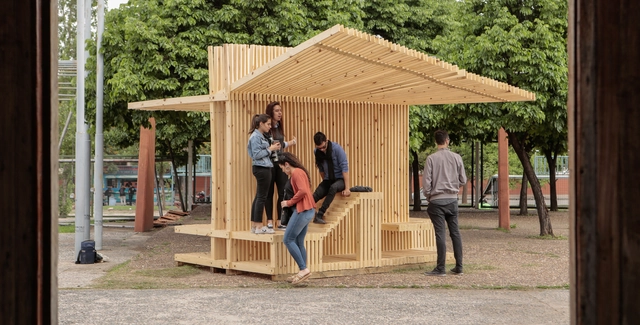
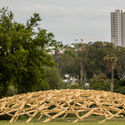
Jointly organized by the Cámara de la Madera, Mueble y Equipamiento de Córdoba (CAMMEC) and the Faculty of Architecture, Urbanism, and Design at the Universidad Nacional de Córdoba, the 'Toco Madera XL'workshop emerged within the framework of the Second Design Biennial in Córdoba, Argentina, with the primary goal of promoting the use of wood.
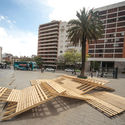
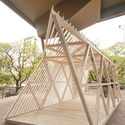
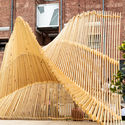
Nine teams made up of more than 200 students and 50 professors designed installations using this material exclusively, which were then placed in various public spaces across the city. The initiative sought to showcase and highlight the regional timber industry, positioning the city as a benchmark for local and international design.
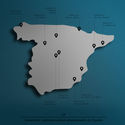
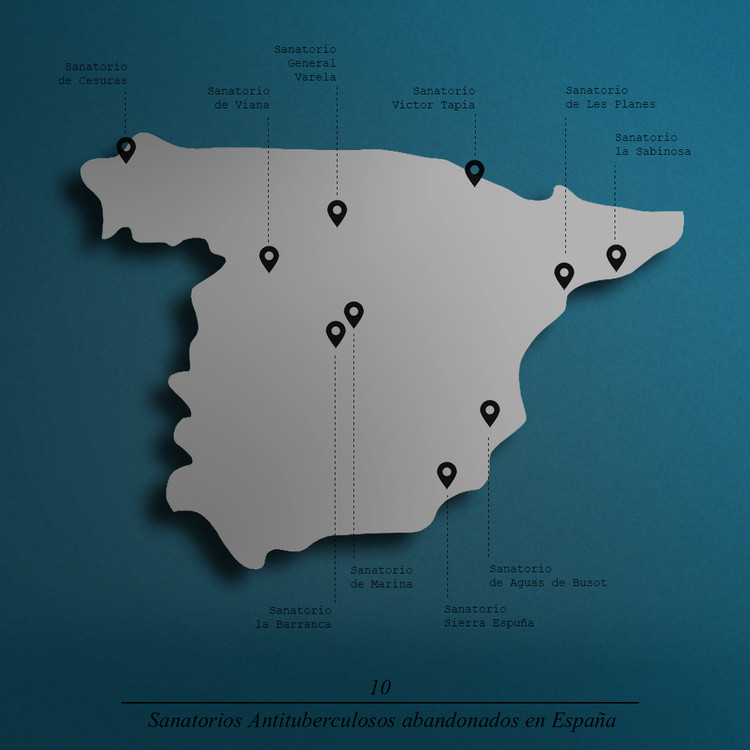
Ubicación de los 10 sanatorios en España. Image Cortesía de Javier García Librero
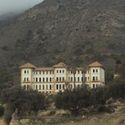
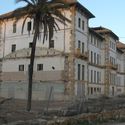
On December 13, 1943, a law established the regulatory framework for the National Antituberculosis Board (Patronato Nacional Antituberculoso), created to combat and help eradicate tuberculosis—one of the worst diseases afflicting Spanish and global populations during the 20th century. "The National Antituberculosis Board is dedicated to preventing the spread of a disease that represents the leading cause of mortality in Spain, as well as the most significant threat to the race," the text of the law began.
Following the end of the Civil War in 1939, the situation in Spain and for its population was precarious. This was reflected in the country falling behind other Western nations in its number of tuberculosis sanatoriums. Indeed, in 1934, with only 66 sanatoriums, Spain had the lowest ratio of facilities per capita in Europe—one for every 357,000 inhabitants.
More than a decade ago, I decided to study contemporary architecture while simultaneously teaching history and criticism, with an emphasis on the last century. The thrilling trajectory of architecture during this period is as surprising and prolific as it undoubtedly was during the Renaissance. Names like Gropius, Jeanneret, Mies, Wright, Costa, Niemeyer, Tange, Bonet, Williams, Scharoun, Terragni, or Aalto represent a group of brilliant architects, much like historical figures such as Leonardo, Raphael, Michelangelo, Brunelleschi, Bramante, Tintoretto, Titian, Masaccio, Botticelli, Palladio, Alberti, and Vignola were to their art starting in the fifteenth century. Modernity in architecture and art undoubtedly possesses the character of a revolutionary period, one of monumental contributions and a turning point in history.
A few months ago, architect Filipe Vasconcelos shared his digital collages with us, exploring the similarities between architecture and objects. He creates scenes in which buildings are recontextualized in situations completely removed from their original contexts and uses.
In late November, we published the winners of the second call for Colombian graduation projects—also known as undergraduate theses—for which we received 70 submissions from 14 cities and 29 universities. Ultimately, nine projects advanced through three rounds of evaluation, standing out for addressing pressing issues, conducting in-depth research, and raising challenges in both urban and rural contexts, just as in 2016.
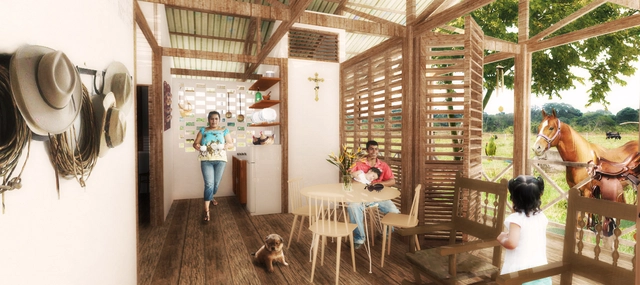
Here, we take an in-depth look at Sustainable Rural Settlement Model in Yopal, Casanare, a proposal selected for the 2017 edition of Archiprix International and developed by Daniel Vanegas and Tatiana Cantor, both graduates of the Universidad Piloto de Colombia.
PERSA SANTA ROSA / Santiago. Image Cortesía de OH! Stgo 2018
Between September 8 and 9, the annual Open House architecture festival—which began in London and is now held in more than 40 cities worldwide—will host its second edition in Santiago, Chile.
Aimed at anyone interested in exploring the city's architecture and urban design under the slogan "TENGO GANAS DE CONOCER SANTIAGO" (I Want to Get to Know Santiago), this free, weekend-long open-door festival offers access to spaces normally closed to the public or hidden within the city, showcasing their outstanding architectural, engineering, environmental, urban, social, and cultural value.
Today, the construction industry faces growing demand for environmentally friendly projects, such as green building certifications and energy efficiency standards. Consequently, raising awareness about the ecological value of timber is essential, as it serves as a renewable alternative to other materials that are more energy-intensive and generate high CO2 emissions.
Active cities are those where the population can make healthier, more sustainable choices. To make this possible, cities must provide access to high-quality public spaces and services for everyone, ensuring they can walk, rest, play, and exercise in plazas, parks, and public facilities. Active cities are also compact, where the proximity between housing and work, school, services, and leisure makes walking, cycling, and public transit networks more efficient and better distributed across the territory. Consequently, opting for walking or cycling for daily commutes becomes viable. For this reason, active cities are, inherently, more walkable.
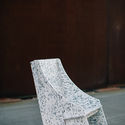
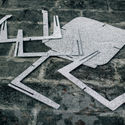
Luken is a designer furniture brand –created and produced in Mexico by architect Paola Calzada Prats–, characterized by its use of recycled or eco-friendly materials. The collection consists of indoor and outdoor furniture that is easily assembled and resistant to sun, water, and heavy use.
Two different materials are used: recycled plastic for outdoor furniture and valchromat for indoor pieces, the latter being a 12 mm thick Portuguese wood fiber panel that, while not rainproof, is resistant to moderate humidity. No glue or nails are required for assembly. Meanwhile, the outdoor recycled plastic is made of 100% melted plastic with no added chemicals in the process. It performs exceptionally outdoors due to its resistance to direct sunlight, sea air, rain, and even heavy daily use by children.
Fotografia de Gustavo Neves da Rocha Filho (1954). Image Cortesia de IAB - SP
The IAB played a key initial role in consolidating the profession of architects and urban planners as an autonomous activity from engineering back in the 1940s and 1950s. It was organized as a representative institution, a voluntary association of architects, and a platform for the field's public policies. This applied both to guiding legitimate practices concerning the built environment, the landscape, and the city, and to educating both architects and society about an activity so fundamental to citizenship. Action across these diverse areas began with support for the regulation of architecture as a profession in Brazil (the creation of Crea/Confea in 1933), followed by the organization of the 1945 congress, and, in the case of São Paulo, support for the founding of the Faculty of Architecture and Urban Planning of the University of São Paulo (FAUUSP) in 1948.
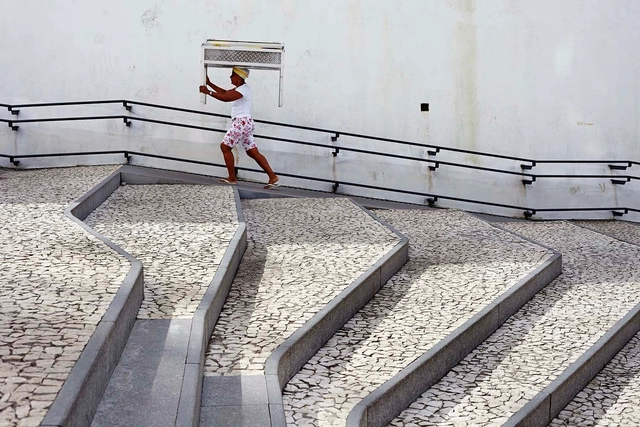
Fitting a ramp into a layout can be a designer's nightmare. But anyone who has ever had to climb a steep ramp in a wheelchair or push someone else knows firsthand how much of a difference a well-designed ramp makes. NBR 9050, from 2015, establishes the technical criteria and parameters to be observed in the design, construction, installation, and adaptation of buildings, furniture, spaces, and urban equipment to ensure accessibility.
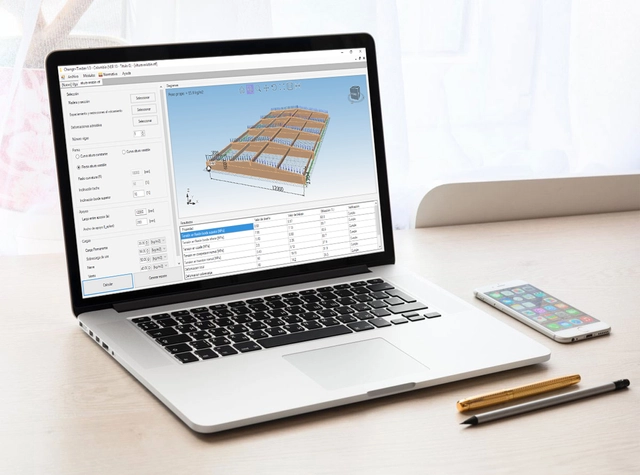
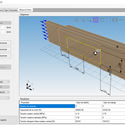
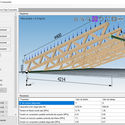
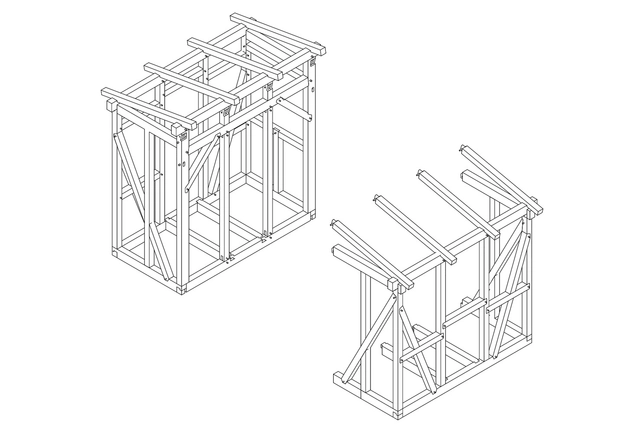
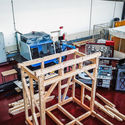
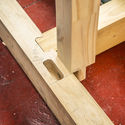
Aiming to offer low-income households genuine flexibility for expansion and adaptation during their housing process, the Robotic Timber Framing group at the Department of Architecture of the Universidad Técnica Federico Santa María, led by Luis Felipe González and Francisco Quitral, is developing timber housing structures that can be freely assembled and transformed by their occupants.
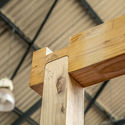
Without the need for metal fasteners, the components are joined using mortise and tenon joints, a process carried out by an industrial robot equipped with cutting tools.
In the constant ebb and flow of those moving through the city of São Paulo, you have likely noticed the distinctive graphic pattern repeated across various sidewalks. The classic pattern behind the modules that graphically form the map of the state of São Paulo was created in 1966 by architect and artist Mirthes dos Santos Pinto. It all began in the 1960s when then-mayor João Vicente Faria Lima launched a competition to design the city's new pavement. Mirthes, who at the time worked as a drafter for the São Paulo Municipal Works Department, created a stylized map of the State of São Paulo. Using square modules of black and white geometric tiles, the design alternated between solid colors and diagonally split tiles to create a continuous pattern.
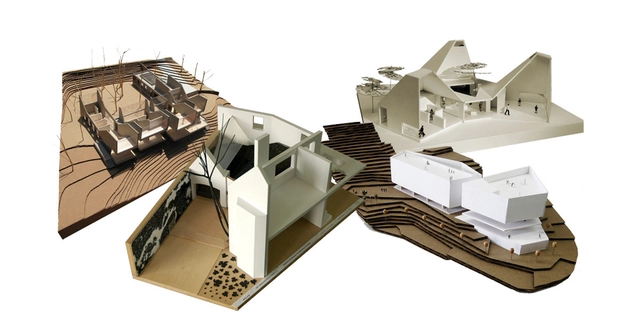
There are now more than 350 Colombian projects published on ArchDaily. To celebrate this milestone, we have curated a selection that highlights the invaluable role of architectural models in conceptualizing, designing, and constructing contemporary Colombian architecture.
Far from the photorealism now achieved by 3D rendering specialists, the physical model endures as a critical tool for conceptual, spatial, structural, and constructive exploration, as showcased in the following selection:
When discussing Le Corbusier, a portion of his work—especially the early villas designed in collaboration with Pierre Jeanneret—is often dubbed the “White Villas.” It is curious that this color, white, remains so closely associated with the architect, rather than him having a “blue” period like Picasso or a “gold” period like Klimt.
When and why was the term “White Villas” coined for Le Corbusier's work? Could the whiteness of his buildings have been misunderstood, much like Greek art? This notion of whiteness was highly useful for laying the foundations of Neoclassicism in its time, yet it is entirely removed from the rich palette of colors that graced those works during the Hellenic period.
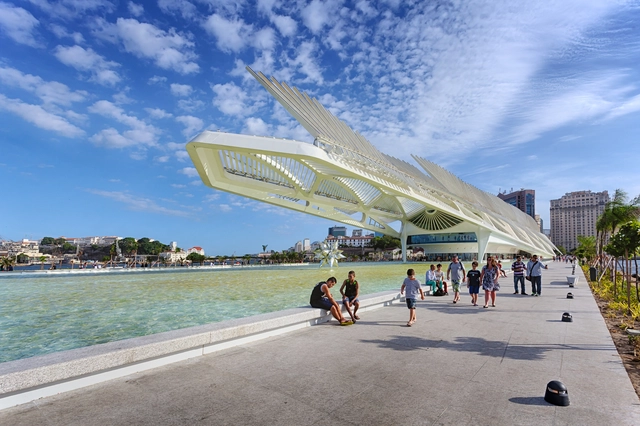
What do the arrival of the Portuguese royal family, Brazil's largest slave trade market, the murder of student Edson Luís during the military dictatorship, and the R$52 million bribe received by Eduardo Cunha have in common? They all took place in Rio de Janeiro’s port area and can now be (re)discovered through the Museum of Yesterday (Museu do Ontem), an app launched by Agência Pública that aims to rescue these stories and foster a new relationship with this important urban territory.
It is another freezing night in Chucuito, and in the restaurant where all the participants of the XV TSL Puno are dining, Jhony Chaves—better known as "El Gato"—tells us stories about impossible places, like Cerro de Pasco, a Peruvian mining settlement even higher, colder, and harsher than Chucuito. He then recalls a village lost in the Peruvian jungle that can only be reached by boat, where the mosquitoes seem as large as birds. Next, he jumps to describing Andean villages that flood and freeze almost year-round, until the weather finally gives a few months of respite to the families who live there simply in houses made of mud.
As El Gato goes through his inventory of Peruvian towns, it is impossible not to think of the magical realism of Macondo. Is all of this real? Indeed, it fits perfectly that this is also a concept coined decades ago, before García Márquez, by a European, for whom his own continent's nature had been entirely domesticated. Of course, Latin America remains a landscape, and our great victory is that we manage to live within it, despite nature and its disasters. Thus, the villages El Gato evokes bring a certain comfort to our shared table, even as the cold and altitude threaten to take their toll on us. "It could be worse," we think before spooning the steaming soup in front of us.
How, then, can we intervene and propose public space in rural, predominantly Aymara settlements like Chucuito, where nature constantly reminds us that it is the main protagonist?
Few cities worldwide have had the courage to tax vehicle circulation—even though existing examples have, so far, been positive. It has fallen to Buenos Aires to launch the first policy of this kind in Latin America. Starting now, the city government will charge for the time saved by those who insist on driving in the historic center (known as Microcentro) of the Argentine capital and in the Retiro neighborhood between 11 a.m. and 4 p.m. The city joins a list whose prominent names include Singapore, London, Stockholm, and Milan.





.jpg?1517752249&format=webp&width=640&height=580)










.jpg?1527695634&format=webp&width=640&height=580)
