Is there a future for our cities if we do not transition to a sustainable way of life? For some time, urban sustainability has adopted a perspective focused more on climate change than on a holistic vision that incorporates society and the way we live in community.
What new ways of living are we experiencing amidst social, economic, and ecological shifts? Ultimately, we must bring to the table examples from different parts of the world to understand the latest trends in how we live in our cities.
We want to hear from you—not only about examples of co-living, cooperatives, and any new type of social housing you consider a benchmark, but also your thoughts on the matter. Selected comments from the form below will be published in an upcoming article.
99+Imaginaris invited renowned architects from around the world to speculate on the future of Barcelona. Within the context of the Model Festival, curators Eva Franch i Gilabert and Josep Maria Montaner, alongside the design, coordination, and exhibition design by the Enric Miralles Foundation, brought together a wide-ranging series of sketches, ideas, visions, and models—from an edible Barcelona by Areti Markopoulou to a Barcelona of inflection points by Zaida Muxí.
The resulting exhibition catalog is a diverse archive of drawn manifestos—a document that allows us to review and debate future ways of living in the city. The curatorial text for 99+Imaginaris, along with the individual visions of its contributors, is presented below.
JULIA GUARINO FICHTER, Primer arquitecta recibida en Uruguay, Revista Mundo Uruguayo Nº2049 (31/07/1958), pág.6 (ejemplar del IHA). Tomado para Nómada Uy. Image Cortesía de Medios Audiovisuales FADU - UdelaR
Born on July 17, 1897, Julia Guarino Fiechter became the first woman to earn an architecture degree in Uruguay, in 1923. Although she was originally from Éboli, in the Italian province of Salerno, she grew up and spent her entire professional life in Uruguay. After graduating from the Faculty of Architecture at the Universidad de la República, she also worked as a draftsperson and educator.
Approximately half of the children and young people between five and 14 years old killed in traffic worldwide are pedestrians, and nearly one-third are passengers in motorized vehicles. In Brazil, traffic is the leading cause of unnatural death for children in this age group. According to data from the Brazilian Association of Traffic Medicine, between January and August 2021 alone, the Unified Health System (SUS) recorded more than 6,000 children and youth hospitalized in serious condition due to being struck by vehicles in the country.
Reversing this scenario requires making our streets safer and more comfortable for walking, focusing primarily on the needs of children. A city that works for children is a more prosperous and pleasant city for its entire population.
The use of bicycles in urban areas has been steadily increasing. Health, leisure, cost savings, convenience—there are numerous reasons and benefits driving this choice. However, for people to choose cycling, a fundamental factor must be met: safety during the ride, which is primarily provided by bike paths and lanes. To highlight this, we present a ranking of which Brazilian capitals prioritize cyclists and the quality of their routes, fostering the construction of a better city through active mobility.
https://www.archdaily.com/1132001/ranking-of-bike-paths-and-lanes-in-brazilian-capitalsArchDaily Team
In urban planning discourse, advocacy for public transit is as widely agreed upon as it is frequently repeated. Proposals such as transit-oriented development (TOD), which advocates for coordinating urban density with transit corridors, have gained traction over recent decades. They have moved from academia into the recommendations and case studies of institutions like the World Bank, into political platforms and official documents, and are already visible in various urban interventions worldwide—from Curitiba to Toronto, and particularly in Asia.
"Less is more!", "ornament is a crime", are some of the modern phrases that shaped the western architectural language in the last century and still continue to be a strong influence when thinking about spaces. Minimalism, even if it is hardly carried out within its original essence, still tends to value emptiness, aesthetic cleanliness and the purism of space.
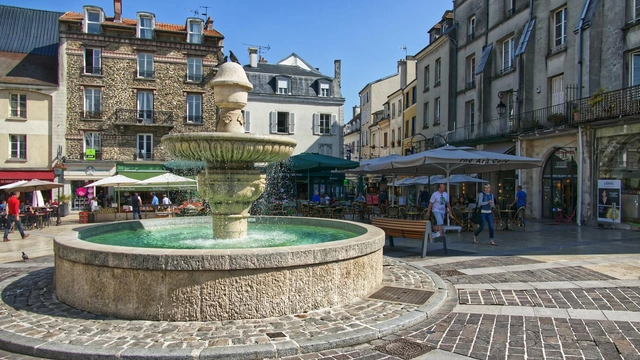
Place de la Fontaine, Lagny-sur-Marne, France. Photo by Pascal Bernardon, via Unsplash
A direct consequence of global warming, heatwaves have become increasingly devastating and frequent with each passing summer. The most recent of these has been sweeping across Europe for days, worsening in western nations, such as Belgium and the United Kingdom. The melting runway surface at Luton Airport and the fires in the village of Wennington, London, and in Calatayud, southwestern Spain, are just some of the incidents that underscore the critical scale of this crisis.
The question in the title of this article stems from the premise that if cities—in modern terms—are spatial entities possessing an originating and demarcating point of development, then they must also possess an equivalent point (or line) of finitude. One could easily resolve this question by turning to cartography. From an administrative and organizational perspective, maps allow us, to some extent, to define the boundaries of any urban agglomeration. However, the boundaries set by scalar representation fail to dismiss this reflection, as our perception of the city is far more complex. As Ferrão (2003) suggests, in a formulation that encompasses the socio-political dimension of the issue alongside geography and architecture: the city is an “object of increasingly invisible contours.”
https://www.archdaily.com/1132101/where-does-a-city-begin-and-where-does-it-endJoão G. Santos
Women Architects and Urban Planners Day was established in 2020 by the Council of Architecture and Urbanism of Brazil (CAU/BR) to reaffirm its commitment to promoting gender equality across all its spheres and in its relationship with society. According to a survey by CAU/BR in its 2019 Yearbook, women represent 63% of architects and urban planners, a proportion expected to increase in the near future. Among professionals aged 30 and under, that number rises to 75% women compared to 25% men.
https://www.archdaily.com/1132008/women-architect-and-urban-planner-day-discovering-the-pioneers-in-brazilArchDaily Team
São Paulo skyline. Photo by Thomas Hobbs via Flickr, licensed under CC BY-SA 2.0
Until the mid-1950s, Brazil was a predominantly rural country, with less than 30% of its population living in urban areas. However, driven by rapid industrialization, the country experienced a massive rural exodus during its transition from an agricultural export model to an urban-industrial one, drastically altering the landscape of its cities in less than 50 years. As a consequence of this rapid transformation, a predatory and unequal model of urbanization emerged, and it was in this context that the City Statute was born.
The determination of focal points in the environments offers dynamism, personality and activates internal and external environments from the enhancement of decorative objects or construction elements. Here are some examples for you to understand what it is and how to use it in the design and decoration of your home.
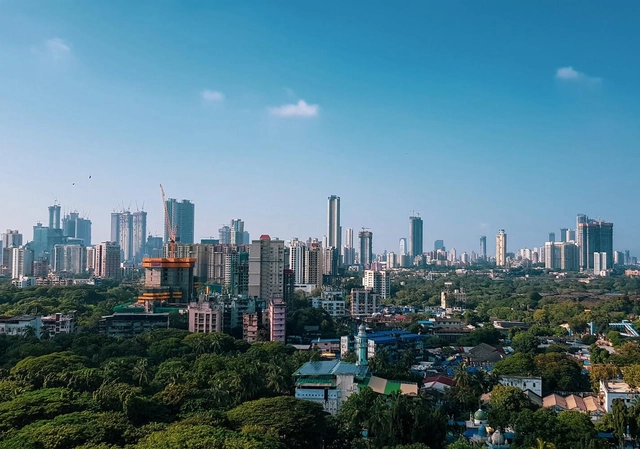
Mumbai, India. Photo by Hardik Joshi, via Unsplash
Cities and communities around the world are stepping up to reduce greenhouse gas (GHG) emissions and prevent the most dangerous impacts of climate change. Typically, strategies focus on reducing emissions in sectors such as transportation, energy, housing, and waste. Yet, there is another sector that many communities have overlooked in their climate plans: trees and forests.
https://www.archdaily.com/1131963/5-reasons-for-cities-to-include-trees-in-climate-actionJohn-Rob Pool, David Gibbs, Sadof Alexander e Nancy Harris
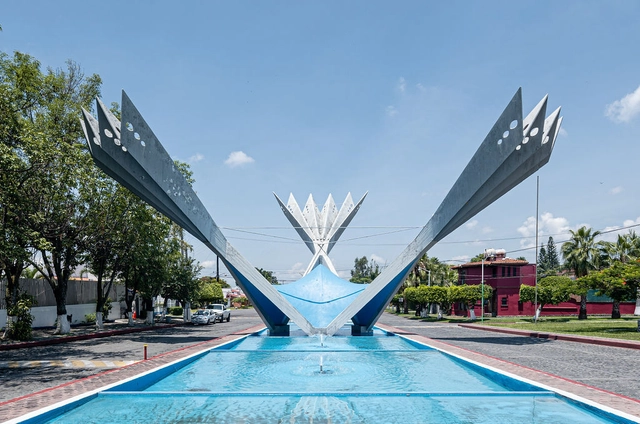
The Spanish-Mexican architect Félix Candela is one of the world's most renowned twentieth-century architects, celebrated for a career that explored reinforced concrete through experiments resulting in his famous cascarones (thin-shell structures)—structural and design elements that support many of his works, such as the Cosmic Rays Pavilion at UNAM in Mexico City (1951); the Palmira Chapel in Cuernavaca (1958); the Los Manantiales Restaurant in Xochimilco (1958); and the Palacio de los Deportes for the 1968 Olympic Games in Mexico City.
The resurrection of the street-level shop is possible: people remain analog. Image: Rovena Rosa/Agência Brasil
An ideal address implies convenience, meeting basic needs for goods and services within a short walk. Breakfast at the base of the building, a quick run to the pharmacy, pulling a cart overflowing with fruit, heading down on Saturday for a haircut, walking the dog in the corner plaza. The health of a city depends on the presence of people walking in public spaces, fostering a sense of community, safety, civility, and the capacity to meet basic consumption needs. And the street-level storefront along this walk is a vital catalyst.
https://www.archdaily.com/1132460/the-death-of-street-shops-and-its-impact-on-citiesFabiano de Marco
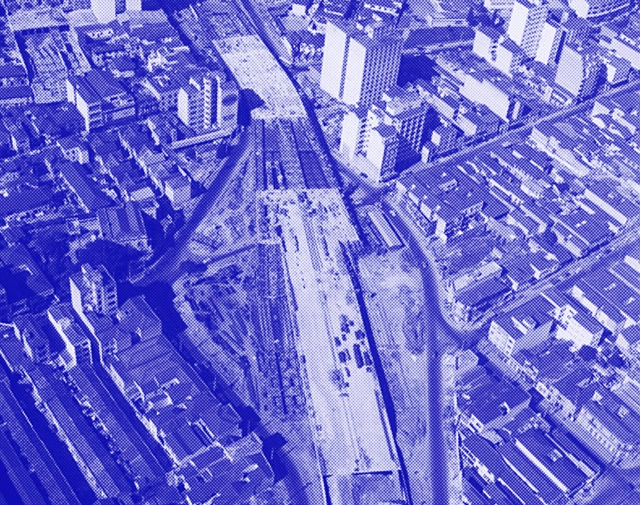
Image produced from a photograph showing the construction of the Júlio de Mesquita Filho Viaduct. Collection of the Museu da Cidade de São Paulo, Ivo Justino. http://www.acervosdacidade.prefeitura.sp.gov.br/PORTALACERVOS/ExibirItemAcervo.aspx?id=439575
What relationships between the social field of memory and the construction of the city can be identified during the Brazilian civil-military dictatorship? We begin with the premise that the formation of the city involves a series of disputes and concessions among the diverse entities that make up society. Since, as we know, each social agent possesses a distinct standpoint, their oppressions or privileges are carried over into the realm of memory, which in turn is transcribed into the construction of the urban environment. That is to say, the opinions and desires of certain communities, because they possess more resources, often determine how places will be built and the narratives woven about them.
https://www.archdaily.com/1132506/the-arc-of-destruction-policies-of-erasure-in-the-developmentalism-of-the-military-regimeLuiza Gibertoni Leite e Pedro Flosi Trama
Tie-in sales are one of the major consumer rights issues and are typically banned in most market economies. They occur when a seller conditions the sale of one product or service on the purchase of another. In Brazil, the Consumer Defense Code, under Article 39, Subsection I, expressly condemns this practice. Meanwhile, Law 12,529/2011, which structures the Brazilian competition defense system, establishes in Article 36, Subsection XVIII, that tie-in sales constitute an infraction against the economic order.