1. ArchDaily
  2. Articles

Articles

What makes a building beautiful?

Subscriber Access | 

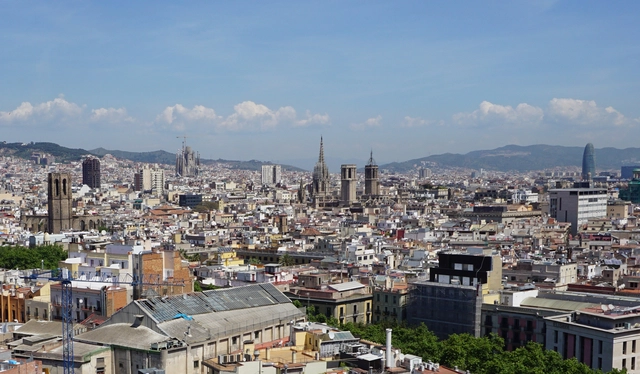
Architects and designers, as well as psychologists and sociologists, recognize that aesthetics and its underlying philosophy have the power to change how we perceive the world around us. Consequently, a deeper understanding of what is beautiful has the power to reshape how people respond to their environment.

Exploring the different meanings of aesthetics in architecture—from "form follows function" to the aesthetics of the metaverse—can help us understand the potential of our physical and virtual environments on the path toward a better world.

Much has already been written on the subject, but we now want to open the debate to you, our readers. Share your thoughts on what makes a building or a city beautiful.

Leave your comments in the form below. These will be selected and published in an upcoming article.
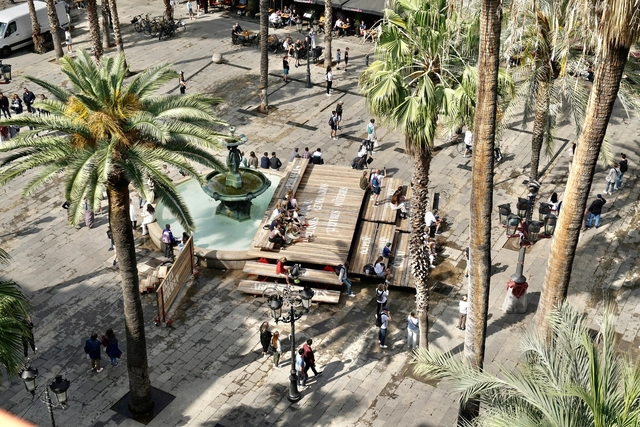
"Occupying the Center with the Word": An Installation on Debate, Public Space, and the City at Barcelona's Plaza Real

Subscriber Access | 

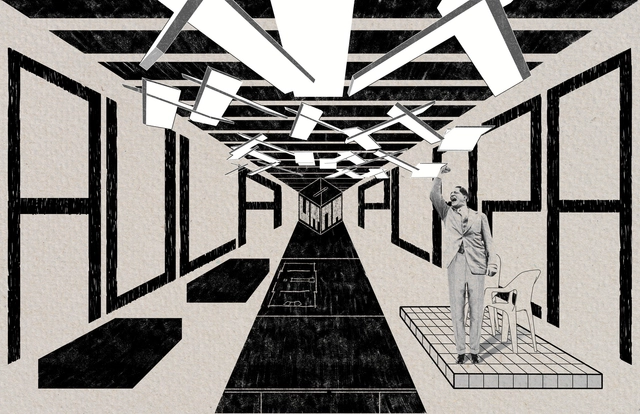
From May 5 to 15, Barcelona's Plaza Real was transformed into one of the hubs for debates on architecture and the city during the MODEL Festival. The ephemeral installation "Occupy the Center with the Word"—led by the ELISAVA Barcelona School of Design and Engineering under the direction of Roger Paez, in collaboration with Manuela Valtchanova, Albert Fuster, and Toni Montes—sought to "create optimal conditions for both encounters and disagreements to take place, always through the spoken word."

8 Approaches and Trends to Promote Safe Traffic and Quality Public Spaces

Subscriber Access | 
8 Approaches and Trends to Promote Safe Traffic and Quality Public Spaces - Featured Image
30 km/h zone (Zona 30) in Belo Horizonte: traffic-calming areas are one of the approaches that reconcile road safety with better quality public spaces. Photo: Rafael Tavares-Octopus Filmes/WRI Brasil

We must slow down traffic in Brazilian cities—and fast. This is a public health issue, as traffic crashes are among the leading causes of death worldwide. It is also a matter of quality of life and equity, as cities that effectively reduce vehicle speeds become safer, more welcoming, and more vibrant for everyone.

Parking reform will save the city

Subscriber Access | 
Parking reform will save the city - Featured Image
Photo by Lucas Hobbs on Unsplash

At the dawn of the automobile era, suppose Henry Ford and John D. Rockefeller had asked how urban planners could increase the demand for cars and gasoline. Consider three options. First, divide the city into separate zones (housing here, jobs there, shopping over there) to generate trips between them. Second, limit density to spread everything out and increase those trips even further. Third, require ample off-street parking everywhere, making cars the easiest and cheapest way to travel.

Before municipal works come information, mapping, and property registration

Subscriber Access | 
Before municipal works come information, mapping, and property registration - Featured Image
Image: Fernando Stankuns/Flickr

According to Victor Carvalho Pinto, an attorney specializing in Urban Law and a legislative advisor to the Brazilian Federal Senate, supporting the modernization of city and state administrations—so-called "institutional development"—is more critical than funding municipal public works. In an exclusive interview with Geocracia, Carvalho Pinto, coordinator of the Cities and Regulation Hub at Insper's Arq.Futuro Cities Lab, stated he is not concerned about the dissolution of the Ministry of Cities, as the federal budget, Caixa Econômica Federal, and BNDES already allocate non-repayable grants for many municipal projects.

How to Expand Nature-Based Solutions for Adaptation

Subscriber Access | 
How to Expand Nature-Based Solutions for Adaptation - Featured Image
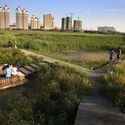
Stormwater Wetland Park / Turenscape. Courtesy of Turenscape

The new report from the Intergovernmental Panel on Climate Change highlights nature's immense potential to reduce climate change risks and build resilience. The political landscape has become increasingly supportive of this approach. In 2021, for instance, 137 countries collectively committed to halting forest loss and land degradation by 2030 as part of the Glasgow Leaders' Declaration on Forests and Land Use. Signatories reaffirmed the importance of all forests in adapting to the impacts of climate change and maintaining healthy ecosystem services. Funding pledges quickly followed, including $19.2 billion to protect and restore forests globally.

How to Expand Nature-Based Solutions for Adaptation - Image 1 of 4How to Expand Nature-Based Solutions for Adaptation - Image 2 of 4How to Expand Nature-Based Solutions for Adaptation - Image 3 of 4How to Expand Nature-Based Solutions for Adaptation - Featured ImageHow to Expand Nature-Based Solutions for Adaptation - More Images+ 3

The Rise of the Tenement Jungle in Nairobi

Subscriber Access | 
The Rise of the Tenement Jungle in Nairobi - Featured Image
Image: DMCA, via Caos Planejado

On a warm, hazy Sunday afternoon, Nairobi's concrete tenements tower over the city's shanties (or “slums”). Men and women hang laundry from roofs and balconies — making the buildings look like a patchwork quilt, a mosaic of fabric.

Walkability: What Is It?

Subscriber Access | 
Walkability: What Is It? - Featured Image
Times Square, New York. Photo by Tomas Eidsvold via Unsplash

From early 20th-century hygienism to the macro-planning of urbanization in the 1970s, the urban model aimed at carving out wide avenues to connect neighborhoods (the center and its extensions) via motorized transport: the city on wheels. This North American urbanization model, adopted by Brazilian cities, privileges high-rise development and private vehicles over public transit.

"Ark of Coexistence": LEA Atelier + TAKK Build a Portable Garden in Barcelona's Ronda de Sant Antoni

Subscriber Access | 

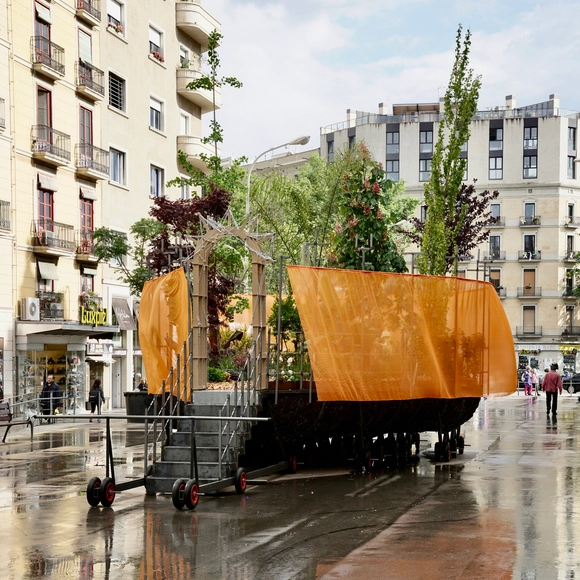
"Arca de Convivencia" is a temporary installation designed by LEA Atelier and TAKK Architecture for the Model Festival—an event that, for ten days in May, turned the city of Barcelona into a testing ground for experimentation and debate. Located on Ronda de Sant Antoni, this mobile artifact houses a multitude of trees, plants, shrubs, and insects, reminding us of the urgent need to create public spaces that reverse the effects of global warming and foster biodiversity.

Chronotopic Memory: An Installation to Reflect on Barcelona's Past and Future Architectures

Subscriber Access | 

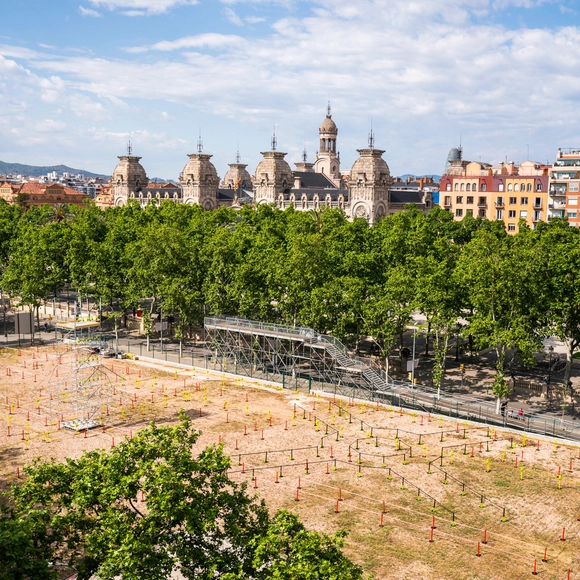
"Memoria Cronotópica" is a temporary installation by the studio FLEXOARQUITECTURA that took place on the site of Barcelona's former municipal courts during the Model Festival — an event that for ten days in May turned the city into a site for experimentation and debate.

The project sought to reflect on the logic of circularity and reuse through the documentation and juxtaposition of the site's lost architectures between the 7th and 21st centuries—from the medieval necropolis to the courthouse building, including the Fusina gardens and the Palau de Belles Arts.

Architecture can be your best calling card to the world

Subscriber Access | 

Laura Foraster i Lloret is the Secretary General of DIPLOCAT, a public-private consortium aimed at connecting Catalonia with the rest of the world and promoting initiatives that project its image abroad. Its 38 members include key public institutions as well as leading organizations from the business, social, labor, academic, and sports sectors—ranging from Futbol Club Barcelona to the University of Barcelona.

During the Model Barcelona Architectures Festival, which took over the city in May—an event already paving the way for the city's designation as the 2026 World Capital of Architecture—she joined us to discuss how architecture serves as a fundamental tool for presenting and projecting the region abroad. Read Laura Foraster i Lloret's key reflections below.

Architecture and Food: MAIO's Urban Kitchen in the Heart of Plaza Cataluña

Subscriber Access | 

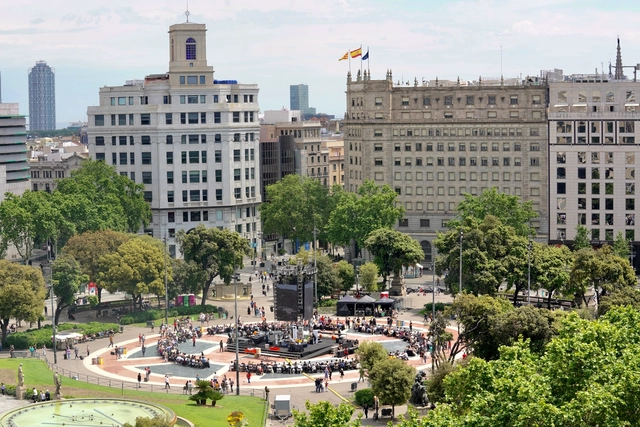
Covering around five hectares, Plaza de Cataluña is one of Barcelona’s primary hubs—a gathering point for a diverse local community and tourists of all cultures and backgrounds. Here, the architecture firm MAIO designed and built an urban kitchen for the Model Festival, an event that turned the city into a laboratory for experimentation and debate for ten days in May.

Agora: A Reflection on the Democratic Architectures of Colombia

Subscriber Access | 

Where are we shaped as democratic subjects? Where do we become aware of the individual and the collective? Where do we forge the character needed for coexistence? These are just some of the questions that the architecture cooperative Coonvite seeks to address through this art installation, titled Ágora. Bringing together expressions and opinions about democracy, the project was curated by Víctor Muñoz and is on display until July 31 at the Arts Center of the EAFIT Library in Medellín, Colombia.

Remnants of the Past: The Maid's Room in Contemporary Residences

Subscriber Access | 

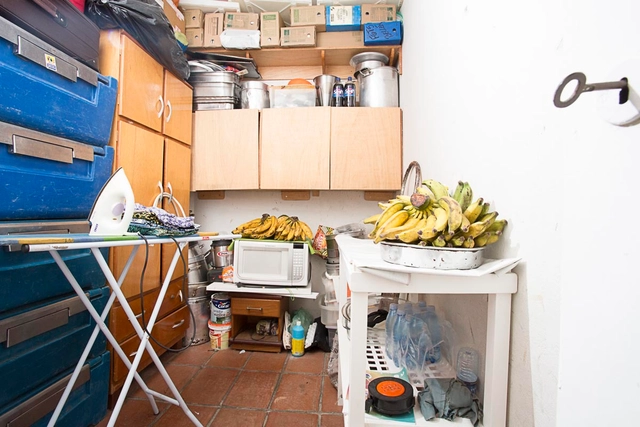
The room built for workers to "rest"—as current discourse attempts to camouflage the origin and meaning of the well-known "service room," "maid's room," or "storage room" typically located next to the service areas of contemporary homes—holds a historical, cultural, social, and economic significance within today's context that is rarely questioned.

"Architecture has no borders": Our readers share their thoughts on the democratization of design

Subscriber Access | 

Many of us agree with Roman Mars of 99% Invisible when he says that we "tend to not notice things that are well-designed"—yet we also agree that design is often considered a privilege for the few. Consequently, we must ask ourselves what truly constitutes democratic design, using this reflection to help define and contribute our vision toward a more equitable society.

From the perspective of architecture and design, democratization can be examined from several angles, ranging from debates on addressing everyday needs to strategies for inclusive design. At the core of these discussions lies a shared goal: finding ways to improve accessibility and livability in our daily lives.

Is it truly possible to design for everyone? And if so, how do we achieve it? We posed this question to you, our readers, in an open call. After reviewing the vast number of responses from industry professionals, students, and architecture enthusiasts, we were struck by a common thread: we not only experience design directly or indirectly in our daily lives, but we also need it to dismantle stereotypes and paradigms. Read a selection of these perspectives below.

How will we live in our cities?

Subscriber Access | 

Is there a future for our cities if we do not transition to a sustainable way of life? For some time, urban sustainability has adopted a perspective focused more on climate change than on a holistic vision that incorporates society and the way we live in community.

What new ways of living are we experiencing amidst social, economic, and ecological shifts? Ultimately, we must bring to the table examples from different parts of the world to understand the latest trends in how we live in our cities.

We want to hear from you—not only about examples of co-living, cooperatives, and any new type of social housing you consider a benchmark, but also your thoughts on the matter. Selected comments from the form below will be published in an upcoming article.
Drawn Manifestos: 99+ Imaginaries of Barcelona's Future

Subscriber Access | 

99+Imaginaris invited renowned architects from around the world to speculate on the future of Barcelona. Within the context of the Model Festival, curators Eva Franch i Gilabert and Josep Maria Montaner, alongside the design, coordination, and exhibition design by the Enric Miralles Foundation, brought together a wide-ranging series of sketches, ideas, visions, and models—from an edible Barcelona by Areti Markopoulou to a Barcelona of inflection points by Zaida Muxí.

The resulting exhibition catalog is a diverse archive of drawn manifestos—a document that allows us to review and debate future ways of living in the city. The curatorial text for 99+Imaginaris, along with the individual visions of its contributors, is presented below.

Julia Guarino, the first “lady architect” of Uruguay

Subscriber Access | 

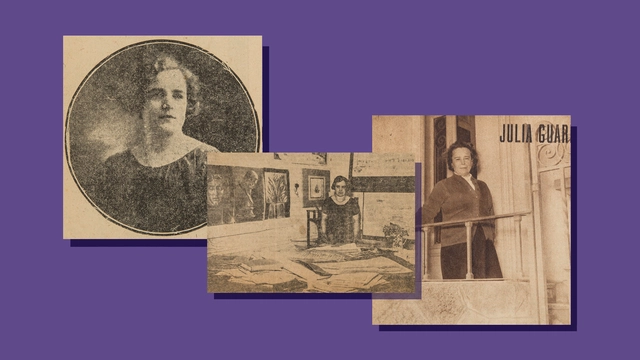
Born on July 17, 1897, Julia Guarino Fiechter became the first woman to earn an architecture degree in Uruguay, in 1923. Although she was originally from Éboli, in the Italian province of Salerno, she grew up and spent her entire professional life in Uruguay. After graduating from the Faculty of Architecture at the Universidad de la República, she also worked as a draftsperson and educator.