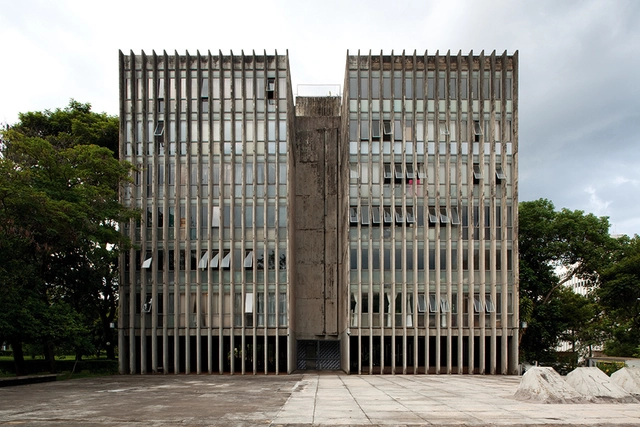
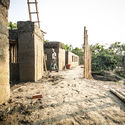
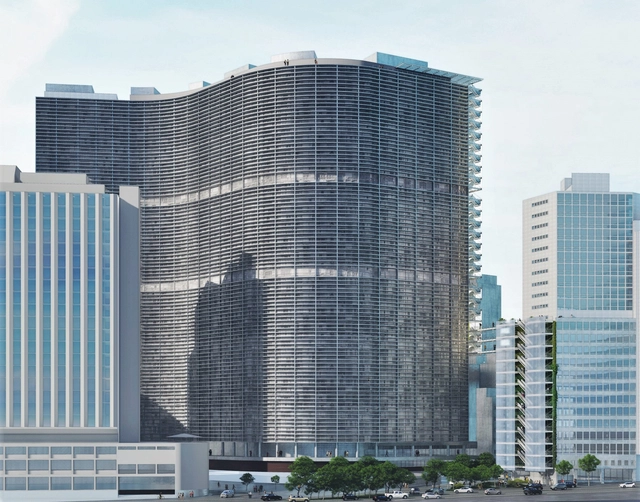
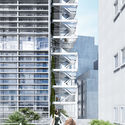
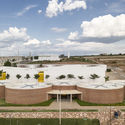
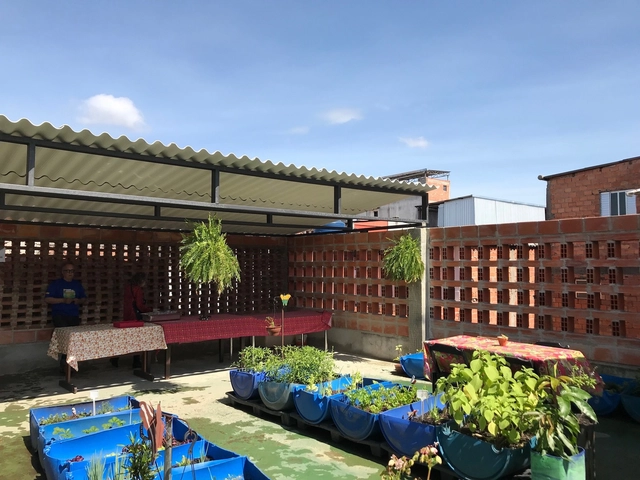
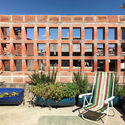
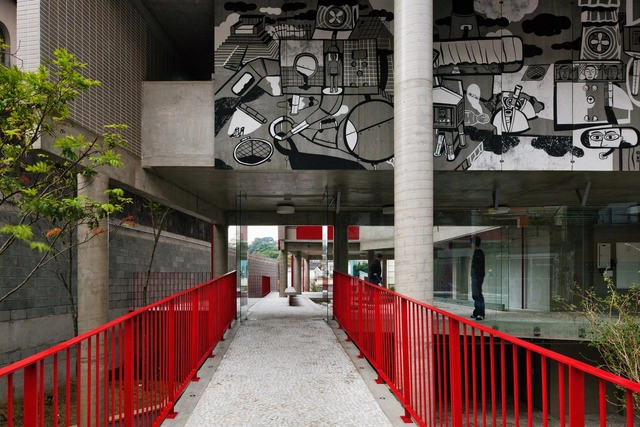
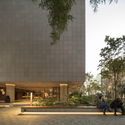
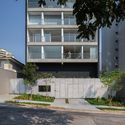
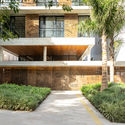
One of the residential blocks of Vila São Miguel, located in the Asa Norte of Brasília's Plano Piloto, designed by Mayumi Watanabe. Image: Courtesy of Revista Habitare
Altamira Editorial has made the book Arquitetas e arquiteturas na América Latina do século XX available for free download on its website. Authored by Ana Gabriela Godinho Lima, the publication features a "survey of the work of 20th-century Latin American women architects in the field of theoretical and practical building production."
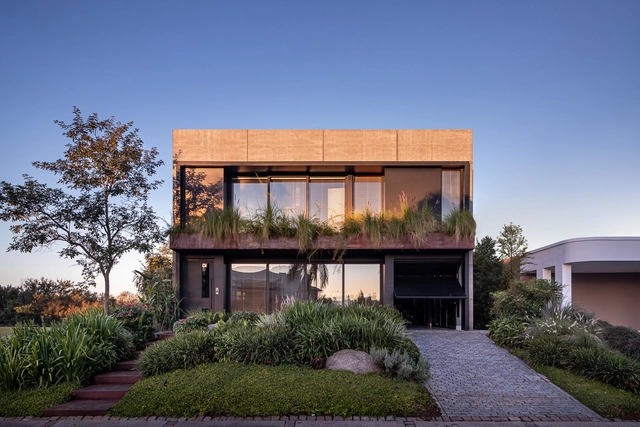
There are countless possibilities when designing the transition between public and private spaces. In residential architecture, the landscaping of the main facade plays a key role in this regard. By integrating different elements such as vegetation, paving, steps, and even artwork, it is possible to create a composition that not only highlights the architecture but is also generous to the public space.
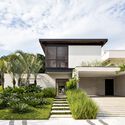
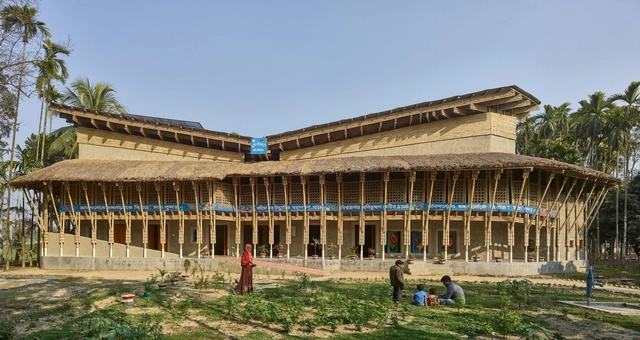
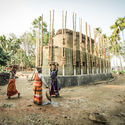
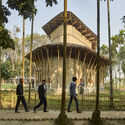
An impressive building has risen in Rudrapur, a village in northern Bangladesh. Local techniques and materials were used to shape a space designed to meet a critical need. Named the Anandaloy Center, its first floor functions as a care center for people with disabilities.
The project won the 2020 OBEL Award, an international prize that honors outstanding architectural contributions to human development worldwide.
Geared toward Latin American architecture students, the Acero Prize aims to promote and encourage initiatives that complement pedagogical models, fostering innovative architectural ideas that use steel as a raw material. This year's edition, themed "Sustainable Cities and Communities," awarded first place to a team of two Brazilian students from FAUUSP.
“Architecture that does not touch the ground” is the name of the proposal developed by Augusto Longarine and Luiz Sakata, advised by Professor Luciano Margotto. With the same project, they won the 13th CBCA Competition (Brazilian Center for Steel Construction), the national stage preceding the Alacero competition. See the project below, accompanied by the project description written by the students.
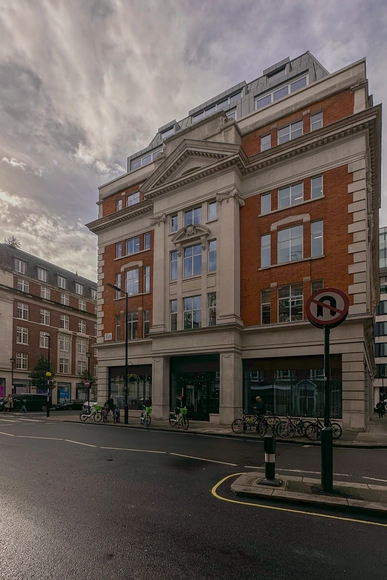
Mexican firm Sordo Madaleno Arquitectos has announced the opening of its new office in the heart of London. This strategic move for its global practice will establish an international presence in a global capital, bringing the firm closer to its clients worldwide.
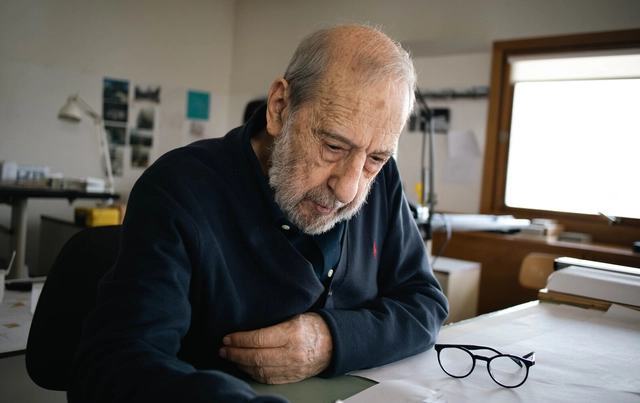
Álvaro Siza, Portugal's first Pritzker Laureate, is undeniably a figure of major importance in the history of contemporary architecture, with projects that have reshaped the urban landscapes of numerous cities around the world. While his name and work are widely known, Siza is a highly private and introspective person who prefers to keep his personal life out of the spotlight.
Directed by producer and director Augusto Custódio, the documentary SIZA offers a more intimate and personal look at the renowned Portuguese architect. The film covers his childhood, his relationship with his wife, his passion for sculpture, and his admiration for classical music, exploring his influences and professional journey.
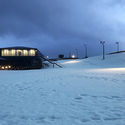
The Tomie Ohtake Institute, with support from AkzoNobel, announced today the three winning projects of the seventh edition of the Tomie Ohtake Institute AkzoNobel Architecture Award. A total of 246 submissions were received from 14 Brazilian states and the Federal District. The selected projects, which will also be featured in a catalog, include works located in Amazonas, Bahia, Ceará, Goiás, Minas Gerais, Rio de Janeiro, Santa Catarina, São Paulo, and King George Island in Antarctica.
The selection was made by a jury composed of architects Diego Mauro, Elisabete França, Fernando Túlio, Juliana Braga, and Pedro Varella. The announcement, made via video on the Institute's social media channels, also marks the opening of the exhibition featuring the 13 selected projects in this seventh edition.
The month of November is marked by various awareness-raising initiatives surrounding the struggle of Black people in a deeply racist society, and is, above all, an essential moment for white people to play an increasingly active role in anti-racist practices.
Videos
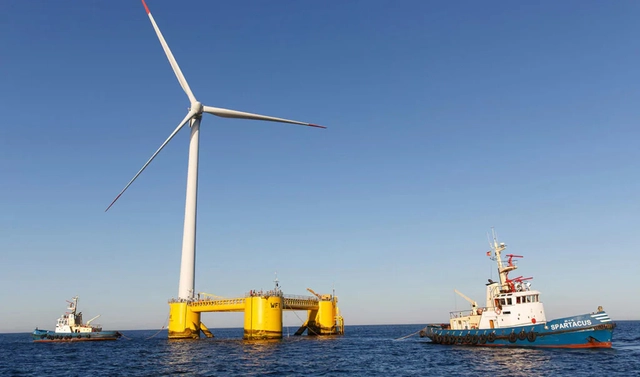
One of the floating wind turbines installed in Portuguese waters. Photo: EDP
Between October 31 and November 6, 2023, Portugal produced more than enough renewable energy to meet the entire country's demand. While fossil fuel plants were still operational, the clean energy generated was more than sufficient to supply the grid. Consequently, consumer electricity rates dropped drastically.
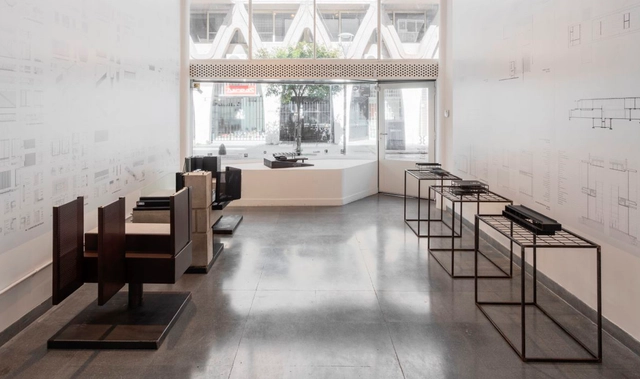
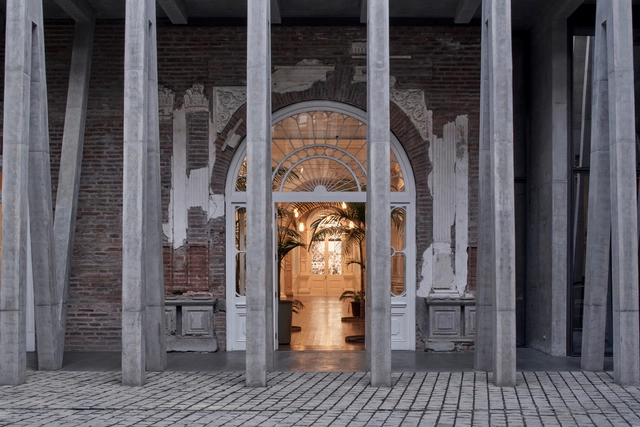
Through January 2024, the exhibition “Sommet: Structure, Precision, and Detail” will be on display at the Bisman Ediciones Architecture Gallery and Residence, located in the “Casa de Estudios para artistas” by Antonio Bonet, Horacio Vera Barros, and Abel López Chas in the heart of downtown Buenos Aires. Through plans and models, Sommet architecture studio showcases work defined by simplicity, understatement, and high construction quality.
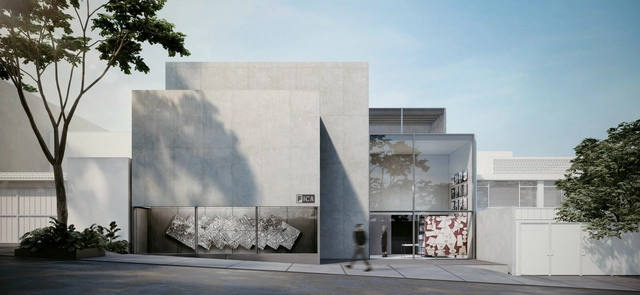
The Fundación ICA presents the initiative to establish the ICA Center for Education, Research, and Training (CENFICA), which will consolidate ICA's historical mission and vision for the professional development of new generations of professionals and the continuous training of its employees. Drawing on academic program experiences and the creation of innovation laboratories for construction and prefabrication processes, ICA promotes CENFICA through Fundación ICA—a non-profit civil association founded in 1986—aiming to expand its institutional outreach across three core areas: Education, Research, and Training.
What would happen if we abandoned the modern epistemology that separates “us” from “others”? What would art history look like without this restrictive separation? Many other, non-disenchanted worlds coexist with ours. Other cosmopolitics can offer us less exclusionary views of life and relationships, unearthing previously unsuspected futures.
Guilherme Wisnik talks with Renata Marquez, a professor at the UFMG School of Architecture and Design and co-editor of Piseagrama magazine. Holding a PhD in Geography and a postdoc in Anthropology, she researches curatorial practices, theory, and criticism at the intersection of art, architecture, geography, and anthropology.
The MA Awards, conceived by Mujer ArquitectA, aim to highlight and promote the creations of contemporary women architects in Chile, valuing their contribution to the architectural field. This recognition celebrates the excellence and outstanding contributions of women architects in the field of creation and design. These awards seek to highlight the innovation, unique vision, and exceptional skill of women architects, offering a meaningful space to honor and bring visibility to their valuable impact on the world of architecture.
On Tuesday, December 5, at the AOA (Association of Architectural Offices) auditorium, the following winners were announced.
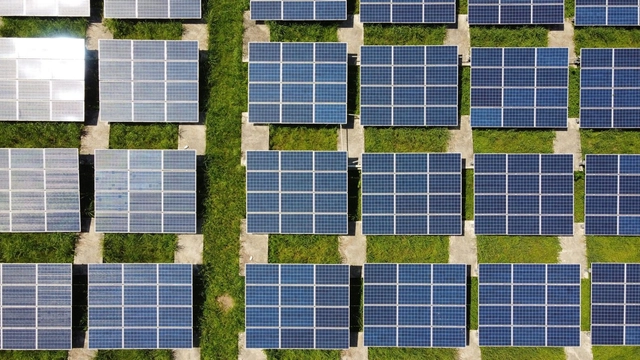
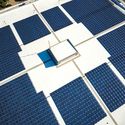
The government of Espírito Santo announced last week the launch of the GERAR Program, which aims to triple investments in distributed solar photovoltaic generation and expand incentives for renewable sources. Supported by the Brazilian Association of Photovoltaic Solar Energy (ABSOLAR), the program demonstrates the state's commitment to its targets for reducing pollutant emissions and combating the climate crisis.
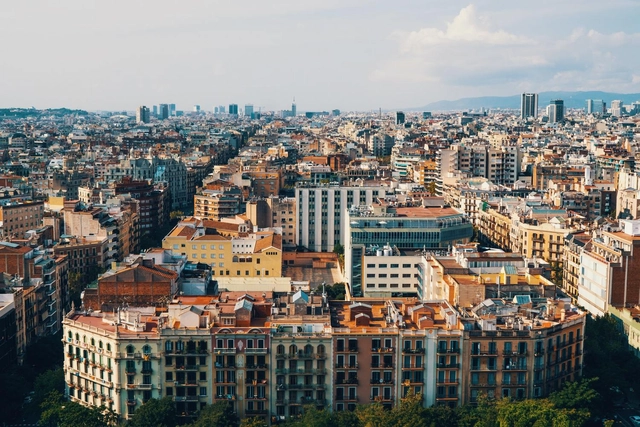
Barcelona, Spain. Photo by Erwan Hesry via Unsplash
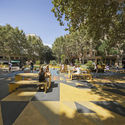
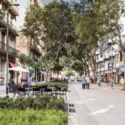
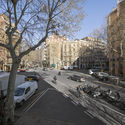
One in three streets in the city center of Barcelona will be transformed into a green axis to prioritize pedestrians and cyclists over cars. Along these streets, 21 intersections will be converted into public spaces so that everyone in the area has access to a park less than 200 meters away.
The winning project of the Oscar Hagerman Prize International Architecture Competition has been announced. Established in 2017 to honor the career of architect Oscar Hagerman, the biennial competition recognizes social architecture concepts, encouraging participants to utilize regional materials while prioritizing user needs.
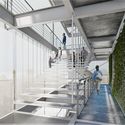
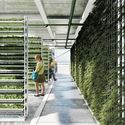
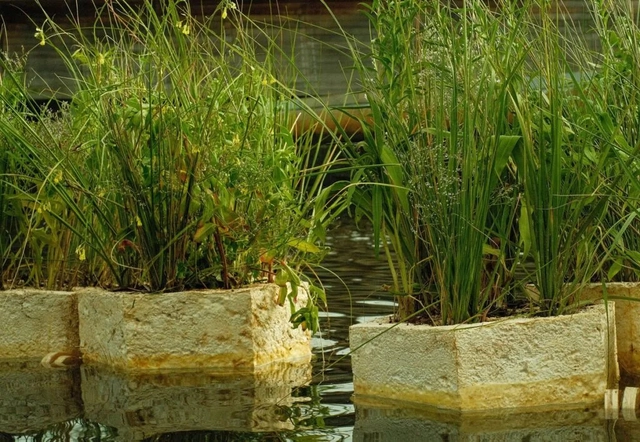
Using plants to filter impurities from lakes and rivers is already a common practice in sustainability. It is an alternative that avoids artificial chemicals in favor of maintaining a balanced ecosystem. Now, students at the Rhode Island School of Design (RISD) have gone a step further, creating floating planters made of mycelium to clean pollutants from waterways while restoring wetland habitats.
Favelas are an established reality in São Paulo, Brazil, housing more than 10% of the city's population. Within these communities, housing is a critical issue, due to both its inherent social dynamics and the poor environmental quality of indoor spaces—primarily caused by the overexposure of building envelopes to the sun and inefficient openings for ventilation. Against this backdrop, the project develops simple, replicable strategies to retrofit self-built housing based on the local climate.
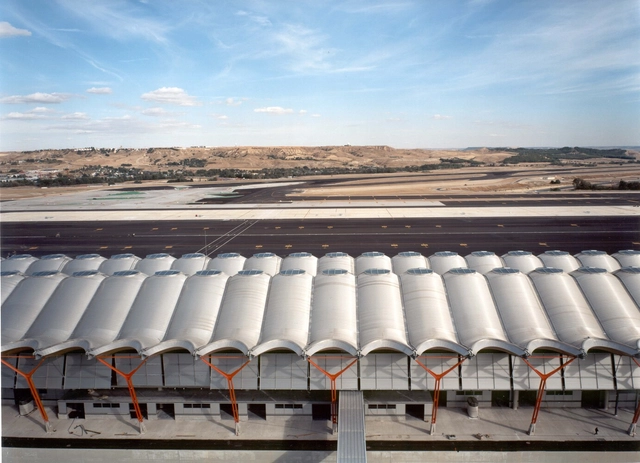
Estudio Lamela and Rogers Stirk Harbour + Partners (RSHP), alongside AYESA Ingeniería, will design the expansion project for terminals T4 and T4S at Adolfo Suárez Madrid-Barajas Airport. In addition to the terminal expansions, the project includes commercial areas, related equipment and furniture, as well as aircraft parking aprons.
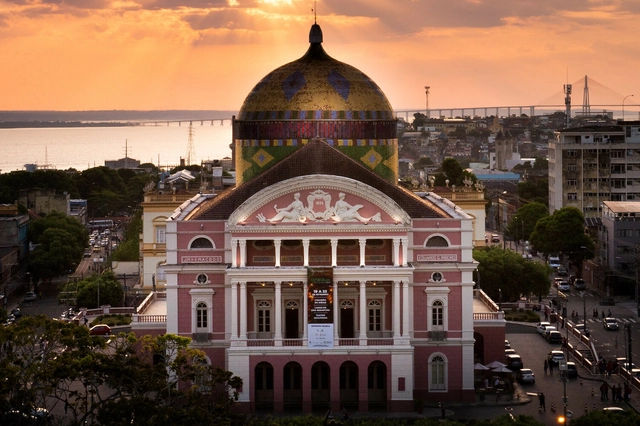
Amazonas Theatre. Photo by Rafael Zart, via Wikipedia. Licensed under CC BY 2.0
Teatro Amazonas in Manaus and Theatro da Paz in Belém could soon achieve recognition as UNESCO World Heritage Sites. The first step toward this distinction for the Amazon theaters will be taken between December 13 and 15, during the first mobilization workshop in Manaus. This event will gather representatives from the governments of Amazonas and Pará, the city halls of Manaus and Belém, civil society, researchers, and the National Institute of Historic and Artistic Heritage (IPHAN).
https://www.archdaily.com/1135873/theatro-da-paz-and-teatro-amazonas-could-become-world-heritage-sites-in-the-coming-yearsArchDaily Team
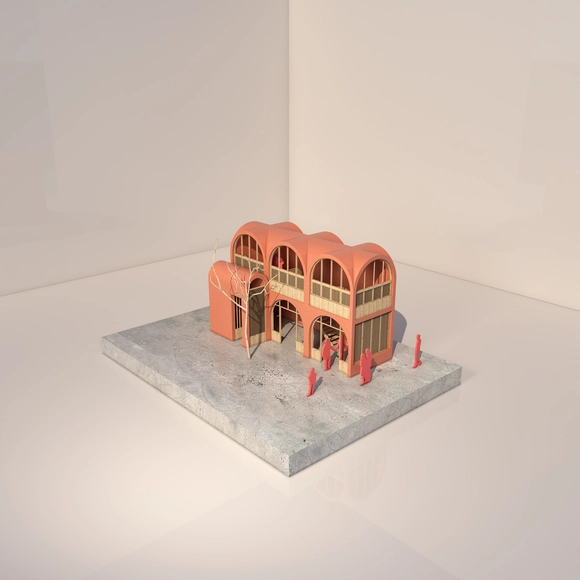
When designing a building, one of the greatest challenges lies in integrating its base with the street level. To foster a more beneficial relationship with the city, bring "eyes on the street"—as Jane Jacobs put it—or even establish an active facade, architectural professionals employ various solutions.
In a year marked by physical distancing, social media became even more crucial for connecting with others and staying informed. @archdailybr's Instagram expanded its reach, and in 2020, brought our audience not only Brazilian and Portuguese projects, but also the top articles and news from the architectural world.
The Virtual Museum of Art building, the world's first fully digital museum. Photo: Courtesy of VOMA
In a year deeply marked by virtual interactions, a temporary suppression of urban public spaces, and a profusion of digital exhibitions, the Virtual Online Museum of Art (Voma)—the world's first fully virtual art museum—has opened. Set in a context as intangible as its concept–perhaps on the shores of a lake or an inlet, one cannot be sure–the virtual building features a unique architecture, composed of complex, somewhat ambiguous volumes and a simulated materiality reminiscent of pigmented concrete.
The future has always been impossible to predict with absolute certainty. While various films, books, and theories have attempted to decipher it—and many have come close—we continue to be surprised by what actually emerges. Take, for instance, artificial intelligence tools. As we wrap up 2023 and head into 2024, does this dynamic remain the same? Can these tools also drive social change?