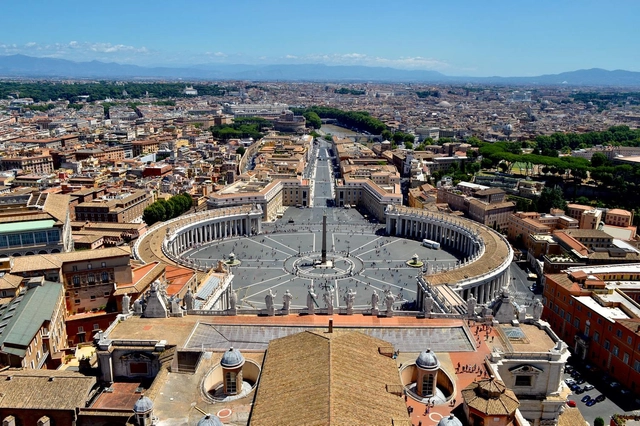
Vatican City. Photo by Sabrina Bronzi, via Unsplash
On June 18, the fifth anniversary of the publication of Laudato Si’ – Pope Francis’s encyclical calling for global unity in combating climate change – the Vatican published new guidelines containing more than 200 recommendations for environmental protection.
The document, titled “Journeying Towards Care for Our Common Home: Five Years After Laudato Si’,” suggests practical measures to curb global warming and issues stark warnings about the dangers of environmental degradation. It calls on the world to decarbonize the energy and economic sectors, making renewable energy accessible to all, and advocates for fossil fuel subsidy reform and CO2 emission taxation.
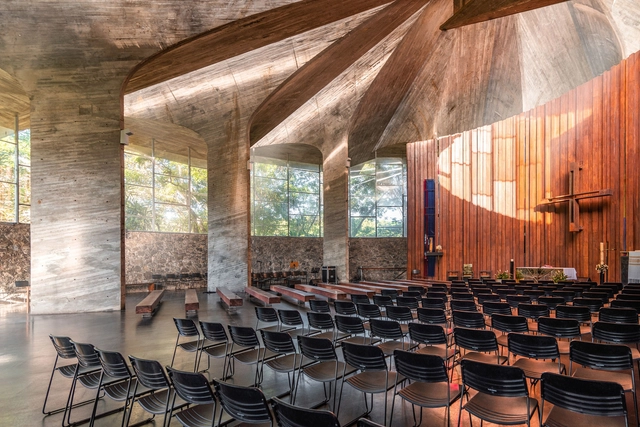
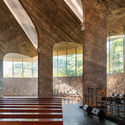
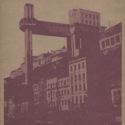
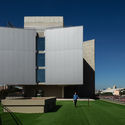
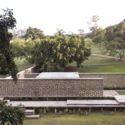
Architectural photographer Guilherme Pucci shared with us a series of images of the Ascension of the Lord Church at the Bahia Administrative Center, designed by João Filgueiras Lima, known as Lelé. Completed in 1975, this classic of Brazilian architecture reveals Lelé's design sensitivity, visible in how the building integrates with the site's topography, the quality of the materials used—concrete, glass, wood, and stone—and the tension created by light and shadow within the church.
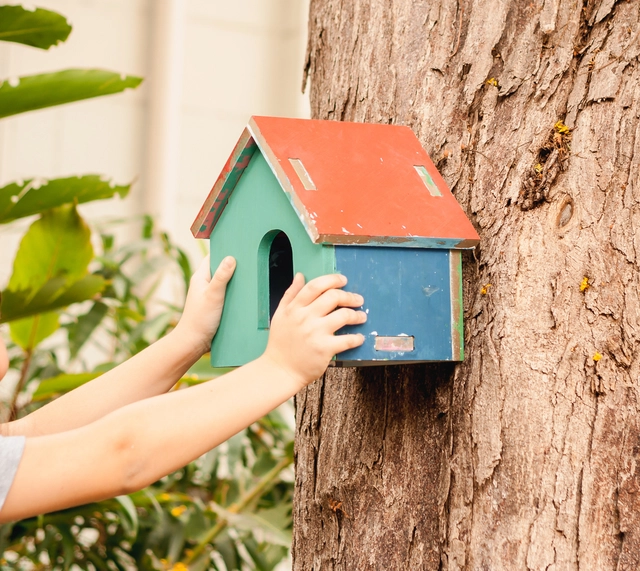
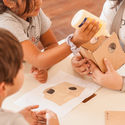
Architecture is a discipline deeply connected to the perception and construction of space, and could be introduced in early childhood education. With this in mind, the architects at Studio dLux proposed the Bird House project, a workshop for elementary school children designed to introduce the design and construction processes of a birdhouse.
The development of digital interfaces, combined with the daily bombardment of advertising images, increases the demand for clarity—a clarity we tend to take for granted. This is what Baudrillard called the "world of hypervisibility." Art, however, can offer a slowing down of perception, pointing us to deeper dimensions of experience where speed becomes delay.
Guilherme Wisnik talks with Michael Wesely, a German art photographer best known for his photos of cities, buildings, and landscapes taken with a special ultra-long exposure technique. From 1986 to 1988, Michael Wesely attended the Bayerische Staatslehranstalt für Photographie in Munich before studying at the Munich Academy of Fine Arts.
Prete-Indígena is a directory designed to map and promote Black and Indigenous people working in the fields of design, architecture, and web development, created by Fabiano Procópio and Gabriel Biselli. It arises from the question of where Black professionals are active, not only in research but also in the practice of these fields.
Cortesia de Instituto Tomie Ohtake e Museu Astrup Fearnley
As part of their partnership in art-education and cultural mediation exchanges, the Tomie Ohtake Institute and the Astrup Fearnley Museum in Oslo have launched the digital publication Our Home Is Where We Are. The project is supported by the Royal Norwegian Embassy in Brasília.
The appearance and long-term maintenance of a work of architecture or interior design are heavily dictated by its materiality and the products used. If the selection of materials and products is not precise, the project can be compromised both aesthetically and functionally.
This is why specification is essential to achieving the desired result, and the professionals responsible for this stage must have a broad knowledge of the materials and products available in their region. But is material specification done similarly across all architecture firms? Do the initial and final stages of the project receive the same attention? How close is the relationship between architects and materials, really?
https://www.archdaily.com/1124255/how-do-architects-and-construction-professionals-specify-materials-and-productsPola Mora
Paulo Mendes da Rocha is interviewed by Paulo Markun in another episode of the series “Conversas na Crise – Depois do Futuro” [Conversations in Crisis – After the Future], organized by the Institute of Advanced Studies (IdEA) at Unicamp in partnership with the UOL news portal. The interview addresses topics such as the impact of the coronavirus pandemic on cities, the public health crisis, and the precariousness of urban housing in Brazil.
For the first time, Escola da Cidade is broadcasting the architecture school's inaugural lecture, delivered by Oscar Niemeyer in 2002. In a lucid and conscious address to young students, Niemeyer emphasizes the social function of architecture and presents, through sketches and images, some of his key works, including the Pampulha architectural complex and Brasília.
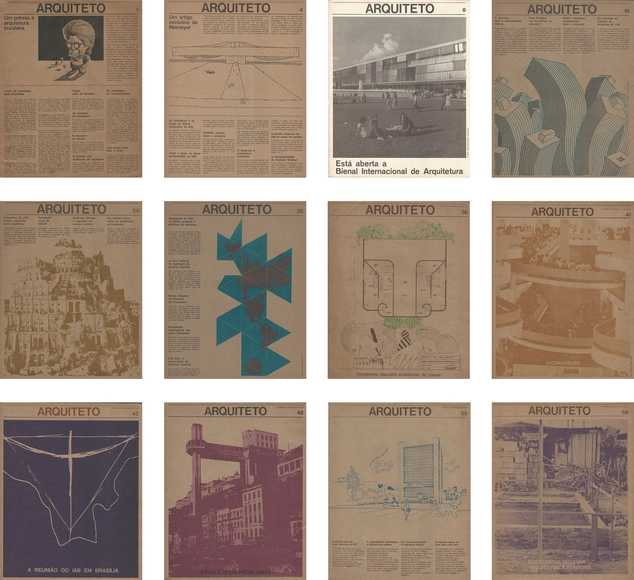
The Institute of Architects of Brazil - São Paulo Department (IABsp) has made all 74 editions of Jornal Arquiteto available online. This prominent publication in the field of architecture and urbanism was edited by IABsp in partnership with the Union of Architects in the State of São Paulo (SASP) between 1972 and 1980. Distributed nationwide, the newspaper aimed to be a "spokesperson for all architects."
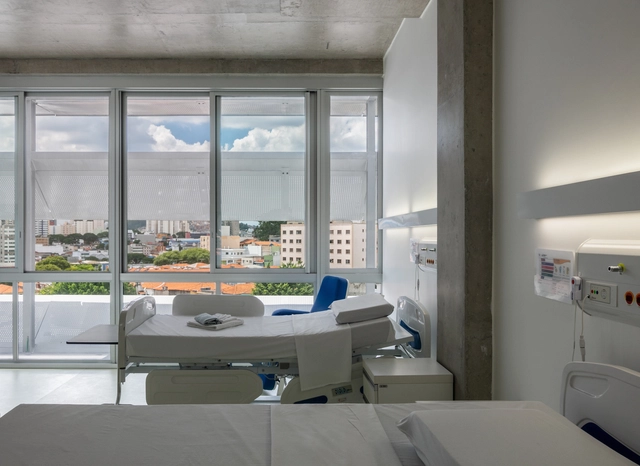
Rino Levi believed that hospital design should dispense with pre-established models and that forms should emerge from the proper organization of three guidelines: functional program, circulation, and physical flexibility. These principles were taught during the Hospital Planning course, held in April 1953 by the IAB-SP and organized by Levi, Jarbas Karman, and Amador Cintra do Prado.
https://www.archdaily.com/1124048/iph-and-iabsp-make-the-book-planejamento-de-hospitais-featuring-teachings-by-rino-levi-available-for-downloadErick Vicente e Renata Baralle
The IAB has announced the selection of Brazilian works qualified to participate in the 3rd edition of the Oscar Niemeyer Award. Out of 33 submissions that met the open call requirements, 20 were selected by the evaluation committee. The "Oscar Niemeyer" Award for Latin American Architecture (ON Prize) is an initiative of the Latin American Network of Architecture Biennials (REDBAAL), founded in 2012 at the Pan-American Architecture Biennial of Quito.
Escola da Cidade is hosting a discussion between Cape Verdean architect Patrícia (Patti) Anahory and the editors of América magazine, Marianna Al Assal and Maira Rios. The event marks the launch of the second issue and addresses the construction of identities through the reading of urban landscapes, as well as the displacement and production of knowledge in the fields of architecture and urbanism between the Americas and Africa today.
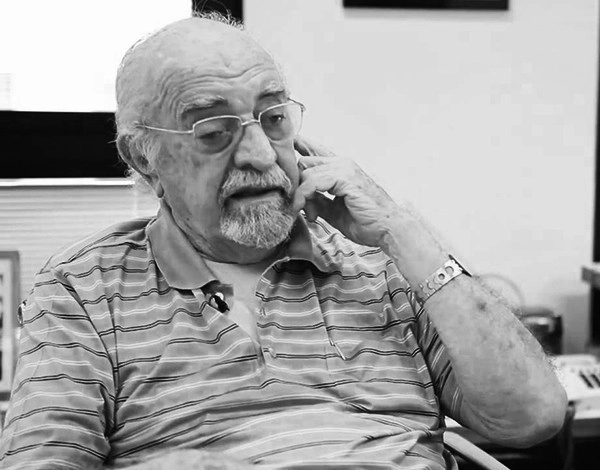
Architect Gian Carlo Gasperini passed away on the night of Wednesday, July 15, at the age of 93. He had been hospitalized for two days at Albert Einstein Hospital with pneumonia. Gasperini was responsible for several of São Paulo's landmark buildings, such as the Galeria Metrópole in the city center and the Pauliceia building on Paulista Avenue.
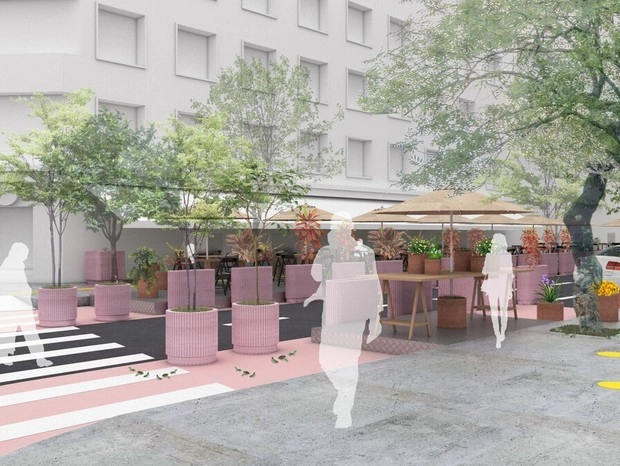
The city of São Paulo will test a pilot project that transforms streets and sidewalks normally reserved for parking spaces into outdoor areas for bars and restaurants. The initiative, named "Ocupa Rua" (Occupy the Street), is led by São Paulo City Hall, the architecture firm Metro Arquitetos Associados, and food critic Alexandra Forbes.
Postponed to July 2021, the 27th World Congress of Architects will host virtual debates as part of an open, collaborative platform to gather insights and proposals for addressing contemporary urban challenges.
The countdown to the event begins this week with the release of special content on the social media channels of UIA2021RIO. This includes video testimonials and interviews with speakers, collaborators, and partners discussing post-pandemic urban transformations and the role architects and urban planners should play in society.
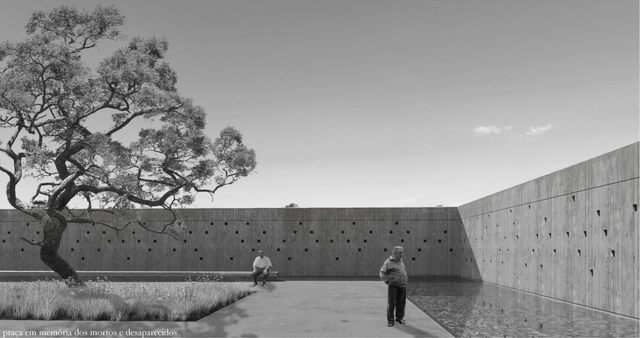
The 4th {CURA} Award continues the practice of hosting ideas competitions on themes aligned with current discussions on architecture, the city, and society, focusing on contemporary Brazil. The institutionalization of authoritarian and denialist discourse has become a real threat. For this reason, the competition's theme—a Museum of Democracy—brings forward a necessary discussion on how we treat memory and our history.
Escola da Cidade is broadcasting, for the first time, the inaugural lecture of the Seminar on Culture and Contemporary Reality, delivered in 2002 by Aziz Ab’saber, one of Brazil's most respected and renowned geographers and scientists.
Architects and urban planners seeking new sources of income during this period can find job opportunities across various regions in Brazil. For example, the City, Housing, and Health competition, organized by CAU/RJ, will award R$ 10,000 to the two best ATHIS (Technical Assistance for Social Interest Housing) proposals addressing housing and health in the era of Covid-19. Meanwhile, the Healthy House – Healthy City competition, hosted by CAU/RS, challenges participants to propose architectural solutions under different themes and will distribute R$ 100,000 in prizes.
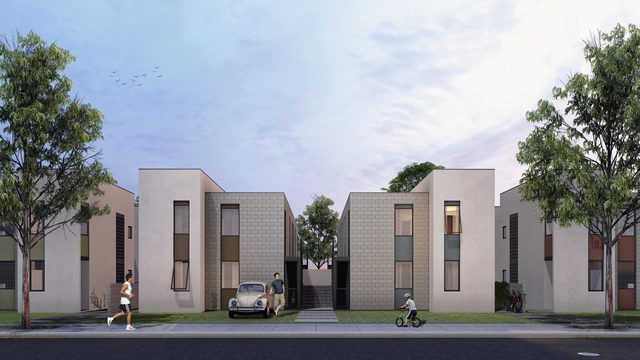
First Place. Courtesy of Oficina Urbana de Arquitetura
The Council of Architecture and Urbanism of Goiás (CAU/GO) has announced the results of the National Design Competition for Social Interest Housing, which aimed to select the best proposal for constructing homes for low-income families as part of the housing projects of the Goiana Housing Agency (AGEHAB).
In 2003, João Filgueiras Lima, known as Lelé, visited Escola da Cidade for a five-lecture series. The institution is broadcasting the fourth session, in which he discusses the industrialization of reinforced concrete in the urbanization of Salvador's favelas, as well as his partnership with Lina Bo Bardi.
To purchase computers for economically vulnerable students at the Department of Architecture, Urbanism, and Design of the Federal University of Ceará—who, due to the pandemic, are unable to attend classes and lectures, develop projects, hold meetings, work in research groups, or access the vast amount of online information—professors and artists have come together for a common project: SOLIDARIEDAUD.
Rocinha Sports Complex and Footbridge | Authors: Mayerhofer & Toledo Arquitetura and Oscar Niemeyer | Date: 2010 | São Conrado. Via Arqguia Colorir
Arqguia Colorir is a digital coloring book that invites everyone to visually reinterpret the main architectural landmarks of Rio de Janeiro. Available for free download in both English and Portuguese, the drawings feature QR codes providing direct access to descriptions of each work on the online architecture guide ArqGuia Rio.
In one of the country's hardest-hit cities by the Covid-19 pandemic – São Paulo – and in the face of the suffocating socio-environmental crisis plaguing our world and our time, how can architects and urban planners take a stand and effectively act against widespread asphyxiation and for the fundamental right to breathe, to exist, and to inhabit the Earth?