Murales en Pasarela Parque del Ebro. Image Cortesía de La Calle es un Museo
At FITUR, the Logroño City Council presented LA CALLE ES UN MUSEO (The Street is a Museum), a project aimed at revitalizing tourism and cultural visits in the city by showcasing public artworks and their creative processes, narrated by the artists themselves.
https://www.archdaily.com/1113768/logrono-promotes-art-tourism-by-turning-its-streets-into-a-museumPola Mora
Opening its doors alongside the Infinito Vão exhibition, “Two Houses by Paulo Mendes da Rocha” will be on display until February 10, 2019, at the House Gallery. Curated by Nuno Sampaio, “Two Houses” offers the opportunity to visit two unique projects from the collection of architect Paulo Mendes da Rocha, which, in line with the transatlantic focus of this program, are located in Portugal and Brazil.
Ever since we announced the results of the competition for the “New Biobío Regional Theater,” an initiative led by the Regional Government and the Architecture Area of the Council of Culture and the Arts, we had been eagerly looking forward to seeing the winning proposal finally built.
https://www.archdaily.com/1113761/the-narrative-behind-the-theater-designed-by-smiljan-radic-eduardo-castillo-and-gabriela-medrano-for-the-biobio-regionPola Mora
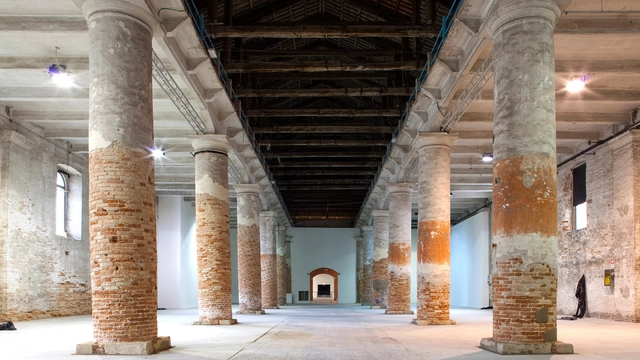
The Institut Ramon Llull has presented the project RCR. Dream and Nature_Catalonia in Venice in Barcelona, an exhibition showcasing RCR Arquitectes as part of the collateral events of the 16th Venice Architecture Biennale, set to open on May 26.
Representing Catalonia at the 2018 Venice Biennale, the project is co-curated by journalist Pati Núñez and architect Estel Ortega alongside the 2017 Pritzker Prize-winning firm. Together, they have created a space free of scale models or blueprints to "investigate and rethink humanity's relationship with the world, located at the La Vila estate in Vall de Bianya (Girona, Catalonia)," according to an official statement from the Catalan institute.
Thanks to its geographical and climatic characteristics, Bogotá has great potential for the development and enjoyment of nature tourism. The Colombian capital is bordered by the beautiful Eastern Hills, which connect with countless parks and trails that welcome visitors.
Among its natural wonders is the Sumapaz Páramo, the largest of its kind in the world. Exploring each of these places is undoubtedly an experience that few have the opportunity to enjoy and admire. As a result, numerous activities have sparked public interest in weaving together a city rich in environmental assets, including parks, rivers, wetlands, and gardens.
The 2018 CEMEX Pavilion competition was conceived to provide the student community of Guadalajara with an opportunity and a voice to express their aspirations, interests, concerns, and critiques of the profession, channeling them into an intervention within the courtyard of a heritage house in the city's historic center, which functions as a workshop and cultural center. The event is organized by eSCALA, CENTROmx, and TEMAdc—groups made up of students and alumni of the Centro Universitario de Arte, Arquitectura y Diño of the Universidad de Guadalajara—and the winners of the 2018 CEMEX Pavilion Competition, which included one first-place and two second-place projects, were recently published.
Brazil's greatest living architect, Paulo Mendes da Rocha does not appreciate architecture alone. Music is also part of his daily life, and this playlist—shared with us by his daughter, Joana Mendes da Rocha—features some of the musical preferences of our Golden Lion.
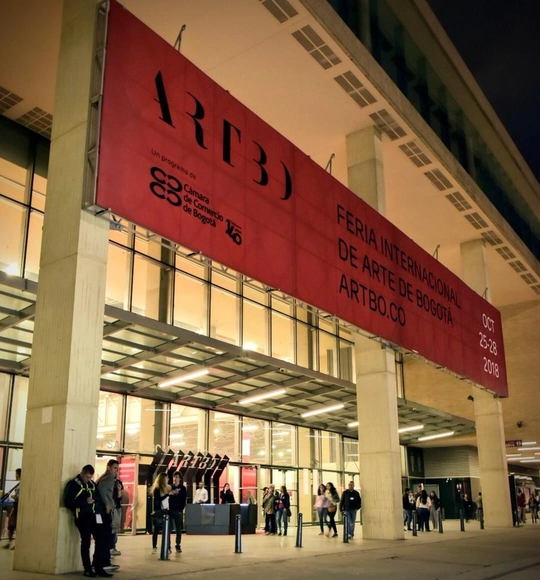
During the Bogotá International Art Fair (ARTBO), held between October 24 and 28, Colombian artist Miller Lagos was awarded the second edition of the Kubik Prize. According to the organization, the prize “commissions a project that bridges art and architecture from an innovative perspective for the benefit of the city and its inhabitants.”
“In his recent work, the artist has undertaken projects in public spaces, examining the relationship between human populations and their bodies of water,” Kubik Lab stated, explaining its decision.
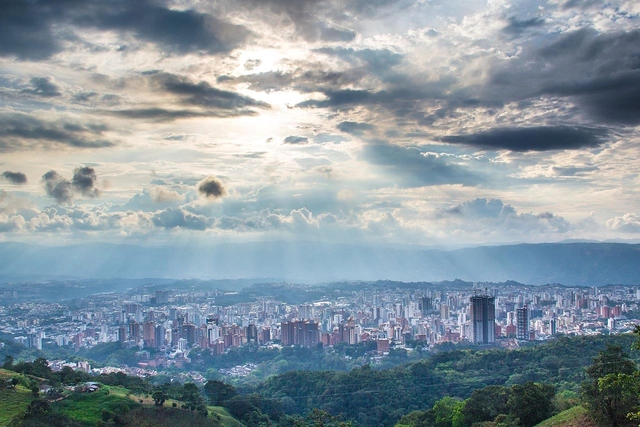
Bucaramanga is located 959 meters above sea level on a plateau in Colombia's Cordillera Oriental. Composed of 17 communes, it has a population of 528,575, while its metropolitan area is home to more than 1,141,700 people. Over the past 30 years, the city has systematically lost its public space due to abandonment, neglect, rapid urban growth, and a lack of coordinated political and planning initiatives that could foster direct communication between residents, public officials, academics, and private sector representatives.
The strategic project “Public Space: The Skin of Democracy” is a suite of initiatives designed by the Bucaramanga municipal government—and integrated into the city's current development plan—aimed at reconfiguring and renovating municipal public spaces. The initiative was launched by the Mayor's Office of Bucaramanga for the 2016–2019 term.
A few days ago, we reported that BD Bacatá, Colombia's tallest skyscraper, has yet to open after a series of delays, and new reports from the local press make it clear that the outlook for its 4,200 investors is not improving.
The developer BD Promotores owes its suppliers an estimated 4 billion Colombian pesos (1.46 million USD) "for finishes and leases." Following a lawsuit filed by three suppliers demanding the payment of 750 million Colombian pesos (273,750 USD) for services rendered, "the only way out after declaring insolvency was the seizure of the trademark" by the Superintendency of Industry and Commerce (SIC), according to a report by local newspaper La República.
In the presence of officials from the Ministry of Culture, Dra. Lidia Camacho, general director of the National Institute of Fine Arts, Mtra. Irene Muñoz Trujillo, director of the Mixed Fund for Tourism Promotion of Mexico City, and Maria Laura Medina de Salinas, honorary president of the Design Week México board, the general director of Design Week México and World Design Capital CDMX 2018, Emilio Cabrero, announced the details of the activity program for World Design Capital CDMX 2018.
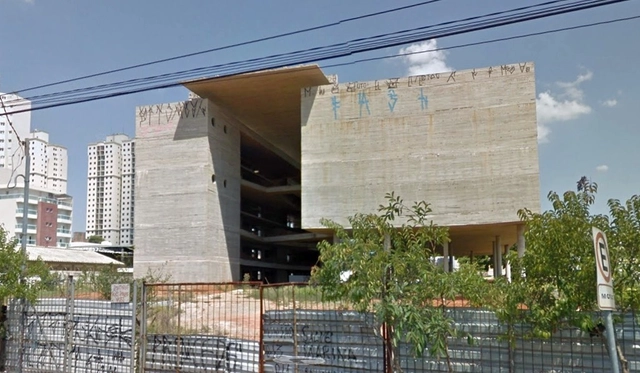
Museu do Trabalho e do Trabalhador in São Bernardo do Campo. Image via Google Street View
Designed by the firm Brasil Arquitetura, the Museum of Labor and the Worker is located in the city of São Bernardo do Campo. Once completed, it is set to house records of the "memory of the working world, from the arrival of the Portuguese to the present day." Although 5,500 square meters have already been built, construction has been halted and the site has been abandoned for about a year and a half.
In an op-ed published in the newspaper Folha de S. Paulo, Brazilian Pritzker laureate Paulo Mendes da Rocha and former UN Special Rapporteur Raquel Rolnik suggest that halting the museum's construction—officially blamed on suspected project overpricing—is actually more closely linked to an aversion to the cultural narrative surrounding the project.
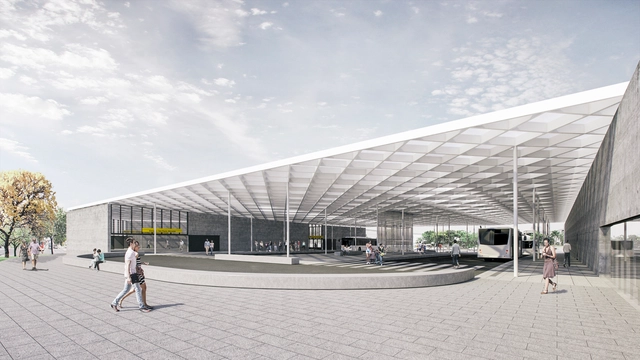
The São Paulo - Morumbi Station is part of the second implementation phase of the São Paulo Metro’s Line 4 – Yellow and is currently nearing completion. The project features two external entrances located at the intersection of Francisco Morato and Jorge João Saad avenues, as well as integration with the SPTRANS bus terminal.
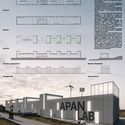
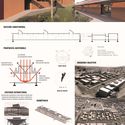
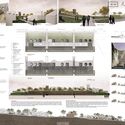
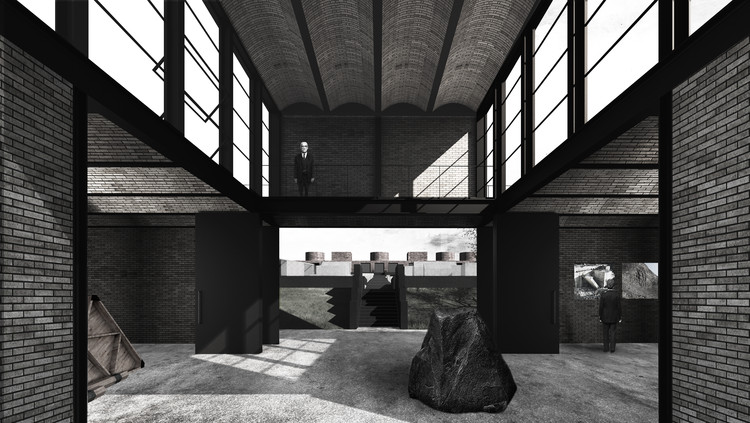
Through the Center for Sustainable Development Research (CIDS), Infonavit launched an open call for architecture and engineering firms to design the "Materials, Energy, and Water Laboratories" Building. Aiming to research and experiment with new materials, industrialized components, and spatial characteristics that foster the development of social housing, the building will be part of the complex named "Infonavit Housing Practical Research and Experimentation Laboratory" in "San Miguel del Arco," Apan, Hidalgo.
The brief required the proposal to be designed as a program container. Specifically, the design for this Ideas Competition had to house three major research spaces (materials, energy, and water) tailored to the specific testing and research needs of each laboratory, which will be developed in detail during the executive project phase with the winning firm. A key requirement for these spaces was spatial flexibility and versatility in both plan and section.
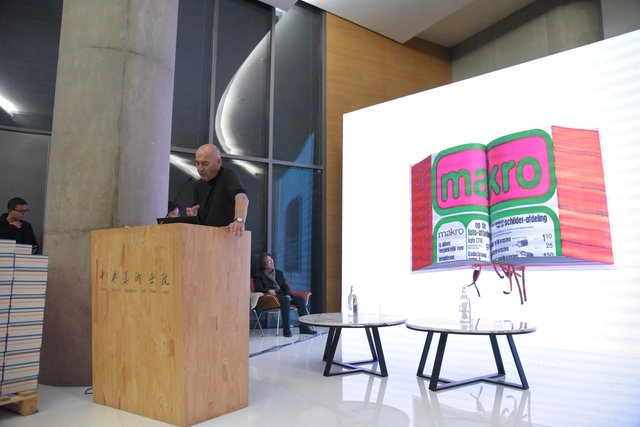
On the evening of November 2, Rem·Koolhaas held a book launch for Elements of Architecture at the Central Academy of Fine Arts (CAFA). Hosted by Dean Zhu Pei, the event featured a roundtable discussion with artist Xu Bing, Mohsen·Mostafavi (Dean of the Harvard Graduate School of Design), and Stephan·Petermann, the book's editor. Koolhaas opened with a brief presentation introducing the book and the journey behind its publication. During the panel, the speakers engaged in an in-depth discussion on architectural details, differences between Eastern and Western book cultures, and the relationship between books and space. Below is a recap of this remarkable event.
Pabellón Amanita Plaza Escuelas Trevijano. Image Cortesía de Concéntrico 04
The Architecture and Design Festival "Concéntrico 04" is preparing for its fourth edition, taking place from April 27 to May 1, 2018. This public event invites residents and visitors to discover and rediscover key sites in the historic center of Logroño, Spain, through temporary urban installations.
Vista general del memorial sobre el cementerio . Image Cortesía de Fabián Leiva
The "Floating Cemetery of Alto Biobío" project, developed by Universidad de Chile architect Fabián Leiva, proposes a memorial for the Quepuca cemetery—one of 14 flooded following the construction of the Ralco hydroelectric plant. The design features a monomaterial concrete volume positioned over the flooded cemetery to establish a vertical communication between the living and the dead, creating a point of connection between them.
A few days ago, we welcomed @archdailyco to Instagram. ArchDaily Colombia's dedicated account on the platform serves as a new showcase for local architecture. To mark this milestone, we invited our readers to share their best photos of Colombian architecture using the hashtag #ArchDailyCo.
Today, we present six of the best photos, along with ArchDaily Colombia's featured project of the week on our Instagram account. This inaugural selection spans Bogotá and Medellín, contrasting concrete and brick, while showcasing both bird's-eye cityscapes and architectural details captured by our followers.
Remember to tag your future photos of Colombian architecture on Instagram with the hashtag #ArchDailyCo for a chance to be featured in our next roundup.
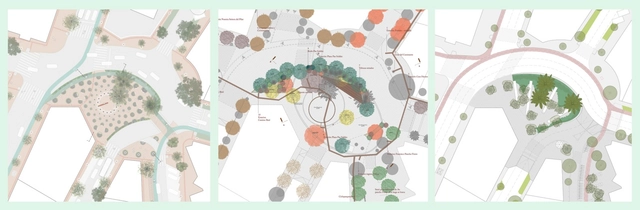
Plaza Paz Soldán - tres finalistas. Image Cortesía de Municipalidad de San Isidro
The integration of art and architecture to build a crucial public space at the Paz Soldán roundabout—one of the most iconic and highly trafficked areas in Lima's San Isidro district—was one of the major challenges presented by the Municipality of San Isidro and Grupo Centenario when they launched the Paz Soldán Plaza National Competition. The competition is part of the "2021: Bicentennial Projects" initiative, directed by Gary Leggett.
Among its primary objectives, the competition seeks the transformation of the primarily vehicular roundabout into a freely accessible pedestrian plaza. Additionally, it proposes the spatial integration of the new Paz Soldán Plaza with the monumental area of El Olivar forest, not only establishing this new area as a gateway to the park but also making it a benchmark for other areas of the city. Meanwhile, the anticipated public art proposal offers a reflection on the role of art in public space. It is also worth noting the broad vision of the roundabout as an urban complex, extending beyond the specific area of intervention.
The three finalists and two honorable mentions have already been announced. Out of 160 registered teams, 60 submitted entries. The jury comprised architects Óscar Borasino, Sharif Kahatt, and Michelle Llona, along with art specialists Max Hernández Calvo and Natalia Majluf. The process was advised by specialists including Juan Carlos Dextre, on mobility and traffic impact, and Patricia Dias, on heritage. Finally, the selection of the winner will include a double-weighted vote from the San Isidro Neighborhood Boards.
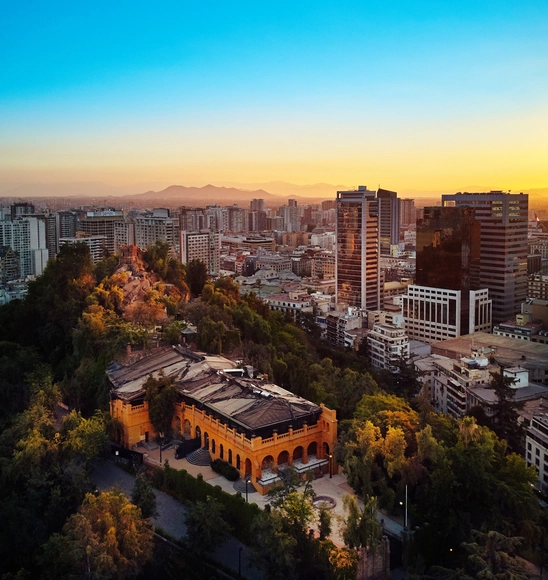
In the late 19th century, Santa Lucía Hill in Santiago, Chile, underwent a radical transformation, evolving from a rocky outcrop in the center of the capital into a vibrant green space. During the hill's redevelopment, the mayor of Santiago at the time, Benjamín Vicuña Mackenna, converted one of its structures, Hidalgo Fort, into a castle that housed a history museum. Reduced to an administrative warehouse during the 20th century, the fort—originally built in 1816—was converted into an event venue in 1997 and is now preparing for its most significant renovation since its construction.
According to the Chilean newspaper La Tercera, Castillo Hidalgo will be transformed into a cultural center featuring “a convention center and a laboratory.” This will allow the venue to open its doors for more than just private events, especially since Santa Lucía Hill receives over 600,000 tourists annually, according to figures from the Municipality of Santiago.
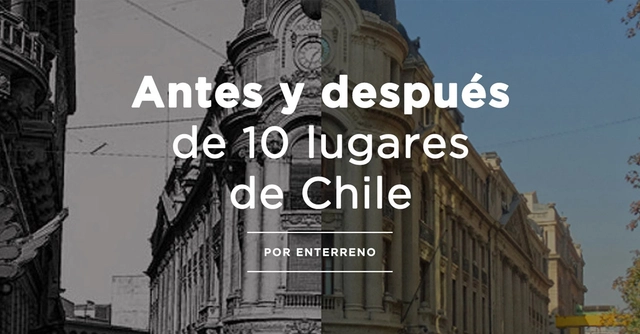
The website Enterreno is building the first “collaborative time machine” using historical images, allowing thousands of people to travel through time via their mobile devices from anywhere in the country or the world. The platform features over 45,000 photographs revealing what Chile was like in both the distant and recent past, shared by everyday people from their family archives and other sources.
By the end of 2018, at least five cities in Germany could test a model approach to combating pollution. The trial will discourage private vehicle use while offering free public transit—a solution currently adopted in only a few places.
Bonn, Essen, Herrenberg, Reutlingen, and Mannheim are the German cities included in the proposal drafted by the federal government. “We are considering making public transport free of charge to reduce the number of private cars,” German ministers stated in a letter sent to the European Commission. “Fighting air pollution effectively without unnecessary delays is of the highest priority for Germany,” the document adds.
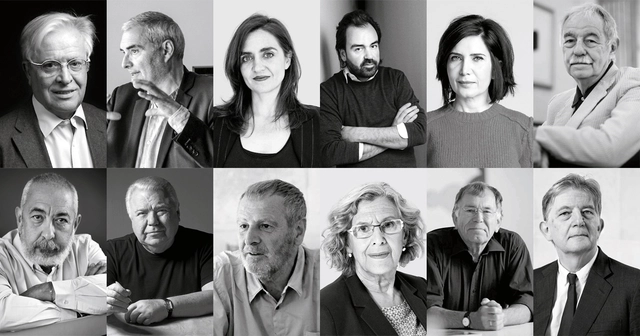
Ponentes del V Congreso Internacional de Arquitectura y Sociedad. Image Cortesía de Fundación Arquitectura y sociedad
On June 14, the second and final day of the 5th International Congress of Architecture and Society took place at the Baluarte Congress Center and Auditorium of Navarre in Pamplona, Spain. The day's sessions focused on topics as diverse as urban development, the political ecology of cities, mobility, and the future of our cities.
Architects Farshid Moussavi and Belinda Tato opened the day's first session, focusing their reflections on the importance of public spaces in cities as “generators of citizenship.” Both experts also highlighted the role of people in shaping cities.
https://www.archdaily.com/1113748/jan-gehl-we-have-lost-the-ability-to-create-neighborhoods-where-it-is-a-pleasure-to-grow-up-and-grow-oldJavier García Librero
Curated by Irish duo Yvonne Farrell and Shelley McNamara, partners at Grafton Architects, this year's theme seeks to reveal "diversity, specificity, and continuity in architecture." According to Paolo Baratta, president of La Biennale di Venezia, FREESPACE aims to promote "desire" in architecture.

.gif?1538085748)




-1.jpg?1518763923&format=webp&width=640&height=580)