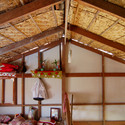
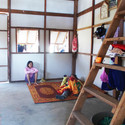
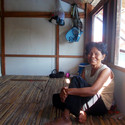
_David_Yeow.jpg?1541989495&format=webp&width=640&height=580)
_David_Yeow.jpg?1541989531 "© David Yeow")
_David_Yeow.jpg?1541989588 "© David Yeow")
_David_Yeow.jpg?1541989612 "© David Yeow")
_David_Yeow.jpg?1541989888 "© David Yeow")
_David_Yeow.jpg?1541989495)
-
Architects: COOKFOX Architects
- Area: 33400 ft²
- Year: 2017
-
Manufacturers: American Standard, Teasco


This article was originally published on November 9, 2015. To read the stories behind other celebrated architecture projects, visit our AD Classics section.
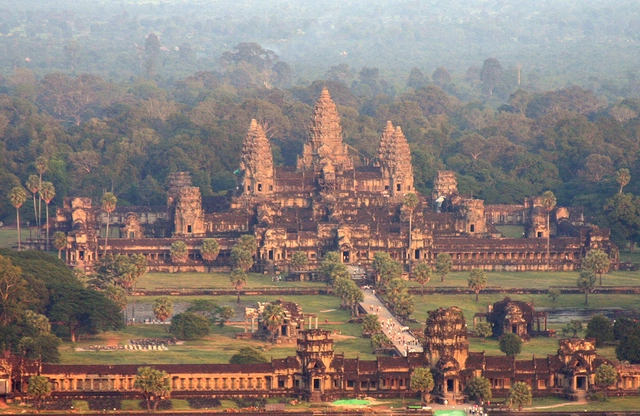
Angkor Wat is just one of dozens of extant Khmer temples in the Angkor area of present-day Cambodia, but it represents the apex of a building tradition that spanned five centuries, and the height of Khmer power and influence in the region. It is the largest temple complex at Angkor, and intricate bas-relief sculptures line the sandstone structures exemplify the apex of Khmer artistry. Although it has been in continuous use since its construction in the twelfth century, aspects of its history remain unknown. As archaeologist and anthropologist Charles Higham explains, “Curiously, there are no direct references to it in the epigraphic record, so we do not know its original name and controversy remains over its function and aspects of its symbolic status.”[1] Originally dedicated to the Hindu god Vishnu, the complex was later converted to Buddhist use (the word “wat” typically refers to Buddhist monasteries[2]), and continues to be a site of religious pilgrimage today.
_David_Yeow.jpg?1535492222&format=webp&width=640&height=580)
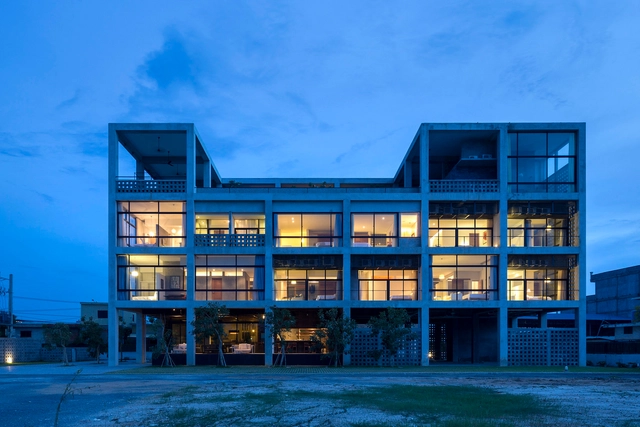
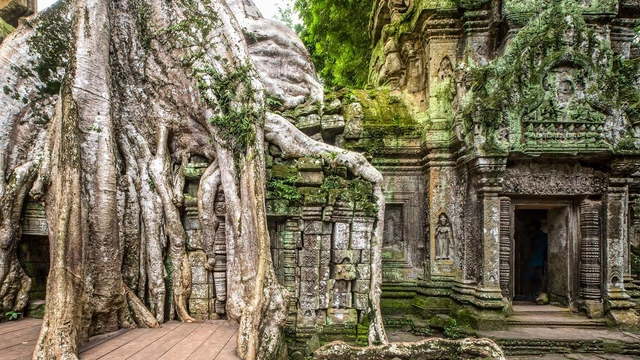
Discover the incredible architectural legacies of Cambodia. Experience the beauty of Angkor and the designs behind it, all while learning how many of those features formed the base of what is now called New Khmer Architecture. The style was created after the country’s independence from France when a generation, led by architect Vann Molyvann, began transforming the face of their country.
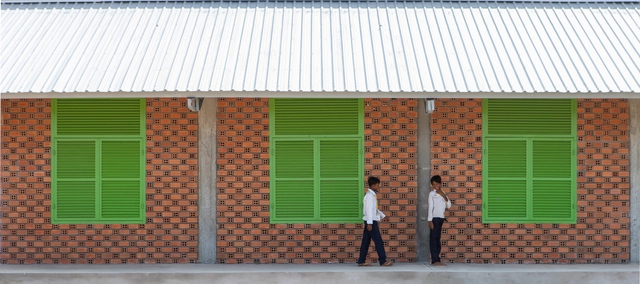

"New Khmer Architecture and Japan" is the first show in Cambodian History to focus on the architectural drawings of its modern movement. Cambodia is a country with mature architectural culture, not only of the great Angkorian heritage and vernacular timber temples, but also of modern buildings from the 1950s and 60s known as New Khmer Architecture. Since the 1990s, in the context of the post-war redefinition of the national identity as well as the recent expansion of environmental consciousness, this Cambodian modern movement, with their sensibility to the traditional culture and tropical climate, is being re-evaluated; though the drawings and documents of the movement were believed to be destroyed and lost in the turmoil of the Civil War.

Building Trust international have announced their 7th international design competition which seeks to find an innovative design proposal for a landmark pavilion structure made from bamboo. The bamboo piece will be the centre of a Bamboo Festival Building Trust are hosting in Phnom Penh, Cambodia this March. The competition challenges architects, designers and engineers to provide a design solution which has the chance to shape the future of building with bamboo globally.

Building Trust are happy to announce that our latest workshop will be held in Cambodia to design and build a project made from bamboo. Building Trust have a number of sustainable design projects in South East Asia in 2016, ranging from schools and housing to wildlife conservation and healthcare. We are offering a hands on participatory workshop where participants will gain experience in sustainable building techniques and understand more about humanitarian design while building worthwhile projects that will have a huge benefit to the local community and local wildlife. Participants will gain an insight into a number of building techniques and architectural styles.
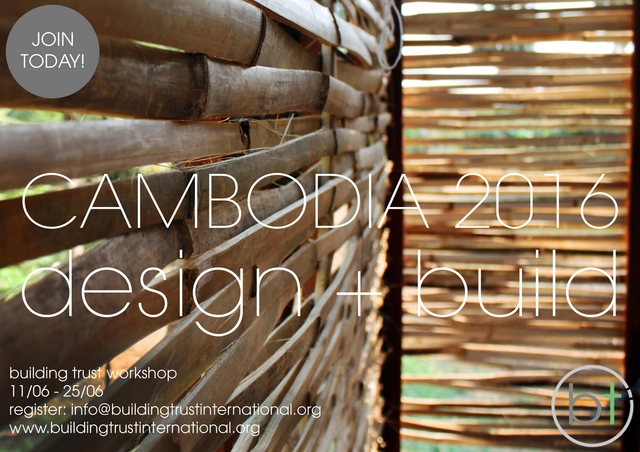
Building Trust are happy to announce details of our latest workshop which will be held in Cambodia to design and build a project made from bamboo. Building Trust have a number of sustainable design projects in South East Asia in 2016, ranging from schools and housing to wildlife conservation and healthcare.
We are offering a hands on participatory workshop where participants will gain experience in sustainable building techniques and understand more about humanitarian design while building worthwhile projects that will have a huge benefit to the local community and local wildlife.
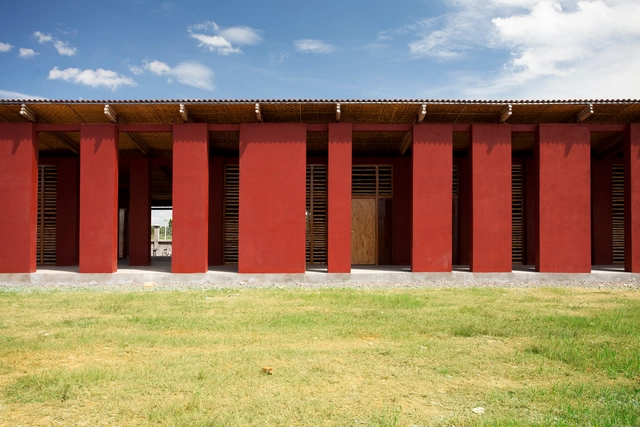
_COOKFOX_Architects.jpg?1434039459&format=webp&width=640&height=580)
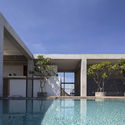
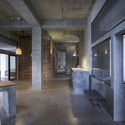
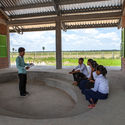
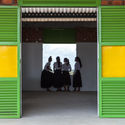
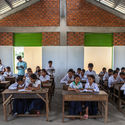
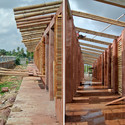
COOKFOX Architects has recently begun construction on The Neeson Cripps Academy, a high-tech and sustainable school to be built in Phnom Penh, Cambodia, as a gift from Velcro Companies to the Cambodian Children’s Fund.
The school, named for Cambodian Children’s Fund founder Scott Neeson and former Velcro Companies Chairman Robert Cripps, will employ multiple sustainable building practices, including water and energy efficiency via natural lighting, integrated solar shading, low energy lighting, and low flow water fixtures. An energy recovery system will further work to improve air quality inside classrooms by filtering outdoor air into the interior of the building, and on-site photovoltaic cells will provide a portion of the school’s energy needs.
.jpg?1432826267&format=webp&width=640&height=580)
Eleven has launched its inaugural ideas and design international competition based on Cambodia’s Tonle Sap Lake: a chance for architects, designers and students to engage in a unique design challenge and help make a difference along the way.
Located just a few miles south from the magnificent Angkor Temples, the Tonle Sap Lake is the largest fresh water basin in Southeast Asia. It boasts a UNESCO biosphere status since 1997 due to its ecological significance as a haven for hundreds of species of birds and fish, many of which are endangered. The lake is also home to more than 1.2 million people living in traditional floating villages. These remote communities migrate seasonally around the basin and rely heavily on its waters for sustenance.
.jpg?1418434750&format=webp&width=640&height=580)

Zaha Hadid Architects have unveiled their design for the Sleuk Rith Institute in Phnom Penh. The highly-anticipated project, commissioned by the Documentation Center of Cambodia’s (DC-Cam), will serve as Cambodia’s go-to archive for Khmer Rouge history and a leading center for genocide studies in Asia.
Five wooden towers, inspired by ancient Angkorian architecture, will house the institute’s “cross-section of pursuits,” including a genocide research center, graduate school, museum, document archives and research library. As the towers rise, the structures will interweave and link, connecting various departments above the ground level and uniting the institution as a singular whole.
A virtual tour through the institute, after the break.
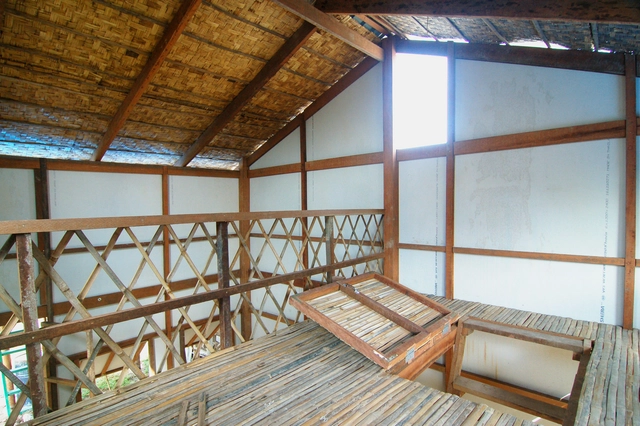
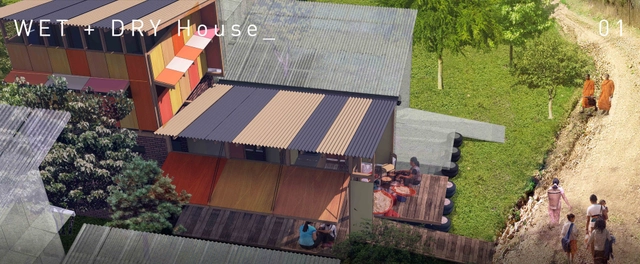
Building Trust International, a non-profit organization offering design assistance to communities and individuals in need, in collaboration with Habitat for Humanity and Karuna Cambodia announced the joint winners of the design competition that brings new life to housing design and delivery for low income families living in Cambodia. The winning projects include: ‘Wet + Dry House’ by Mary Ann Jackson, Ralph Green, Muhammad Kamil and Nick Shearman from Australian firm Visionary Design Development Pty Ltd., ‘Courtyard House’ by Jess Lumley & Alexander Koller from the UK, and ‘Open Embrace’ by Keith Greenwald and Lisa Ekle from USA. The Winning Student Design was by Sanaz Amin Deldar, Nastaran Hadidi, Ehsan Naderi and Simak Khaksar from Iran. More images and information after the break.
Designed by Architetto Matteo Ascani (AMA), the main driving force behind the their Cambonian Sustainable Housing project was to somehow recreate the sensation of living in a typical Cambodian house, where people have to maintain their own traditions, but in healthy and safe living conditions. Combined with a type of spatial experience that allows flexibility and the simple method of construction, this environmentally conscious design is able to respond to the needs of this society. More images and architects’ description after the break.
_David_Yeow.jpg?1535492547 "© David Yeow")
_David_Yeow.jpg?1535492367 "© David Yeow")
_David_Yeow.jpg?1535492493 "© David Yeow")
_David_Yeow.jpg?1535492349 "© David Yeow")
_David_Yeow.jpg?1535492222)





.jpg?1434684324 "© Bernardo Salce")
.jpg?1434684207 "© Bernardo Salce")
.jpg?1434684134 "© Bernardo Salce")

.jpg?1418434785 "© Khmeresque_photo")
.jpg?1418434721 "© Khmeresque_photo")
.jpg?1418434125 "© Khmeresque_photo")
.jpg?1418434670 "© Khmeresque_photo")
.jpg?1418434750)
.jpg?1412951460 "South Facade and Memorial Park. Image © ZHA")
.jpg?1412951277 "Entrance. Image © ZHA")