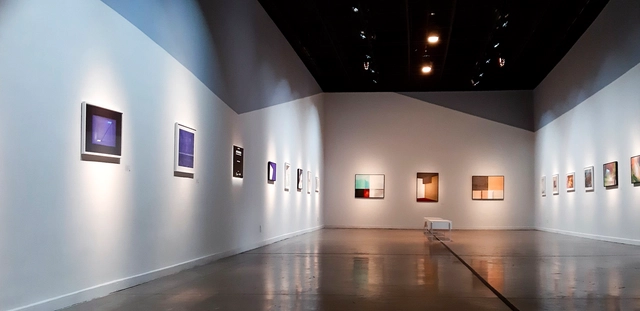
Photograph by Rodrigo Albertini at the In Pixels exhibition
In Pixels is the new exhibition by visual artist Thammy Tales and photographer Rodrigo Albertini, curated by Chico Cortez. Regarding the selection of 16 works that make up the exhibition, the curator notes that they are “parts of the existence of these singular artists, contemporary witnesses to a plural and technological world.”
Housing improvements and the qualification of low-income areas in the Federal District are the subject of a book launched by architects in Sol Nascente
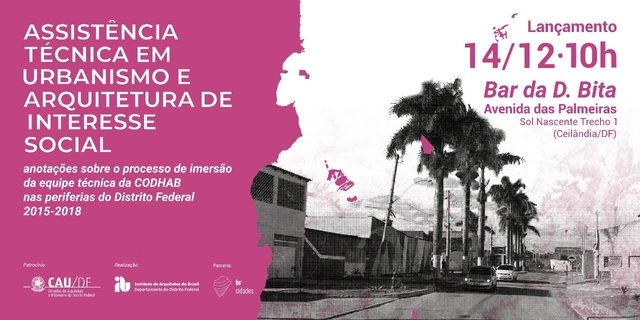
The work on housing improvements and the qualification of urban spaces in peripheral areas, resulting from the implementation of public and free technical assistance for the low-income population of the Federal District (DF), is the subject of a book to be launched this Saturday (14th) in the Sol Nascente community, in celebration of National Architect and Urban Planner Day. The publication, edited by the Institute of Architects of Brazil and sponsored by the Council of Architecture and Urbanism of the Federal District, brings together texts from various authors regarding the experience carried out by CODHAB between 2015 and 2018, in addition to interviews and articles by professors who also address the topic as an extension project at the University of Brasília.
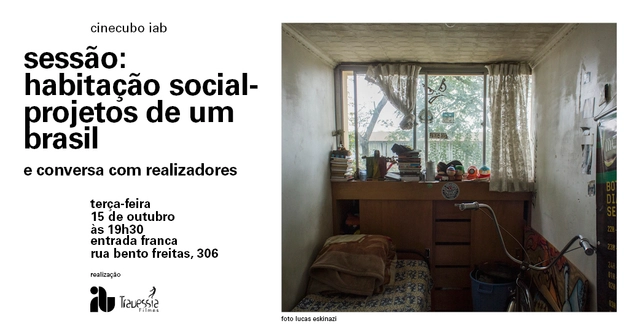
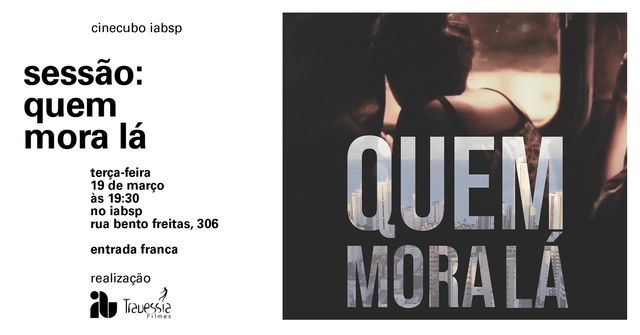
Cinecubo is a film club hosted by the Institute of Architects of Brazil (IAB) designed to foster dialogue between audiovisual and architectural languages while debating perspectives on the city. On the third Tuesday of every month at 7:30 PM, Cinecubo presents film screenings followed by discussions at the IAB-SP headquarters. Curated and moderated by Nana Maiolini, Travessia Filmes, and guests, the sessions are free and open to the general public.
Registration is now open for the 2nd Course on Risk Area Mapping using the Álea App (Distance Learning modality). Available at: .
The Federal University of Juiz de Fora has released the call for applications (Edital 1/2019) for the second edition of the Risk Area Mapping Course using the Álea application (Distance Learning modality).
SEMANAU – The UFERSA Architecture and Urbanism Week is an event hosted by the first public Architecture and Urbanism program in the semi-arid region, at the Ufersa Pau dos Ferros campus. Coordinated by faculty members Tamms Morais and Gabriel Leopoldino, the event’s primary objective is to connect students from a public university in the interior of Rio Grande do Norte with professionals, students, and researchers in architecture, urbanism, and related fields.
- The meeting brings together Clara Reynaldo of CR2 Arquitetura, Lua Nitsche of Nitsche Arquitetos, and Marta Moreira of MMBB; the goal is to stimulate reflection on the role of women in architecture.
{CURA} Gathers Architects for the "Women on Site" Event
Ana Beatriz Ribeiro Barros Silva. Photo: Reproduction / Social Media
The issue of occupational hazards and their repercussions on the capital-labor relationship, mediated by the State, is the central theme connecting the discussions in this book, with a special focus on cases that occurred during the military dictatorship and their impacts on the Brazilian working class.
BrCidades is a developing network formed through spaces of dialogue, interaction, and the sharing of experiences and projects among various social agents—including social movements, universities, NGOs, technical entities, and legal institutions—committed to the social construction of a project for Brazilian cities that contributes to democratic expansion and urban justice.
Escola Aberta no Galpão is a non-profit educational entity that promotes debates, meetings, and workshops on architecture, the city, the arts, and related fields.
People in front of the Justo at the Verão Staircase. Image: TransLAB.URB
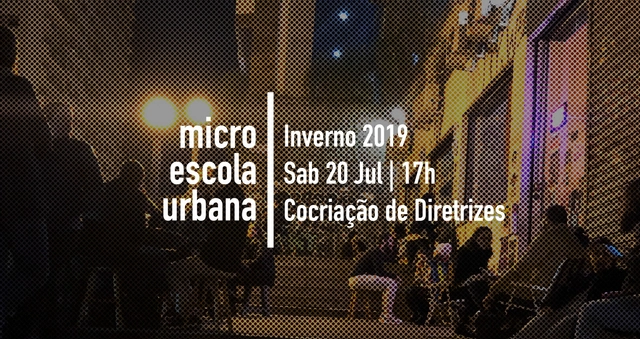
On Saturday, July 20, the TransLAB.URB collective, at the invitation of the JUSTO team, will host another edition of the Micro Escola Urbana, this time with a winter-themed approach.
escolaabertanogalpao art: Maitê Pasquini and Antonio Neto
The objective of this workshop is to reflect on our roles as professionals, educators, and students of Civil Engineering, Architecture, Urbanism, and Design. Participants will explore the application of forces and the assembly of structures—ranging from the scale of the human body to large-scale projects—while establishing a fundamental link between the construction process and structural analysis (spatial and organic).
In July, {CURA}, located in downtown São Paulo, is holding its Vacation Intensive and opening new classes for the months of August and September.
{CURA}, an acronym for architectural representation courses, is an independent school that focuses on training architects and students to improve their graphic representation skills. In July, {CURA}, located in downtown São Paulo, is holding its Summer Intensive and opening new classes for August and September.
The SESC Arsenal Gallery presents the exhibition AFINIDADES — a similarity of tastes, interests, and feelings. Afinidades is a collection of works by Márcia Miranda and Éder Bispo, featuring prints, paintings, architectural projects, graphic design, furniture design, and surface design.
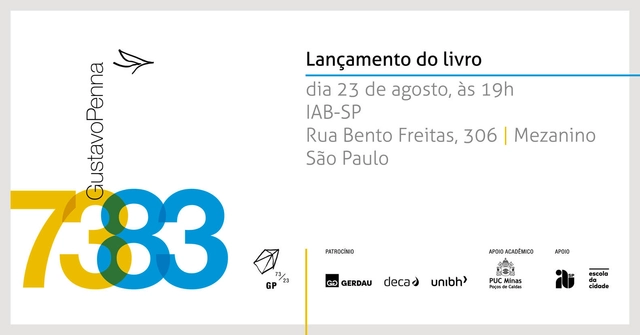
This book is the first volume of a 5-book collection to be produced by 2023 about architect Gustavo Penna.
On August 23 at 7:00 PM, at IAB SP, the project Gustavo Penna 73/23 – 50 Years of Architecture, Design, and Word will launch the first volume of a five-book collection to be produced through 2023. Titled Gustavo Penna 73/83, the book covers the architect’s first decade of work, including their mentors, professional colleagues, and the early years of the firm, assembling a vast chronological puzzle.
Japan House São Paulo - Photo by Rogério Cassimiro
São Paulo, April 2019 – Seven major cultural institutions located on the city’s most famous avenue are uniting for the second time to offer a full Sunday of free activities on April 28: Paulista Cultural. This pioneering initiative, organized by Casa das Rosas, Centro Cultural Fiesp, IMS Paulista, Itaú Cultural, JAPAN HOUSE São Paulo, MASP, and now Sesc Avenida Paulista—which joins the team for this edition—encompasses activities focused on theater, music, visual arts, dance, literature, photography, and gastronomy, as well as cinema.
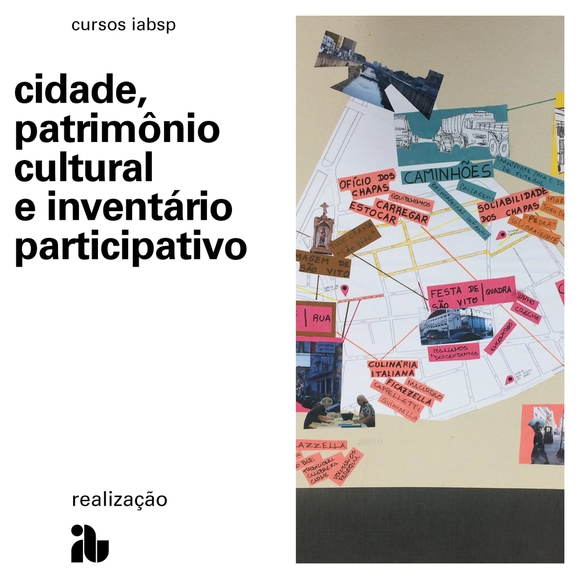
Reflecting on how we approach the memory and history of architecture and the city is essential to discussing which cultural heritage we are preserving. Furthermore, there is a growing discourse regarding social participation in preservation policies. However, there are few means and methods for valuing alternative meanings of heritage. In this scenario, the Participatory Cultural Reference Inventory method emerges as a potential tool for developing participatory preservation processes, adding new dimensions to the argument for the importance of cultural assets. It builds a dataset that serves as a complex image of a territory, driven by collective mobilization and dialogue among different stakeholders. In this course, we will present the Participatory Inventory method through debates on the construction of the cultural heritage field and case studies, focusing on the possibility of building new perspectives for cultural heritage in cities.