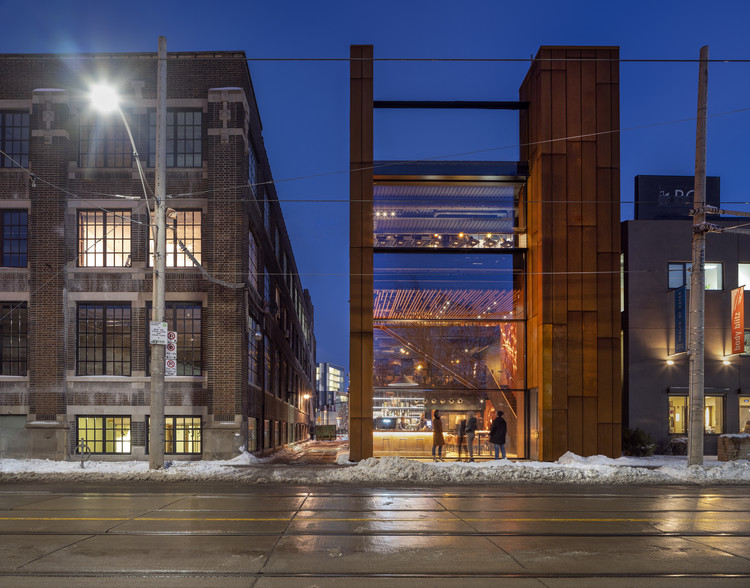
"The method doesn’t always pay off, and comes with a good deal of frustrating moments and necessary plot twists. Projects we love are regularly thrown in the trash bin. But more often than not, they leave place for even more lovable ones. In short, we have to be resilient and stubborn. Being optimistic is an enjoyable burden."
Space Popular directors Fredrik Hellberg and Lara Lesmes will discuss their latest projects in both the physical and virtual realms with a focus on how new technologies are changing both how we think of and experience architecture.
This book The Architecture of Point William. A Laboratory for Living shares Shim-Sutcliffe’s significant work at Point William intertwines landscape and architecture with ancient rock and water reshaping and reimagining a site on the Canadian Shield for over two decades. The project is a laboratory for experimentation at many scales of design including the landscape, built form, furniture, lighting and hardware shared in this book through sketches, model photos and photographs. Kenneth Frampton provides an insightful introduction with his own selected sketches framing a way of seeing Point William for the reader. Michael Webb’s provocative interview with Brigitte Shim and Howard Sutcliffe describes the evolution of the site. Immersive spaces have been captured by three remarkable photographers Ed Burtynsky, James Dow and Scott Norsworthy.
The Daniels Faculty of Architecture, Landscape, and Design is pleased to announce that the 2020-21 Frank Gehry International Visiting Chair in Architectural Design is Douglas Cardinal, OC, FRAIC, a renowned Canadian architect known both for his inspiring designs and for his advocacy for the rights and dignity of Indigenous peoples. Cardinal will lead a series of public events including lectures and conversations in collaboration with the Daniels Faculty, throughout his appointment as Gehry Chair.
‘Support Black Designers.’ is a temporary mural featuring artwork & writing by Black creatives — curated by the Daniels Art Directive with designers Ashita Parekh and Tolu Alabi — installed on the north facade of One Spadina, the University of Toronto John H. Daniels Faculty of Architecture, Landscape, & Design.
We’re excited to invite you to Danish Desire, our virtual event presented by The Royal Danish Consulate General and TORP, at DesignTO Festival, Saturday, January 23 from 2pm-3pm. Our panel of leading Danish and Canadian designers, makers and educators will be discussing the ongoing success of Danish Design, Denmark’s rich design history, and how a culture deeply immersed in and supportive of design positively affects design outcomes. Register today at: https://us02web.zoom.us/webinar/register/1016105024546/WN_V2wJTYPEReq79TEke5Ls9A
As the domain where different vectors of the current climate crisis meet and interact, and where conflicts around its regulation are emerging, the atmosphere also produces multiple localities where these transformations can be observed and understood—and sites of mediation can be imagined. Far from being understood in all of its complexity, the atmosphere continues to elude our ability to model its dynamics—or to compute future scenarios.
This event celebrates the six winning entries of the 14th cycle of the Aga Khan Award for Architecture. This prestigious award program selects exemplary built work that combines social and ecological concerns with innovative and exemplary design.
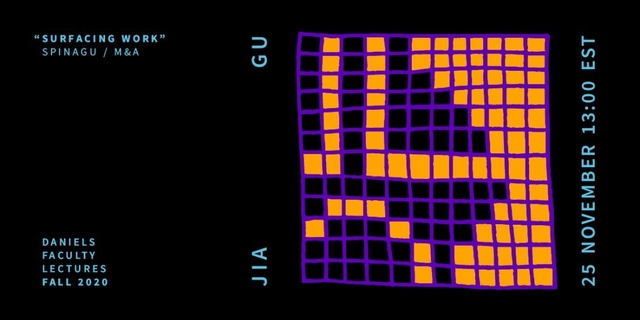
Surfacing Work presents recent projects by Spinagu, a Los Angeles-based research and design studio that explores architectural ideas and processes through spatial, experimental, and exhibitionary formats.
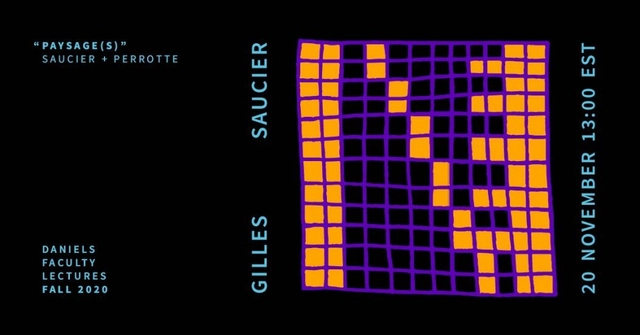
Founded in 1988 by Gilles Saucier and André Perrotte, Saucier + Perrotte Architectes is a multidisciplinary practice that is internationally renowned for its institutional, cultural, and residential projects. Saucier + Perrotte’s highly acclaimed buildings have been published the world over, reflecting the office’s status as one of Canada’s premier design firms.
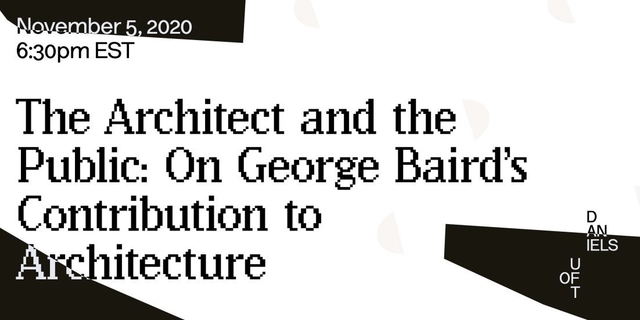
The event is the first of a series of conversations to launch the recently published book The Architect and the Public: On George Baird's Contribution to Architecture (Quodlibet, 2020). The first group of speakers moderated by Roberto Damiani, the book editor, includes Brigitte Shim as a discussant and the volume contributors Joan Ockman, Richard Sommer, Hans Ibelings, Michael Piper, and Andrew Choptiany.
Towards Half: Design for a Climate Positive Future. How can the built environment meet the 2030 target and halve the emissions of construction and operations this decade? MASS's Good, Clean, & Fair approach offers a language and approach to address this profound challenge - linking climate and socio-economic justice in the process.
We are shaped by our context and histories. However, we also and critically shape our context and history to influence the future. While this appears so obvious, it took my leaving Kenya to study and work in the US, to discover my own deep-seated biases and discriminations that had influenced my design thinking. This lecture will reflect on how sketching can be utilised as a tool for introspection, with specific regard to breaking down deep-seated biases that are the basis for institutional discrimination. Through my sketches and the work of KDI I will explore the potential of Landscape Architecture, Architecture and Urban Design to shape our context and drive a more equitable future, in Kenyan Urban Space.
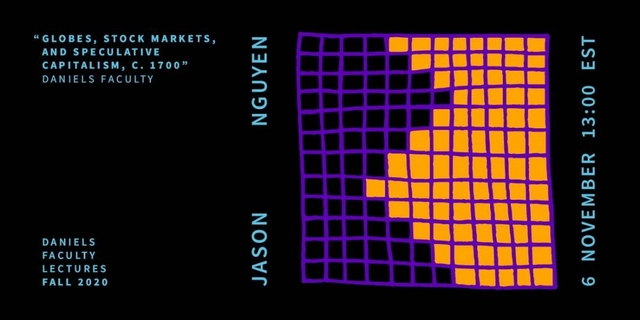
This talk looks at a small handheld globe manufactured by the British cartographer Herman Moll in 1719. Though small in size and overtly commercial in use, the object serves as a particularly useful case study for understanding the relationship between cartography, consumerism, and certain geopolitical developments that historians have seen as president of global modernity, namely speculative capitalism—including its troubling connections to colonialism and slavery. Additionally, the talk sketches the parameters of a new line of architectural research on the history of European-supported entrepôts in Asia, Africa, and the Americas as they relate to early modern shipping networks and the formalization of the modern stock exchange in Amsterdam and London.
For almost two centuries, urbanization has been achieved by conquering land and using the natural environment as a disposable commodity. As a result, we have depleted our forests, wetlands, and soils. These effects have impacted the quality of life in urban areas, as well as the health of urban residents. And yet, the same pattern of development continues to be used, even as its negative consequences are amplified by climate change. Our forest conservation and restoration efforts, shaped by constant struggles against development, are reactive, opportunistic and ad-hoc rather than strategically planned.