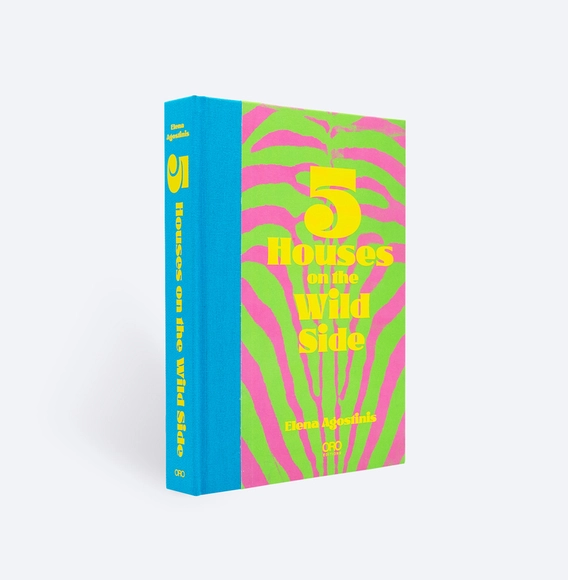
5 Houses on the Wild Side is a visual feast showcasing the wildly imaginative, rules-free, cozy and sumptuous interiors Elena Agostinis has created for her family’s homes in New York, Montana, and Mexico.
Videos
First Prize Winner: Edge of presence. Image Courtesy of Buildner
Buildner has announced the results of its Re-Form: New Life for Old Spaces, an international ideas competition examining the adaptive reuse of small-scale existing buildings. The competition invited architects and designers to propose transformations of used, abandoned, or overlooked structures with an approximate footprint of 250 square meters, located anywhere in the world. With no fixed site or program, participants were encouraged to explore alternatives to demolition and new construction through reuse strategies grounded in contemporary social and environmental concerns.
As an open-format competition, Re-Form foregrounded sustainability, feasibility, and community impact over formal or typological constraints. Submissions ranged from precise urban insertions to more speculative rural interventions, reflecting a broad range of approaches to working with existing fabric. Many projects focused on how limited, often marginal spaces could be reactivated to support new forms of collective use while responding to material, climatic, and ecological conditions.
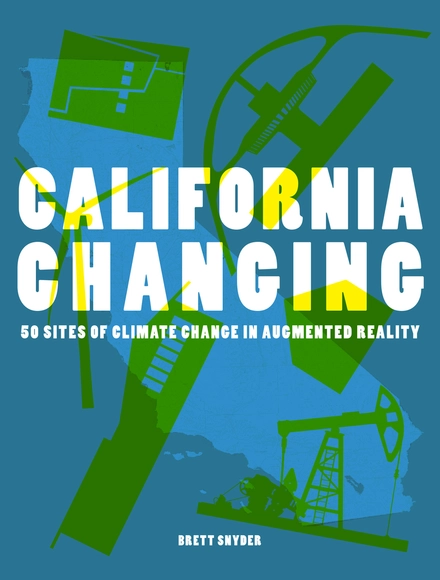
The state of California has emerged as a pioneering force in designing for climate change, yet it has also faced the devastating impacts of numerous climate-related disasters, including droughts, wildfires, and rising sea levels. This book offers a unique climate change tour, delving into architectural scale sites across the state. From innovative houses using sustainable techniques to historical locations ravaged by the combined forces of drought and wildfire, the book explores a range of poignant examples. The main visual contents are a set of architectural site illustrations that are each enhanced by an augmented reality component showcasing the interplay between past, present, and future scenarios. The publication caters to architects, landscape architects, planners, design enthusiasts and general audiences alike, fostering a curiosity about climate change and its relevance to our daily lives.
Visited by up to 500 guests annually, this number promises to increase with additional garden club registrations and publicity. Stunning photographs and the book’s elegant design take readers on an exquisite visual tour of the property and its development, including the origins and culture of its owners—Douglas Hamilton former president and chairman of The Walters Museum in Maryland and Tsognie Wangmo, the eldest child of the last king of Sikkim, shortly before the Himalayan royal kingdom was taken over by India.
Organized by ASF with Susan Chin of DesignConnects, in collaboration with the American Institute of Architects New York, and American Institute of Architects Continental Europe, Nordic American Connections: Conversations on Architecture and Design is a four-part series that presents prominent architects, critics and scholars to reflect on Scandinavian and Nordic design’s enduring impact in shaping modern American design since the 19th century.
Media Matters in Landscape Architecture makes a unique contribution to landscape architectural praxis for its explicit framing of “environmental media” in terms of its dual meaning within our discipline. In the sciences, environmental media are the materials of the natural world—soils, air, water, plants, microbes. Within STS and media studies, “environmental media” refers broadly to the relationship between environmental issues—such as pollution, biodiversity loss, climate change—and the creation and application of the tools, interfaces, and images, through which information about these issues is conveyed. This book focuses on how these two distinct understandings of environmental media coalesce within the discipline of landscape architecture and other spatial design fields. Authors from a wide range of disciplines—landscape architecture, media studies, science and technology studies, history of science, engineering, ecology, and architecture—examine how the creation and use of data, images, and models act as the mediums through which a particular understanding of “environment” or “landscape” arises. This framing of environmental media emphasizes the relationships among various design media and the specific material and social environments within which they operate.
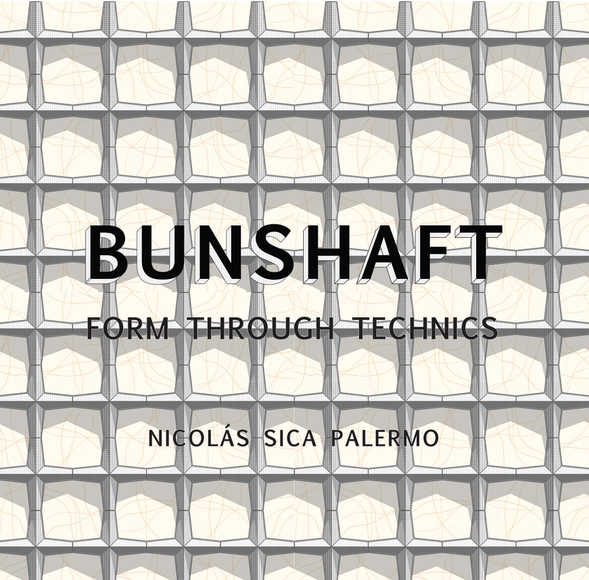
The works of Gordon Bunshaft, developed while working for the multinational architectural firm SOM (Skidmore, Owings & Merrill), put together a number of concrete and abstract elements that fully reflected the modern movement during the years of its maximum artistic expression.
Open House Europe Annual Summit "Future Heritage", courtesy of Architektūros fondas.
Open House Europe will hold its third Annual Summit in Athens on January 9–10, 2026. Hosted by Open House Athens, co-hosted by Open House Slovenia and Open House Thessaloniki, and coordinated by Architektūros fondas, the Summit will once again convene festival organisers, architecture professionals, students, enthusiasts, and partners from across the continent and beyond for shared reflection, exchange, and dialogue.
Bratislava, the rapidly developing capital of Slovakia—located in the heart of Europe—continues to strengthen its presence on the European architectural map. As a growing hub of contemporary design—already home to projects by Zaha Hadid Architects, Massimiliano & Doriana Fuksas, Stefano Boeri, Studio Egret West, and Snøhetta—the city has now reached another important milestone: an international architectural and urban design competition has been announced to shape the future of Zváračák, one of the last major brownfield sites near the city center.
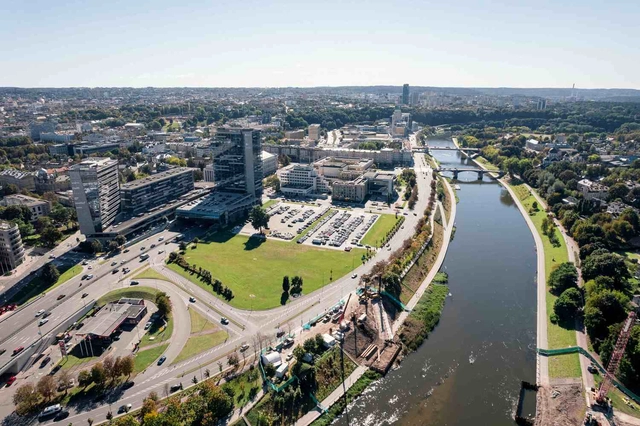
Vilnius has launched an open international architectural competition to select the design concept for the future Vilnius Congress Centre, a flagship venue aimed at transforming the city’s competitiveness in the global meetings and events market. Proposals are invited until 16 March 2026, with a total prize fund of 100 000 euros. The winning concept will form the basis for a next-generation congress centre planned for completion at the end of 2031 on A. Goštauto street, next to the Parliament of the Republic of Lithuania.
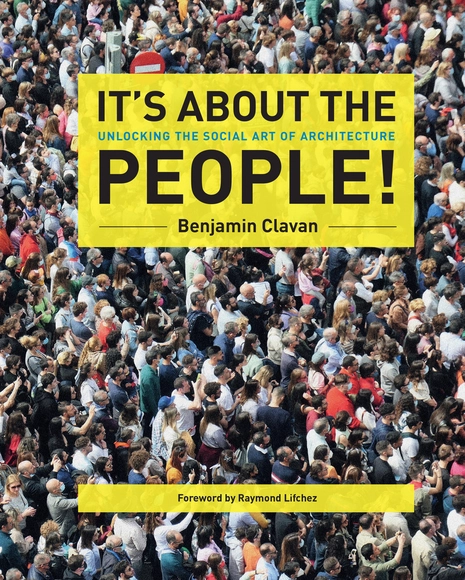
This book is about architecture, but not about formal architectural images. It is about the people who inhabit and use buildings and places. It is about the people who have made and will make buildings and places. It is a book about subjects and themes that directly impact the lives of the people who will utilize these efforts.
The Urban Design Legacy of Colin Rowe is a must read for anyone who cares about the quality and meaning of the diverse environments we inhabit from modest neighborhood communities to grand social and civic institutions.
The international student architecture competition INSPIRELI AWARDS is entering its 11th edition. The competition is open to students of architecture and related disciplines from around the world and has long ranked among the largest international student architecture competitions.
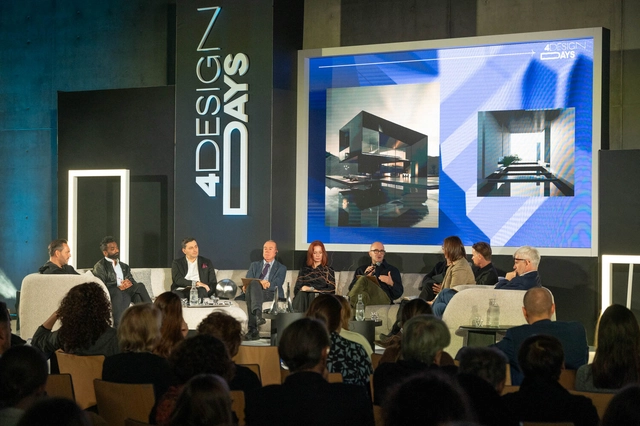
4 Design Days 2026 is the jubilee 10th edition of one of the most important events for the architecture, design, and real estate sectors in Poland. On 22–23 January 2026, the International Congress Centre in Katowice will host architects, designers, investors, developers, manufacturers, representatives of local authorities, and experts who actively shape the directions of contemporary spatial development.
What is the common value of ar chitecture? The first description that come t o mind is: something normal, ordinary, or rational. These keywords are pointing toward the opposite of newness. A brave jump of logic would make out that architecture does not need to call for newness. On the contrary, one must admit that other fields of design and ar t in fact need to be attracted to newness and the endeavors themselves are meaningful. But architecture has always been unique because it does not exclusively belong to either art or technology because it requires enormous amounts of coordination with various consultants to make one building work in addition to what we call “design.” This unique character of architecture demands commonness rather than newness.
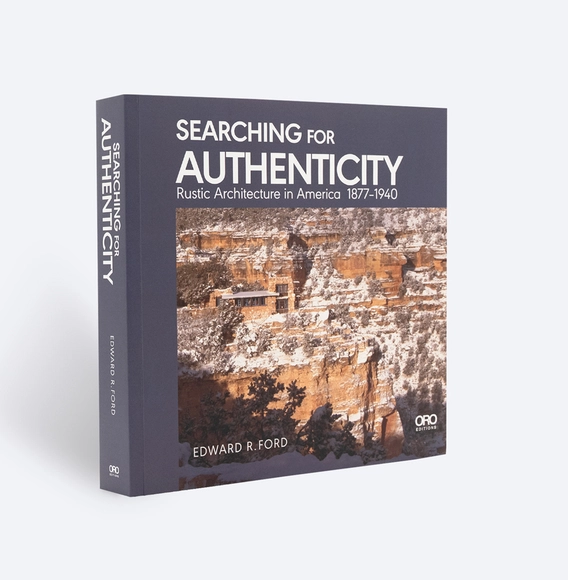
Rustic Architecture in America 1887–1940 is a history of a series of misunderstood masterpieces, the log-based architecture that emerged in the Adirondacks and the National Parks between 1890 and 1935. It is a history of how both form and technology of construction were determined by the tourist industry and the railroads who built the buildings and the social and environmental damage caused by the larger process of which they were a part. Many of these buildings were constructional shams driven by romantic pretenses, but there is also in the best of this architecture something truly original. It is also a history of how the rustic aesthetic transcended glib, mythic romanticism to produce a truly original architecture, how the unique conditions of the West merged craft with the industrial, of how its designers drew on the landscape of the West in combination with the European traditions of the rustic to create an original architecture and a unique way of building. Forty buildings are examined in detail. The text and the numerous original drawings unfold the story how the work was actually constructed in relation to its many enduring myths.
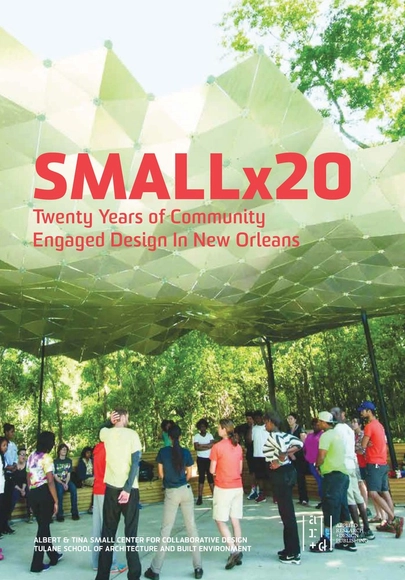
The Albert and Tina Small Center for Collaborative Design is the outreach arm of the Tulane School of Architecture and Built Environment. The Center works with nonprofit organizations and community-based groups to provide design services to communities who are consistently underserved by the design professions. The work focuses on equitable par ticipation, meaningful outcomes, design excellence, and inclusion as critical parts of the design process. Smallx20 tells the story of the Center’s founding and illustrates the Center’s approach to design in service to community needs. In August 2005, Hurricane Katrina struck New Orleans, and the ensuing federal levee failure flooded 80% of the city. While the groundwork for Small Center was established before the storm, the Center’s early work served to support community needs during the city’s recovery. Smallx20 details how the Center’s responsiveness to community voice continues to characterize its approach to public interest design and architectural education. The Center is consistently recognized as a national leader in community-based design, with a commi tment to deep collaboration and design excellence. Through guest reflections, case studies, and photographs Smallx20 offers a window into the Center’s working methods, the resulting designs, and a por trait of the communities and traditions that shape New Orleans culture.