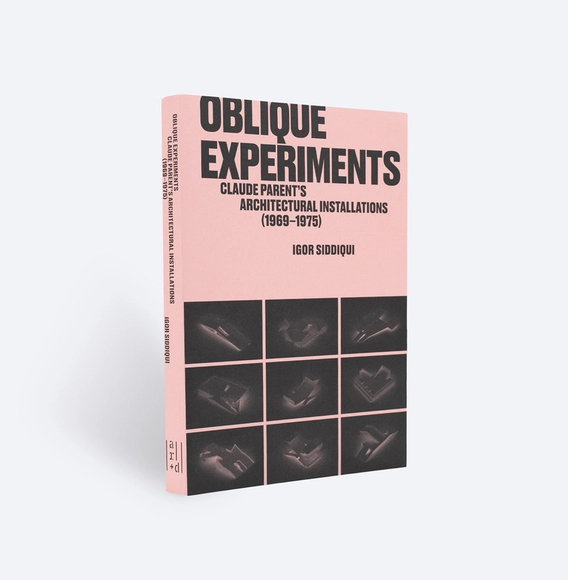
With the radical proposition of life on inclined planes—a theory known as the oblique function—the French architect Claude Parent sought to free architecture of orthogonal form, renew its social relevance, and inspire people’s interest in the built environment. Oblique Experiments: Claude Parent’s Architectural Installations (1969–1975) explores the significance of a series of temporary interventions that he designed in an attempt to convert his theory into practice. Referred to as practicables, these installations incorporated oblique geometries, involved interdisciplinary collaboration, and made themselves at home in existing buildings, often inside of French cultural centers known as maisons de la culture. Using rarely published archival materials as well as new drawings produced by the book’s author, Oblique Experiments brings overdue attention to this series of architectural experiments with enduring intellectual and creative appeal. Moreover, the book prompts the reader to imagine the radical potential of obliqueness in a range of contemporary practices—beyond the literal prospect of life on sloped floors. As such, Oblique Experiments builds upon Parent’s work in order to imagine new forms of experimentation in architecture, design, and art.
Soundscape Architecture presents historical examples, design projects and art works related to the sonics of architectural spaces and landscapes. This work grew out of our interest in listening to places that sponsor distinct sonic characteristics with specific and memorable identities. We have addressed this challenging design territory by beginning with the act of listening itself. We record the spaces, create new compositions from the recordings, draw (by hand and digitally) the sounds of these compositions, animate these drawings, and then create digital paintings as a memory of this process. We also present sonic installations, projects, and other exemplary art works as creative demonstrations that support the act of listening to the atmospheres of our natural and built environments.
This 12th volume of Prospectiva delves into the complexity and richness of contemporary architecture in Colombia. This territory is traversed by geographical, social and political tensions, demanding precise and imaginative architectural responses.
Fast Forward: How HKS Shapes the Future of Design showcases recent work by global design firm HKS and offers a look ahead to the future of innovation in architecture and design. The firm’s portfolio of architecture, interior design, urban planning and research demonstrates how HKS contributes to improving communities and transforming the design industry. For more than 85 years, HKS has brought a depth of knowledge and expertise to clients spanning diverse markets and sectors, crafting design solutions that rise to meet the challenges of today and tomorrow. The firm is now poised to continue its path of progress, influencing how the combined power of technology and design thinking will be an asset to society throughout the 21st century.
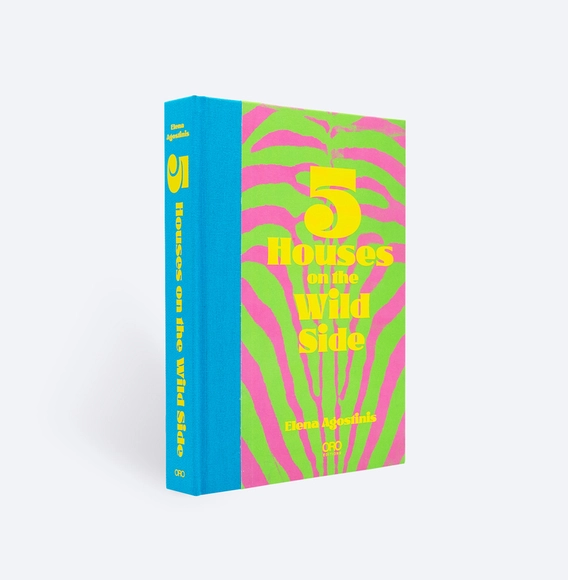
5 Houses on the Wild Side is a visual feast showcasing the wildly imaginative, rules-free, cozy and sumptuous interiors Elena Agostinis has created for her family’s homes in New York, Montana, and Mexico.
Videos
First Prize Winner: Edge of presence. Image Courtesy of Buildner
Buildner has announced the results of its Re-Form: New Life for Old Spaces, an international ideas competition examining the adaptive reuse of small-scale existing buildings. The competition invited architects and designers to propose transformations of used, abandoned, or overlooked structures with an approximate footprint of 250 square meters, located anywhere in the world. With no fixed site or program, participants were encouraged to explore alternatives to demolition and new construction through reuse strategies grounded in contemporary social and environmental concerns.
As an open-format competition, Re-Form foregrounded sustainability, feasibility, and community impact over formal or typological constraints. Submissions ranged from precise urban insertions to more speculative rural interventions, reflecting a broad range of approaches to working with existing fabric. Many projects focused on how limited, often marginal spaces could be reactivated to support new forms of collective use while responding to material, climatic, and ecological conditions.
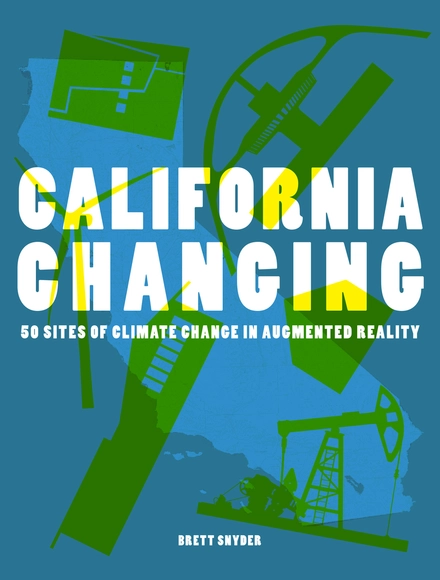
The state of California has emerged as a pioneering force in designing for climate change, yet it has also faced the devastating impacts of numerous climate-related disasters, including droughts, wildfires, and rising sea levels. This book offers a unique climate change tour, delving into architectural scale sites across the state. From innovative houses using sustainable techniques to historical locations ravaged by the combined forces of drought and wildfire, the book explores a range of poignant examples. The main visual contents are a set of architectural site illustrations that are each enhanced by an augmented reality component showcasing the interplay between past, present, and future scenarios. The publication caters to architects, landscape architects, planners, design enthusiasts and general audiences alike, fostering a curiosity about climate change and its relevance to our daily lives.
Visited by up to 500 guests annually, this number promises to increase with additional garden club registrations and publicity. Stunning photographs and the book’s elegant design take readers on an exquisite visual tour of the property and its development, including the origins and culture of its owners—Douglas Hamilton former president and chairman of The Walters Museum in Maryland and Tsognie Wangmo, the eldest child of the last king of Sikkim, shortly before the Himalayan royal kingdom was taken over by India.
Organized by ASF with Susan Chin of DesignConnects, in collaboration with the American Institute of Architects New York, and American Institute of Architects Continental Europe, Nordic American Connections: Conversations on Architecture and Design is a four-part series that presents prominent architects, critics and scholars to reflect on Scandinavian and Nordic design’s enduring impact in shaping modern American design since the 19th century.
Media Matters in Landscape Architecture makes a unique contribution to landscape architectural praxis for its explicit framing of “environmental media” in terms of its dual meaning within our discipline. In the sciences, environmental media are the materials of the natural world—soils, air, water, plants, microbes. Within STS and media studies, “environmental media” refers broadly to the relationship between environmental issues—such as pollution, biodiversity loss, climate change—and the creation and application of the tools, interfaces, and images, through which information about these issues is conveyed. This book focuses on how these two distinct understandings of environmental media coalesce within the discipline of landscape architecture and other spatial design fields. Authors from a wide range of disciplines—landscape architecture, media studies, science and technology studies, history of science, engineering, ecology, and architecture—examine how the creation and use of data, images, and models act as the mediums through which a particular understanding of “environment” or “landscape” arises. This framing of environmental media emphasizes the relationships among various design media and the specific material and social environments within which they operate.
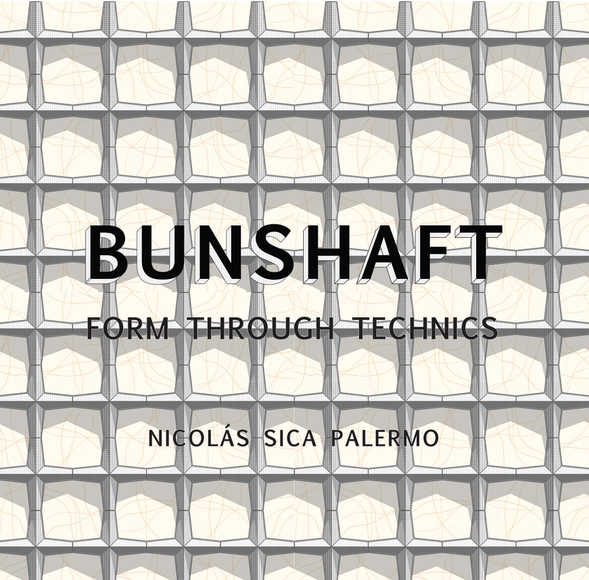
The works of Gordon Bunshaft, developed while working for the multinational architectural firm SOM (Skidmore, Owings & Merrill), put together a number of concrete and abstract elements that fully reflected the modern movement during the years of its maximum artistic expression.
Open House Europe Annual Summit "Future Heritage", courtesy of Architektūros fondas.
Open House Europe will hold its third Annual Summit in Athens on January 9–10, 2026. Hosted by Open House Athens, co-hosted by Open House Slovenia and Open House Thessaloniki, and coordinated by Architektūros fondas, the Summit will once again convene festival organisers, architecture professionals, students, enthusiasts, and partners from across the continent and beyond for shared reflection, exchange, and dialogue.
Bratislava, the rapidly developing capital of Slovakia—located in the heart of Europe—continues to strengthen its presence on the European architectural map. As a growing hub of contemporary design—already home to projects by Zaha Hadid Architects, Massimiliano & Doriana Fuksas, Stefano Boeri, Studio Egret West, and Snøhetta—the city has now reached another important milestone: an international architectural and urban design competition has been announced to shape the future of Zváračák, one of the last major brownfield sites near the city center.
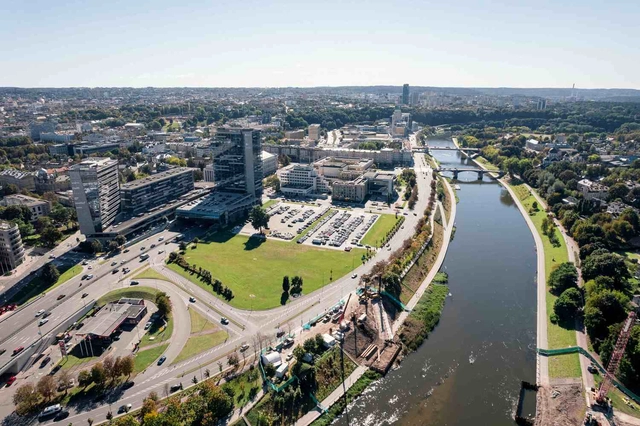
Vilnius has launched an open international architectural competition to select the design concept for the future Vilnius Congress Centre, a flagship venue aimed at transforming the city’s competitiveness in the global meetings and events market. Proposals are invited until 16 March 2026, with a total prize fund of 100 000 euros. The winning concept will form the basis for a next-generation congress centre planned for completion at the end of 2031 on A. Goštauto street, next to the Parliament of the Republic of Lithuania.
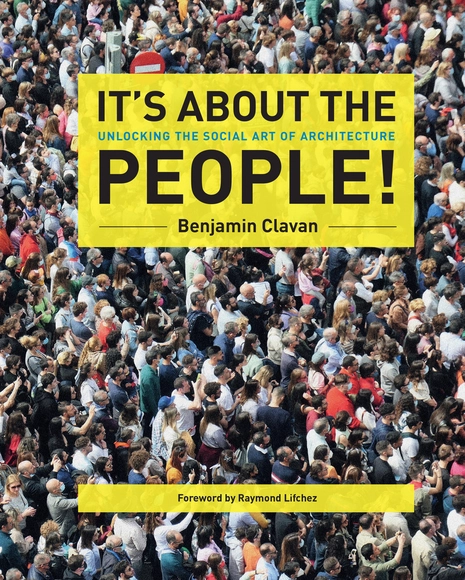
This book is about architecture, but not about formal architectural images. It is about the people who inhabit and use buildings and places. It is about the people who have made and will make buildings and places. It is a book about subjects and themes that directly impact the lives of the people who will utilize these efforts.
The Urban Design Legacy of Colin Rowe is a must read for anyone who cares about the quality and meaning of the diverse environments we inhabit from modest neighborhood communities to grand social and civic institutions.
The international student architecture competition INSPIRELI AWARDS is entering its 11th edition. The competition is open to students of architecture and related disciplines from around the world and has long ranked among the largest international student architecture competitions.