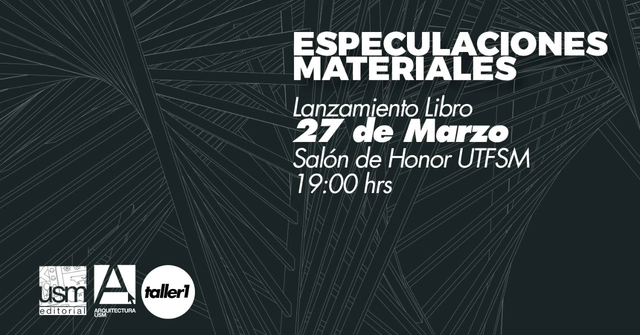
The community is invited to the launch of the book Material Speculations: Materiality Exercises from the UTFSM Introduction to Architecture Workshop, presented by the core faculty team alongside guest architect Verónica Arcos.
The community is invited to the launch of the book Material Speculations: Materiality Exercises from the UTFSM Introduction to Architecture Workshop, presented by the core faculty team alongside guest architect Verónica Arcos.

CineCubo is the film club hosted by the Institute of Architects of Brazil, aimed at fostering dialogue between audiovisual and architectural languages and debating perspectives on the city. Every third Tuesday of the month at 7:30 PM, CineCubo screens films followed by a discussion at the IAB-SP headquarters. Curated and moderated by Nana Maiolini, Travessia Filmes, and guests, the sessions are free and open to the general public.
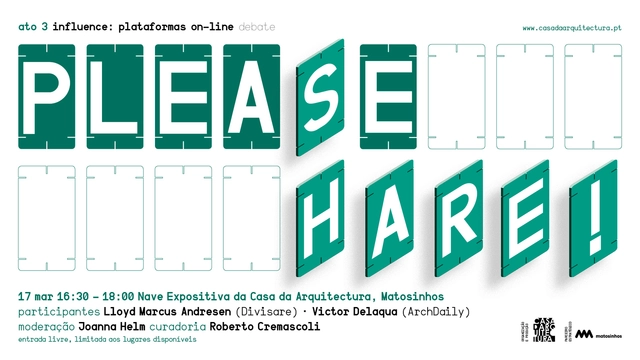
Influence: Online Platforms / Please Share!

The "Corredor Sur" project, a partnership between the collectives TransLAB.URB (Porto Alegre, Brazil), Urbanismo Vivo (Buenos Aires, Argentina), and FADU (Faculty of Architecture, Design, and Urbanism at the University of the Republic, Montevideo, Uruguay), which began in November 2017, is starting to yield its first results.
Micro Urban School | Gardens in Residential Buildings

Exhibition Title: Designing with Construction Sets
Date: April 10, 2018 – May 4, 2018
Time: 8:00 AM – 10:00 PM (Mon–Fri) and 8:00 AM – 12:00 PM (Saturdays)
Location: Main Hall of the Rectory, Federal University of Juiz de Fora (UFJF)
City: Juiz de Fora, MG
Organization: Laboratory for the Study of Languages and Expressions of Architecture, Urbanism, and Design (LEAUD/FAU/UFJF)
Curator: Prof. Dr. Frederico Braida

CineCubo IAB: "Banco Imobiliário,"
followed by a conversation with Miguel Antunes Ramos.
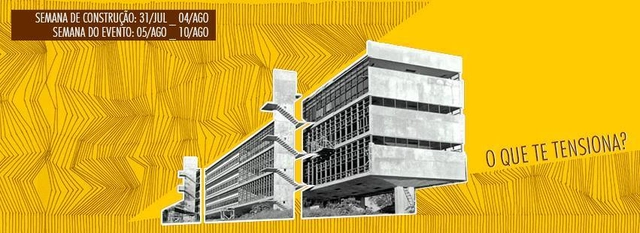
The EREA (Regional Meeting of Architecture Students) examines the extent to which the university is truly integrated into the city. Is São Carlos a university town, or is it a city with universities? It is the city with the highest number of PhDs per square meter, but who does it direct its knowledge toward? It is a technology hub, yet one where research stagnates and fails to reach the periphery; these are universities that claim to be public, yet select which segments of the population can access their spaces and knowledge. Consequently, we do not want to discuss these issues within the confines of the university; we want to burst the university bubble and integrate academic knowledge with the local context, encouraging a horizontal exchange of wisdom. To this end, the meeting will be open, with activities conducted by both participants and the community, given that Parque do Bicão is a public space located in a non-central region, outside the "university town." Thus, we position ourselves to unify and strengthen our efforts alongside social movements, local businesses, occupations, and minority groups, with the goal of deconstructing stereotypes, questioning common sense, combating oppression, and creating tension. And you, what creates tension for you?

Submissions are now open for ACADEMIC PAPERS for the Communication Sessions of the 4th CATS - CONGRESS ON ARCHITECTURE, TOURISM, AND SUSTAINABILITY - Cataguases, MG.
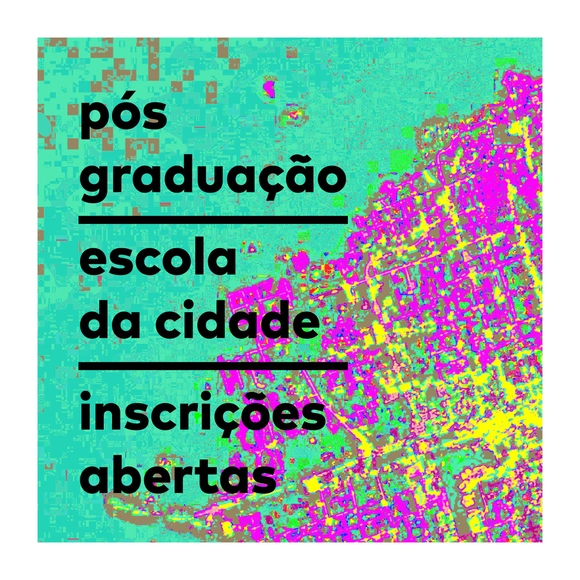
Escola da Cidade is now accepting applications for its second-semester postgraduate programs. Among the offerings are two new courses—one focused on mobility and another on technology. See the details below:

Sidewalks, also known as public walkways, can be understood as multifunctional open spaces where a range of activities occur, from pedestrian flow to social interaction.
From this perspective, public walkways have great potential to host green infrastructure solutions—such as rain gardens, bioswales, and stormwater planters—capable of providing a series of environmental services for cities. These include mitigating urban pollution (water, air, and soil), providing habitats for urban fauna, contributing to the control of stormwater runoff volume and velocity, and improving local microclimatic quality and thermal comfort for adjacent buildings through shading and evapotranspiration, in addition to serving as an aesthetic element.
Currently, emerging ecological sidewalk design techniques that add value and attractiveness to properties are well-known, utilized, and proven.
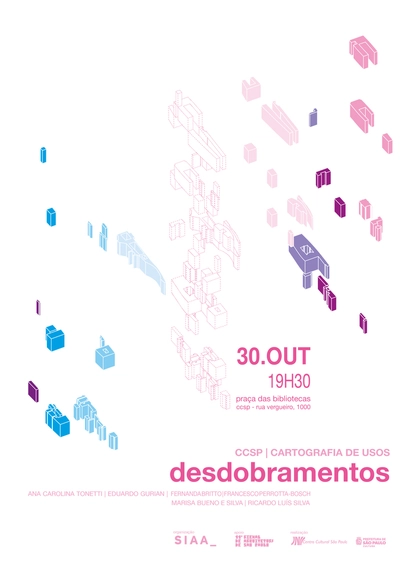
Drawing from the theme "In Project" of the 11th Architecture Biennial, the firm SIAA Arquitetos Associados reflects on the potential for alternative relationships between architectural design, the built environment, and its public occupation over time, whether anticipated or not. To this end, they use the Centro Cultural São Paulo building—designed by architects Eurico Prado Lopes and Luiz Telles—as the foundation for their reflection, and not by coincidence.
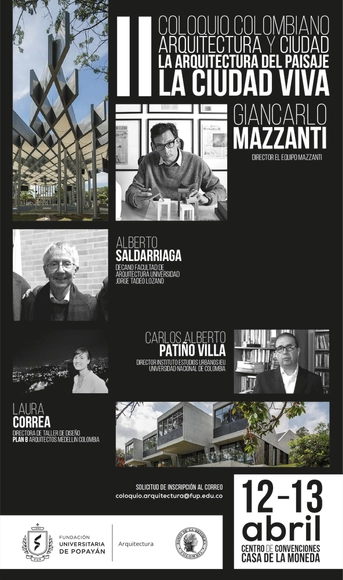
The Fundación Universitaria de Popayán, through its Faculty of Architecture, in a strategic alliance with the Banco de la República, has been working to formulate high-level academic initiatives. These efforts deserve to be shared with the academic community and the general public, which has led to the second edition of the II Colombian Colloquium on Architecture and the City: "Landscape Architecture: The LIVING CITY," to be held on Thursday and Friday, April 12–13, at the Casa de la Moneda Convention Center in Popayán.

The launch of the book ART-quitectura will take place on November 20th. This is the 14th work by architect Luis Alonso, founding partner of the firm Alonso, Balaguer y Arquitectos Asociados—one of the most international and prolific Spanish architecture firms today—in which he showcases 10 of his projects developed across different countries.

The Terrain Lab Visiting School is a 10-day research workshop held in collaboration with the Architectural Association in London and the University of Navarra. This year, it will take place at the University of Navarra School of Architecture in Pamplona from June 25 to July 5, 2018. The Lab investigates the geographic, socioeconomic, and cultural forces that shape each territory to formulate hypotheses regarding the future production of landscapes and anthropized territories.
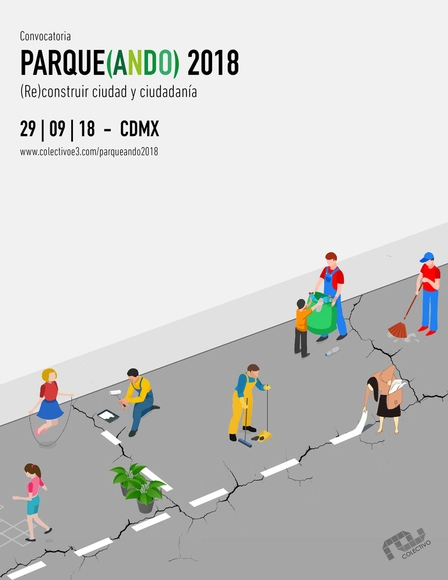
Parque(ando) is an initiative that proposes a welcoming and participatory use of public space, in which citizens transform streets into small parks for one day through the use of furniture, art installations, cultural expressions, recreational activities, and more.

The objective of this course is to provide the theoretical and practical foundations of architectural photography. This ensures participants gain the essential principles needed to photograph their first project. In the second phase, participants will apply the knowledge they have acquired during a photo shoot of an assigned architectural project. Following the photo shoot, the process will continue with the editing of selected images, printing, and mounting, culminating in a photo exhibition at the "La Incubadora" space in Cumbaya. The goal is to provide workshop attendees with a comprehensive experience, covering everything from capturing images of a building to printing and mounting them for an exhibition.

In a context shaped by neoliberal policies, urban design in Santiago, Chile, has been progressively limited to private, internalized spaces. Specifically, through the shopping mall model, which, rather than serving as a suburban solution, has transformed into a vehicle for developing central, pre-equipped areas. Urban shopping malls are large-scale consumption artifacts that not only aggregate a significant amount of infrastructure, programs, and services to meet daily demands, but also represent a "real" opportunity to create urban spaces with a spatial and symbolic richness unavailable elsewhere in the city. However, this complexity comes at the expense of the urban experience. Housing, understood as the center of domesticity, has lost its fundamental relationship with the city and today is merely an isolated component of urban design, the result of an undifferentiated proliferation of housing units, buildings, and blocks that serve no function other than accommodation.