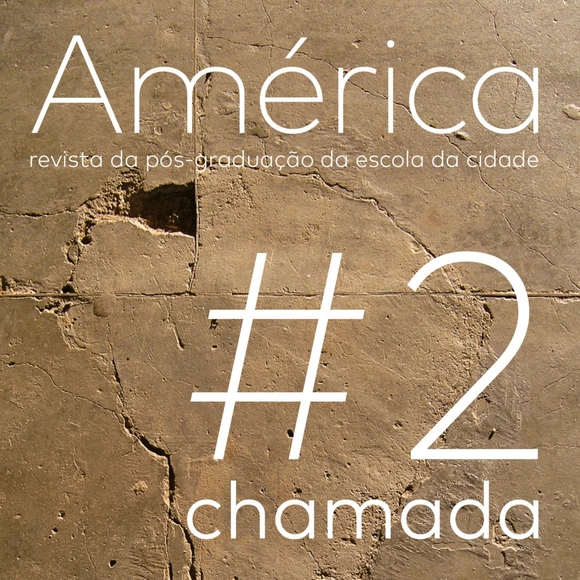
Through March 15, América—the postgraduate journal of Escola da Cidade—is accepting submissions of scientific articles and unbuilt projects for its second volume.
Through March 15, América—the postgraduate journal of Escola da Cidade—is accepting submissions of scientific articles and unbuilt projects for its second volume.

The School of Architecture, Art and Design at Tecnológico de Monterrey will host the panel discussion “From the Project to the City, From the City to the Project” on Wednesday, June 19, at 7:00 p.m. at Espacio CDMX: Av. de los Compositores No. 4, Bosque de Chapultepec II Sección, CDMX.
Basic

Prima is an independent architecture publication focused on the discipline's means of representation. Each issue is structured around a single medium of representation, used to explore a topic best discussed through that specific lens. For each issue, two young Chilean firms and a critic or academic whose work aligns with the theme are invited to contribute.
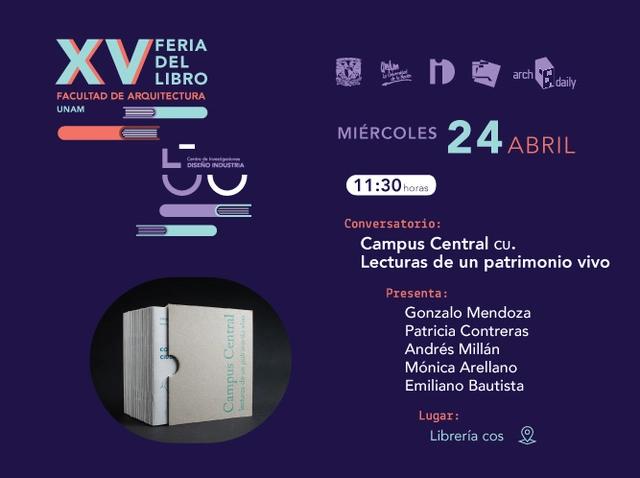
CU Central Campus: Readings of a Living Heritage is a collection of 19 booklets that compile the history of the buildings that make up the original campus of UNAM's Ciudad Universitaria.
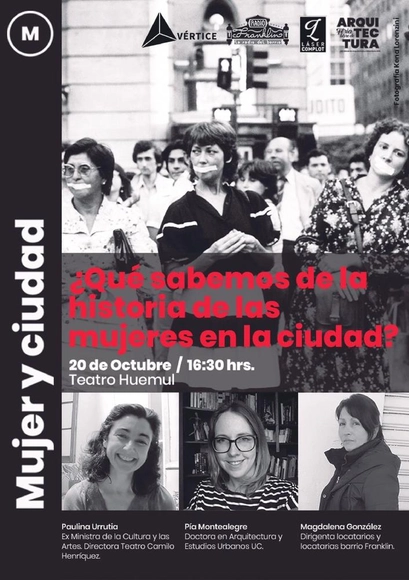
As part of the XXI Bienal de Arquitectura y Urbanismo de Chile, Fundación Vértice invites you to discuss how the city recognizes—or fails to recognize—women in history, particularly the history of women in Chile. Do we know where we voted for the first time? Where did we gather? How did the territory influence the advancement of our rights?

The Institute for Advanced Architecture of Catalonia (IAAC) is pleased to announce the launch of the Global Summer School 2019 - Becoming, the 12th edition of the international summer program on the future of our cities, which will take place in Barcelona and simultaneously at other nodes around the world from July 1 to 14, 2019.
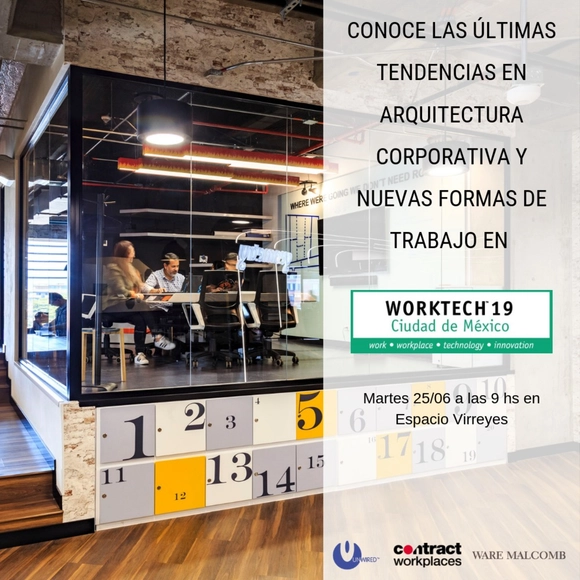
After 15 years of success and replicating the format of major global cities, WORKTECH LATAM brings together international experts to provide an inspiring and innovative perspective. The event offers exclusive content that blends new ideas, strategies, case studies, and industry developments, while providing a dynamic forum for debate on the trends shaping the future of the workplace and new ways of working.

The Master’s Program in Project Research at the POIESIS Center (FADU UBA) is pleased to invite you to the lecture "Summoning Matter," to be delivered by renowned Paraguayan architect Solano Benítez. This event will take place within the framework of the workshop "Material Experimentations: From Potential Matter to Actual Material." The event will be held on Monday, May 6, 2019, at 7:00 PM in the FADU Aula Magna and is open to the general public.
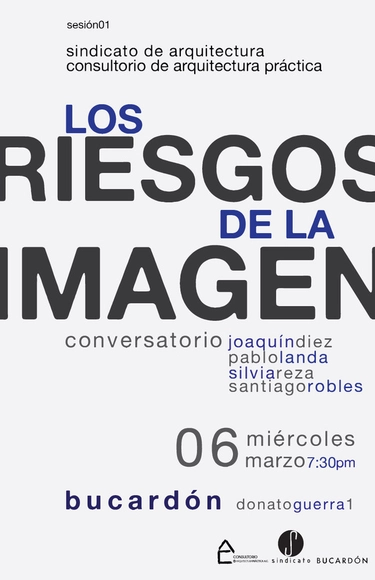
Representation plays a pivotal role in shaping architecture. In other words, our discipline relies on various visual devices that enable its existence—such as plans, models, and renders—as well as its material realization and its mediation with the world. Consequently, we are interested in discussing the image as the primary tool for reproducing the capitalist metropolis, where its aspiration-generating elements or idealized margins recreate scenarios that are adverse to the actual needs of cities, architecture, and beyond. In architectural practice, there is a reification and an excessive importance assigned to the image over any foundation or conceptualization; despite this, we believe that discussions regarding its use remain scarce. Therefore, we have decided to convene a discussion between architects and artists to examine the implications of the visual.
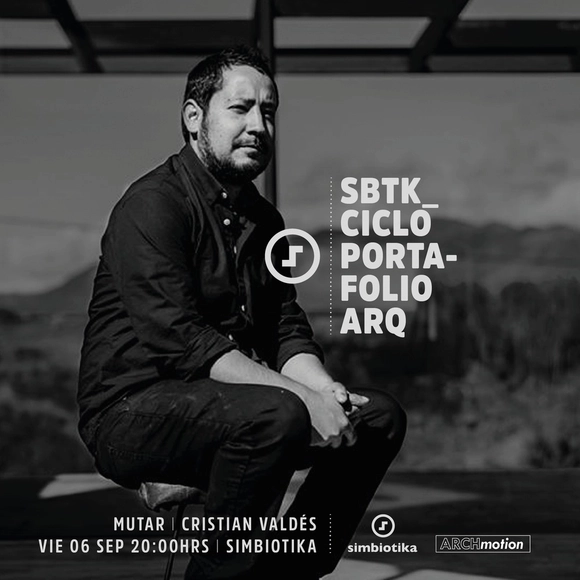
Estudio Simbiotika and Archmotion are launching the Portfolio Cycle, a series of talks featuring studios and architects from the "Made in Talca" movement, showcasing a selection of projects and works completed both within and outside the Maule region in recent years. Invited speakers include Enzo Sartori/111 Arquitectos, Juan Paulo Alarcón/Surco Studio, José Miguel Mardones/Archmotion, Carlos Candia/Aplomo, and Felipe Alarcón. The first session will be led by Cristián Axl Valdés of Mutar Estudio on September 6th at 8:00 PM at Estudio Simbiotika, 8 Ote 925 (between 2 and 3 Sur), Talca.
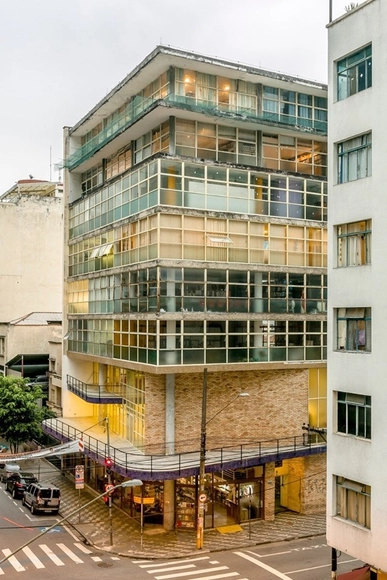
Compasso Fair - Architecture, Urbanism, and Design Publications
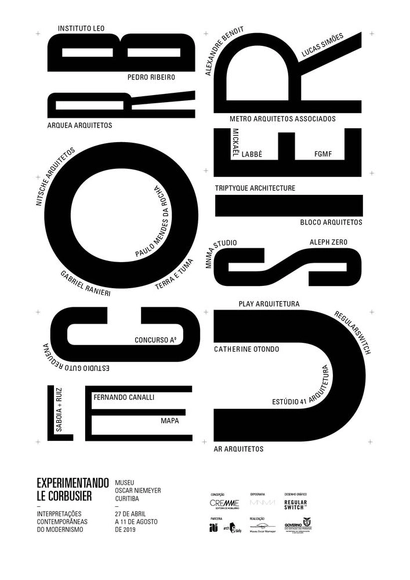
Cremme Furniture Publishing and the Oscar Niemeyer Museum open an exhibition on Le Corbusier

To highlight the themes of Urban October, the United Nations Human Settlements Programme (UN-Habitat) office in Brazil created the Urban Circuit in 2018—a call for events organized by various stakeholders on topics related to Urban October. The second edition of the Urban Circuit in 2019 will feature the general theme "Innovative and Inclusive Cities" and the guiding question: "How can innovation improve urban services and policies in an inclusive and sustainable way?"
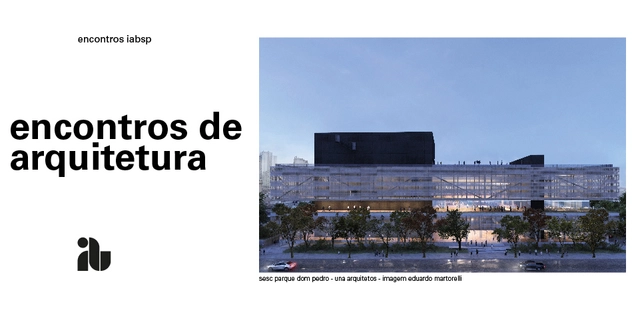
August is approaching, and with it, our "Architecture Meetings" return.
For those unfamiliar, the idea behind these meetings is to discuss contemporary Brazilian architectural production, organized by theme. The conversation will feature professionals active in the field of architecture and will be moderated by an external guest or a member of the group formed by IABsp to curate this activity.

The IV ENEEEA aims to discuss the teaching of structures in architecture schools, addressing traditional structural systems and innovations, as well as their integration with architectural design courses and other didactic activities outlined in the programs' pedagogical curricula.

This Forum aims to bring together, over four days in Belo Horizonte, various stakeholders involved in housing issues—architects, planners, public officials, members of municipal housing councils, grassroots movements, government representatives, organizations, and other professionals working in the field, as well as researchers and students. In doing so, it aims to provide a space for multidisciplinary discussion, addressing both theoretical and practical issues related to urban living.
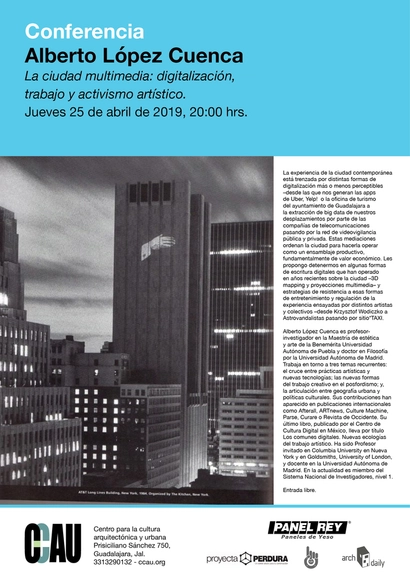
Thursday, April 25, 2019
The experience of the contemporary city is interwoven with various forms of digitization, some more perceptible than others—ranging from those generated by apps like Uber, Yelp!, or the Guadalajara municipal tourism office, to the extraction of big data from our movements by telecommunications companies, and the network of public and private video surveillance. These mediations organize the city to function as a productive assembly, primarily for economic value. I propose we examine some forms of digital writing that have operated on the city in recent years—3D mapping and multimedia projections—as well as strategies of resistance to these forms of entertainment and regulation of experience, as explored by various artists and collectives, from Krzysztof Wodiczko and Astrovandalistas to sitio*TAXI.