The Seoul Metropolitan Government is hosting the 'Show Garden Competition for Seoul International Garden Show 2026' to discover creative garden designs as a way to promote urban garden culture as everyday art. We look forward to receiving submissions by garden designers of great caliber.
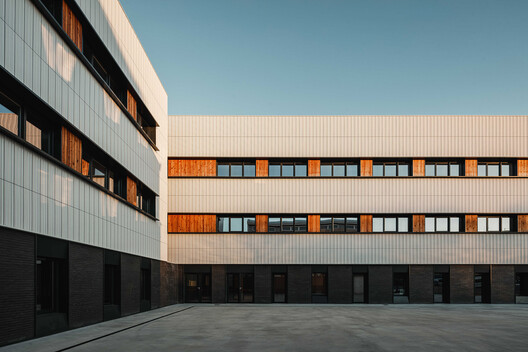
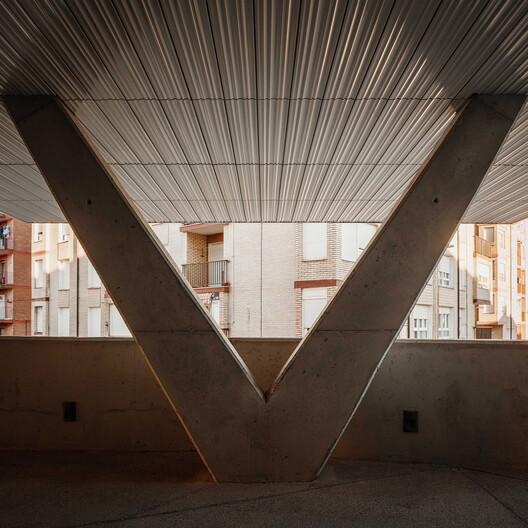
The new Muskiz Secondary School building (Vizcaya), designed by BAT Architecture studio, has become a leading symbol of sustainable architecture for educational centers. Designed in accordance with Passivhaus criteria and built using cross-laminated timber (CLT), the project combines innovation and comfort with environmental care.
In this equation, Faveker's tiled ventilated facade, tailor-designed using its GA16 system as a basis, plays a key role. This precise, luminous tiled skin enhances the building's energy efficiency and infuses it with a unique architectural personality that harmonizes with the surrounding natural setting.
Architecture at Zero is a design competition for decarbonization, equity, and resilience, open to students and professionals worldwide. It serves to engage the fields of architecture, design, engineering and planning in the pursuit of sustainable design.
Nearly three years after artificial intelligence captured the world's attention, architecture is still searching for stable ground in the conversation. Between confident claims and cautious trials, many professionals still question whether—and how—AI is truly changing everyday practice.
A new white paper from Chaos addresses this through practitioner interviews and in-depth internal research, revealing how the technology is beginning to reshape productivity, authorship, and creative identity across the industry.
The white paper offers a closer look at where AI creates value, where it falls short, and how architects can navigate what comes next.
Dedicated to high-end lighting specification, the UK's trade show LiGHT 25 will return to the Business Design Center in Islington, London, on November 19–20, 2025. Following LiGHT 24, which attracted more than 5,500 visitors, this year's edition will feature an expanded program of innovation, education, and networking opportunities. Key highlights for 2025 include the introduction of the Technical Zone, the return of the Associations Lounge, and a new large-scale immersive light art installation.
This year’s Industrial Design Trophy invites students to design futuristic, sustainable products or spaces that merge art, technology, and ecology. Centered on the theme Catalyse, the competition challenges participants to imagine how design can shape life in 2035 and beyond where culture, technology, and sustainability coexist. It’s a call to create innovative, human centered solutions that inspire change and redefine the future of design.
The 68th Year Writing Architecture Trophy invites you to explore, express, and expand your architectural imagination by rethinking what it means to be an architect today. Supported by The Architect’s Diary, this platform is for every thinker, observer, and storyteller of architecture. It’s time to Catalyse Conversations through Words!
Each month, Friends of Residential Treasures Los Angeles (FORT: LA) curates a new self-guided trail, inviting Angelenos to explore the city’s rich architectural heritage. These immersive experiences highlight significant homes, hidden gems, and the designers who have shaped Los Angeles' built environment.
Artificial Kreativity presents Kreative Talks with Peter Murray OBE Kreative Talks are the stories behind the creatives and how they are shaping the world.
The event invited designers to reflect on one of architecture's oldest and most symbolic elements: the stair. Beyond its functional role as a connector of levels, the stair was positioned here as a medium of architectural storytelling—an invitation to explore ideas of procession, sequence, space, and form.
For this first edition, participants were asked to conceptualize a stair not as a technical solution but as an expressive artifact—an embodiment of their design sensibility and architectural values. There were no constraints on site, scale, material, or program. Instead, designers were challenged to reimagine the stair as a sculptural, poetic, and even philosophical construct—one that could provoke, question, or elevate our understanding of vertical space.
Buildings must change faster than they were built to. Shifting tenant needs, tightening climate policies, and rising office vacancies expose the cost of static stock: waste, noise, downtime, and—in the worst case—stranded assets. The consequence is clear: buildings across typologies must be designed to adapt over time. The inaugural Adaptable Building Conference (ABC), taking place on January 22, 2026, at the Nieuwe Instituut in Rotterdam, brings the industry together to turn adaptability from principle into practice.
The VELUX Group is launching the next step in its Action Leadership agenda as an experiment to explore how existing buildings can better serve both people and planet. The experiment builds on decades of demonstration projects and research into healthy buildings, including Living Places, which achieved an ultra-low carbon footprint and first-class indoor climate in an affordable and accessible way. The next step shifts focus towards existing buildings, from new build to renovation—named Re:Living.
Re:Living is a forward-thinking experiment to reimagine renovation to be more than a technical upgrade, and instead as a holistic opportunity to improve human well-being, support biodiversity, and reduce environmental impact. It's part of VELUX's long-term commitment to lead the building industry toward healthier, more sustainable practices, driven by a belief that simply reducing harm is no longer enough.