In times of change, AOA proposes an optimistic approach to the challenges facing cities and their citizens within both local and global contexts. We aim to highlight existing opportunities for positive change during and after crisis situations, thereby promoting more resilient cities in both the short and long term.
The Official Portuguese Representation at the 17th International Architecture Exhibition of La Biennale di Venezia presents two new panel discussions to be held at the Portugal Pavilion for the 2021 Biennale Architettura, located at Palazzo Giustinian Lolin.
The OODA collective opened its ‘Ten Years OODA’ exhibition last Saturday, November 27, following the launch of the book ‘X!?’ in celebration of the collective’s 10 years of practice.
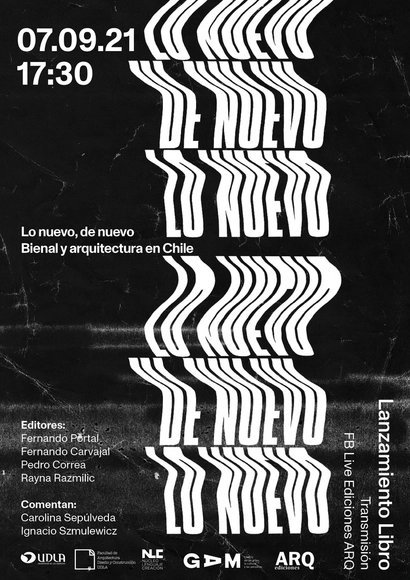
The launch of the latest book, Lo nuevo de nuevo. Bienal y arquitectura en Chile, by editors Fernando Portal, Fernando Carvajal, Pedro Correa, and Rayna Razmilic, will take place on September 7 at 5:30 PM via the Ediciones ARQ Facebook Live page.
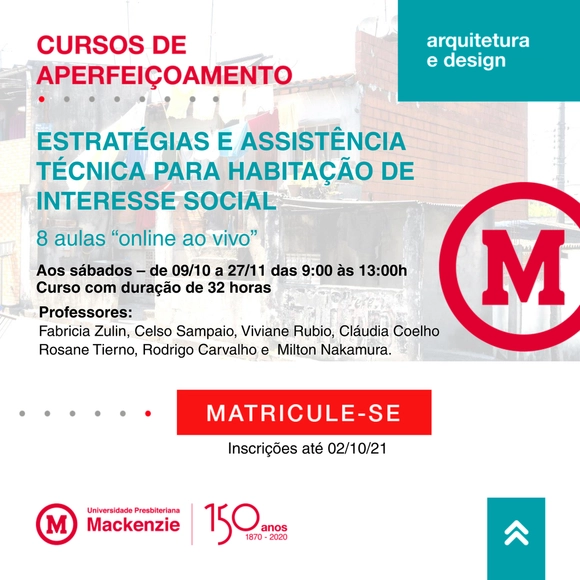
Strategies and Technical Assistance for Social Interest Housing. Credit: Fabricia Zulin
Objective: To expand knowledge regarding housing policies and strategies for Technical Assistance for Social Housing (ATHIS). Target Audience: Professionals and graduates who wish to act as agents of social transformation in projects that promote the right to the city and to housing.
Discover the 30 Nominees for the 2021 CAU/DF Seal - Brasília Architecture
In this edition, in addition to the superquadra blocks, public and private schools participated. The public—building managers, condominium administrators, residents, and other interested parties—was also able to submit nominations online. All nominations were reviewed by the CAU/DF Temporary Heritage Commission between August and early November, resulting in the selection of 30 buildings that stood out for their historical value, the well-maintained state of their facades, outdoor areas, pilotis, and other analytical criteria.
The 15º edition of the "From Territory to Detail" International Architecture Seminar serves as a space for dialogue and reflection, bringing together students, academics, and professionals in the field alongside renowned Latin American architects. A common thread among these speakers is their balance of teaching with professional practice across diverse areas, ranging from editorial work to artistic experimentation.
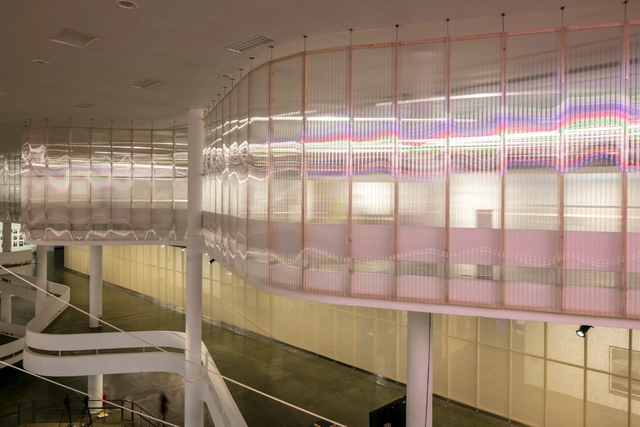
transparencies and depths How was the lighting design for the 34th Bienal developed? Light is something we see all the time, yet little is commonly known about what happens in practice. This course aims to address key issues in lighting design through the illumination of the 34th Bienal de São Paulo: Faz escuro mas eu canto.
The Urbanism in Bahia Seminar - urbBA[21], in its 11th edition, proposes a discussion on the city and care.
The Urbanism in Bahia Seminar - urbBA[21], organized by the Lugar Comum Research Group (UFBA), proposes a discussion on the city and care in its 11th edition.
Videos
Poster developed by the event organizers. Image courtesy of Architect Malu Borja and Al Borde.
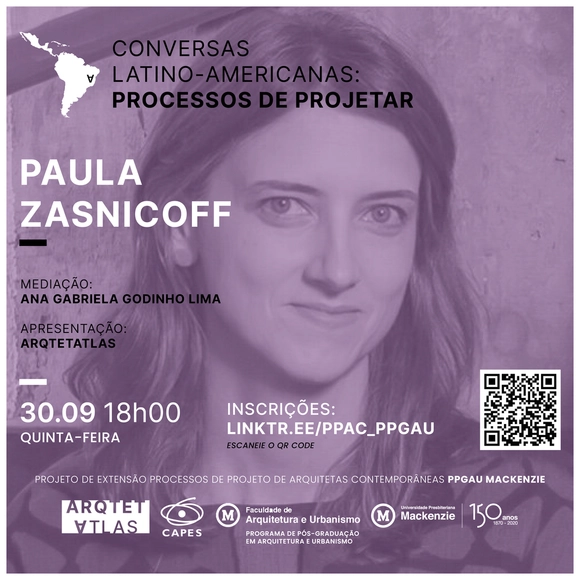
We invite everyone to the third meeting of the event "Latin American Conversations: Design Processes," organized by the extension project "Design Processes of Contemporary Women Architects," coordinated by Professor Ana Gabriela Godinho Lima, in partnership with the "Arqtetatlas" collective. The event will take place on Thursday, October 28, at 6:30 PM, featuring Ecuadorian architect Malu Borja.
Videos
Poster developed by the event organizers. Image courtesy of Architect Paula Zasnicoff
We invite everyone to the second meeting of the event "Latin American Conversations: Design Processes," organized by the extension project "Design Processes of Contemporary Architects," coordinated by Prof. Ana Gabriela Godinho Lima, in partnership with the collective "Arqtetatlas." The event will take place on Thursday, September 30, at 6:00 PM, featuring architect Paula Zasnicoff.
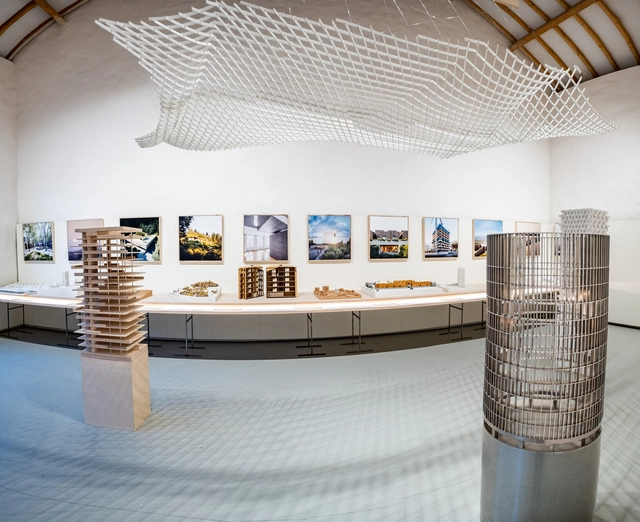
Models and drawings are essential tools for understanding architecture; they reveal the form and physical expression of buildings. This exhibition brings together a collection of models that, having previously been displayed to represent architectural works, were placed in the care of the Belém Cultural Center. Much like the buildings they represent in miniature, these models have been weathered by time, which has left its mark upon them. Twenty years after their initial presentation, they serve as treasures that reveal more than mere reflections of an era.
Ideas de Ciudad is a laboratory for research, dissemination, and debate on the spatial and social transformations of the contemporary city. Its goal is to create a city laboratory—an open research platform aimed at exploring the future of cities as spaces for culture and the generation of new social, technological, and innovation paradigms.
The IAB 2021 Awards – Centennial Edition marks a new chapter in the long-standing tradition of recognizing and honoring architecture and urbanism, as promoted by the IAB and its various departments throughout its history.






![Toward an art of cultivating and enacting hope in cities - urbBA[21] - Featured Image](https://snoopy.archdaily.com/images/archdaily/media/images/617a/ddcf/f91c/815a/6200/002a/slideshow/open-uri20211028-31407-3j56mn.jpg?1635442110&format=webp&width=640&height=580)